
Strumigenys kompsomala
- Wetenschappelijke naam
- Strumigenys kompsomala
- Tribus
- Attini
- Subfamilie
- Myrmicinae
- Auteur
- Bolton, 2000
- Verspreiding
- Gevonden in 0 landen
Introductie
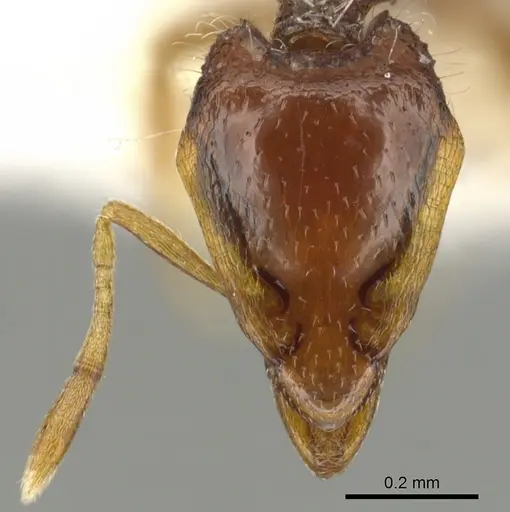
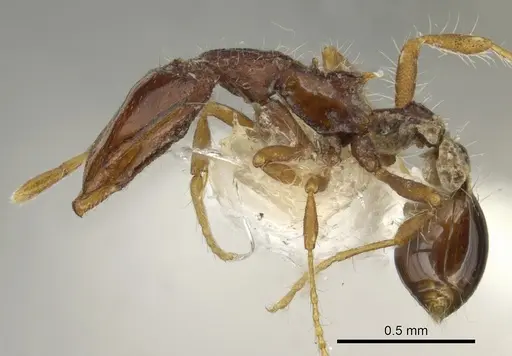
Strumigenys kompsomala is a tiny ant from Colombia's Putumayo region . Workers measure about 2.3 mm in total length . It belongs to the splendens group and has a distinctive appearance: a very reduced ventral postpetiolar lobe (just a small triangular spongiform process) and long, flagellate hairs projecting from the sides of the head . The mandibles are short and trap-like, used for catching very small prey . Antennae have 6 segments . Specimens have also been found in Brazil's Rondônia state, suggesting a wider range than originally documented . Almost nothing is known about the biology of this species, making it one of the most challenging ants to keep in captivity.
Quick Summary
- Difficulty: Expert
- Origin & Habitat: Neotropical region, documented from Putumayo, Colombia (type locality Villa Garzon) and Brazil's Rondônia state [1][4][2]. The area is tropical rainforest in the Amazon basin, characterized by high humidity and warm temperatures.
- Colony Type: Unconfirmed, no data on colony structure (single-queen or multi-queen) exists.
- Size & Growth:
- Queen: Unknown, queens not described in available literature.
- Worker: ~2.3 mm total length [2]
- Colony: Unknown, no colony size data available.
- Growth: Unknown, no development data exists.
- Development: Unknown, no direct observations of development have been recorded. (This is one of the least studied ant species. Development timeline must be estimated from related Strumigenys species, which typically take several months to produce first workers.)
- Antkeeping:
- Temperature: No specific data for this species. Based on its Neotropical origin, aim for stable warmth around 24-28°C. Avoid drops below 20°C.
- Humidity: No specific data. The natural habitat suggests consistently high humidity. Keep the nest substrate moist but not waterlogged, with a humidity gradient so ants can choose their preferred microclimate.
- Diapause: Unknown, likely no required diapause given tropical origin, but may show reduced activity seasonally.
- Nesting: No specific data. Their tiny size suggests they need very small, tight spaces. A small test tube setup for founding is recommended.
- Behavior: Strumigenys kompsomala is a specialized predator of tiny arthropods, using its trap-like mandibles to catch prey like springtails [3]. It possesses a functional stinger, but it is too small to penetrate human skin, the ant is completely harmless to people. These ants are slow-moving, cryptic, and spend much time foraging in leaf litter. Their small size makes them excellent escape artists, you must use fine mesh and impeccable seals to prevent escapes.
- Common Issues: essentially no biological data exists, care is entirely experimental., tiny size makes escape prevention critical, they can squeeze through standard mesh., no information on accepted foods, you must experiment cautiously with micro-prey., slow growth means colonies can stall if conditions are suboptimal., wild-caught colonies may have parasites given the lack of captive breeding data.
Species Identification and Morphology
Strumigenys kompsomala is a member of the splendens group. It can be identified by its extremely reduced ventral postpetiolar lobe, appearing as only a small triangular spongiform process [2][3]. Workers measure about 2.3 mm in total length [2]. The head has flagellate (long, hair-like) hairs projecting from the dorsolateral margin, and the middle and hind tibiae have freely projecting hairs [2]. The mandibles are short, robust, and trap-like, triangular in shape, designed for snapping shut on tiny prey [3]. The antenna has 6 segments [3]. Unlike some related species, this one lacks the upcurved anterior clypeal margin and does not have exposed preocular carinae [2].
Distribution and Range
This species was originally described from Colombia's Putumayo region, with the type locality being Villa Garzon, collected in July 1977 [2]. Specimens have also been studied from Brazil's Rondônia state (Porto Velho), suggesting the distribution may extend further east than originally documented [4]. The Putumayo region in Colombia is a tropical area in the Amazon basin, characterized by high humidity and dense rainforest. This Neotropical distribution suggests the species prefers warm, humid conditions similar to other Amazonian ants.
Housing and Escape Prevention
Given the extremely small size of this species (about 2.3 mm), housing requires careful consideration. Standard test tubes work but must have excellent seal quality, these tiny ants can escape through gaps that would hold back larger species. Use fine mesh (at least 0.5 mm or smaller) on any ventilation holes. A small acrylic nest with tight chambers scaled to their size would be ideal once the colony establishes. The reduced ventral postpetiolar lobe suggests they are adapted for moving through very narrow spaces, so ensure all connections between outworld and nest are snug. Because they are so small, avoid deep water barriers as they can drown, use Fluon or similar barriers instead.
Feeding and Diet
The diet for Strumigenys kompsomala must be approached experimentally since no direct feeding observations exist for this species. However, Strumigenys in general are specialized predators of tiny arthropods, primarily springtails (collembola), but also small mites, aphids, and other micro-arthropods [3]. Their short, trap-like mandibles are designed for catching very small, soft-bodied prey. Start by offering live springtails, which are the most likely accepted food based on related species. Sugar sources are unlikely to be accepted, this is not a honeydew-feeding species. Do not offer prey larger than they can handle, their tiny size limits what they can subdue.
Temperature and Humidity Requirements
No specific temperature or humidity data exists for Strumigenys kompsomala. Based on its Neotropical origin (Colombia's Putumayo region in the Amazon basin), aim for warm, humid conditions. Target temperatures around 24-28°C, avoiding drops below 20°C. Humidity should be high, think damp forest floor conditions. Keep the nest substrate consistently moist but not waterlogged, with some variation so ants can choose their preferred microclimate. Use a water tube or moisture reservoir in the nest setup to maintain humidity. Avoid direct airflow that could dry out the nest.
Challenges and Limitations
This is one of the most challenging species to keep because essentially nothing is known about its biology in captivity. No data exists on founding behavior, development time, colony size, queen number, or specific care requirements. You will essentially be pioneering its husbandry. Expect losses, this species is not recommended for beginners. Start with a small colony if available, and be prepared to experiment with conditions. Document your observations carefully as they will contribute to our knowledge of this species. The extremely small size also makes them vulnerable to drying out, drowning in water barriers, and escaping through standard equipment.
Frequently Asked Questions
How long does it take for Strumigenys kompsomala to produce first workers?
Unknown, no development data exists for this species. Based on related Strumigenys species, expect 3-6 months at optimal temperature (around 26°C). The lack of any documented development timeline makes this a species for patient, experienced keepers willing to document their observations.
What do Strumigenys kompsomala ants eat?
No feeding observations exist for this specific species. Based on related Strumigenys ants, they are specialized predators of tiny arthropods. Offer live springtails as a primary food source. Other tiny soft-bodied prey like small mites may also be accepted. Sugar sources are unlikely to be taken.
Are Strumigenys kompsomala good for beginners?
No, this species is not recommended for beginners. Essentially nothing is known about its captive care requirements. There is no data on founding, development, feeding preferences, or optimal conditions. This is an expert-level species for experienced antkeepers willing to experiment and document their observations.
What size colony do Strumigenys kompsomala reach?
Unknown, no colony size data exists for this species. Related Strumigenys species typically form small colonies of a few dozen to a few hundred workers. Given the tiny worker size, expect relatively small colonies compared to more common ant species.
Do Strumigenys kompsomala need hibernation?
Unknown, no data on overwintering requirements exists. As a Neotropical species from Colombia's Amazon region, they likely do not require a true diapause. However, they may have seasonal periods of reduced activity. Monitor your colony and reduce feeding if they become less active.
Can I keep multiple Strumigenys kompsomala queens together?
Unknown, no data exists on colony structure or queen behavior for this species. The colony type (monogyne vs polygyne) has never been documented. Do not attempt combining unrelated queens as there is no information on whether they will tolerate each other.
How do I prevent Strumigenys kompsomala from escaping?
Escape prevention is critical due to their extremely small size (about 2.3 mm). Use fine mesh (0.5 mm or smaller) on all ventilation. Ensure all connections are snug, these ants can squeeze through gaps that hold back larger species. Apply Fluon or similar barriers to the rim of the outworld. Avoid water barriers as they can drown, use chemical barriers instead.
What is the best nest type for Strumigenys kompsomala?
No specific nest data exists for this species. A small test tube setup works well for founding colonies. For established colonies, use an acrylic nest with very small, tight chambers scaled to their tiny size. The reduced ventral postpetiolar lobe suggests they are adapted for narrow spaces.
Where is Strumigenys kompsomala found?
The species is documented from Colombia's Putumayo region (type locality: Villa Garzon) [2]. Specimens have also been studied from Brazil's Rondônia state, suggesting a broader Neotropical distribution [4]. The Putumayo region is in the Amazon basin with tropical rainforest climate.
Report an Issue
The current care sheet is based fully on literature. See inconsistencies, or something that's incorrect? Please , it will be resolved after review from an admin. Contributing to the blogs tab also helps providing information, to make us be able to further improve the caresheets. Thank you for your support!
References

Dit verzorgingsblad is gelicentieerd onder CC BY-SA 4.0 .
Community-blogs
CASENT0900190
Bekijk op AntWeb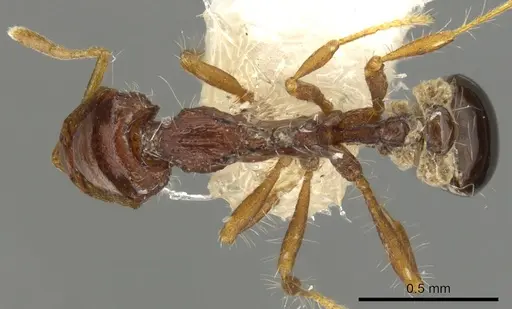
Literatuur
Verspreidingskaart laden...Producten laden...