
Strumigenys flavianae
- Wetenschappelijke naam
- Strumigenys flavianae
- Tribus
- Attini
- Subfamilie
- Myrmicinae
- Auteur
- Chaul, 2023
- Verspreiding
- Gevonden in 0 landen
Introductie
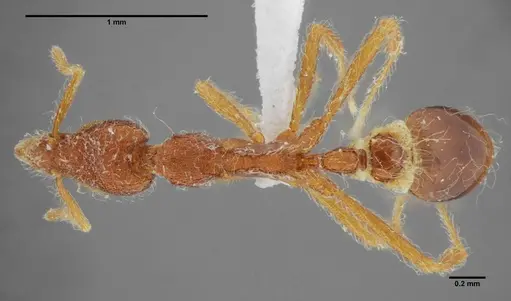
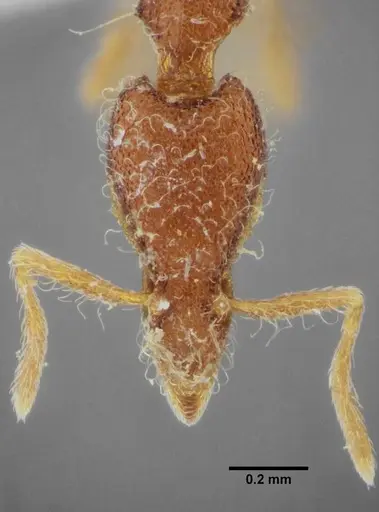
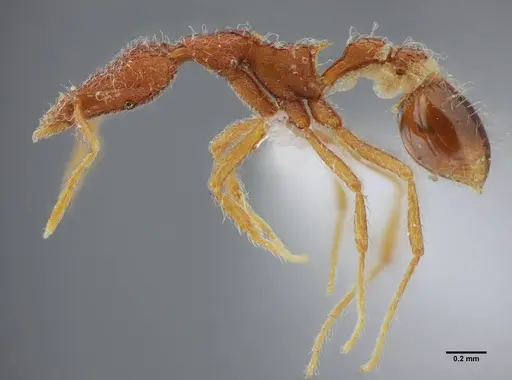
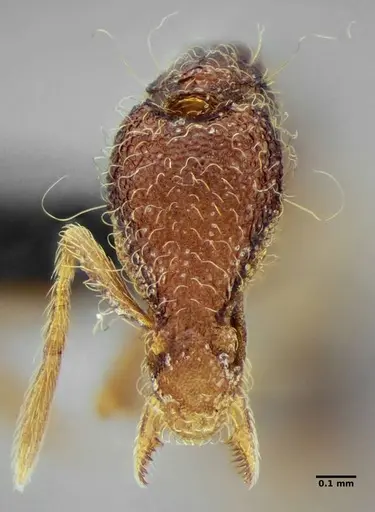
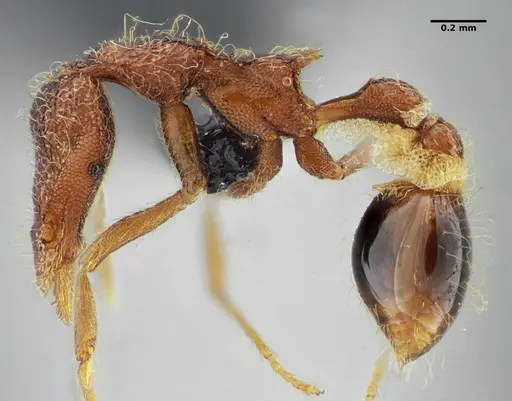
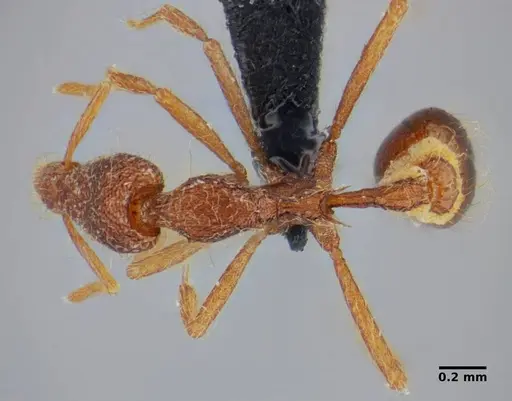
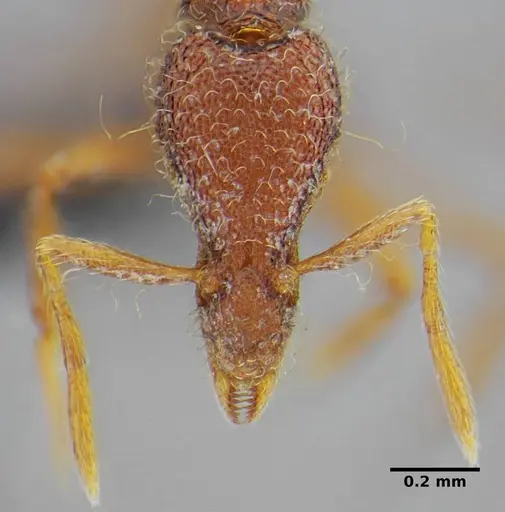
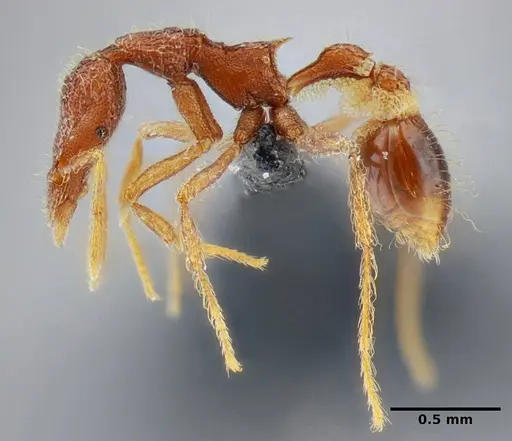
Strumigenys flavianae is a newly described ant species from the Brazilian Atlantic Forest, officially named in 2023. Workers are tiny, just 3.02-3.16 mm total length, with an extremely slender body, long head, and notably long legs . Their body is covered in distinctive wire-like and flagellate setae that stick out in an untidy pattern, giving them a fuzzy look . The mandibles are small, triangular, and use a gripping mechanism rather than a trap-jaw . This species is so unique that it required its own new species group (the flavianae-group) . It has only been found three times in secondary growth forest remnants near Viçosa, Minas Gerais, making it exceptionally rare in the wild . No queens or colonies have ever been observed.
Quick Summary
- Difficulty: Expert
- Origin & Habitat: Viçosa, Minas Gerais, Brazil, in the Atlantic Forest region. Found in secondary growth forest remnants, likely in humid, shaded microhabitats on the upper leaf litter or inside rotten logs [1][2].
- Colony Type: Unknown, this species was only described in 2023 and no living colonies have ever been studied. Colony structure (single queen vs multiple queens) is completely unconfirmed.
- Size & Growth:
- Queen: Unknown, only workers have been described [1]
- Worker: 3.02-3.16 mm total length [1]
- Colony: Unknown, only three workers have ever been collected [1]
- Growth: Unknown
- Development: Unknown, no breeding biology has been documented (This is a newly described species with zero documented colony biology. Estimates based on related Strumigenys would suggest 2-4 months at warm temperatures, but this is purely speculative.)
- Antkeeping:
- Temperature: Unconfirmed. Based on typical Strumigenys preferences and the Atlantic Forest climate (tropical highlands), aim for roughly 22-26°C with stable humidity. Related species typically prefer warm, humid conditions.
- Humidity: High humidity required, think damp forest floor. Keep the nest substrate consistently moist but not waterlogged. Provide a water source such as a test tube or water feeder.
- Diapause: Unknown for this species. The Atlantic Forest does not have harsh winters, so diapause may not be required. Monitor colony activity and adjust accordingly.
- Nesting: Based on morphology suggesting foraging in upper litter layers and rotten log cavities, a naturalistic setup with moist substrate or a plaster nest would be appropriate. Their tiny size means they need very tight chambers.
- Behavior: Behavior is completely unstudied in captivity. Based on related Strumigenys, they are likely slow-moving, cryptic predators that hunt micro-arthropods. Their small mandibles suggest a gripping rather than trap-jaw hunting strategy. They have a functional stinger, but it is too small to harm humans. Escape prevention is critical due to their extremely small size, they can squeeze through the tiniest gaps. Use fine mesh barriers (at least 0.5 mm openings) and tight-fitting lids.
- Common Issues: this species has never been kept in captivity, all care recommendations are speculative, extreme rarity means finding colony founders is nearly impossible, tiny size makes escape prevention challenging, no established feeding protocols exist for this species, unknown if they accept standard ant foods or require specialized micro-prey
Discovery and Rarity
Strumigenys flavianae was only described in 2023 by Júlio Cezar Mário Chaul, making it one of the newest ant species to science [1]. The species was named to honor Flaviana Heloisa da Silva Caetano, a young Brazilian student who passed away during the COVID-19 pandemic [1]. Only three workers have ever been collected, the holotype from Mata do Paraíso forest remnant and two paratypes from different locations near Viçosa, Minas Gerais [1]. Despite years of sampling in the region, this species remains exceptionally rare [1]. This means two things for antkeepers: first, finding a colony to keep will be nearly impossible outside of scientific collections, second, everything we know about their care is based on educated guesses from related species rather than direct observation of living colonies.
Appearance and Identification
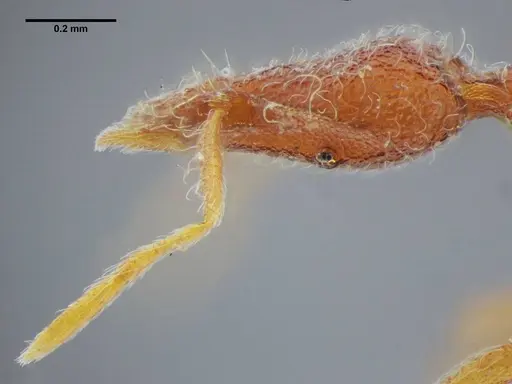
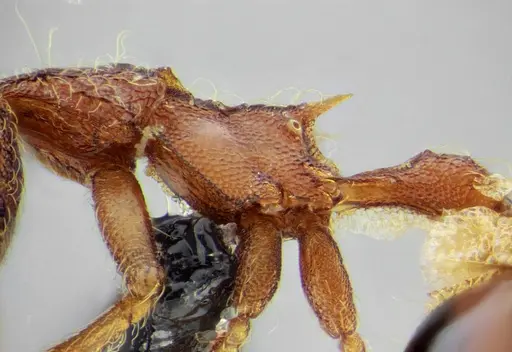
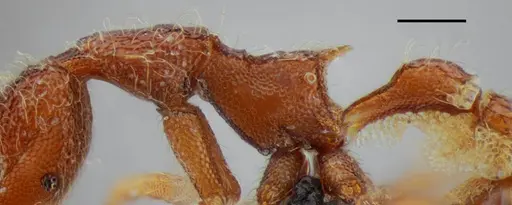
Workers measure just 3.02-3.16 mm in total length, making them among the smallest ants in the genus Strumigenys [1]. Their most striking feature is their extraordinary slenderness, the head is much longer than wide, and the mesosoma, petiole, and legs are all notably elongate [1]. The body is covered in distinctive wire-like and flagellate setae that stick out in an untidy pattern, particularly noticeable on the head, mesosoma, and gaster [1]. The mandibles are small and triangular, using a gripping mechanism rather than the dramatic trap-jaw snap found in some Strumigenys species [1]. They have 6-segmented antennae, and the scape (first antenna segment) has a row of freely projecting wire-like setae along its front edge [1]. The waist segments (petiole and postpetiole) have well-developed spongiform tissue underneath, which is a soft, sponge-like material used in various ant behaviors [1].
Natural History and Foraging
Nothing is known about the biology of living colonies of this species [1]. However, scientists have made educated guesses based on its morphology. Its slender body and long legs suggest it forages on the upper stratum of leaf litter or within cavities inside rotten logs rather than in the deeper, denser soil layers [1]. This is consistent with other Strumigenys species, which are typically predators of small soil arthropods like springtails. The species has been found in secondary growth forest remnants in the Atlantic Forest of Minas Gerais, Brazil, a humid, tropical environment with dense vegetation [1][2]. The Atlantic Forest is known for its high biodiversity and consistent year-round warmth and humidity, which should inform your care setup.
Housing and Setup
Since this species has never been kept in captivity, all housing recommendations are estimates based on typical Strumigenys care. Use a small, well-humidified nest, plaster or Y-tong (AAC) nests with tight chambers work well for tiny ants. The nest chambers should be small and scaled to their 3 mm body size. Provide a water source such as a test tube or water feeder, as high humidity is essential. Given their presumed foraging behavior in upper litter layers, you might also consider a naturalistic setup with moist leaf litter and decaying wood pieces where they can hunt. Temperature should be warm, aim for 22-26°C, which matches their Atlantic Forest origin. Escape prevention is absolutely critical: at just 3 mm total length, they can squeeze through gaps that would hold back larger ants. Use fine mesh (at least 0.5 mm or smaller) on any ventilation and ensure all connections are tight. [1]
Feeding and Diet
Feeding is entirely speculative for this species. Based on typical Strumigenys biology, they are likely predatory on micro-arthropods, particularly springtails (Collembola), which are their primary prey in the wild [1]. Related Strumigenys species have small gripping mandibles designed to seize small, soft-bodied prey. You should start by offering live springtails, as these are the most natural food source. Other micro-arthropods like tiny isopods and mites may also be accepted. Sugar sources are unlikely to be important, Strumigenys are not typically honeydew feeders. Do not expect them to accept standard ant foods like mealworms or fruit flies, as their tiny size limits what they can tackle. Offer small live prey items only, and remove any uneaten prey to prevent mold issues in the humid setup they require.
Temperature and Seasonal Care
This species comes from the Brazilian Atlantic Forest, a tropical environment with relatively stable temperatures year-round. There is no documented diapause requirement, and given the tropical climate of their origin, they likely do not need a winter rest period [1]. Maintain temperatures in the 22-26°C range, warm and stable. Avoid temperature fluctuations, as this could stress the colony. Since nothing is known about their seasonal biology, observe your colony's activity patterns and adjust accordingly. If they remain active year-round, continue normal care. The key is consistency, sudden changes in temperature or humidity are likely to be harmful. Use a small heat mat if your room temperature falls below 22°C, but always provide a temperature gradient so the ants can choose their preferred zone.
Frequently Asked Questions
How do I keep Strumigenys flavianae ants?
This species has never been kept in captivity, so there are no established care protocols. Based on related Strumigenys species, provide a small, well-humidified nest at 22-26°C with fine escape prevention. Start with live springtails as food. This is an expert-level species that requires experience with delicate micro-ants.
What do Strumigenys flavianae eat?
Based on related species, they likely prey on micro-arthropods like springtails. Their small gripping mandibles are designed for small, soft-bodied prey, not large insects. Offer live springtails and other tiny soil arthropods. Sugar sources are unlikely to be important.
How big do Strumigenys flavianae colonies get?
Unknown, only three workers have ever been collected, and no colony has ever been documented. Related Strumigenys species typically form small colonies of perhaps 50-200 workers. This species is so rare that even in the wild, large colonies may not exist.
Are Strumigenys flavianae good for beginners?
No. This is an expert-level species for several reasons: it was only described in 2023 with zero captive biology documented, it is exceptionally rare in the wild, and its tiny size requires specialized setup and care. Even experienced antkeepers should approach this as an experimental species.
What temperature do Strumigenys flavianae need?
Based on their Atlantic Forest origin, aim for 22-26°C. This is a warm, tropical species that likely does not tolerate cool temperatures. Maintain stable warmth rather than allowing fluctuations.
How long do Strumigenys flavianae live?
Unknown, no colony biology has ever been documented for this species. Even basic lifespan data does not exist. Related Strumigenys species may live several years for queens and months to over a year for workers, but this is purely speculative.
Where is Strumigenys flavianae found?
Only in Viçosa, Minas Gerais, Brazil, in the Atlantic Forest region. It has been found in secondary growth forest remnants. This is an extremely restricted range, among the rarest ants in the world to keep.
Can I keep multiple queens together?
Unknown, colony structure has never been documented for this species. No one has ever found a queen or observed founding
Report an Issue
The current care sheet is based fully on literature. See inconsistencies, or something that's incorrect? Please , it will be resolved after review from an admin. Contributing to the blogs tab also helps providing information, to make us be able to further improve the caresheets. Thank you for your support!
References

Dit verzorgingsblad is gelicentieerd onder CC BY-SA 4.0 .
Community-blogs
Literatuur
Verspreidingskaart laden...Producten laden...