
Strongylognathus arnoldii
- Wetenschappelijke naam
- Strongylognathus arnoldii
- Tribus
- Crematogastrini
- Subfamilie
- Myrmicinae
- Auteur
- Radchenko, 1985
- Verspreiding
- Gevonden in 0 landen
Introductie
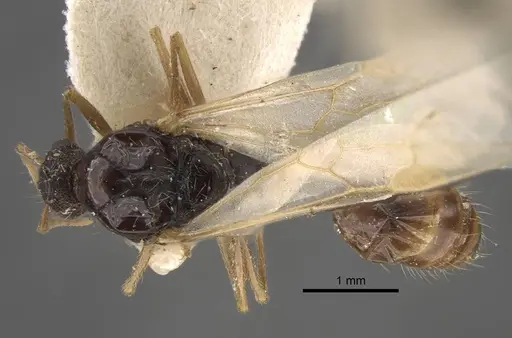
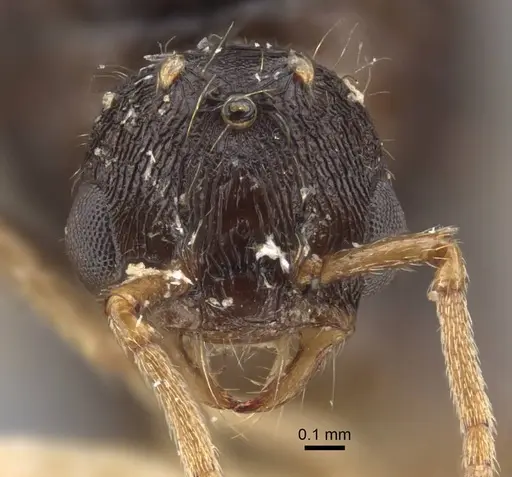
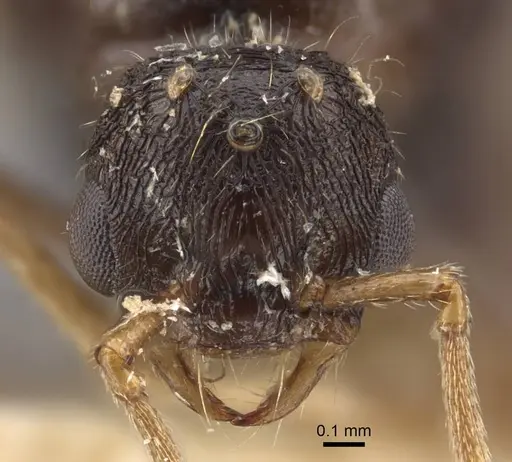
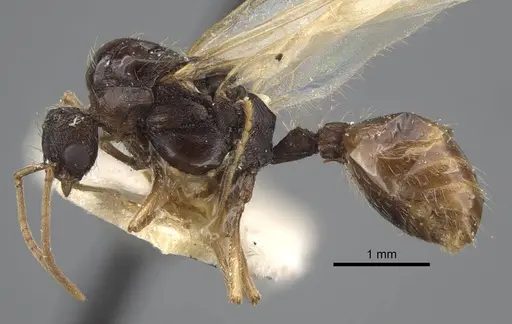
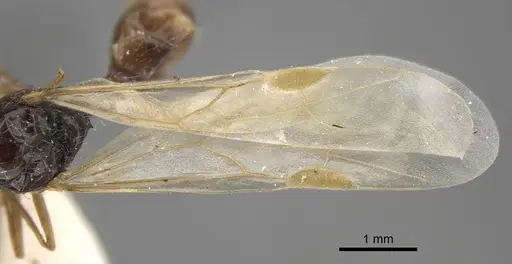
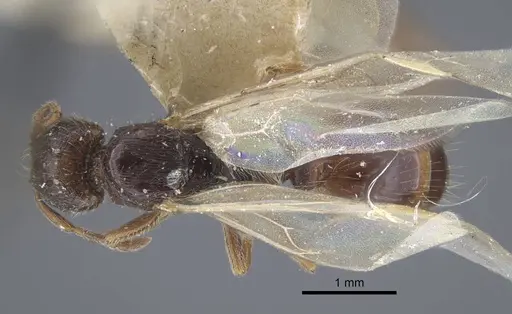
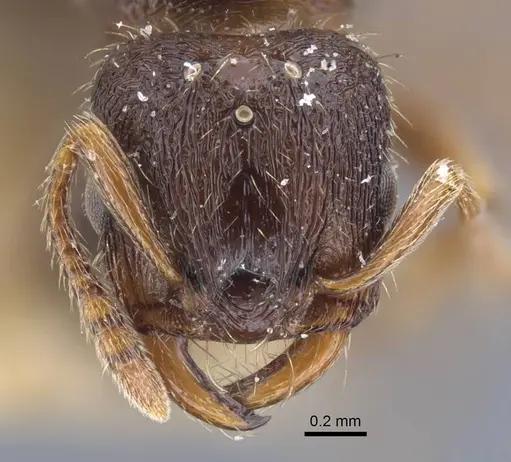
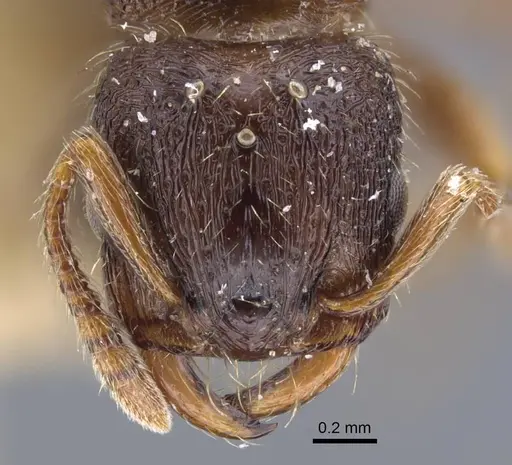
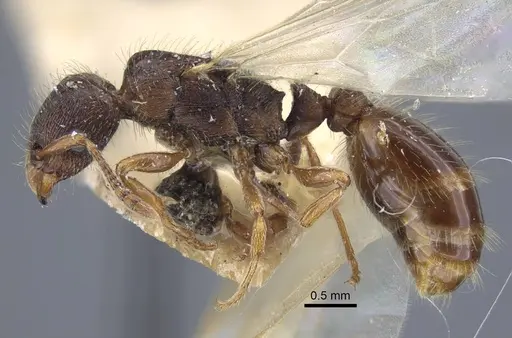
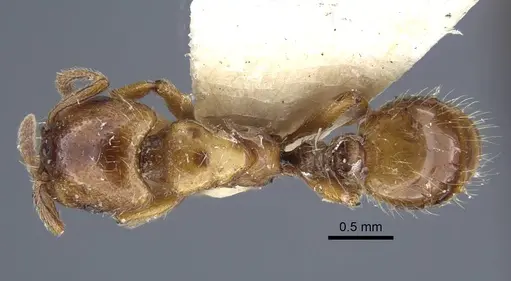
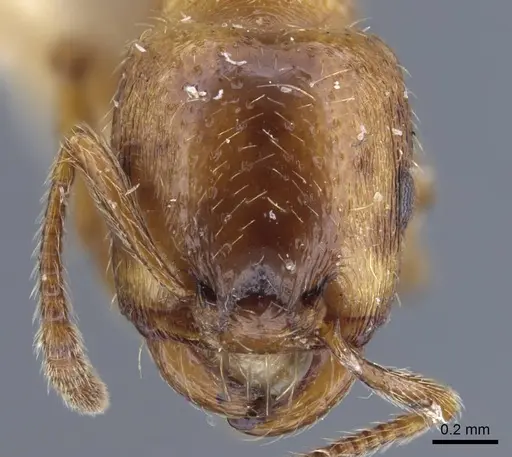
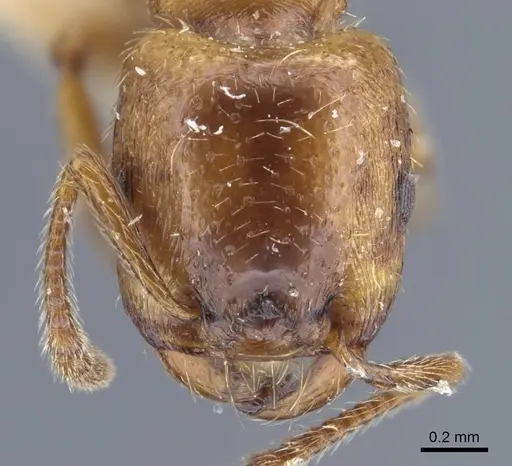
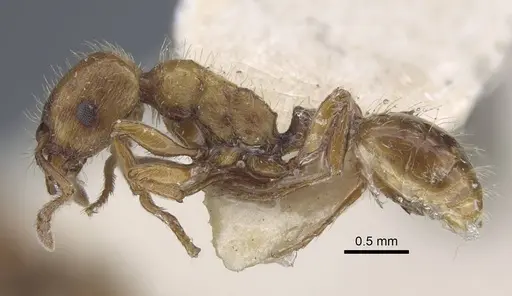
Strongylognathus arnoldii is a small myrmicine ant endemic to Ukraine, found in the Steppe zone and the southern coast of Crimea . Workers are tiny at 2-3mm , with a flattened, shield-like head typical of the genus. The species was described by Radchenko in 1985 from specimens collected near Gurzuf in Crimea . This ant is a social parasite - specifically a dulotic slave-maker that raids Tetramorium colonies and steals brood to enlarge its own workforce . S. arnoldii cannot establish a colony independently. A newly mated queen must invade an existing Tetramorium colony, kill or replace the host queen, and trick the host workers into raising her first brood. This makes it one of the most challenging species to keep in captivity.
Quick Summary
- Difficulty: Expert
- Origin & Habitat: Endemic to Ukraine, specifically the Steppe zone and southern coast of Crimea [1][2]. In the wild, it parasitizes Tetramorium colonies in open, dry steppe habitats.
- Colony Type: Dulotic social parasite, requires host Tetramorium colony to survive. Single-queen colonies (monogyne).
- Size & Growth:
- Queen: Approximately 4-5mm (inferred from genus pattern)
- Worker: 2-3mm [3]
- Colony: Small colonies, typically under 100 workers (including host workers)
- Growth: Slow, dependent on host colony success
- Development: Unknown, depends entirely on host Tetramorium workers (Brood development is tied to host colony dynamics rather than typical ant development.)
- Antkeeping:
- Temperature: Keep at 20-24°C, matching Tetramorium requirements. In summer, room temperature is fine. Provide a temperature gradient.
- Humidity: Moderate, mimicking steppe conditions. Keep the nest substrate mostly dry, with one slightly moist area to provide a humidity gradient.
- Diapause: Likely requires a winter rest period (3-4 months at 5-10°C), similar to other temperate European ants and their Tetramorium hosts.
- Nesting: Cannot be kept alone, must be provided with a compatible Tetramorium host colony. Use Y-tong, plaster, or soil nests for the combined colony. Do not use acrylic nests.
- Behavior: Extremely aggressive toward other ant species (especially Tetramorium) but relatively docile toward humans. Workers are small and fast-moving. Escape prevention is critical due to their tiny size. The defining behavior is raiding, Strongylognathus workers raid Tetramorium colonies to steal brood.
- Common Issues: dulotic species requires a host colony, they cannot survive without Tetramorium workers., finding a compatible Tetramorium host colony can be difficult., colonies may fail if the host queen dies or workers reject the parasites., tiny size (2-3mm) makes escape prevention extremely important., expert-level species, not suitable for beginners.
Understanding Dulotic Ants
Strongylognathus arnoldii belongs to a rare group of ants called dulotic species, commonly known as slave-makers. Unlike typical ants where the queen raises her first workers alone, dulotic queens must invade an established colony of a different species (in this case, Tetramorium) and trick the host workers into raising her offspring [4]. The host workers continue their normal duties, foraging, caring for brood, maintaining the nest, while the Strongylognathus workers focus on raiding other Tetramorium colonies to capture more slaves.
This parasitic lifestyle means S. arnoldii has lost the ability to found colonies independently. Their queens are not claustral (they don't seal themselves in and live off stored fat). Instead, a newly mated queen must find a Tetramorium colony, infiltrate it, and somehow take over or coexist with the host colony. This makes captive breeding extremely difficult and explains why this species is rarely kept.
Housing and Colony Setup
Keeping S. arnoldii requires maintaining TWO colonies, the parasite colony itself AND a healthy Tetramorium host colony to serve as workers. This is significantly more complex than keeping typical ants. You'll need to establish a Tetramorium colony first (T. caespitum or T. immigrans work well), then introduce the Strongylognathus queen.
The combined colony can be housed in a standard formicarium setup, but you must ensure the nest has chambers large enough for both species. Use Y-tong, plaster, or soil nests, avoid acrylic. Provide the Tetramorium workers with their normal food sources (protein, sugar water) while the Strongylognathus workers will primarily focus on raiding behavior. Escape prevention is critical, these tiny ants can squeeze through standard mesh barriers. Use very fine mesh (0.5mm or smaller) or fluon barriers. [3]
Feeding and Nutrition
The host Tetramorium workers handle all foraging and feeding duties for the combined colony. Feed the Tetramorium portion of the colony a standard ant diet: protein sources like small insects (fruit flies, pinhead crickets) and sugar sources (honey water, sugar water). The Strongylognathus workers will typically accept food offered to the host colony but may show less interest in feeding themselves.
Because the host workers do the foraging, ensure food is always available. Remove uneaten prey after 24-48 hours to prevent mold. Sugar water should be provided constantly in a test tube setup. [3]
Temperature and Seasonal Care
Maintain temperatures between 20-24°C, similar to what Tetramorium species require. During summer months (May-September), room temperature is usually sufficient. In winter, the colony will likely enter a dormant period, reduce temperatures to 5-10°C for 3-4 months to simulate winter. This diapause period is important for colony health.
Keep humidity at moderate levels, neither too wet nor too dry. A humidity gradient allows the ants to choose their preferred zone. The steppe origins of this species mean they tolerate drier conditions better than moisture-loving species. [3]
Frequently Asked Questions
Can I keep Strongylognathus arnoldii in a test tube setup?
Not effectively. This is a dulotic species requiring a host Tetramorium colony, you need a formicarium setup with both species present. A test tube alone won't work.
How do I establish a Strongylognathus arnoldii colony?
You must first establish a healthy Tetramorium colony, then introduce a mated S. arnoldii queen. The Strongylognathus queen will need to integrate with or take over the host colony. This is extremely difficult and rarely successful. Most keepers obtain established colonies rather than attempting to found them. The process is poorly documented in the literature [4].
Do Strongylognathus arnoldii ants sting?
As Myrmicinae, they have a stinger but due to their tiny size and parasitic lifestyle, they are not considered dangerous to humans. Their primary defense is chemical, they smear venom rather than injecting it, based on their tribe Crematogastrini.
Are Strongylognathus arnoldii good for beginners?
Absolutely not. This is an expert-level species requiring knowledge of both the parasite and host species. The complex dulotic lifecycle makes them one of the most difficult ants to keep successfully.
What do Strongylognathus arnoldii eat?
The host Tetramorium workers do all the foraging. Feed the colony small insects and sugar water. The Strongylognathus workers will consume food brought back by the hosts.
How long does it take for first workers to appear?
This depends entirely on successful integration with the host colony. Unlike typical ants with predictable development timelines, S. arnoldii relies on host workers to produce its first workers. No specific data is available.
Do Strongylognathus arnoldii need hibernation?
Based on its temperate origin, it likely requires a winter rest period of 3-4 months at 5-10°C, similar to other European ants including its Tetramorium hosts.
Why are my Strongylognathus arnoldii dying?
The most common cause is failure of the host colony. If Tetramorium workers die or reject the parasites, the Strongylognathus colony will collapse. Additionally, these are wild-caught species with specific requirements that are difficult to meet in captivity.
Can I keep multiple queens together?
Not recommended. Strongylognathus colonies are typically monogyne (single queen). Multiple unrelated queens would likely fight.
Where is Strongylognathus arnoldii found in the wild?
This species is endemic to Ukraine, found only in the Steppe zone and southern coast of Crimea [1][2]. It has also been recorded in Crimea, Russia.
Report an Issue
The current care sheet is based fully on literature. See inconsistencies, or something that's incorrect? Please , it will be resolved after review from an admin. Contributing to the blogs tab also helps providing information, to make us be able to further improve the caresheets. Thank you for your support!
References

Dit verzorgingsblad is gelicentieerd onder CC BY-SA 4.0 .
Community-blogs
Literatuur
Verspreidingskaart laden...Producten laden...