
Stigmatomma trilobum
- Wetenschappelijke naam
- Stigmatomma trilobum
- Tribus
- Amblyoponini
- Subfamilie
- Amblyoponinae
- Auteur
- Xu, 2001
- Verspreiding
- Gevonden in 0 landen
Introductie
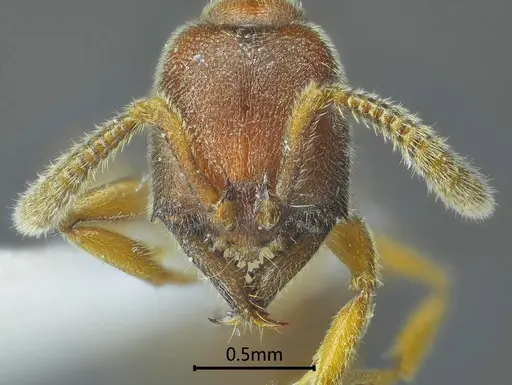
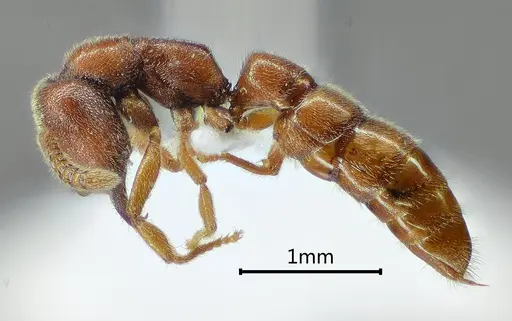
Stigmatomma trilobum is a rare Amblyoponinae ant from the high mountains of Yunnan Province, China. Workers are 4.5mm in total length, with a reddish-brown body and 12-segmented antennae . The head is elongate and trapezoidal, distinctly longer than wide . The most striking feature is the complete absence of eyes, indicating a subterranean lifestyle adapted to darkness . The anterior clypeal margin is divided into three lobes - the middle lobe has four denticles - which gives the species its name 'trilobum' . Originally described as Amblyopone triloba in 2001,it was moved to Stigmatomma in 2012 . This species is extremely rare in both the wild and the hobby, with very few records.
Quick Summary
- Difficulty: Expert
- Origin & Habitat: Yunnan Province, China, at 2500m elevation in sub-alpine moist evergreen broad-leaf forest of the Gaoligong Mountain Nature Reserve [2][1].
- Colony Type: Unconfirmed, no published data exists on queen number or social structure.
- Size & Growth:
- Antkeeping:
- Temperature: Likely cool, around 15-20°C, based on high-elevation (2500m) sub-alpine habitat. Avoid overheating.
- Humidity: High humidity, consistent with moist evergreen broadleaf forest conditions. Keep substrate damp but not waterlogged.
- Diapause: Likely yes, inferred from high-elevation temperate origin, a cool winter period may be required.
- Nesting: Natural nesting site unknown. Based on related Amblyoponinae, likely in soil, under stones, or in rotting wood. Provide dark, undisturbed conditions.
- Behavior: Secretion, slow-moving, and completely secretive, workers avoid light and are likely active only in darkness. They possess a functional sting (subfamily trait) but are not aggressive, they flee from threats. Escape risk is low as they rarely venture into open areas.
- Common Issues: extreme rarity, almost never available in the hobby., complete lack of captive breeding records and established protocols., no biological data, every aspect of care must be inferred from habitat., high elevation origin makes temperature management critical, overheating is likely fatal., eye-less species: light stress is a major concern, keep nesting areas consistently dark.
Temperature and Care
Stigmatomma trilobum requires cool temperatures, reflecting its high-elevation (2500m) sub-alpine habitat [2]. Keep the nest area at approximately 15-20°C, much cooler than most ant species. Heating is unnecessary unless room temperature drops below 15°C. Place the nest in a dark, quiet location away from direct light and vibrations. The species has no eyes and evolved in darkness, so light exposure causes stress [1]. Use a thermostat to prevent accidental overheating, which is likely fatal for this cold-adapted species. Maintain stable temperatures without fluctuations.
Humidity and Substrate
This species needs high humidity matching its moist evergreen broadleaf forest habitat [2]. Keep the substrate consistently damp but not waterlogged. Provide a water reservoir or moisture gradient so ants can choose their preferred zone. Use a hygrometer, aim for 70-85% relative humidity near the nest. Mist the outworld occasionally but avoid standing water. The type locality at 2500m experiences high atmospheric moisture, replicate this with consistent dampness rather than periodic flooding.
Feeding and Diet
Stigmatomma trilobum is a predatory ant, though specific prey data is lacking. Based on subfamily characteristics (Amblyoponinae), it likely hunts small soil arthropods such as springtails, mites, and tiny insects. Offer small live prey 2-3 times per week and remove uneaten items after 24 hours to prevent mold. Sugar sources (honey, sugar water) are unlikely to be accepted, Amblyoponinae are specialized predators, not honeydew feeders.
Nesting Preferences
Natural nesting sites are unknown. The species was collected from sub-alpine moist evergreen broadleaf forest at 2500m, suggesting a preference for cool, shady, and moist microhabitats [2]. Related Amblyoponinae nest in soil, under stones, or in rotting wood. In captivity, use a naturalistic setup with flat stones over damp substrate, or a Y-tong/plaster nest with narrow chambers. Keep the nest completely dark, cover any observation windows. Provide deep substrate (at least 5cm) to allow underground galleries. Avoid disturbance.
Behavior and Temperament
This is an extremely secretive species that spends most of its time hidden in darkness. Workers are slow-moving and likely active only at night or in complete darkness. They are not aggressive and will flee rather than confront threats. The slender mandibles are adapted for precision prey capture, not defense. While they possess a functional sting (subfamily trait), stinging behavior has not been documented in this species. Do not expect visible foraging during daylight. The lack of eyes means they navigate by touch and chemical signals, avoid disturbing the nest or substrate [1].
Frequently Asked Questions
Is Stigmatomma trilobum available in the antkeeping hobby?
No. This is one of the rarest ant species in cultivation. It is known only from a few specimens collected in the high mountains of Yunnan, China. There are no established captive breeding programs, and wild queens are essentially unavailable.
What do Stigmatomma trilobum ants eat?
They are predators that likely hunt small soil arthropods like springtails and mites. Feed small live prey items 2-3 times per week. Sugar sources are unlikely to be accepted because Amblyoponinae are specialized predators, not honeydew feeders.
Do Stigmatomma trilobum ants have eyes?
No. This species has completely absent eyes, which is unusual and indicates adaptation to a subterranean life in complete darkness [1]. Keep their nesting area dark and avoid exposing them to light.
What temperature do Stigmatomma trilobum ants need?
Based on their high-elevation origin (2500m in sub-alpine Yunnan), they likely need cool temperatures: 15-20°C. Overheating is probably fatal. Keep them in a cool, stable environment.
How big do Stigmatomma trilobum colonies get?
Unknown. No colony size data exists in scientific literature for this species.
Do Stigmatomma trilobum ants sting?
Yes, as a member of the subfamily Amblyoponinae, they have a functional sting. However, they are not aggressive and will flee rather than use it. Stinging behavior has not been documented in this species.
Where is Stigmatomma trilobum found in the wild?
Only in Yunnan Province, China, at approximately 2500m elevation in the Gaoligong Mountain Nature Reserve. The type locality is in sub-alpine moist evergreen broadleaf forest [2].
Is Stigmatomma trilobum good for beginners?
No. This is an expert-level species due to extreme rarity, specific temperature requirements (cool), need for high humidity, eye-less light sensitivity, and complete lack of established captive protocols. Do not attempt unless you are an experienced keeper with access to proper equipment.
Do Stigmatomma trilobum ants need hibernation?
Likely yes. The high-elevation origin suggests they require a cold period matching sub-alpine winters. Expect reduced activity during winter months, possibly with complete dormancy.
What is the colony structure of Stigmatomma trilobum?
Unconfirmed. No published data exists on whether they are single-queen (monogyne) or multi-queen (polygyne).
Report an Issue
The current care sheet is based fully on literature. See inconsistencies, or something that's incorrect? Please , it will be resolved after review from an admin. Contributing to the blogs tab also helps providing information, to make us be able to further improve the caresheets. Thank you for your support!
References

Dit verzorgingsblad is gelicentieerd onder CC BY-SA 4.0 .
Community-blogs
CASENT0104981
Bekijk op AntWeb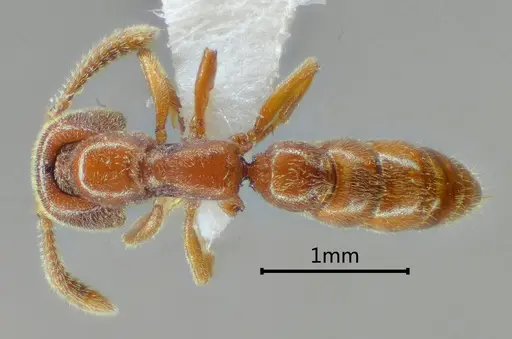
Literatuur
Verspreidingskaart laden...Producten laden...