
Stigmatomma ophthalmicum
- Wetenschappelijke naam
- Stigmatomma ophthalmicum
- Tribus
- Amblyoponini
- Subfamilie
- Amblyoponinae
- Auteur
- Baroni Urbani, 1978
- Verspreiding
- Gevonden in 0 landen
Introductie
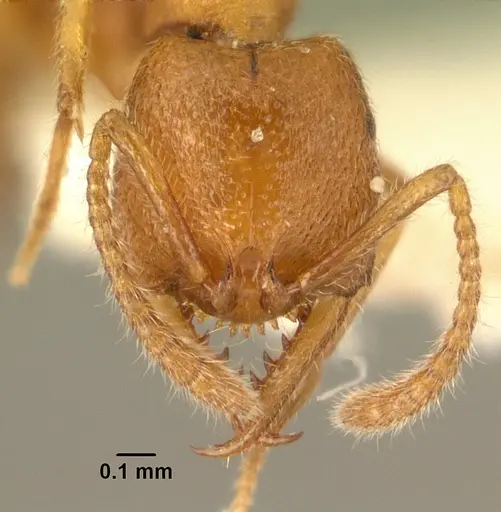
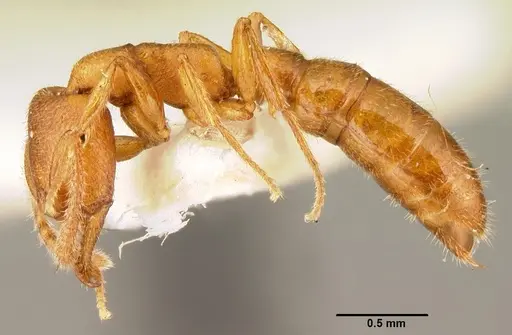
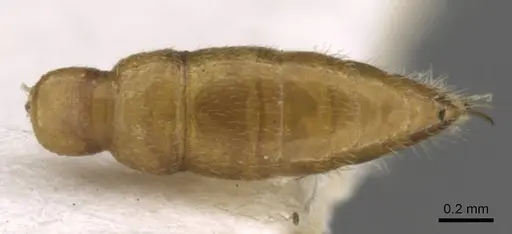
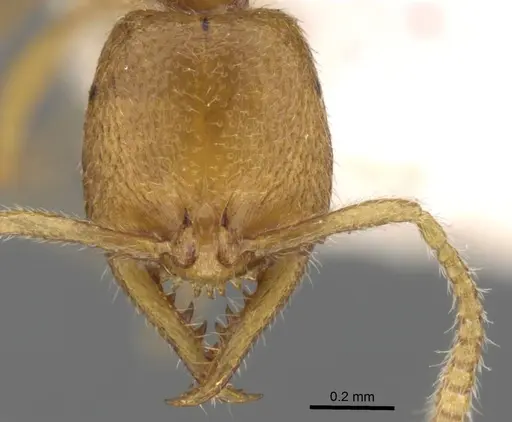
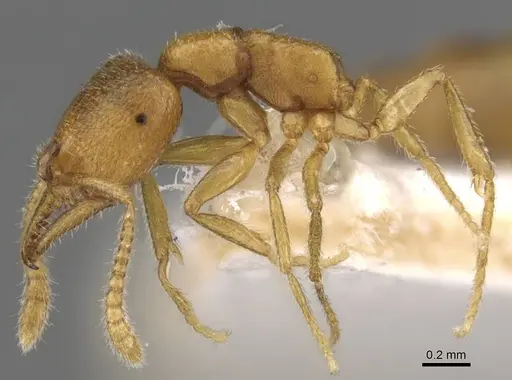
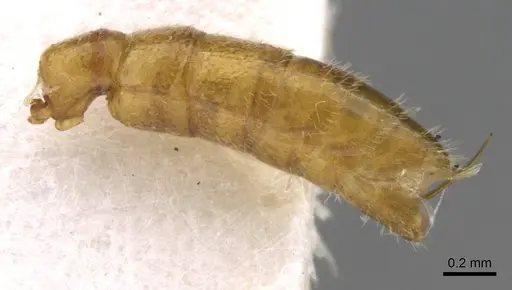
Stigmatomma ophthalmicum is a small, cryptic ant species endemic to Israel, known only from Galilee (Ginosar), the Jordan Valley, and southern Golan . Workers have an elongated trapezoidal head, distinctly longer than broad, with small but visible eyes. The front edge of the clypeus (the plate above the mouth) bears seven teeth, plus an additional tooth on each side . The anterodorsal corner of the petiolar node is rounded, and the subpetiolar process is roughly rectangular in side view . Originally described as Amblyopone ophthalmica in 1978,it was moved to the genus Stigmatomma in 2012 . Very little is known about the biology of this species. It belongs to the subfamily Amblyoponinae, a group of primitive ants that retain functional stingers. Because it is rarely collected and has a very limited natural distribution, almost no captive care data exists. Most of the care guidance below is inferred from related Amblyoponinae species and general principles.
Quick Summary
- Difficulty: Expert
- Origin & Habitat: Endemic to Israel: Galilee (Ginosar), the Jordan Valley, and southern Golan [1][2]. Likely inhabits moist, shaded microhabitats under stones or in soil within Mediterranean climate zones (hot dry summers, mild wet winters).
- Colony Type: Unconfirmed, no data available on queen number or social structure.
- Size & Growth:
- Queen: Unknown, queens have not been described in available literature.
- Worker: Size data unavailable, no body measurements (total length) are recorded for this species.
- Colony: Unknown, no colony size estimates exist for this species.
- Growth: Unknown, no data on colony growth rate.
- Development: Unknown, no developmental timeline data available. (No information exists on brood development for this species. Generalizations from other Amblyoponinae are untested.)
- Antkeeping:
- Temperature: Keep at typical room temperature (22-26°C). Avoid prolonged temperatures above 30°C or below 18°C. Without species-specific data, observe colony response and adjust gradually.
- Humidity: Provide moderate to high humidity: keep the nest substrate consistently moist but not waterlogged. Include a moisture gradient with a slightly drier area so ants can choose.
- Diapause: Unknown. Given its Mediterranean origin, a mild winter rest period may be beneficial, but no specific data exists. If attempted, reduce temperature to 15-18°C for 2-3 months during winter and keep substrate slightly drier. Watch for signs of stress.
- Nesting: Use dark, quiet setups with good moisture retention. Naturalistic nests (soil/sand mix with flat stones) or plaster nests work well. Avoid large open chambers. Test tubes are suitable for founding but need careful humidity control.
- Behavior: Shy, cryptic, and strongly photophobic, they avoid light and disturbance. Workers have a functional sting (subfamily trait) but are not aggressive toward humans, stings cause only mild discomfort if handled roughly. Escape risk is moderate due to small size. Activity is likely nocturnal or crepuscular.
- Common Issues: very limited availability, this species is rarely collected and almost never available in the hobby, total lack of captive care data, most advice is inferred and may be incorrect, humidity management is critical, too dry or too wet can kill the colony, predatory diet may be difficult to maintain, live prey (small invertebrates) must be provided regularly, sensitivity to disturbance, avoid unnecessary bright light, vibrations, or opening the nest
Species Overview and Identification
Stigmatomma ophthalmicum was first described as Stigmatomma ophthalmicum by Baroni Urbani in 1978 based on workers collected from Ginosar, Israel [2]. In 2012 it was transferred to the genus Stigmatomma following a revision of Malagasy Amblyoponinae [3].
Workers are identified by: an elongated trapezoidal head that is distinctly longer than broad, a clypeus with seven teeth on the anterior margin plus one tooth on each side, small but present eyes, a rounded anterodorsal corner of the petiolar node, and a roughly rectangular subpetiolar process in profile [3].
This species is endemic to Israel, recorded from Galilee, the Jordan Valley, and southern Golan [1]. No other confirmed populations exist. It has not been studied in captivity.
Housing and Nest Setup
Because no captive data exists for this species, setup advice must be inferred from related Amblyoponinae and general principles. Provide a dark, quiet environment with high humidity. A naturalistic setup with a deep layer of moist soil-sand mix covered by a flat stone mimics likely natural nesting conditions. Plaster or 3D-printed nests with small chambers also work if humidity can be maintained.
Use a test tube with a water reservoir for founding, but ensure the cotton plug stays moist without flooding. Avoid acrylic nests as they dry out too quickly. A small outworld with a thin layer of substrate and a cover (e.g., petri dish with ventilation) helps keep the nest area dark. Offer a moisture gradient by keeping one part of the nest wetter than another. Keep the setup away from direct light and vibrations.
Feeding and Diet
No dietary data is published for Stigmatomma ophthalmicum. Based on the subfamily (Amblyoponinae), it is likely a specialist predator of small soil invertebrates. In captivity, offer live prey such as springtails, fruit flies, or pinhead crickets. Prey items must be small enough for workers to handle.
It is unknown whether this species accepts sugar solutions or honey water. Focus on providing a varied protein source. Feed small amounts every 2-3 days and remove uneaten prey after 24 hours to prevent mold. Colonies may refuse food if stressed, in that case, reduce disturbance and check humidity.
Temperature and Seasonal Care
Without species-specific data, maintain a stable temperature of 22-26°C. Avoid sudden fluctuations or extremes. Mediterranean ants often tolerate a winter cooling period, but whether S. ophthalmicum requires diapause is unknown. If you choose to offer a rest, gradually lower temperature to 15-18°C for 2-3 months during winter, keeping the substrate slightly drier. Resume normal temperatures slowly in spring. Monitor colony behavior: if workers become inactive or brood stops developing, adjust accordingly.
Behavior and Colony Dynamics
Published observations are limited to taxonomic notes. Like other Amblyoponinae, workers have a functional sting and are likely shy, remaining hidden in the nest. They probably hunt by ambushing small prey in the dark. Colonies are expected to be small and slow-growing, but this is speculation. Avoid frequent disturbance, especially during founding. Do not expect visible foraging trails or outworld activity, this species likely stays in the nest unless hunting.
Frequently Asked Questions
Is Stigmatomma ophthalmicum a good species for beginners?
No. This species is only for expert keepers because: it is rarely available, virtually nothing is known about its captive care, it requires live prey, and maintaining proper humidity is tricky without species-specific guidance.
What do Stigmatomma ophthalmicum ants eat?
Their natural diet is undocumented. Based on the subfamily, they likely prey on small soil invertebrates. In captivity, offer live springtails, fruit flies, or other tiny arthropods. It is unknown if they accept sugars.
How long does it take for Stigmatomma ophthalmicum to raise first workers?
Unknown. No developmental data exists for this species. Any claimed timeline (e.g.,8-12 weeks) would be pure speculation.
Do Stigmatomma ophthalmicum ants sting?
Yes, the subfamily Amblyoponinae has functional stingers. Workers can sting defensively if handled roughly, but the sting is weak and causes only mild, temporary discomfort.
What temperature do Stigmatomma ophthalmicum need?
No specific data exists. A safe starting range is 22-26°C. Avoid extremes. Whether they need a winter diapause is unknown but possible given their Mediterranean origin.
How big do Stigmatomma ophthalmicum colonies get?
Unknown. No colony size data has been published. Related Amblyoponinae usually have small colonies (tens to low hundreds), but this is conjecture.
Can I keep multiple Stigmatomma ophthalmicum queens together?
No information exists. Polygyny (multiple queens) has not been documented for this species. It is safest to assume single-queen colonies until proven otherwise.
Do Stigmatomma ophthalmicum need hibernation?
Unknown. A mild winter rest (15-18°C for 2-3 months) may benefit colonies, but there is no confirmation. Monitor the colony and provide a gradual temperature drop if you choose to try.
Where is Stigmatomma ophthalmicum found in the wild?
Only in Israel: Galilee (Ginosar), the Jordan Valley, and southern Golan [1]. It is considered endemic to the Levant region.
Why is Stigmatomma ophthalmicum so hard to find for sale?
The species has an extremely limited natural range (only Israel) and is rarely collected. No commercial breeding exists. It is virtually never available in the ant-keeping hobby.
Report an Issue
The current care sheet is based fully on literature. See inconsistencies, or something that's incorrect? Please , it will be resolved after review from an admin. Contributing to the blogs tab also helps providing information, to make us be able to further improve the caresheets. Thank you for your support!
References

Dit verzorgingsblad is gelicentieerd onder CC BY-SA 4.0 .
Community-blogs
CASENT0101746
Bekijk op AntWeb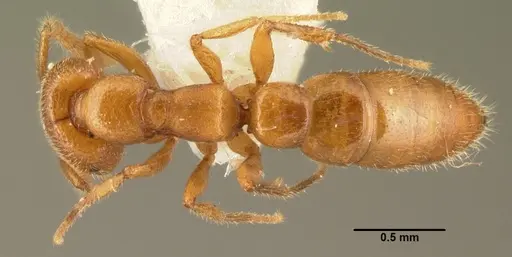
CASENT0906832
Bekijk op AntWeb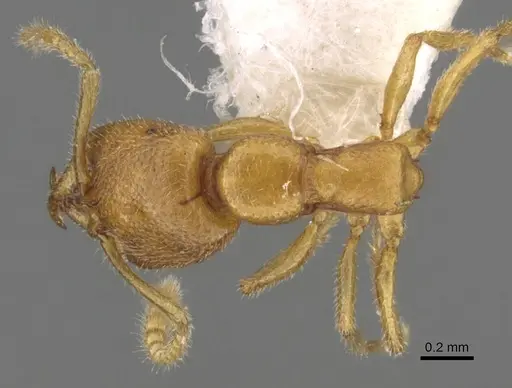
Literatuur
Verspreidingskaart laden...Producten laden...