
Solenopsis weyrauchi
- Wetenschappelijke naam
- Solenopsis weyrauchi
- Tribus
- Solenopsidini
- Subfamilie
- Myrmicinae
- Auteur
- Trager, 1991
- Verspreiding
- Gevonden in 1 landen
Introductie
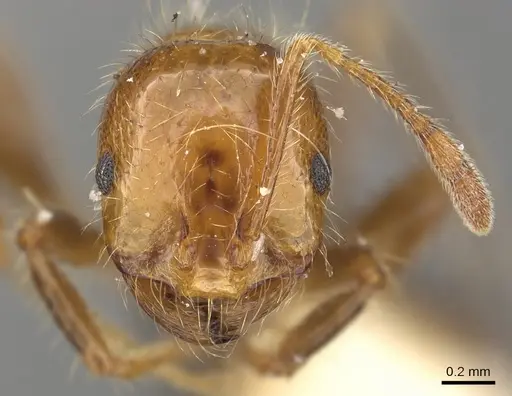
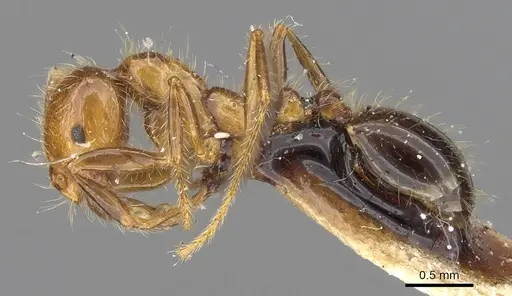
Solenopsis weyrauchi is a fire ant from the high Andes of Peru and Bolivia, found at elevations of 2,000-3,500 m . Workers have a distinctive two‑tone color: the head and thorax are reddish‑yellow, the gaster dark brown to black. Major workers also show a median frontal streak and two small spots on the first abdominal segment . This species belongs to the Solenopsis saevissima group, which includes several well‑known fire ants . Curiously, only the worker caste has ever been studied - queens, males, and colony founding are completely unknown .
Quick Summary
- Difficulty: Medium
- Origin & Habitat: Highlands of the Peruvian and Bolivian Andes at 2,000-3,500 m elevation. The type locality is Cajamarca, Peru (≈2,500-2,800 m) [1]. The range likely extends throughout the Andes from Peru to Bolivia, possibly as far north as Colombia and south as Argentina and Chile [1][3].
- Colony Type: Unconfirmed, only workers have been described, so colony structure is unknown [2].
- Size & Growth:
- Queen: Undescribed, no scientific measurements available [2]
- Worker: Size not specified in the available literature [1], description focuses on morphology rather than body length
- Colony: Unknown, no colony size data published
- Growth: Unknown
- Development: No published observations, development time is unconfirmed (Because no captive‑breeding records exist, all development estimates would be pure speculation.)
- Antkeeping:
- Temperature: Based on the cool high‑altitude habitat, aim for moderate temperatures around 20-24 °C. Avoid overheating, this species likely tolerates cooler conditions than tropical fire ants [1].
- Humidity: No specific data. For most fire ants, keep the nesting substrate moderately moist but not waterlogged. A gradient from dry to wet allows the ants to choose.
- Diapause: Unknown, no published information. The high‑altitude origin suggests cold tolerance, but overwintering requirements are unconfirmed [1].
- Nesting: No species‑specific data. Typical Solenopsis nest in soil with moderate moisture. A test‑tube setup or a Y‑tong/plaster nest with a moist chamber should work. Escape prevention is critical, fire ants are expert escape artists.
- Behavior: This ant has a functional stinger typical of the Myrmicinae subfamily and will use it when threatened. Expect active foraging and a defensive colony. Because all care recommendations come from related species, expect to adjust conditions based on your colony's behavior.
- Common Issues: nearly everything about captive care is unknown, you must infer from related species and adapt quickly, escape prevention is critical, this ant will exploit any gap (use a tight lid with fluon or oil barriers), stinger can deliver a painful sting, wear gloves and work over a tray, limited availability of scientific data means you cannot rely on species‑specific guides, high‑altitude origin suggests poor heat tolerance, keep temperatures moderate
Temperature & Environment
This ant comes from the cool, high‑elevation Andes (2,000-3,500 m) [1]. That means it likely prefers temperatures on the lower side of typical fire‑ant ranges. Start at 20-24 °C and watch your colony: if workers become sluggish, warm it slightly, if they avoid the nest and gather near edges, it’s too hot. Avoid direct sunlight or heat sources, over‑heating can kill this species quickly. A temperature gradient inside the nest (warm one end, cool the other) lets them pick their comfort zone.
Housing & Nesting
No nesting data exists for this species, but most fire ants like moist soil [1]. A test tube with a water reservoir works well for a starting colony. For larger colonies, use a Y‑tong (AAC) or plaster nest with a permanently moist chamber. The substrate should be damp but never waterlogged, standing water leads to mold. Because we know so little, providing a moisture gradient gives the ants freedom to choose. Escape prevention is absolutely critical: fire ants squeeze through tiny gaps, so seal every seam and use a tight lid with fluon or mineral‑oil barrier.
Feeding & Diet
Published feeding observations are absent. As a fire ant, Solenopsis weyrauchi is almost certainly omnivorous. Offer small insects (fruit flies, pin‑head crickets, mealworms) as protein, plus sugar water or honey for carbohydrates. In the wild they probably also collect seeds and tend aphids for honeydew. Offer tiny amounts at first and remove leftovers after 24-48 hours to prevent mold. Always provide a clean water source (a test‑tube reservoir or a water tower).
Behavior & Temperament
Solenopsis weyrauchi belongs to a sting‑bearing subfamily (Myrmicinae). It will sting when handled or disturbed. Fire‑ant stings are painful and cause local swelling, always use caution. Workers are active foragers and likely defend the colony aggressively. Major workers have large heads and strong mandibles for processing food. Because no direct observations exist, we assume behaviour similar to other saevissima‑group fire ants. The high‑altitude environment may make them less heat‑tolerant and possibly less aggressive than tropical relatives, but that’s unconfirmed. [1]
Knowledge Gaps
This is one of the least‑studied fire ants in the world. Only the worker caste has been formally described, we have no descriptions of queens, males, colony founding, or natural history [2]. The original 1991 description used just 47 workers, and the 2018 revision added more specimens but still focused only on morphology [1]. Almost everything about captive care (temperature, humidity, founding type, growth rate) is inferred from related species. Keepers must be ready to experiment and adjust based on what their colony actually does, because species‑specific literature is nearly nonexistent.
Ethical & Legal Considerations
This ant is native to the Andes of South America and should never be released elsewhere. Fire ants are among the most damaging invasive species worldwide. Even if Solenopsis weyrauchi is not yet proven invasive, it poses a risk if it escapes. If you can no longer keep your colony, humanely freeze the ants and dispose of them. Do not give them to someone who might accidentally release them. Check your local laws, some countries require permits for keeping non‑native ants.
Frequently Asked Questions
How do I keep Solenopsis weyrauchi ants?
Use a test-tube setup for a founding colony (if you ever get a queen) and move them to a Y‑tong or plaster nest once the colony grows. Keep temperatures moderate (20-24°C), the nest substrate slightly damp, and offer a varied diet of small insects and sugar water. Escape prevention is vital, seal every gap.
What do Solenopsis weyrauchi eat?
No specific data, but fire ants are omnivorous. Offer protein (small insects like fruit flies, pinhead crickets) and carbohydrates (sugar water, honey). Remove uneaten food after 24-48 hours to prevent mold.
Do Solenopsis weyrauchi ants sting?
Yes, as a member of the sting‑bearing subfamily Myrmicinae, it can sting. Fire ant stings are painful, so handle with care and wear gloves when necessary.
What temperature do Andean fire ants need?
Based on their high‑altitude habitat (2,000-3,500 m), they likely prefer moderate temperatures around 20-24°C. Avoid overheating, they probably can’t handle the high heat typical of tropical fire ants [1].
How long does it take for Solenopsis weyrauchi to develop from egg to worker?
Unconfirmed, no observations exist. Any number would be pure speculation. If you keep this species, record your own observations and share them with the ant‑keeping community.
Are Solenopsis weyrauchi good for beginners?
No, too little is known about their captive care. Beginners should start with a well‑documented species (e.g., Lasius niger, Messor barbarus) before attempting a species with so many unknowns.
Where is Solenopsis weyrauchi found in the wild?
In the high Andes of Peru and Bolivia at 2,000-3,500 m elevation. The type locality is Cajamarca, Peru. The range may extend from Colombia to northern Chile and Argentina [1][3].
How big do Solenopsis weyrauchi colonies get?
Unknown, no colony size data exists. Related fire ants can have tens of thousands of workers, but that’s speculation for this species.
Can I keep multiple Solenopsis weyrauchi queens together?
Not recommended because colony structure is entirely unconfirmed. Avoid attempting pleometrosis (multiple‑queen founding) unless future research shows it works for this species.
Do Solenopsis weyrauchi need hibernation?
Unknown, no data on overwintering. The high‑altitude habitat suggests cold tolerance, but specific diapause needs are not documented. Keep a stable temperature year‑round and watch for seasonal changes in activity.
Why is so little known about Solenopsis weyrauchi?
Only workers have been studied, queens, males, and colony biology are still undescribed [2]. The remote Andean habitat has limited collection and research, so almost no captive or field observations exist [1].
Is Solenopsis weyrauchi invasive?
This species is not currently considered invasive, but fire ants are among the worst invaders globally. Never release any ant outside its native range, humanely dispose of unwanted colonies.
Report an Issue
The current care sheet is based fully on literature. See inconsistencies, or something that's incorrect? Please , it will be resolved after review from an admin. Contributing to the blogs tab also helps providing information, to make us be able to further improve the caresheets. Thank you for your support!
References

Dit verzorgingsblad is gelicentieerd onder CC BY-SA 4.0 .
Community-blogs
CASENT0902356
Bekijk op AntWeb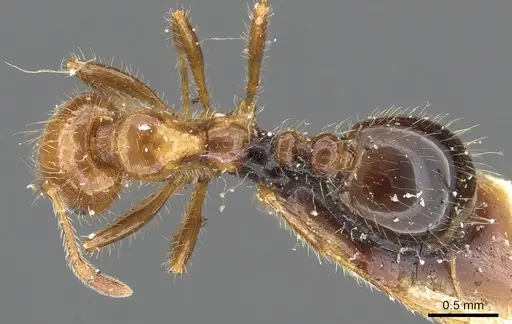
Literatuur
Verspreidingskaart laden...Producten laden...