
Solenopsis westwoodi
- Wetenschappelijke naam
- Solenopsis westwoodi
- Tribus
- Solenopsidini
- Subfamilie
- Myrmicinae
- Auteur
- Forel, 1894
- Verspreiding
- Gevonden in 1 landen
Introductie
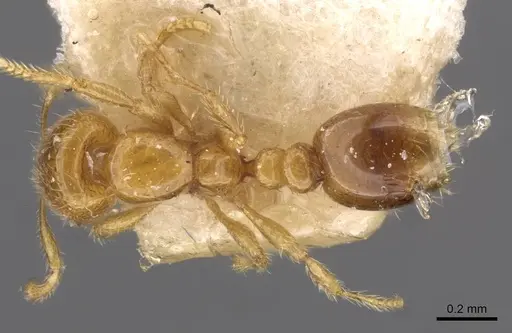
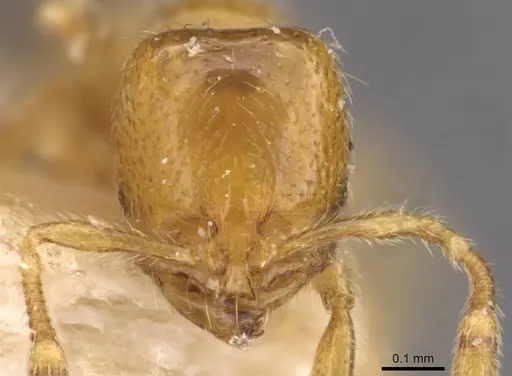
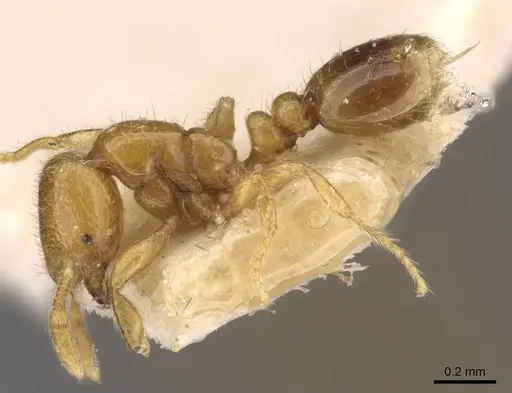
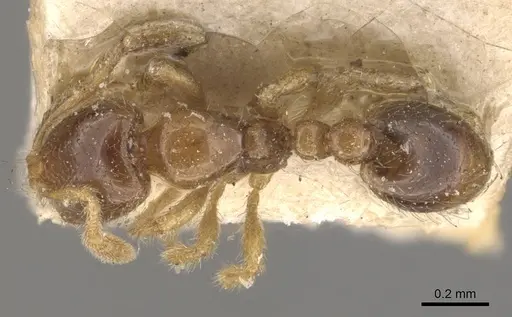
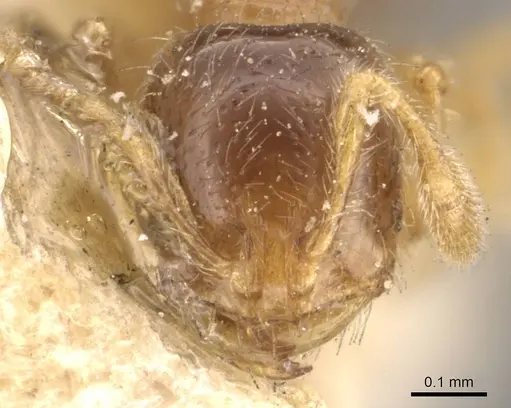
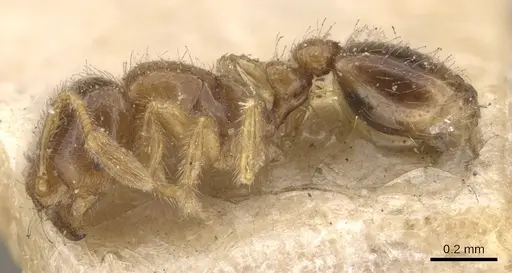
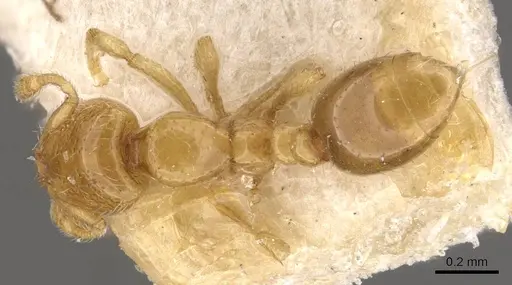
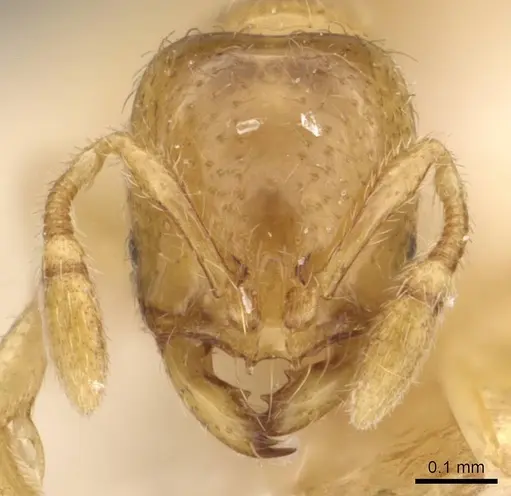
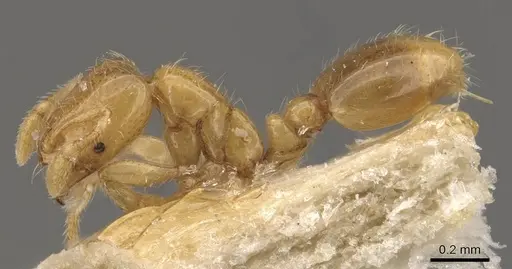
Solenopsis westwoodi is a small thief ant belonging to the Solenopsis fugax species complex. Workers measure just 1.44-1.56 mm and are medium brown, while queens are larger at about 4 mm and have a distinctive golden brown body with yellowish appendages . The species is found across Argentina, Paraguay, and southern Brazil, where it nests in close association with other ant species - particularly leafcutter ants (Atta and Acromyrmex) . This close association with host colonies is characteristic of thief ants, which specialize in stealing food and resources from their neighbors. What makes them interesting is their kleptoparasitic lifestyle: using their tiny size and stealth to infiltrate nearby nests and make off with brood, food stores, or other resources. The workers have well-developed clypeal teeth that help with this specialized feeding strategy .
Quick Summary
- Difficulty: Medium
- Origin & Habitat: Argentina, Paraguay, and southern Brazil. In the wild, these ants are typically found nesting in association with leafcutter ants (Atta and Acromyrmex) in the Buenos Aires region and surrounding areas [1]. They prefer warm, humid Neotropical environments.
- Colony Type: Colony structure is not documented in scientific literature. Keepers should assume single-queen colonies until proven otherwise, but this is unconfirmed.
- Size & Growth:
- Queen: ~4 mm (total length) [1]
- Worker: 1.44-1.56 mm (total length) [1]
- Colony: Unknown, likely small to moderate (under 500 workers) based on related thief ants, but specific data is unavailable.
- Growth: Moderate, based on typical Solenopsis development patterns.
- Development: Estimated 6-10 weeks at optimal temperatures (based on related Solenopsis species), specific data for S. westwoodi is not available. (Development time is unconfirmed for this species. Keep conditions stable and observe.)
- Antkeeping:
- Temperature: Keep at 24-28°C. These are Neotropical ants that prefer warm conditions. A heating cable on one side of the nest can create a suitable gradient.
- Humidity: High humidity is essential, keep the nest substrate consistently moist but not waterlogged. A water reservoir or test tube setup works well. Avoid letting condensation pool.
- Diapause: Not required. As a Neotropical species from Argentina, Brazil, and Paraguay, they do not experience harsh winters and do not need a diapause period.
- Nesting: Y-tong (AAC) nests, plaster nests, or test tube setups work well for these small ants. They prefer tight, humid chambers. Given their association with leafcutter ants in the wild, they may benefit from a naturalistic setup with multiple connected chambers, but open spaces should be avoided.
- Behavior: These are shy, secretive ants that prefer to stay hidden. Workers are tiny (under 2 mm) and very quick-moving. They have a sting (typical for Solenopsidini) but are not aggressive and will flee rather than fight. Their main defense is escaping and hiding. Escape prevention is critical due to their tiny size, they can slip through standard barriers. They are primarily nocturnal and will establish foraging trails to nearby food sources.
- Common Issues: escape prevention is critical due to their tiny 1.5 mm worker size, use fine mesh, fluon barriers, and tight-fitting lids, colonies may be difficult to establish from queen alone because founding behavior is unconfirmed, queens likely need dark, undisturbed conditions, high humidity requirements can lead to mold if ventilation is poor, ensure airflow while maintaining humidity, their kleptoparasitic nature may make them shy about foraging in open spaces, offer food near nest entrances and provide cover, their small size makes them vulnerable to drowning in open water sources, use cotton-plugged test tubes or sponges
Housing and Nest Setup
Use small, tight enclosures due to the tiny worker size (1.44-1.56 mm). A Y-tong (AAC) formicarium with narrow chambers works well, tight spaces mimic their natural nesting near host ant colonies. Alternatively, a well-humidified test tube setup works for founding colonies. Provide a humidity gradient by placing a water reservoir on one end of the nest. Avoid large open areas, these shy ants will avoid exposed spaces and may not forage properly. Escape prevention is critical: use fluon barriers on all surfaces and seal every connection, these ants can slip through gaps that would stop larger ants [1].
Feeding and Diet
Solenopsis westwoodi is a thief ant that specializes in stealing food from other ant colonies, particularly leafcutter ants like Atta and Acromyrmex, in whose nests they have been found [1]. In captivity, offer small protein sources such as fruit flies, pinhead crickets, or tiny mealworm pieces. They also accept sugar water or honey. Because of their tiny size, food must be appropriately sized, even a small mealworm piece may be too large. Feed small amounts every 2-3 days and remove leftovers within 24 hours to prevent mold. Their feeding behavior is secretive, place food near nest entrances and provide dark covers to encourage foraging.
Temperature and Humidity
These Neotropical ants need warm, humid conditions. Keep the nest area at 24-28°C. Use a heating cable on one side of the nest to create a gentle gradient if your room is cooler. Place the heating on top of the nest, not underneath, to avoid drying out the substrate too quickly. Humidity should be high, keep the substrate consistently moist but not waterlogged. Use a cotton-plugged test tube with a water section or a connected water reservoir. Mist the nest occasionally, but avoid condensation that can drown small ants. Good ventilation is essential to prevent mold while maintaining humidity, small holes or mesh panels work well.
Colony Development
Queens measure about 4 mm and are golden brown with yellowish appendages [1]. Founding behavior is unconfirmed, it is not known whether queens are claustral or semi-claustral. Keepers should provide a small, dark, sealed chamber for the queen and disturb her as little as possible during founding. Do not offer food until workers appear, as she may be sealed away. After the first workers (nanitics) emerge, colony growth is likely moderate, with several hundred workers at maturity. Be patient, the founding stage can be slow [1].
Behavior and Temperament
These are shy, non-aggressive ants. They have a sting (typical of Solenopsidini) but are unlikely to use it on humans, they prefer to flee and hide. Workers are fast-moving and will retreat if disturbed. They are primarily nocturnal, so most activity will be in the evening. Their kleptoparasitic nature means they may establish hidden foraging trails and investigate other ant colonies if present. Their tiny size demands excellent escape prevention, they can squeeze through remarkably small gaps. Provide plenty of dark, covered spaces in the nest to make them feel secure [1].
Frequently Asked Questions
How long does it take for Solenopsis westwoodi to raise first workers?
This is not specifically documented for S. westwoodi. Based on related Solenopsis species, expect 6-10 weeks from egg to first worker at 24-28°C. Monitor your colony and adjust temperature if needed.
Can I keep multiple Solenopsis westwoodi queens together?
Colony structure is unknown for this species. It is safest to house queens separately to avoid fighting. If you attempt pleometrosis (co-founding), be prepared to separate them if aggression occurs.
What do I feed Solenopsis westwoodi?
Offer small protein sources like fruit flies, tiny crickets, or small mealworm pieces. They also accept sugar water or honey. Make sure food is appropriately sized for their tiny (1.5 mm) workers. Remove uneaten food within 24 hours to prevent mold.
Are Solenopsis westwoodi good for beginners?
This species is rated medium difficulty. They require excellent escape prevention due to their tiny size, and they need stable warm, humid conditions. Their secretive nature can also make monitoring tricky. They are not aggressive, so they are safe, but complete beginners may find them challenging.
Do Solenopsis westwoodi need hibernation?
No, as a Neotropical species from Argentina, Brazil, and Paraguay, they do not need diapause. Keep them warm and active year-round.
Why are my Solenopsis westwoodi escaping?
Their tiny 1.5 mm size means they can slip through gaps that stop larger ants. Use fluon or PTFE barriers on all surfaces, ensure lids fit tightly, and seal tube connections with cotton or tape. Check ventilation holes, use fine mesh (0.1 mm openings) to block them.
How big do Solenopsis westwoodi colonies get?
There are no published colony size data for this species. Based on related thief ants, they likely reach several hundred workers at maturity. They are not known to form large colonies.
When will my queen lay eggs?
Founding behavior is unconfirmed. If the queen is claustral, she may lay eggs within 1-2 weeks of sealing herself in. If semi-claustral, she may lay eggs only if food is available. Give her a dark, undisturbed space and check only after several weeks. Patience is key.
Report an Issue
The current care sheet is based fully on literature. See inconsistencies, or something that's incorrect? Please , it will be resolved after review from an admin. Contributing to the blogs tab also helps providing information, to make us be able to further improve the caresheets. Thank you for your support!
References

Dit verzorgingsblad is gelicentieerd onder CC BY-SA 4.0 .
Community-blogs
Literatuur
Verspreidingskaart laden...Producten laden...