
Solenopsis nigella
- Wetenschappelijke naam
- Solenopsis nigella
- Tribus
- Solenopsidini
- Subfamilie
- Myrmicinae
- Auteur
- Emery, 1888
- Verspreiding
- Gevonden in 0 landen
Introductie
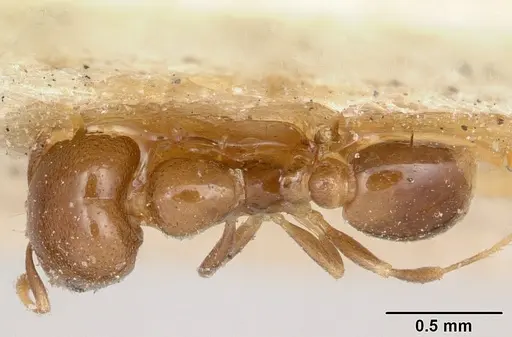
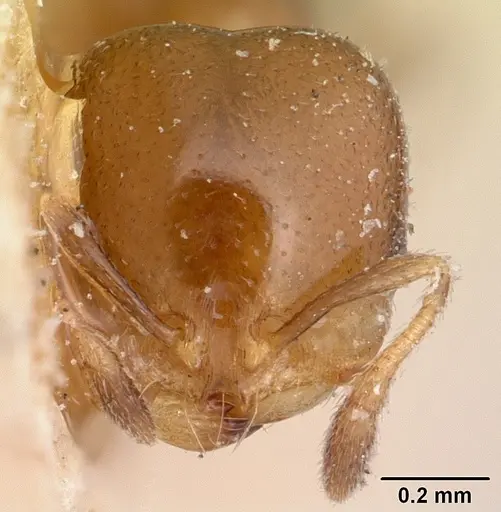
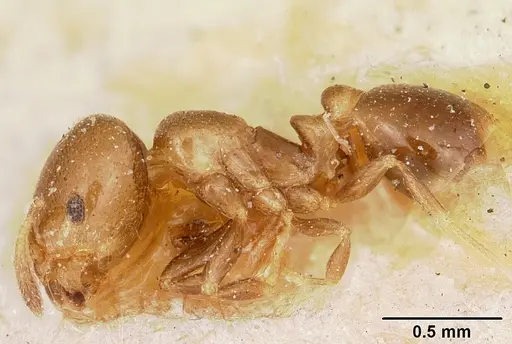
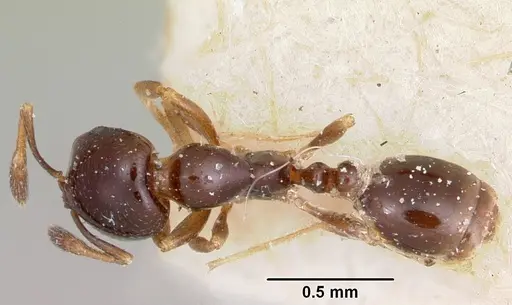
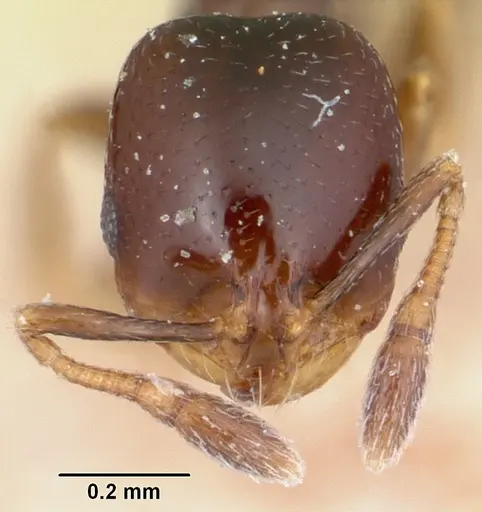
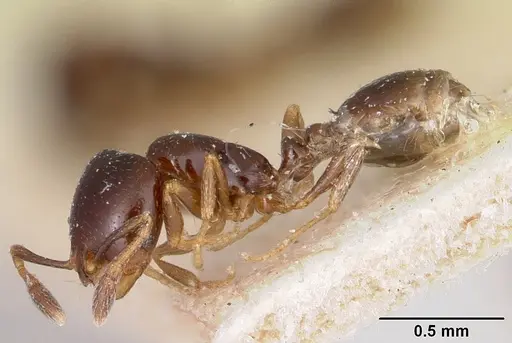
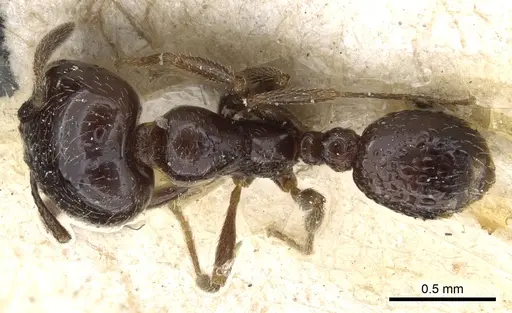
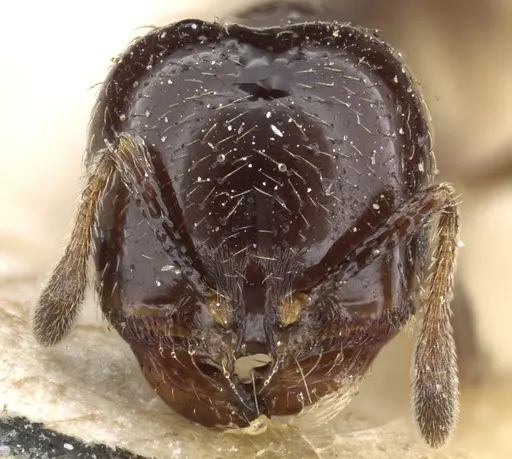
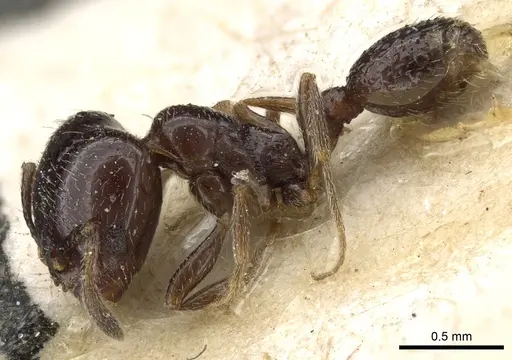
Solenopsis nigella is a tiny thief ant from South America, found in Argentina, Brazil, and Uruguay . Workers are just under 2 mm long (1.92 mm) and have a shiny golden-brown body with a relatively large head and small eyes (30-35 ommatidia) . They belong to the Solenopsis nigella species complex and are closely related to fire ants, though they are much smaller and less aggressive . In the wild, they forage on sand and are classified as Tropical Climate Specialists . Their biology is poorly known - males have never been collected, and the species may be polymorphic (having both major and minor workers) .
Quick Summary
- Difficulty: Medium
- Origin & Habitat: Argentina, Brazil (Rio Grande do Sul, Mato Grosso do Sul), and Uruguay, tropical and subtropical sandy areas where they forage on sand [1][2][3].
- Colony Type: Unconfirmed, colony structure and queen number are not documented in available research.
- Size & Growth:
- Queen: Unknown, queen has been described but no size measurements are available [3]. Estimate from related Solenopsis is not reliable.
- Worker: ~1.92 mm total length [3]
- Colony: Unknown, no colony size data exists for this species.
- Growth: Unknown, no growth rate studies have been done on this species.
- Development: Unknown, development time has not been studied. (As a tropical species, development likely requires warm temperatures year-round, but exact timing is unknown.)
- Antkeeping:
- Temperature: Unknown, based on tropical classification, keep warm (24-28°C is a reasonable guess), but no direct studies exist [2].
- Humidity: Unknown, natural habitat is sandy and likely dry to moderately moist. Provide a gradient with one damp area and one dry area.
- Diapause: No, as a tropical species from southern Brazil and Argentina, no winter diapause is needed [2].
- Nesting: Unknown, they likely nest in soil or sand. In captivity, a small test tube or mini formicarium with sand-based substrate works well. Their tiny size requires tight chambers and extremely fine escape barriers.
- Behavior: Very small and shy. They are thief ants, so they may raid other colonies or scavenge. They are not aggressive to humans and rarely sting. Their tiny size makes escape prevention critical, they can slip through standard mesh or small gaps.
- Common Issues: escape prevention is critical, they are under 2 mm and can squeeze through any gap wider than about 0.5 mm., extreme lack of research means almost all care advice is guesswork, expect surprises and be ready to adapt., tropical warmth is required year-round, cold temperatures can kill them quickly., their small size makes them vulnerable to mites and other pests, check regularly., wild-caught colonies may have unknown parasites, quarantine new colonies.
Housing and Setup
Because these ants are tiny (under 2 mm), your setup must be escape-proof. A narrow test tube with a cotton water reservoir works well for a small colony. Use a formicarium with very fine sand or soil substrate. Avoid any gaps larger than 0.5 mm, standard insect mesh may not hold them. Instead, apply a thin layer of fluon or use a tight-fitting lid. Keep the nest area warm and provide a humidity gradient (one damp area, one dry). Avoid acrylic nests, choose plaster, Y-tong (AAC), or 3D-printed nest with tiny chambers. [2][3]
Temperature and Heating
No precise temperature data exists for this species, but as a Tropical Climate Specialist, it needs warmth year-round [2]. A good starting point is 24-28°C (75-82°F), use a heat mat on one side of the nest to create a gradient. Avoid going below 20°C for long periods. No winter cooling is needed. Monitor temperature with a thermometer and adjust based on ant activity: if they become sluggish, raise the temperature slightly.
Feeding and Diet
Like other Solenopsis, these ants are omnivorous but prefer protein. Offer tiny prey, fruit flies, small mealworm pieces, or microworms. For sugars, use diluted honey or sugar water on a cotton ball. Feed small amounts every 2-3 days and remove leftovers to prevent mold. Always provide fresh water in a small test tube or via a water dispenser. Their tiny mandibles cannot handle large prey, so everything must be chopped small. [3]
Colony Development
Because almost nothing is known about Solenopsis nigella development, you must be patient. The queen lays eggs, larvae hatch, and workers eventually emerge. The timeline is unknown, expect at least several weeks, possibly months. The species may have two worker sizes (majors and minors), so do not be alarmed by size variation [3]. Keep disturbance to a minimum, especially in the early stages.
Behavior and Temperament
These ants are non-aggressive to humans and prefer to hide. They are thief ants by nature, so they may try to steal brood from other ant colonies, but in captivity you do not need to provide rivals. Their sting is very weak and not a concern. They are most active when warm and will explore their outworld. Because they are so small, handle with care, even a gentle vibration can stress them. Avoid shaking or moving the nest frequently.
Frequently Asked Questions
How long does it take for Solenopsis nigella to produce first workers?
Unknown, development time has not been studied for this species. Based on related tropical Solenopsis, it may take several weeks, but no reliable estimate exists.
What size colony does Solenopsis nigella reach?
Unknown, no colony size data is available for this species.
What temperature do Solenopsis nigella need?
No precise data, but as a Tropical Climate Specialist, they need warmth year-round. A good range is 24-28°C (75-82°F). No diapause is required [2].
Are Solenopsis nigella good for beginners?
Not really, their tiny size, unknown care requirements, and difficulty preventing escape make them better for intermediate antkeepers who enjoy a challenge.
What do Solenopsis nigella eat?
Offer tiny protein sources (fruit flies, small mealworm pieces) and sugary liquids (diluted honey). Feed small portions every few days.
How do I house Solenopsis nigella?
Use a small test tube or a formicarium with very fine sand substrate. Escape prevention is critical, seal all gaps with fine mesh or fluon. Avoid acrylic nests.
Where is Solenopsis nigella found?
Argentina, Brazil (Rio Grande do Sul, Mato Grosso do Sul), and Uruguay, in sandy tropical and subtropical areas [1][2][3].
Is Solenopsis nigella related to fire ants?
Yes, it belongs to the same genus and is sister to the Solenopsis geminata species group of fire ants. But it is much smaller and less aggressive [4][6].
Do Solenopsis nigella need hibernation?
No, they are tropical ants and do not require winter diapause. Keep them warm all year [2].
Report an Issue
The current care sheet is based fully on literature. See inconsistencies, or something that's incorrect? Please , it will be resolved after review from an admin. Contributing to the blogs tab also helps providing information, to make us be able to further improve the caresheets. Thank you for your support!
References

Dit verzorgingsblad is gelicentieerd onder CC BY-SA 4.0 .
Community-blogs
Literatuur
Verspreidingskaart laden...Producten laden...