
Solenopsis lusitanica
- Wetenschappelijke naam
- Solenopsis lusitanica
- Tribus
- Solenopsidini
- Subfamilie
- Myrmicinae
- Auteur
- Emery, 1915
- Verspreiding
- Gevonden in 5 landen
Introductie
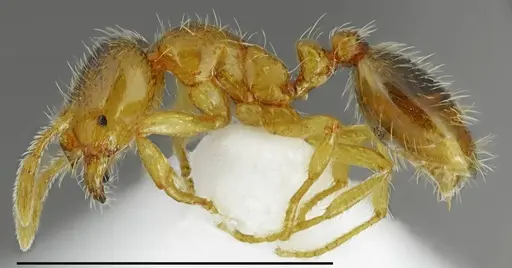
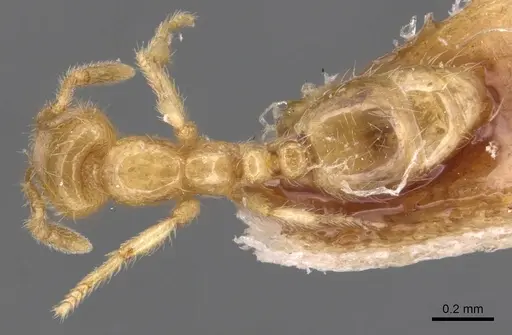
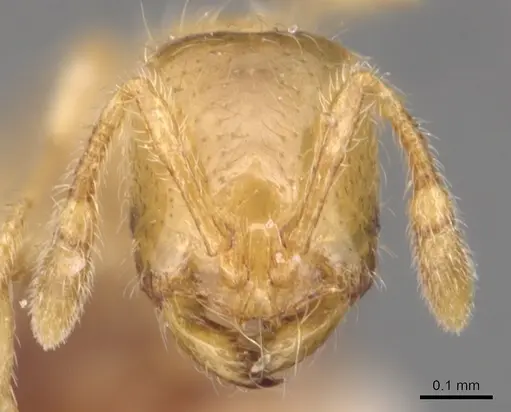
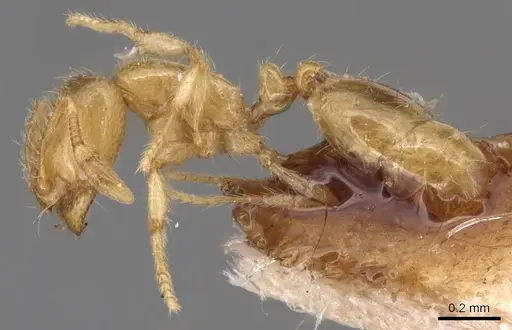
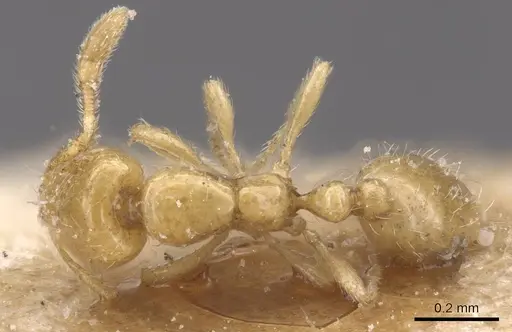
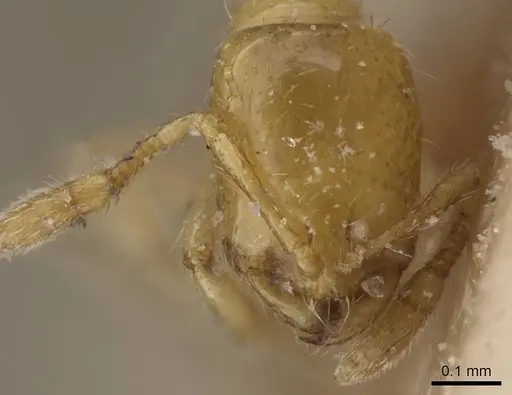
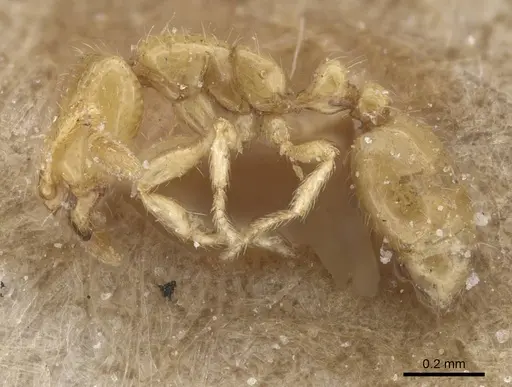
Solenopsis lusitanica is a tiny ant native to the western Mediterranean, found in Portugal, Spain, France, Italy (including Sardinia and the Tuscan Archipelago), and Morocco . They belong to a species group that needs a taxonomic overhaul, they look a lot like the common thief ant Solenopsis fugax but are smaller overall . Workers are pale golden-yellow to light brown, with major workers often having slightly darker heads. Total body length hasn't been measured, but head width runs about 0.4 mm in minors and 0.48 mm in majors . Queens are similar, with head width around 0.81 mm and mesosoma length about 1.5 mm - much smaller than those of Solenopsis fugax . What really sets this ant apart is its colony structure. Researchers found one nest with 20 wingless queens (ergatogynes) alongside the main queen . These ergatogynes vary a lot - some look like mini queens, others like big workers - and they probably act as backup reproductives if the primary queen dies. That's extremely rare in Solenopsis, and it makes the colony tougher to kill.
Quick Summary
- Difficulty: Medium
- Origin & Habitat: Native to the western Mediterranean basin, recorded in Portugal, Spain, France, Italy (including Sardinia and the Tuscan Archipelago), and Morocco [1][2]. Lives in dry, open places like grasslands, scrub, and coastal areas with sparse vegetation and warm, sunny spots.
- Colony Type: Single‑queen colonies (monogyne) with a flexible backup system: numerous ergatogynes (wingless queens) can replace the main queen if she dies [2]. This is unusual for Solenopsis.
- Size & Growth:
- Queen: Size data unavailable, no total length measured. Head width is approx 0.81 mm, mesosoma length approx 1.5 mm [2][3].
- Worker: Size data unavailable, no total length measured. Head width for minors is ~0.4 mm, for majors ~0.48 mm [2].
- Colony: Unknown in the wild, one sampled nest had over 350 workers plus multiple reproductives [2]. Likely reaches a few hundred workers at most.
- Growth: Moderate, direct development data missing, but similar myrmicines take 6-10 weeks.
- Development: Estimated 6-10 weeks based on related Solenopsis species (No direct measurements for S. lusitanica. Temperature likely plays a big role.)
- Antkeeping:
- Temperature: Warm, stable, keep the nest at 22-26 °C. Use a heating cable on one side to create a gradient so workers can choose. Avoid prolonged temps below 15 °C or above 30 °C.
- Humidity: Low to moderate, these ants hail from dry Mediterranean habitats. Keep the nest substrate mostly dry with a small moist area. Let the substrate dry between waterings, too much dampness will kill them.
- Diapause: Yes, as a temperate Mediterranean species, they likely need a winter rest at 10-15 °C for 2-3 months (roughly November-February).
- Nesting: Y‑tong (AAC) nests work well because the chambers are small and the material stays dry. Test tube setups are fine for founding and small colonies. Avoid anything that stays constantly wet.
- Behavior: Thief ant, they naturally raid other colonies for brood and food, but in captivity they'll take any tiny prey. Workers are fast, skittish, and mostly nocturnal. They have a small stinger but the sting is too weak to bother humans. Escape risk is HIGH because of their tiny size, they can slip through the smallest gaps. Use fine mesh (≤0.5 mm) and fluon barriers on all exits. Not aggressive to keepers, but will defend their nest if disturbed.
- Common Issues: escape prevention is critical, workers fit through gaps you think are sealed., too much moisture kills them, they need dry conditions, not damp., colony growth may stall if temperatures drop below 20 °C., wild‑caught colonies are easily misidentified as Solenopsis fugax, verify traits like queen size and pilosity., ergatogynes can confuse keepers unfamiliar with wingless queens, they are normal and not a sign of stress.
Housing and Nest Setup
Because Solenopsis lusitanica is so small, you need to think about scale from day one. Y‑tong (AAC) nests are a great choice, the chambers are naturally tiny and the material helps keep things dry, which this species loves. Test tube setups also work perfectly for founding and small colonies, there's no rush to move them. For any nest, the biggest concern is escape-proofing. Use fluon on all inner surfaces of the outworld, cover every ventilation hole with fine mesh (0.5 mm or smaller), and check seals regularly. One missed gap and you'll have a very small, very fast ant roaming your house. The outworld can be a simple plastic box with a tight lid, keep it simple so you can clean easily.
Feeding and Diet
In the wild these ants raid other nests for brood and food, but in captivity they'll eat anything small enough to handle. Offer a varied diet: tiny live prey like fruit flies, pinhead crickets, or chopped mealworms, also protein jelly and sugar water (honey water or diluted honey). Because the workers are so small, make sure prey is appropriately sized, a whole cricket is useless. Feed small amounts every 2-3 days and remove leftovers after 24 hours to stop mold. Some colonies show more interest in sugars than others, watch what your colony prefers. Always provide a water source with a wet cotton ball or small watering station.
Temperature and Seasonal Care
Keep your S. lusitanica colony warm and stable. The sweet spot is around 22-26 °C during the active season. You can use a heating cable under part of the nest to create a temperature gradient, workers will move to the spot they like best. When winter comes, this Mediterranean species needs a rest period. Reduce the temperature to 10-15 °C for about 2-3 months (November to February works well). During this time the colony will slow way down, just offer water occasionally and a tiny bit of protein once a month. Don't let the nest freeze, and don't keep them warm all winter, skipping diapause can exhaust the queen.
Colony Development and Growth
We don't have solid data on how fast S. lusitanica colonies grow, but based on related thief ants you can expect the first workers after 6-10 weeks in warm conditions. The founding queen will raise the first batch of tiny workers (nanitics) without ever leaving the nest, that's typical claustral behavior. After that, the colony gradually builds up over the first year, possibly reaching a few dozen workers by the end of the season. The really interesting part is the ergatogynes. A single colony can contain up to 20 wingless queens that look like a mix between workers and true queens [2]. These ergatogynes probably act as backup reproductives, if the main queen dies, one of them can take over. That's a rare insurance policy in the ant world.
Frequently Asked Questions
How long does it take for Solenopsis lusitanica to raise first workers?
Expect 6-10 weeks from egg to first worker if you keep them at 22-26 °C. This is based on related Solenopsis species, direct data for S. lusitanica isn't available yet.
Can I keep multiple Solenopsis lusitanica queens together?
No, this species is monogyne (single queen). While they produce ergatogynes within a colony, those are backup reproductives, not extra founding queens. Putting two unrelated queens together will lead to fighting.
What size colony does Solenopsis lusitanica reach?
Colony size isn't well documented. One wild nest had about 350 workers plus several queens and males [2]. In captivity, they probably max out at a few hundred workers, they're not a massive colony species.
Are Solenopsis lusitanica good for beginners?
They're intermediate. The main challenge is their tiny size, escaping is a real risk. If you have experience with escape‑proofing small ants, they're not too demanding. Beginners might struggle with constant security checks.
Do Solenopsis lusitanica need hibernation?
Yes, they need a winter diapause. Cool them to 10-15 °C for 2-3 months (November-February). This matches their natural Mediterranean cycle and keeps them healthy long‑term.
Why are my Solenopsis lusitanica dying?
Most common reasons: escape (check all seals and mesh), too much moisture (dry them out), temperatures too low (keep above 20 °C in active season), or stress from frequent disturbance. Also check for mold, remove uneaten food quickly.
When should I move my colony to a formicarium?
Wait until the colony has at least 50-100 workers. These tiny ants do fine in a test tube for a long time, there's no rush. A Y‑tong nest is ideal when they start to look cramped.
What makes Solenopsis lusitanica different from Solenopsis fugax?
S. lusitanica is smaller, queens have a head width of ~0.81 mm vs. bigger heads in S. fugax. Workers have less body hair, and major workers have darkened heads. Queens also lack the ridges (longitudinal rugae) on the front of the head that S. fugax has [2]. The two species were often confused in the past.
Report an Issue
The current care sheet is based fully on literature. See inconsistencies, or something that's incorrect? Please , it will be resolved after review from an admin. Contributing to the blogs tab also helps providing information, to make us be able to further improve the caresheets. Thank you for your support!
References

Dit verzorgingsblad is gelicentieerd onder CC BY-SA 4.0 .
Community-blogs
Literatuur
Verspreidingskaart laden...Producten laden...