
Simopone inculta
- Wetenschappelijke naam
- Simopone inculta
- Subfamilie
- Dorylinae
- Auteur
- Bolton & Fisher, 2012
- Verspreiding
- Gevonden in 1 landen
Introductie
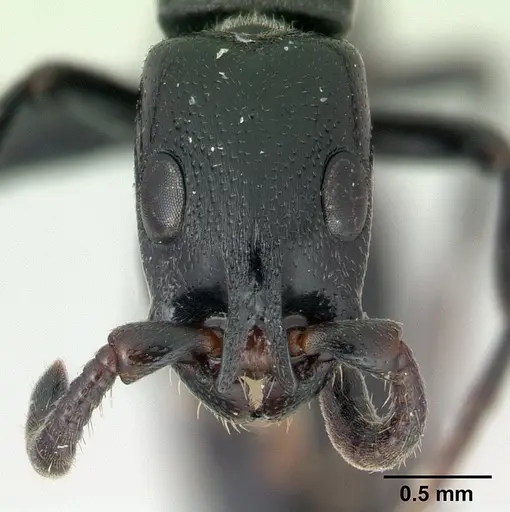
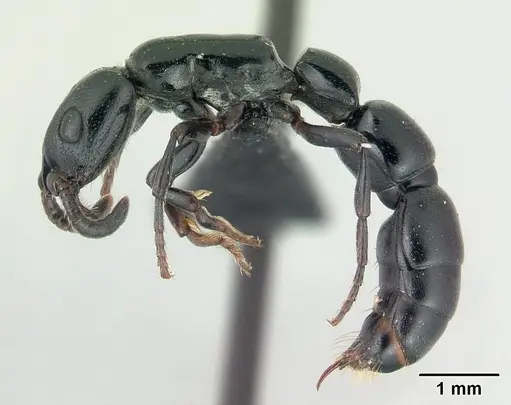
Simopone inculta is a medium-sized predatory ant from Madagascar, belonging to the subfamily Dorylinae. Workers are black with slightly lighter appendages . The frontal lobes project far forward beyond the clypeal margin, and the head and mesosoma have dense fine sculpture . This species was described by Bolton & Fisher in 2012 based on a worker collected in the Montagne Français region of northern Madagascar . This ant lives in tropical dry forest and has been found in low vegetation . Simopone ants are cryptic, slow-moving predators that hunt small invertebrates. Almost nothing is known about their colony structure or captive care, making them a challenging species for experienced keepers.
Quick Summary
- Difficulty: Hard
- Origin & Habitat: Madagascar (Malagasy Region), specifically Prov. Antsiranana, Montagne Français at 180m elevation. Collected from low vegetation in tropical dry forest [1][2].
- Colony Type: Unconfirmed, no data available on queen number or social structure [2].
- Size & Growth:
- Queen: Unknown, no queen specimens have been described, estimated ~6-8mm based on other Simopone species (inferred)
- Worker: ~4-5mm total length (estimated from related Simopone species) [1]
- Colony: Unknown, no colony size data available
- Growth: Unknown
- Development: Unknown, no data available (Development has not been studied for this species.)
- Antkeeping:
- Temperature: Warm year-round,24-28°C (inferred from tropical habitat). Avoid drops below 20°C. Provide a gentle temperature gradient with a heat cable on one side of the nest.
- Humidity: Moderate humidity. Keep nest substrate slightly moist but not waterlogged. Since the species comes from a tropical dry forest, allow for some drier periods, do not keep constantly wet.
- Diapause: Unlikely, as a tropical species from Madagascar, no hibernation needed. Keep warm year-round.
- Nesting: In nature they inhabit low vegetation and decaying wood [2]. In captivity, use a naturalistic setup with soil, rotting wood, and climbing branches. A Y-tong (AAC) or plaster nest with narrow chambers can also work. Avoid large open spaces, workers are small and may feel exposed.
- Behavior: Simopone ants are slow-moving, cryptic predators. They are not aggressive toward humans and rarely sting, but will defend the nest if threatened. They hunt individually or in small groups, searching for small invertebrates. Their small size (~4-5mm) means escape prevention is critical, use fine mesh and tight seals. Activity patterns are unknown, but likely nocturnal or crepuscular [2].
- Common Issues: very limited availability, this species is rarely available in the hobby due to its restricted Madagascar distribution, specialized diet, needs a constant supply of small live prey, which can be hard to maintain, escape risk due to small size, the ants can squeeze through tiny gaps, so excellent escape prevention is essential, unknown exact requirements, any care advice is based on inference, so keepers must experiment carefully, wild-caught stress, most specimens are wild-caught and may die from stress or poor acclimation
Housing and Nest Setup
Because almost nothing is known about the nesting habits of Simopone inculta, setting up a captive nest requires some guesswork. Found a small colony in a standard test tube with a water reservoir, pack the cotton firmly to prevent flooding. Once the colony grows (you'll need to judge by eye), move them to a small naturalistic setup: a container with a layer of soil mixed with decaying wood, topped with leaf litter and climbing twigs [2]. A Y-tong (AAC) or plaster nest with narrow chambers can also work, but avoid acrylic nests. Keep the nest substrate slightly moist (not wet) and provide good ventilation. Because of their small size, use fine mesh and tight lids to prevent escapes.
Feeding and Diet
Simopone inculta is a predator that needs live prey. Offer small invertebrates like fruit flies (Drosophila), springtails, pinhead crickets, and tiny mealworms. Feed 2-3 times a week in amounts the colony can eat within 24 hours. Remove uneaten prey to prevent mold. Sugar sources like honey or sugar water are not essential, though you can offer a tiny drop occasionally, do not rely on them. The key to success is a reliable supply of appropriately sized live prey [2].
Temperature and Seasonal Care
This species comes from the tropics and needs warmth year-round. Keep the nest at 24-28°C (75-82°F). Use a heat cable on one side to create a gradient, allowing the ants to choose their preferred temperature. Never let the temperature drop below 20°C for extended periods, it can stop brood development and stress the colony. No hibernation is needed, simply maintain stable warmth.
Behavior and Colony Dynamics
Simopone ants are cryptic and slow-moving. They are not aggressive and rarely sting, but will defend if cornered. Workers hunt alone or in small groups, not in mass columns like true army ants. The colony likely stays small, but no exact size data exists. All workers appear to be the same size (monomorphic) [1]. Keep an eye on their behavior: if they refuse food or huddle together, check temperature and humidity.
Frequently Asked Questions
How long does it take for Simopone inculta to produce first workers?
There is no documented data. The development time from egg to worker is unknown. If you manage to get a queen, keep her warm (24-28°C) and well-fed with live prey, and observe, but expect uncertainty.
Can I keep Simopone inculta in a test tube?
Yes, test tubes are fine for founding. Use a standard setup: water reservoir with a cotton plug. Keep it humid but not flooded. When the colony outgrows the tube (you'll see many workers and brood filling it), move them to a larger naturalistic enclosure. Do not rely on worker counts since none are documented.
What do Simopone inculta eat?
They eat small live invertebrates. Offer fruit flies, springtails, pinhead crickets, and tiny mealworms. Feed 2-3 times a week. They do not need sugar sources, protein is their main fuel [2].
Are Simopone inculta good for beginners?
No. This species is extremely hard to source, has unknown care requirements, and needs a specialized diet of live prey. It is only for experienced keepers willing to experiment.
How big do Simopone inculta colonies get?
Completely unknown. No colony size data exists for this species or its close relatives. If you manage to keep one, record your observations!
Do Simopone inculta need hibernation?
No. They come from tropical Madagascar and need warmth all year. Never refrigerate them or let the temperature drop below 20°C.
Why are my Simopone inculta dying?
Most likely causes: stress from wild capture, wrong diet (need live prey, not just sugar), temperature too cold, humidity either too dry or too wet, or escape stress. This species is poorly understood, so you must adjust conditions one by one and observe carefully.
When should I move Simopone inculta to a formicarium?
Move them when the test tube becomes visibly overcrowded, for example, when workers cover the entire tube and brood is spilling out. Since colony size is unknown, judge by sight rather than worker count. Use a naturalistic setup or small Y-tong/plaster nest.
Can I keep multiple Simopone inculta queens together?
There is no data on colony structure. It is not recommended to combine foundresses as their social system is unknown. Keep each queen separately to avoid aggression.
Report an Issue
The current care sheet is based fully on literature. See inconsistencies, or something that's incorrect? Please , it will be resolved after review from an admin. Contributing to the blogs tab also helps providing information, to make us be able to further improve the caresheets. Thank you for your support!
References

Dit verzorgingsblad is gelicentieerd onder CC BY-SA 4.0 .
Community-blogs
CASENT0410475
Bekijk op AntWeb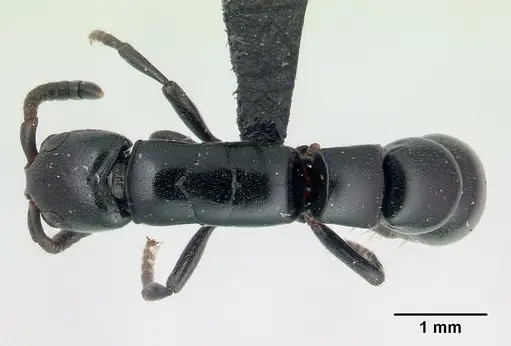
Literatuur
Verspreidingskaart laden...Producten laden...