
Simopelta vieirai
- Wetenschappelijke naam
- Simopelta vieirai
- Tribus
- Ponerini
- Subfamilie
- Ponerinae
- Auteur
- Mackay & Mackay, 2008
- Verspreiding
- Gevonden in 0 landen
Introductie
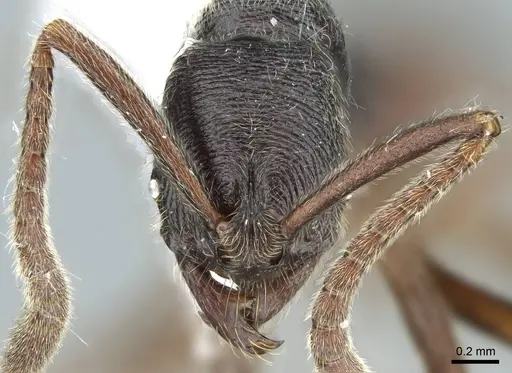
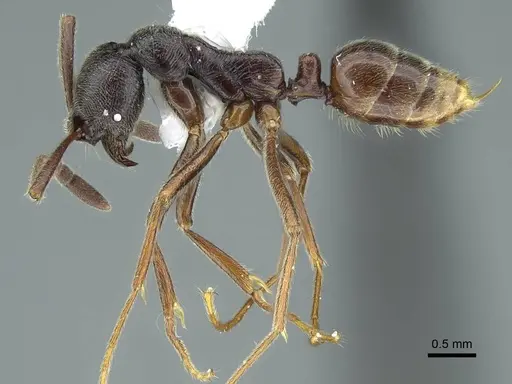
Simopelta vieirai is a moderately sized predatory ant, with workers measuring 4.5mm in total length . They are dark reddish-brown with brown legs and have distinctive three-toothed mandibles where the second and third teeth are usually truncated . Their petiolar node is nearly circular from above, which helps separate them from the similar Simopelta williamsi . This species is found in high-elevation montane cloud forests in Colombia (Quindío and Nariño) and Ecuador (Cotopaxi and Pichincha), typically at altitudes between 1350 and 2000 meters . Foragers move in columns across the forest floor and have been collected from ridge top leaf litter . Only the worker caste has been described - no queens or males are known from scientific literature . As a Ponerine ant, this species has a functional stinger used to subdue prey.
Quick Summary
- Difficulty: Expert
- Origin & Habitat: High-elevation montane cloud forest in Colombia (Quindío, Nariño) and Ecuador (Cotopaxi, Pichincha) at 1350-2000m elevation [1][2][3].
- Colony Type: Colony structure is unconfirmed, only the worker caste has been described. Based on related Ponerine ants, single-queen colonies are possible but not confirmed.
- Size & Growth:
- Queen: Unknown, queen caste not described in scientific literature [1]
- Worker: 4.5mm total length [1]
- Colony: Unknown, no colony size data available
- Growth: Unknown
- Development: Unknown, no data available [1] (Related Ponerine ants generally require 2-4 months at warm temperatures, but this is unconfirmed for Simopelta vieirai.)
- Antkeeping:
- Temperature: Inferred from high-elevation cloud forest origin, keep cool, around 18-22°C. Avoid temperatures above 25°C. A temperature gradient can help, but stability is key [1].
- Humidity: Keep the nest substrate consistently moist but not waterlogged. These cloud forest floor ants need high humidity, maintain damp substrate and provide a water source. Good ventilation is still important to prevent mold [1].
- Diapause: Unknown, no data available. As a high-elevation species, a cool rest period may occur naturally, but captive requirements are unstudied.
- Nesting: Prefers humid setups: naturalistic soil nests, or well-hydrated Y-tong/plaster nests with a water reservoir. Horizontal space is more important than vertical height [1].
- Behavior: Active predators that hunt in columns on the forest floor [1]. They have a functional stinger for subduing prey. Workers are moderately sized at 4.5mm, escape prevention is manageable. Temperament is likely defensive when disturbed, as with most Ponerine ants.
- Common Issues: high-elevation origin means they overheat easily, keep them cool and stable, no queens described in science makes captive breeding nearly impossible, predatory diet requires live prey, not suitable for keepers who want easy feeding, humidity must be maintained or workers will dehydrate, extremely limited availability, no established colonies in the hobby
Temperature and Care
Simopelta vieirai comes from high-elevation cloud forests in the Andes, so they prefer cool temperatures [1]. Keep the nest area around 18-22°C, avoid temperatures above 25°C as this species is not adapted to warm conditions. A gentle temperature gradient can be created with a small heating cable on one side if your room runs cool, but monitor closely to prevent overheating. Stability matters more than hitting an exact number. Room temperature in most homes works well, but avoid placing the nest near heat sources or in direct sunlight.
Humidity and Water
High humidity is essential for this cloud forest species [1]. Keep the nest substrate consistently moist but not waterlogged, it should feel damp to the touch. Provide a water reservoir or a test tube water source connected to the nest. Mist the outworld occasionally, but focus on maintaining moisture in the nest itself. Good ventilation is still important to prevent mold, but avoid excessive airflow that dries out the nest. Replicate the constantly humid forest floor environment as closely as possible.
Feeding and Diet
As Ponerine ants, Simopelta vieirai are active predators [1]. Feed them small live prey such as fruit flies, small crickets, mealworms, and other appropriately-sized insects. Foragers coordinate in columns, so they likely hunt together. Offer prey 2-3 times per week for established colonies. Remove uneaten prey after 24-48 hours to prevent mold. Sugar water or honey can be offered occasionally, but protein-rich live prey should be the primary food source. These are specialized hunters, not scavengers, so live food is important for their health.
Nesting Preferences
In the wild, these ants forage on the forest floor in humid cloud forest environments [1]. In captivity, they do well in naturalistic setups with moist soil or in well-hydrated Y-tong or plaster nests. The key is maintaining high humidity within the nest while providing good ventilation. A formicarium with a water reservoir works well. Since they are floor-foragers, horizontal space is more important than vertical height. Provide enough chambers for the colony to expand, but avoid overly large spaces that are hard to keep humid.
Defense and Handling
Simopelta vieirai belongs to the subfamily Ponerinae, which means they possess a functional stinger. While their sting is not considered dangerous to humans, they may sting if they feel threatened. These ants are not aggressive toward humans when undisturbed, but take care during nest maintenance. Use standard escape prevention, they are moderate-sized at 4.5mm, so barriers work well. [1]
Colony Establishment
This is the most challenging aspect of keeping Simopelta vieirai. Only worker specimens have been described in scientific literature, no queens or males are known [1]. This means wild-collected colonies are your only source, and queenright colonies are extremely rare in the hobby. If you obtain workers, understand that colony establishment and growth will be slow and uncertain. There is no information on whether they can be kept long-term without a queen or if the species can reproduce via gamergates. This species is not recommended for beginners or even most experienced keepers due to the lack of captive breeding information.
Frequently Asked Questions
How do I keep Simopelta vieirai ants?
Keep them in a humid, cool setup, aim for 18-22°C with consistently moist substrate. Use a naturalistic or Y-tong nest with a water reservoir. Provide live prey as their primary food source [1].
What do Simopelta vieirai eat?
They are predatory ants that eat small live insects. Feed them fruit flies, small crickets, mealworms, and similar prey 2-3 times per week. Remove uneaten prey after a day or two [1].
How big do Simopelta vieirai colonies get?
Colony size is unknown, this species has not been studied in detail and only workers have been collected [1].
Where is Simopelta vieirai found?
They live in high-elevation cloud forests in Colombia (Quindío and Nariño) and Ecuador (Cotopaxi and Pichincha) at altitudes of 1350-2000 meters [1][2].
Is Simopelta vieirai good for beginners?
No, this species is not recommended for beginners. Only workers have been described scientifically, so queenright colonies are essentially unavailable. Their cool-temperature requirements and need for live prey also make them challenging [1].
Do Simopelta vieirai need hibernation?
Unknown, no data is available on overwintering requirements. As a high-elevation species, a cool resting period may occur naturally, but captive needs are unstudied [1].
Why are Simopelta vieirai so rare in the ant hobby?
Only the worker caste has been scientifically described, no queens or males are known. This means wild colonies are the only source, and they are difficult to locate in their remote cloud forest habitat [1].
What temperature is best for Simopelta vieirai?
Based on their high-elevation origin, keep them cool at 18-22°C. Avoid temperatures above 25°C [1].
How long do Simopelta vieirai live?
Worker lifespan is unknown. Related Ponerine workers typically live several months to a year, but this species has not been studied in captivity [1].
Report an Issue
The current care sheet is based fully on literature. See inconsistencies, or something that's incorrect? Please , it will be resolved after review from an admin. Contributing to the blogs tab also helps providing information, to make us be able to further improve the caresheets. Thank you for your support!
References

Dit verzorgingsblad is gelicentieerd onder CC BY-SA 4.0 .
Community-blogs
CASENT0914502
Bekijk op AntWeb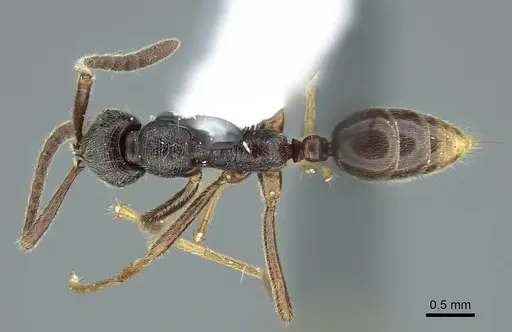
Literatuur
Verspreidingskaart laden...Producten laden...