
Rhopalothrix mariaemirae
- Wetenschappelijke naam
- Rhopalothrix mariaemirae
- Tribus
- Attini
- Subfamilie
- Myrmicinae
- Auteur
- Tocora <i>et al.</i>, 2024
- Verspreiding
- Gevonden in 0 landen
Introductie
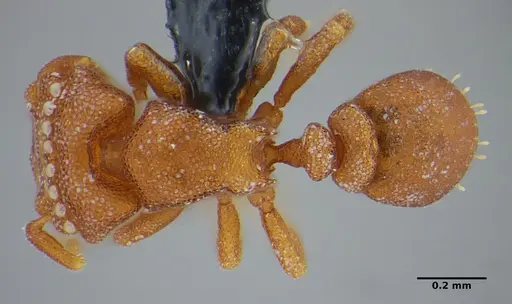
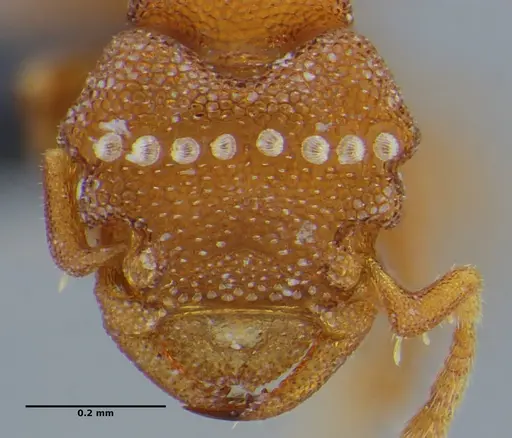
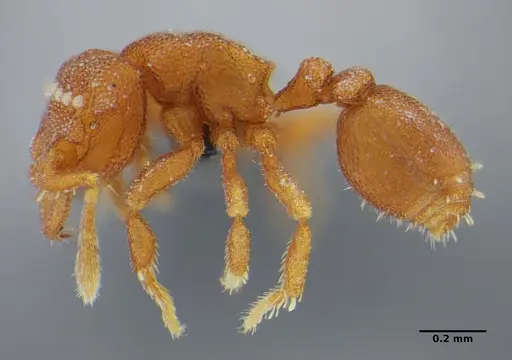
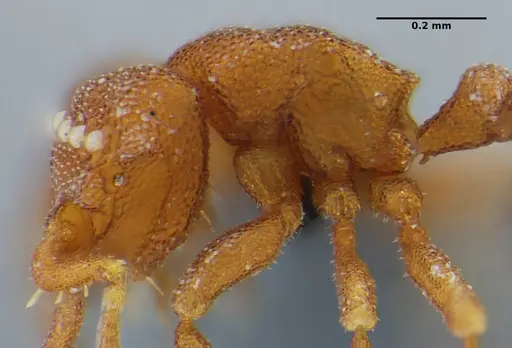
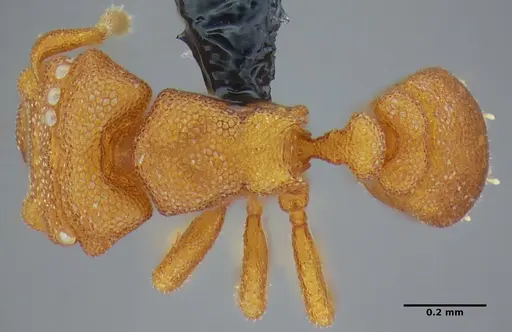
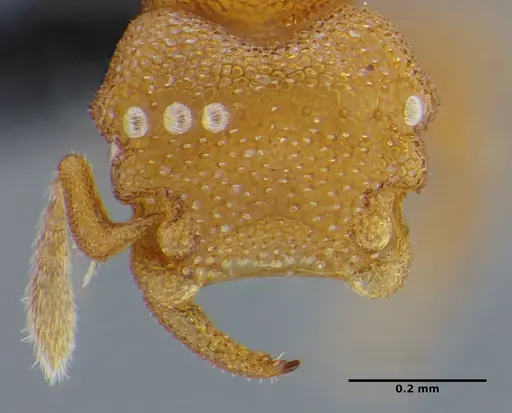
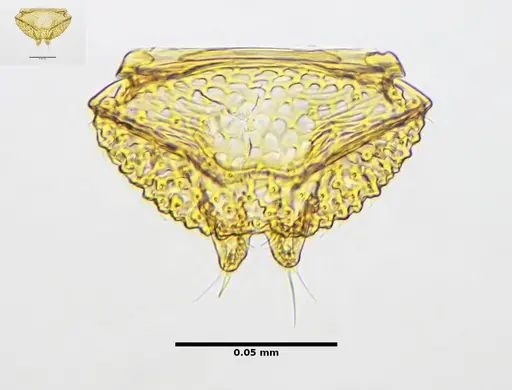
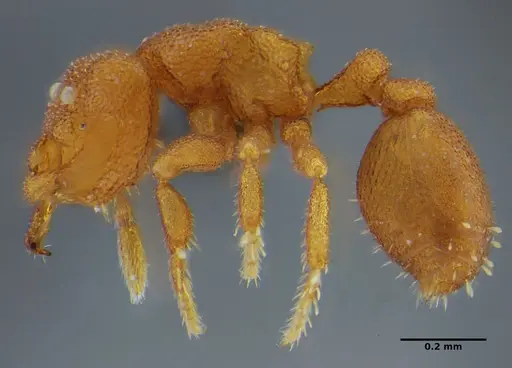
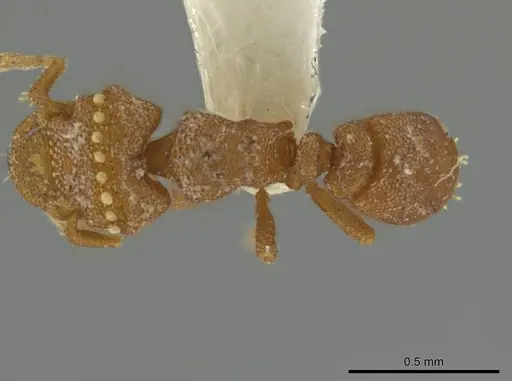
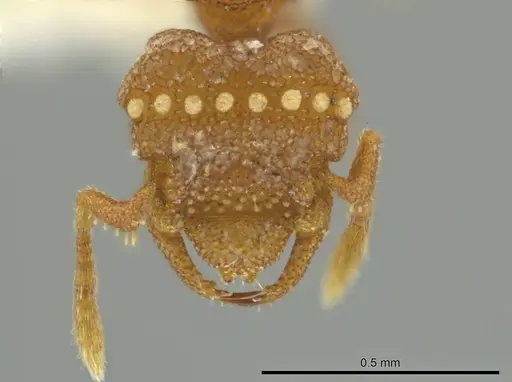
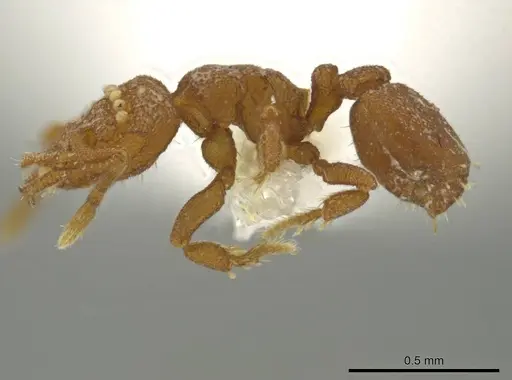
Rhopalothrix mariaemirae is a tiny ant species from the Neotropics, found in Brazil, Colombia, and Guyana . Workers are extremely small - precise body length is unavailable, but head width measurements confirm they are one of the smallest ants known . They have a distinctive appearance with eight large, rounded white scale‑like hairs on the head that look like pale spots from above, and their body is ocher to orange with a rough, shagreened surface . These ants live in leaf litter on the forest floor, where they forage among decomposing material . This species was only formally described in 2024,so biological information is very limited . Queens and males are unknown . Based on its genus placement in the tribe Attini, it likely shares a cryptic, slow‑moving lifestyle with other Rhopalothrix species - secretive hunters of tiny prey in the leaf litter layer .
Quick Summary
- Difficulty: Expert
- Origin & Habitat: Found in Brazil (Amazonas, Manaus, Rondônia, Porto Velho, Pará, Melgaço, Marituba), Colombia (Guaviare, Serranía de Chiribiquete), and Guyana (Rupununi) [1]. They live in leaf litter on the forest floor in tropical rainforest environments [1].
- Colony Type: Unknown, this species was only described in 2024 and no colonies have been documented. Related Attini ants are often monogyne, but data is lacking for this species.
- Size & Growth:
- Queen: Unknown, queens have not been described [1]
- Worker: Size data unavailable, only head and mesosoma measurements exist, which are not full body length [1]
- Colony: Unknown, likely small based on related Attini patterns
- Growth: Unknown
- Development: Unknown, based on typical Myrmicinae development at tropical temperatures, estimate 6-10 weeks (No direct data available. Estimates based on genus-level patterns for tiny leaf‑litter ants.)
- Antkeeping:
- Temperature: Keep at 24-28°C, these are tropical forest floor ants that need warmth. Use a heating cable on one side of the nest to create a gentle gradient.
- Humidity: High humidity is essential, they live in leaf litter where conditions are constantly damp. Keep the nest substrate consistently moist but not waterlogged. Aim for 70-85% humidity.
- Diapause: No, as a tropical species from the Amazon basin, a true diapause is unlikely. Maintain stable temperatures year‑round.
- Nesting: These tiny ants need very small chambers scaled to their minute size. A Y‑tong (AAC) nest with narrow passages or a plaster nest works well. Provide plenty of damp substrate for foraging areas.
- Behavior: This is a cryptic, slow‑moving ant that spends most of its time in the leaf litter layer. They are likely predatory on tiny arthropods like springtails and mites, using their specialized mandibles to capture small prey [1]. Workers are extremely small and can easily escape through standard barrier gaps, escape prevention must be excellent. They are not aggressive and likely flee from threats. Their slow movement and tiny size make them difficult to observe without magnification.
- Common Issues: escape prevention is critical, they are tiny enough to squeeze through standard mesh and gaps, no established care protocols exist since this is a newly described species, slow growth and small size make them vulnerable to stress, humidity must be carefully maintained, they dry out quickly, they likely need tiny live prey which can be difficult to source consistently
Housing and Nest Setup
Rhopalothrix mariaemirae presents unique housing challenges due to its extremely small size. Workers are tiny, precise body length is unavailable, but head width measurements confirm they are among the smallest ants [1]. Standard formicarium chambers will be far too large, these ants need tight, miniaturized housing. A Y‑tong (AAC) nest with the smallest available chamber options works best, or you can create a custom plaster nest with chambers no larger than 2-3 mm in any dimension. The foraging area should also be scaled down.
Escape prevention is absolutely critical. Even standard fluon barriers may not contain them, use multiple layers of protection including fine mesh (0.5 mm or smaller), tight-fitting lids, and consider wrapping connections with parafilm. Check all seams and gaps regularly. A single worker can slip through an opening invisible to the naked eye.
The nest should have a water reservoir to maintain humidity without frequent misting, which can disturb these tiny ants. Place a small piece of damp cotton or foam in the foraging area to provide moisture. Avoid any ventilation that creates airflow across the nest, stagnant, humid air is preferred.
Feeding and Diet
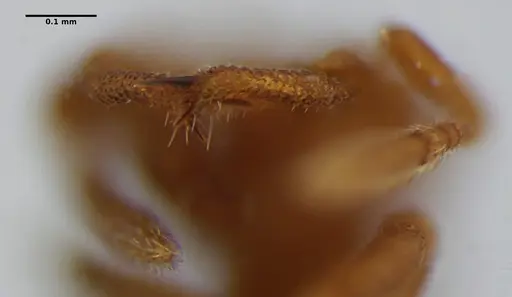
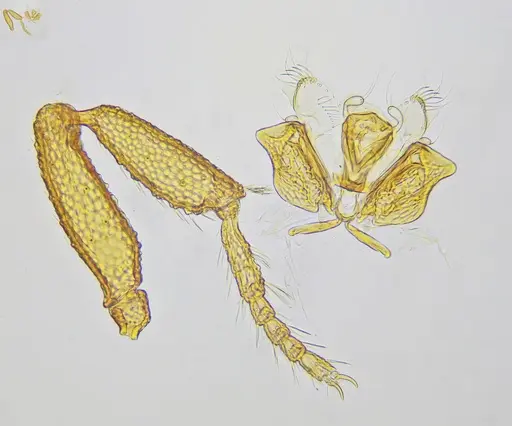
Rhopalothrix mariaemirae has specialized mandibles with two small teeth near the base of the subapical tooth, an adaptation for capturing tiny arthropods [1]. Based on its genus placement in Attini and morphology, it is likely a predator of minute prey in leaf litter. In captivity, their primary food should be live springtails, which are the right size and provide proper nutrition. Other acceptable foods include tiny soil mites, booklice (psocids), and other micro-arthropods.
Do not offer large prey items, these tiny ants cannot tackle anything bigger than themselves. Sugar sources are unlikely to be accepted since they are not honeydew feeders. Feed small amounts of live prey every 2-3 days, removing any uneaten items promptly to prevent mold. A well‑established springtail culture is essentially required before attempting to keep this species.
Some Attini species are fungus‑growers, but Rhopalothrix is not known to cultivate fungi. Stick to small live prey as the primary food source.
Temperature and Seasonal Care
As a tropical species from the Amazon basin and surrounding regions, Rhopalothrix mariaemirae requires warm temperatures year‑round. Keep the nest area at 24-28°C with minimal fluctuation. A small heating cable placed on one side of the nest creates an ideal temperature gradient, allowing ants to self‑regulate by moving between warmer and cooler areas.
Since this species was only described in 2024,there is no data on diapause requirements. However, given their tropical origin, a true hibernation is unlikely to be necessary. The ants may show reduced activity during cooler periods but should not enter full diapause. Maintain stable temperatures throughout the year.
Avoid placing the nest near windows, air conditioning vents, or any location with temperature swings. Room temperature alone may be insufficient, monitor with a thermometer and adjust heating accordingly. Cold stress can quickly kill these tropical ants.
Handling and Observation
Observing Rhopalothrix mariaemirae requires patience and the right equipment. Workers are tiny, a good magnifying lamp or stereo microscope is essential for proper observation and appreciation of this species. Their distinctive scale‑like hairs on the head are best seen under magnification [1].
When working with the colony, minimize disturbances. These are not ants you will regularly handle or relocate. Any nest maintenance should be done slowly and carefully. Because of their tiny size and cryptic nature, the best approach is to set up the colony and observe from a distance rather than interact frequently.
Photography requires macro or microscope equipment to capture their distinctive features. The eight white scale‑like hairs on the head are the most distinctive characteristic and can help verify species identification [1].
Frequently Asked Questions
How long does it take for Rhopalothrix mariaemirae to develop from egg to worker?
The development timeline is unknown, this species was only described in 2024 and no breeding data exists. Based on typical Myrmicinae patterns for tiny tropical ants, estimate 6-10 weeks from egg to worker at optimal temperatures (around 26°C). Expect slow growth and be patient.
Can I keep Rhopalothrix mariaemirae in a test tube?
Standard test tubes are too large for these tiny ants. While they might survive in a test tube setup with cotton and water, the chambers would be enormous relative to their size. A Y‑tong nest with the smallest available chambers or a custom plaster setup with tiny passages is more appropriate. The key is providing appropriately scaled housing.
Are Rhopalothrix mariaemirae good for beginners?
No, this species is not recommended for beginners. They are extremely small, require specialized housing with excellent escape prevention, need live micro‑prey, and require high humidity. There is also no established care protocol since the species was only described in 2024. This is an expert‑only species.
What do Rhopalothrix mariaemirae eat?
Based on their genus placement and morphology, they are likely predatory on tiny arthropods. The primary food should be live springtails, these are the right size and readily accepted by related species. Other tiny prey like soil mites and booklice may also be taken. Sugar and honey are unlikely to be accepted.
How big do Rhopalothrix mariaemirae colonies get?
Colony size is unknown but likely small, probably under 100 workers based on related Attini patterns. These are cryptic leaf‑litter ants that do not form large colonies. Do not expect the massive worker numbers seen in species like Lasius or Camponotus.
Do Rhopalothrix mariaemirae need hibernation?
No, as a tropical species from the Amazon region, they do not require hibernation. Maintain warm temperatures (24-28°C) year‑round. They may show reduced activity during cooler periods but should not enter true diapause.
Why are my Rhopalothrix mariaemirae escaping?
Escape prevention is the number one challenge with this species. Workers are tiny, precise body length is unavailable, but head width measurements confirm they are among the smallest ants [1]. They can squeeze through gaps invisible to the naked eye. Use multiple barriers: fine mesh (0.5 mm or smaller), fluon on container rims, parafilm around connections, and check all seams regularly. Even standard barriers often fail, assume any gap is a potential escape route.
Where can I get Rhopalothrix mariaemirae?
This species was only described in 2024 and is not currently available in the antkeeping hobby. It would require field collection in its native range (Brazil, Colombia, or Guyana) using Winkler extraction from leaf litter, a specialized technique [2]. There are no known captive breeding efforts. This species is not currently available to hobbyists.
What makes Rhopalothrix mariaemirae special?
This is one of the smallest ant species known, with workers tiny enough that precise body length is unavailable. They have a distinctive appearance with eight white scale‑like hairs on the head [1]. They are also a newly described species (2024), making them one of the most recently discovered ants in the hobby. Their cryptic lifestyle and tiny size make them a fascinating challenge for expert antkeepers.
Report an Issue
The current care sheet is based fully on literature. See inconsistencies, or something that's incorrect? Please , it will be resolved after review from an admin. Contributing to the blogs tab also helps providing information, to make us be able to further improve the caresheets. Thank you for your support!
References

Dit verzorgingsblad is gelicentieerd onder CC BY-SA 4.0 .
Community-blogs
Literatuur
Verspreidingskaart laden...Producten laden...