
Protanilla bicolor
- Wetenschappelijke naam
- Protanilla bicolor
- Tribus
- Leptanillini
- Subfamilie
- Leptanillinae
- Auteur
- Xu, 2002
- Verspreiding
- Gevonden in 0 landen
Introductie
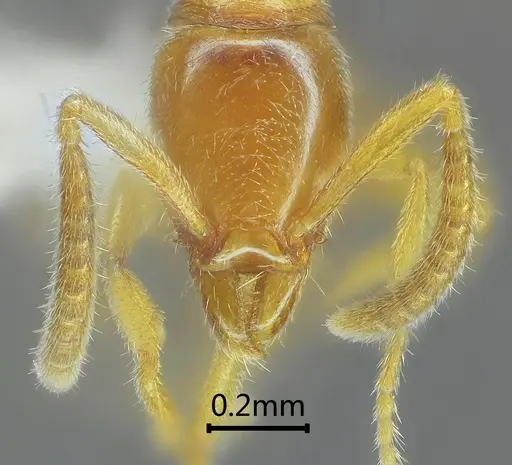
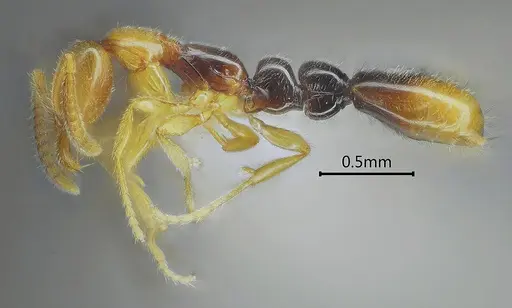
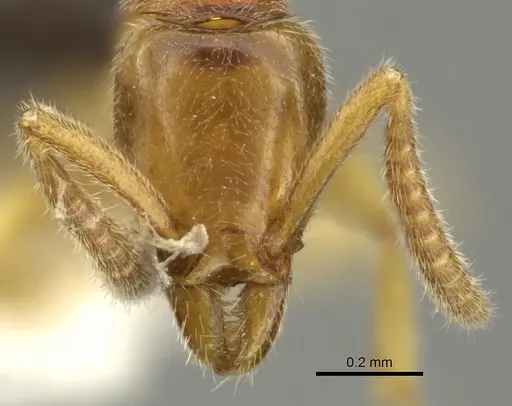
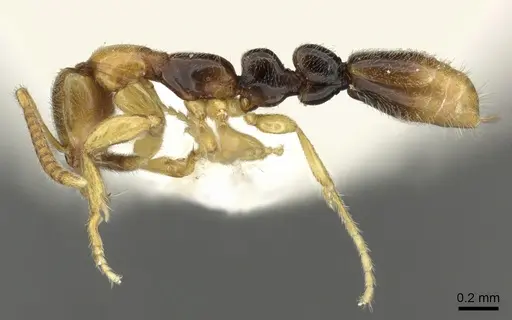
Protanilla bicolor is a tiny ant species in the subfamily Leptanillinae. Workers measure 2.7-3.0 mm in total length . They have a bicolored appearance: brownish yellow head and body, with black on the posterior mesothorax, metathorax, propodeum, petiole, postpetiole, and first gastral segment . The head is triangular in face view, narrowing forward, and the petiolar node is trapezoidal . This species is known only from Yunnan Province, China, where colonies nest in soil in deciduous broad-leaf forests at about 1600 m elevation . What makes P. bicolor unusual is its extreme rarity; the genus Protanilla is among the least collected ant groups, and the only observed colony had 23 workers . Leptanillinae ants are predators on small soil invertebrates, though specific hunting behavior for P. bicolor is unconfirmed.
Quick Summary
- Difficulty: Expert
- Origin & Habitat: Yunnan Province, China, mountain forest soil at 1600 m elevation in deciduous broad-leaf forest [3]
- Colony Type: Colony structure is unconfirmed. The only observed colony had 23 workers, suggesting naturally small colonies [3].
- Size & Growth:
- Queen: Unknown, queen caste has not been described for this species [3]
- Worker: 2.7-3.0 mm total length [1][2][3]
- Colony: Up to 23 workers based on one observed colony [3]
- Growth: Unknown, likely slow given small colony size
- Development: Unknown, no direct development data exists. (Development timeline is unconfirmed, based on related Leptanillinae, it may take several weeks at optimal temperature.)
- Antkeeping:
- Temperature: Estimated 20-24°C based on Yunnan mountain climate [3]. Provide a gentle gradient and avoid extremes.
- Humidity: Keep nest substrate consistently moist but not waterlogged, inferred from soil-nesting habitat [3].
- Diapause: Unknown, no specific data on overwintering requirements.
- Nesting: Natural nesting is in soil [3]. In captivity, use a small test tube or miniature nest made of Y-tong, plaster, or soil. Avoid large spaces.
- Behavior: Behavior is poorly documented. Based on related Leptanillinae, they are likely predatory on small soil invertebrates [4]. Workers are small and slow-moving. Escape risk is moderate due to tiny size, use barriers, but they are not strong climbers. Temperament is unknown but likely non-aggressive.
- Common Issues: very small colony size means any losses have significant impact, avoid disturbing colonies, lack of documented care information means you are pioneering captive husbandry, extremely small size makes escape prevention important despite moderate climbing ability, wild-caught colonies may have parasites or diseases that cause colony failure, finding appropriate prey items like springtails can be challenging
Understanding Protanilla bicolor
Protanilla bicolor belongs to the Leptanillinae subfamily, a group of primitive ants that is extremely rare. First described by Xu in 2002 from Yunnan Province, China, this species has rarely been observed since [5]. Workers are tiny at 2.7-3.0 mm total length, with a bicolored pattern: brownish yellow head and body, and a black band across the middle [3]. The head is triangular in face view, narrowing forward, and the petiolar node is trapezoidal when viewed from the side [3]. The mandibles have specialized peg-like teeth for capturing prey [4]. The only known colony contained just 23 workers, suggesting naturally small colonies [3].
Housing and Nest Setup
Given their tiny size and soil-nesting habits, Protanilla bicolor requires careful housing. A small test tube setup works well for founding or small groups, use a test tube with a water reservoir stopped with cotton. For established colonies, use a miniature nest made of Y-tong, plaster, or soil, with tight chambers scaled to their size. A small outworld area allows for feeding and waste disposal. Because they are small, reinforce escape barriers like Fluon. Keep the nest humid but not wet, aim for damp substrate without standing water [3].
Feeding and Diet
The diet of Protanilla bicolor is not directly documented, but based on related Leptanillinae, they are likely predators on small soil invertebrates. Their specialized mandibles suggest adaptation for capturing small, soft-bodied prey [4]. In captivity, prioritize live springtails as a primary food source, they are the right size and provide nutrition. Other micro-arthropods like pot worms or small mites may be accepted. Feed small amounts every 2-3 days, removing uneaten prey after 24 hours to prevent mold. Sugar sources are unlikely to be accepted.
Temperature and Seasonal Care
Protanilla bicolor comes from Yunnan Province at approximately 1600 m elevation in deciduous broad-leaf forests [3]. This environment has moderate temperatures with mild winters. Aim to keep the colony at an estimated 20-24°C, avoiding extremes above 28°C. A heating cable can create a gentle gradient. Diapause requirements are unknown, a reduced temperature period may be beneficial but is not confirmed. Monitor colony activity and maintain stability.
Colony Growth and Expectations
You should have realistic expectations when keeping Protanilla bicolor. The only documented wild colony had 23 workers, suggesting naturally small colonies [3]. Growth will be slow, and your colony will remain numerically small. A healthy colony might reach up to 23 workers, but do not expect large colonies like common species. Be patient and avoid overfeeding or disturbing the colony. Each worker is precious in such small colonies.
Common Challenges
Keeping Protanilla bicolor presents challenges: complete lack of captive care literature means you are experimenting, extremely small size makes workers vulnerable to loss, finding appropriate food like springtails is ongoing, wild-caught colonies may carry parasites, and small colony size may slow reproduction. Approach this as an exciting challenge for experienced keepers willing to document results.
Frequently Asked Questions
How long does it take for Protanilla bicolor to produce first workers?
The egg-to-worker timeline is unconfirmed for this species. No direct data exists, so it is unknown.
Can I keep Protanilla bicolor in a test tube?
Yes, a small test tube setup works well for this species. Use a standard test tube with a water reservoir stopped with cotton, kept horizontal or slightly tilted.
What do Protanilla bicolor ants eat?
Based on related Leptanillinae, they are likely predators. Feed live springtails as a primary food source [4]. Other small live prey may be accepted.
How big do Protanilla bicolor colonies get?
The only documented wild colony contained 23 workers [3]. In captivity, a healthy colony might reach up to 23 workers.
Do Protanilla bicolor ants sting?
Leptanillinae ants do not have functional stingers. They may bite if threatened, but the bite is negligible due to their tiny size [4].
Are Protanilla bicolor good for beginners?
No. This species is rated Expert difficulty due to limited data, small colonies, specialized diet, and pioneering husbandry.
Do Protanilla bicolor need hibernation?
Diapause requirements are unknown. Yunnan has mild winters, so a reduced temperature period may be beneficial but is not confirmed.
Why is my Protanilla bicolor colony dying?
Potential causes include inappropriate food, temperature stress, humidity issues, parasites from wild-caught colonies, or the challenge of maintaining a species with no captive history.
When should I move Protanilla bicolor to a formicarium?
Move to a small formicarium only when the colony reaches at least 15-20 workers and the test tube shows crowding. Use a tiny nest with minimal chambers.
Can I keep multiple queens together?
Colony structure is unconfirmed, and the queen caste has never been described. Keep single-queen colonies until more information is available.
Report an Issue
The current care sheet is based fully on literature. See inconsistencies, or something that's incorrect? Please , it will be resolved after review from an admin. Contributing to the blogs tab also helps providing information, to make us be able to further improve the caresheets. Thank you for your support!
References

Dit verzorgingsblad is gelicentieerd onder CC BY-SA 4.0 .
Community-blogs
ANTWEB1060534
Bekijk op AntWeb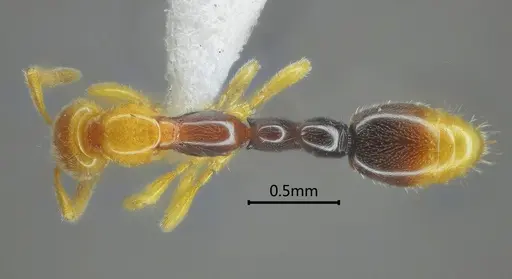
CASENT0235341
Bekijk op AntWeb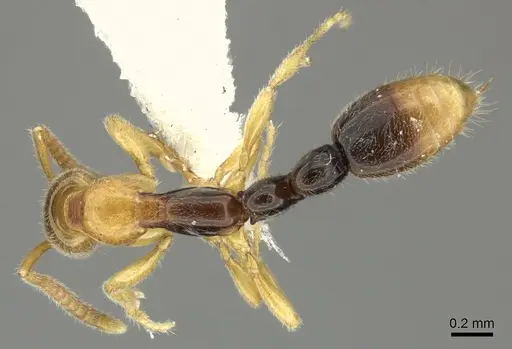
Literatuur
Verspreidingskaart laden...Producten laden...