
Proceratium williamsi
- Wetenschappelijke naam
- Proceratium williamsi
- Tribus
- Proceratiini
- Subfamilie
- Proceratiinae
- Auteur
- Mathew & Tiwari, 2000
- Verspreiding
- Gevonden in 1 landen
Introductie
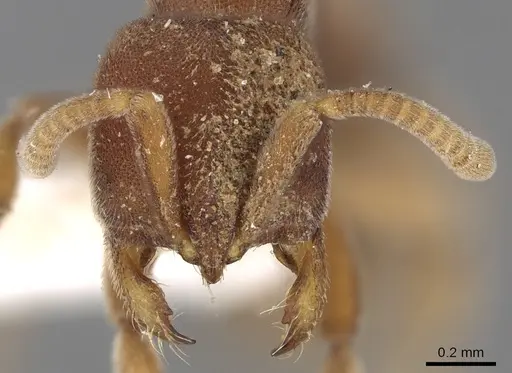
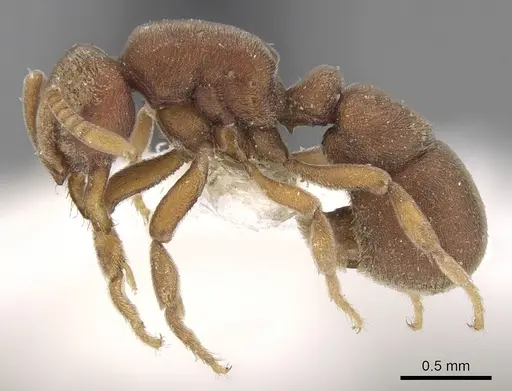
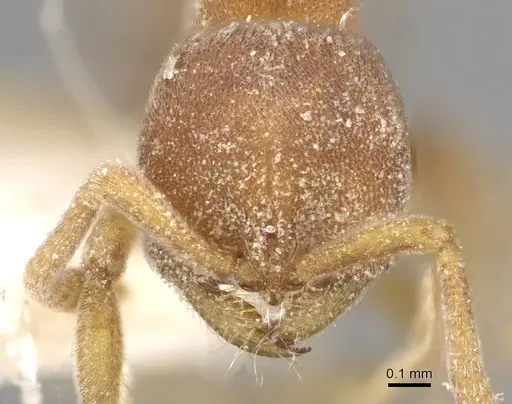
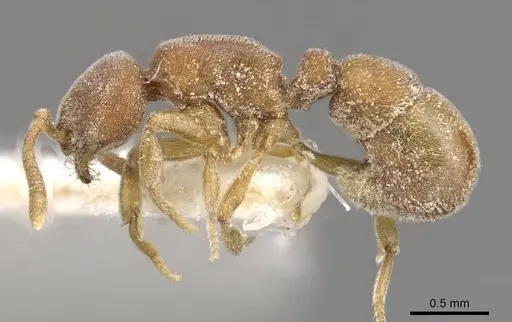
Proceratium williamsi is a tiny ant species native to the Himalayan region of India and Bhutan. Workers measure 2.87-2.92 mm and queens 4.13-4.34 mm . They have reddish-brown coloration with a densely punctated, silky glossy body surface. This species belongs to the itoi species group, characterized by the fourth abdominal segment sternite protruding over the third . They inhabit leaf litter in primary subtropical forests of the Himalayas . Proceratium williamsi was originally described as Proceratium bhutanense in 2003 but was synonymized in 2014. It was the only Proceratium species documented from India before recent discoveries .
Quick Summary
- Difficulty: Medium
- Origin & Habitat: Himalayan region of India (Meghalaya, Sikkim, Uttarakhand, West Bengal, Arunachal Pradesh, Himachal Pradesh, Uttar Pradesh) and Bhutan. Inhabits leaf litter of primary subtropical forests and occasionally soil samples from secondary forests in cool, shady locations [3][4][5].
- Colony Type: Unconfirmed, research does not specify queen number or social structure.
- Size & Growth:
- Antkeeping:
- Behavior: Proceratium williamsi is a cryptic, slow-moving predator that hunts small invertebrates in leaf litter. Workers are not aggressive and forage individually. Escape risk is moderate due to their small size [5].
- Common Issues: high humidity maintenance is critical, drying out kills colonies quickly., slow growth tests keeper patience and may lead to overfeeding mistakes., wild-caught colonies may have parasites that cause captive failures., tiny size makes them vulnerable to flooding in test tube setups., difficulty observing workers in complex naturalistic setups.
Natural History and Distribution
Proceratium williamsi is endemic to the Himalayan mountain range, found across northern India from Uttarakhand to Meghalaya and in Bhutan. These ants inhabit the leaf litter layer of primary subtropical forests at elevations from near sea level to about 2000 meters. They prefer cool, shady locations with high humidity and are collected by sifting through dead leaves and decaying organic matter. The species was first recorded from India in 2000,representing the first Proceratium species documented there [3][4][2].
Housing and Nest Preferences
These tiny ants require careful attention to nest dimensions. Y-tong nests with narrow chambers or plaster nests with small tunnels work well. Chambers should be scaled to worker size for security. A naturalistic setup with moist substrate and leaf litter can mimic their environment, but observation is difficult. Many keepers prefer Y-tong nests for easier viewing while providing a humid outworld with leaf litter debris. Humidity must remain high to prevent desiccation [5].
Feeding and Diet
Proceratium williamsi is a predator that hunts small invertebrates. In captivity, offer live prey such as springtails, fruit flies, and tiny isopods. Prey should be smaller than the workers' body size. They do not accept sugar or dry commercial foods. Feed every 2-3 days and remove uneaten prey to prevent mold [5].
Temperature and Seasonal Care
These ants prefer moderate temperatures of 20-24°C and avoid heat above 28°C. Room temperature in this range is often suitable. Diapause requirements are unknown, but seasonal cycling may be beneficial [5].
Behavior and Observation
Proceratium williamsi is a cryptic, solitary forager. Workers move slowly through substrate and are not defensive. Observation requires patience due to their small size and hiding behavior. Colony activity increases in humid conditions [5].
Frequently Asked Questions
How long does it take for Proceratium williamsi to produce first workers?
The exact timeline is unknown. No specific data is available for this species [5].
What do Proceratium williamsi ants eat?
They are predators that hunt small invertebrates. Feed live prey like springtails and fruit flies. Prey should be appropriately sized [5].
Do Proceratium williamsi ants sting?
They possess a stinger but it is too small to penetrate human skin. These ants are harmless and rely on hiding [5].
Are Proceratium williamsi good for beginners?
No, they are intermediate to advanced due to high humidity needs, specialized diet, and slow growth. Not recommended as a first species [5].
Do Proceratium williamsi need hibernation?
Diapause requirements are unknown. No specific data is available on winter rest periods [5].
How big do Proceratium williamsi colonies get?
Colony size data is unavailable from research [5].
Can I keep multiple Proceratium williamsi queens together?
Colony structure is unconfirmed. Combining unrelated queens is not recommended as it has not been studied [5].
What humidity level do Proceratium williamsi need?
High humidity is critical. Keep nest substrate consistently moist but not waterlogged [5].
When should I move Proceratium williamsi to a formicarium?
Keep them in a test tube during founding. Move to a nest when the colony is crowded, but timing is not specified [5].
What temperature is ideal for Proceratium williamsi?
Keep them at 20-24°C, avoiding temperatures above 28°C [5].
Report an Issue
The current care sheet is based fully on literature. See inconsistencies, or something that's incorrect? Please , it will be resolved after review from an admin. Contributing to the blogs tab also helps providing information, to make us be able to further improve the caresheets. Thank you for your support!
References

Dit verzorgingsblad is gelicentieerd onder CC BY-SA 4.0 .
Community-blogs
CASENT0281860
Bekijk op AntWeb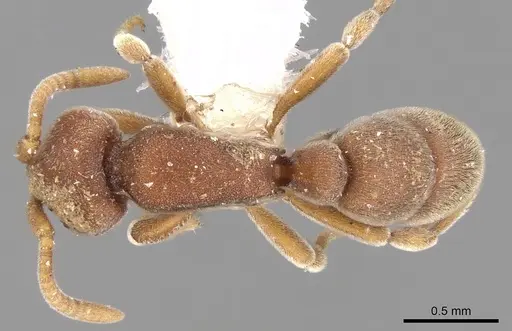
CASENT0915311
Bekijk op AntWeb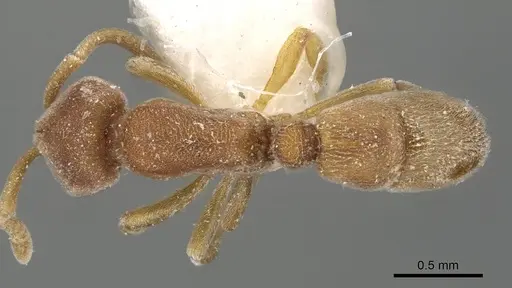
Literatuur
Verspreidingskaart laden...Producten laden...