
Proceratium diplopyx
- Wetenschappelijke naam
- Proceratium diplopyx
- Tribus
- Proceratiini
- Subfamilie
- Proceratiinae
- Auteur
- Brown, 1980
- Verspreiding
- Gevonden in 1 landen
Introductie
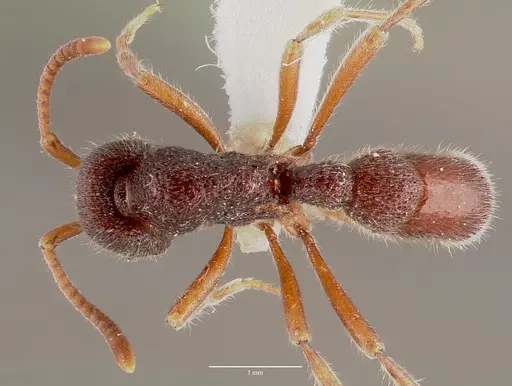
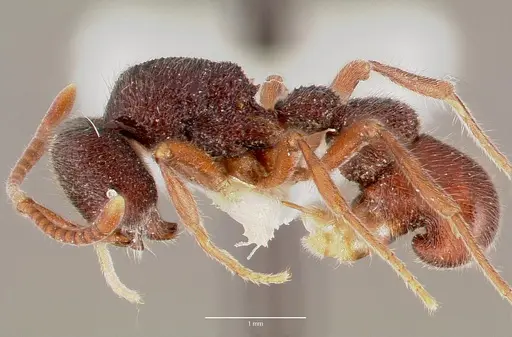
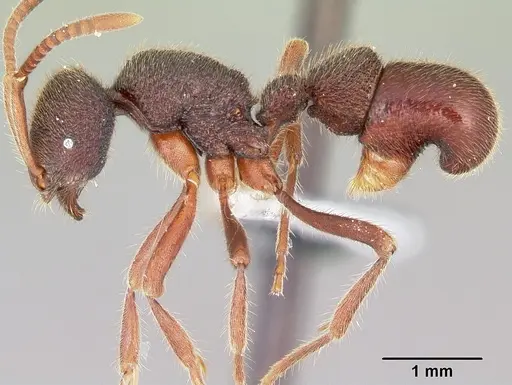
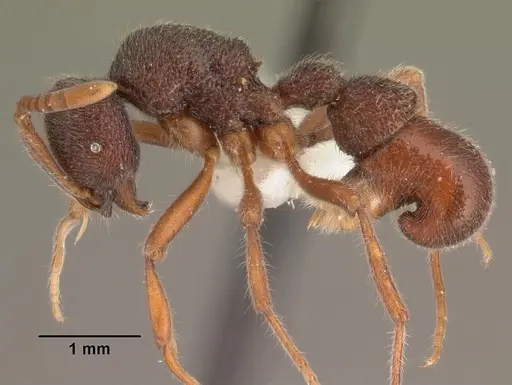
Proceratium diplopyx is an ant species native to Madagascar, found in rainforest habitats at elevations of 825-1000 meters . It is the most distinctive member of the stictum clade due to its unique gastral morphology, with the first gastral segment greatly hypertrophied and produced into a downcurved false apex . Workers are reddish-brown, with coarse foveolate-granulate sculpture and propodeal teeth . This species is best suited for experienced keepers due to limited availability and specialized care needs.
Quick Summary
- Difficulty: Expert
- Origin & Habitat: Madagascar rainforest, specifically Baie d'Antongil at 1000m and Masoala Peninsula at 825m [1][2][3].
- Colony Type: Colony structure is unconfirmed. No data on queen number or social structure for this species.
- Size & Growth:
- Queen: Size data unavailable, no measurements described [2].
- Worker: 5.86 mm total length [2].
- Colony: Unknown, no colony size data available.
- Growth: Unknown, no development data available.
- Development: Unconfirmed, based on typical Proceratium patterns, expect 8-12 weeks at optimal temperature. (Development timeline is unconfirmed for this species.)
- Antkeeping:
- Temperature: Inferred from Madagascar rainforest origin: aim for 22-26°C with a gentle gradient [1][2].
- Humidity: Keep nest substrate consistently moist but not waterlogged, based on rainforest habitat [1][2].
- Diapause: Unknown, no data on overwintering requirements [3].
- Nesting: Inferred: likely nests in rotting wood or soil, in captivity, use moist substrate or Y-tong/plaster nests with high humidity [2].
- Behavior: Based on Proceratium genus patterns, likely non-aggressive and secretive, with moderate escape risk due to 5.86mm size.
- Common Issues: high humidity requirements can lead to mold issues if ventilation is poor., slow growth may require patience from keepers., wild-caught colonies may have parasites that are difficult to treat.
Appearance and Identification
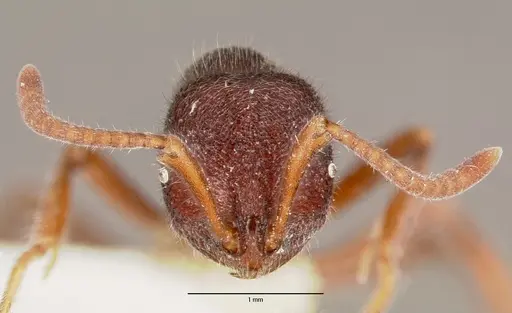
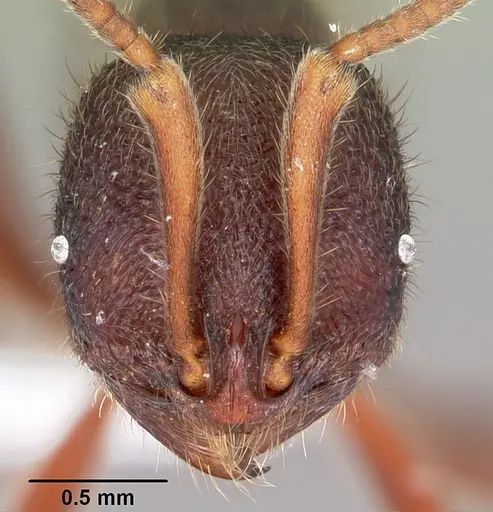
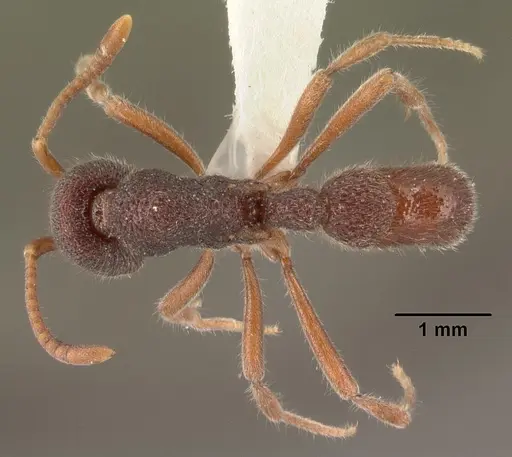
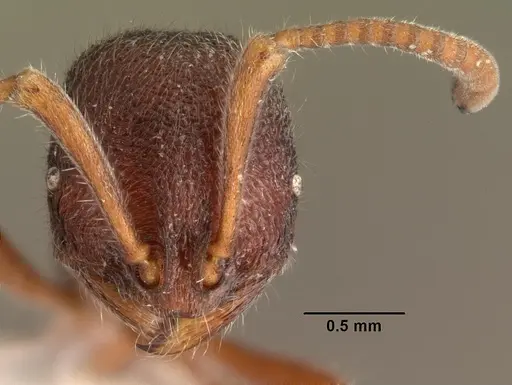
Proceratium diplopyx workers reach 5.86 mm in total length, making them relatively large for the genus [2]. The most striking feature is the greatly hypertrophied first gastral segment that extends into a downcurved false apex, unique within the genus [2]. Workers are reddish-brown with coarse foveolate-granulate sculpture on the head, mesosoma, petiole, and postpetiole, while the first gastral tergite is smoother [2]. The propodeum has pointed teeth, and eyes are present with a single convex facet [2].
Distribution and Habitat
This species is endemic to Madagascar, found in eastern rainforests at 825-1000m elevation [1][2]. The type locality is Iaraka in Baie d'Antongil at 1000m, with additional records from Masoala Peninsula at 825m [1][2]. These ants prefer cooler, humid conditions typical of mid-to-high elevation rainforests.
Feeding and Diet
Specific dietary data for Proceratium diplopyx is not available [3]. Proceratium ants are generally predatory on small arthropods, so in captivity, offer live prey like springtails or fruit flies [3]. Sugar sources may be accepted but are not primary.
Temperature and Humidity Requirements
Based on Madagascar rainforest origin, aim for temperatures of 22-26°C with a gentle gradient [1][2]. Humidity should be high, keep nest substrate consistently moist but not waterlogged to mimic natural conditions [1][2].
Colony Structure and Development
Colony structure is unconfirmed for this species [3]. Founding behavior is also unconfirmed [3]. Development time is unknown, but based on typical Proceratium patterns, expect 8-12 weeks from egg to worker at optimal temperatures.
Behavior and Temperament
Based on Proceratium genus patterns, these ants are likely non-aggressive, slow-moving, and secretive. Escape risk is moderate due to their 5.86mm size, standard barriers should suffice [2].
Frequently Asked Questions
How long does it take for Proceratium diplopyx to produce first workers?
The egg-to-worker timeline is unconfirmed. Based on typical Proceratium patterns, expect approximately 8-12 weeks at optimal temperature.
What do Proceratium diplopyx ants eat?
Specific dietary data is not documented [3]. They are likely predatory on small arthropods, so offer live prey like springtails in captivity [3].
What temperature and humidity do Proceratium diplopyx need?
Based on their Madagascar rainforest origin, aim for 22-26°C and high humidity with moist substrate [1][2].
Are Proceratium diplopyx good for beginners?
No, this is an expert-level species due to lack of specific care data and specialized requirements [3].
How big do Proceratium diplopyx colonies get?
Colony size is unknown, no mature colony data exists [3].
Do Proceratium diplopyx ants sting?
Proceratium ants have stingers but are not aggressive, stingers are typically too small to penetrate human skin effectively [3].
Can I keep multiple Proceratium diplopyx queens together?
Colony structure is unconfirmed, most Proceratium are single-queen, so combining queens is not recommended [3].
What type of nest is best for Proceratium diplopyx?
Use a naturalistic setup with moist substrate or Y-tong/plaster nests to maintain high humidity [2].
Where is Proceratium diplopyx found in the wild?
This species is endemic to Madagascar, found in rainforests at 825-1000m elevation [1][2].
Does Proceratium diplopyx need hibernation?
Diapause requirements are unknown, being from tropical Madagascar, they likely do not require true hibernation [3].
Report an Issue
The current care sheet is based fully on literature. See inconsistencies, or something that's incorrect? Please , it will be resolved after review from an admin. Contributing to the blogs tab also helps providing information, to make us be able to further improve the caresheets. Thank you for your support!
References

Dit verzorgingsblad is gelicentieerd onder CC BY-SA 4.0 .
Community-blogs
Literatuur
Verspreidingskaart laden...Producten laden...