
Polyrhachis selecta
- Wetenschappelijke naam
- Polyrhachis selecta
- Subgenus
- Myrma
- Tribus
- Camponotini
- Subfamilie
- Formicinae
- Auteur
- Forel, 1911
- Verspreiding
- Gevonden in 0 landen
Introductie
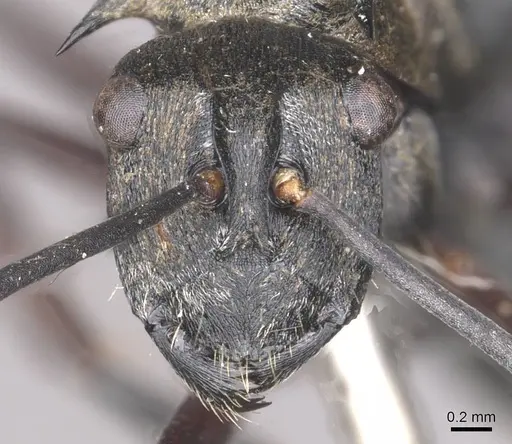
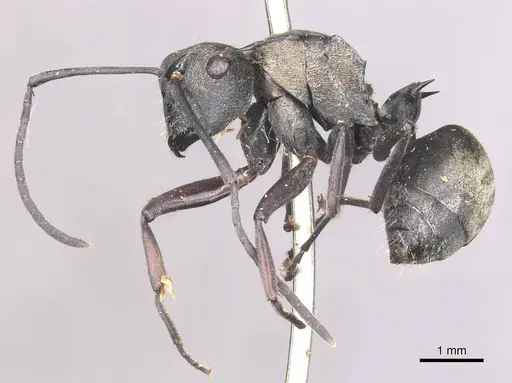
Polyrhachis selecta is an ant measuring around 6.65 mm in total length . Workers have distinctive features including well-developed pronotal spines that are more than twice as long as their basal width, a longitudinally striate mesosomal dorsum, and long slender dorsal petiolar spines . This species belongs to the Polyrhachis aculeata species-group in the subgenus Myrma . Originally described as a subspecies of Polyrhachis murina, it was raised to full species status in 2013 based on morphological differences . The species is known only from Java, Indonesia, where it was collected in the early 1900s . Unfortunately, almost nothing is known about this species' biology in the wild - queen caste, immature stages, and colony structure have never been documented .
Quick Summary
- Difficulty: Hard
- Origin & Habitat: Java, Indonesia [2]. The specific habitat is unknown, as no field observations exist.
- Colony Type: Unknown, colony structure has never been documented in scientific literature.
- Size & Growth:
- Queen: Unknown, queen caste has never been described [2]
- Worker: 6.65 mm total length [1][2]
- Colony: Unknown, no colony size data exists for this species [2]
- Growth: Unknown, no development data available
- Development: Unknown, no development data exists for this species [2] (Development timeline is completely unstudied. Based on typical Polyrhachis patterns in tropical conditions, expect slower development, but this is unconfirmed.)
- Antkeeping:
- Temperature: Based on Java's tropical climate, temperatures around 24-28°C are recommended. Room temperature (22-25°C) may be suitable, but monitor colony activity.
- Humidity: Moderate to high humidity preferred. Keep nest substrate moist but not waterlogged. Provide a water source and mist occasionally.
- Diapause: No, Java has no true winter, so hibernation is not required. Keep colony active year-round with stable warm temperatures.
- Nesting: Preferred nest types are not documented. Based on typical Myrma subgenus behavior, they likely prefer nesting in rotting wood, under bark, or in arboreal situations. In captivity, a Y-tong (AAC) nest, plaster nest, or naturalistic setup would likely work well.
- Behavior: Behavior is unstudied for this species. Based on genus patterns, Polyrhachis ants are typically moderate in activity level and not particularly aggressive. They are Formicinae ants, so they can spray formic acid as a defense but lack a painful sting. Workers are medium-sized and should be manageable in captivity. Escape risk is moderate due to their size (6.65 mm), but active escape prevention is always recommended.
- Common Issues: no biological data exists, this is one of the least studied ant species in the hobby, so standard care guidelines may not apply., queen and brood are completely unknown, you may be keeping a founding queen without knowing her specific requirements., colony growth rate is unconfirmed, development may be slower than typical species since no data exists., winter conditions must be avoided, being from Java, these ants likely cannot tolerate cold temperatures.
What Makes This Species Unique
Polyrhachis selecta is a mysterious ant. Despite being described over a century ago in 1911,almost nothing is known about its biology in the wild. The queen has never been described, immature stages (eggs, larvae, pupae) have never been documented, and we have no information about how these ants form colonies, what they eat, or how they behave [2]. This makes keeping Polyrhachis selecta a genuine adventure, you'll be learning alongside the scientific community. The species was originally classified as a subspecies of Polyrhachis murina but was elevated to full species status in 2013 when detailed morphological comparison revealed consistent differences, particularly in the pronotal spines which are more than twice as long as their basal width in Polyrhachis selecta versus very short in Polyrhachis murina [2]. The workers have a distinctly longitudinally striate (grooved) mesosomal dorsum and long slender spines on the petiole (the narrow waist segment) [1][2].
Known Physical Characteristics
Workers measure approximately 6.65 mm in total length [1][2]. The most distinctive features are the pronotal spines, well-developed spikes on the pronotum that are more than twice as long as their basal width. The mesosomal dorsum has a distinctive longitudinal striation (grooved pattern). The petiole has long, slender dorsal spines [1][2]. Only the worker and male castes are known, the queen remains undescribed [2].
Distribution and Native Habitat
Polyrhachis selecta is known only from Java, Indonesia [2]. The original specimens were collected in 1909 from two locations: Samarang (September 1909) and Melambong (July 1909) [2]. Java is a tropical island with warm temperatures and high humidity year-round. The specific microhabitat where these ants were found is not recorded, but members of the subgenus Myrma typically inhabit forest environments.
Caring for an Unstudied Species
Since almost nothing is known about Polyrhachis selecta's biology, you'll need to rely on genus-level knowledge while observing your colony carefully. Start with standard Polyrhachis care: keep them warm (24-28°C), maintain moderate to high humidity, and provide a nest that allows for some moisture. A Y-tong (AAC) nest or plaster nest works well for this size of ant. For feeding, offer protein sources (small insects like fruit flies, mealworms, or crickets) and sugar sources (honey water or sugar water). Polyrhachis species are typically generalist omnivores. Watch your colony closely, if workers avoid certain foods or cluster in specific areas of the nest, adjust conditions accordingly. The lack of documented biology means you'll be contributing to our understanding of this species. Take notes on behavior, feeding preferences, and development timing to help future antkeepers.
Temperature and Seasonal Care
Being from Java, Indonesia, a tropical island near the equator, Polyrhachis selecta has no adaptation to cold temperatures. Keep the colony warm year-round with temperatures in the 24-28°C range. A slight temperature gradient (warm end around 28°C, cooler end around 24°C) allows workers to regulate their body temperature. Avoid any temperatures below 20°C, as this could stress or kill the colony. Unlike temperate species, these ants do not require a winter dormancy period. Maintain stable conditions throughout the year.
Nesting Recommendations
The natural nesting behavior of Polyrhachis selecta is unknown, but the subgenus Myrma species typically nest in rotting wood, under bark, or in arboreal situations. For captivity, a Y-tong (AAC) nest with moist chambers works well for this medium-sized ant. The chambers should be appropriately scaled, not too large but large enough for several hundred workers. Plaster nests also work well since they can hold moisture and maintain humidity. A naturalistic setup with cork, wood pieces, and moist soil can also be successful. Regardless of nest type, ensure the substrate stays moist but not waterlogged. Provide a water tube or cotton ball as a water source. Good ventilation is important to prevent mold while maintaining humidity.
Frequently Asked Questions
How do I care for Polyrhachis selecta when almost nothing is known about this species?
You care for them using general Polyrhachis husbandry while observing your specific colony. Keep them warm (24-28°C), maintain moderate humidity, and offer a varied diet. Since no species-specific data exists, pay close attention to worker behavior, where they cluster, what foods they prefer, how quickly brood develops. This species is a blank slate in terms of captive care, so your observations will be valuable.
What do Polyrhachis selecta ants eat?
Diet is unconfirmed for this species, but Polyrhachis ants are typically generalist omnivores. Offer small insects (fruit flies, pinhead crickets, mealworms) for protein and sugar sources (honey water, sugar water) for energy. Start with small prey items appropriate to their worker size and adjust based on what they accept.
What temperature do Polyrhachis selecta ants need?
Keep them warm, aim for 24-28°C based on their Java (tropical) origin. Room temperature in most homes (22-25°C) is likely acceptable, but a slight increase into the mid-to-high 20s is ideal. Avoid any cold temperatures below 20°C.
How big do Polyrhachis selecta colonies get?
Colony size is unknown for this species since it has never been studied. Based on typical Polyrhachis (Myrma) patterns, colonies likely reach several hundred workers. Expect moderate growth, this is not a fast-growing species.
Where does Polyrhachis selecta come from?
This species is known only from Java, Indonesia. The original specimens were collected in 1909 from Samarang and Melambong. Java is a tropical island with warm temperatures and high humidity year-round.
How long does it take for Polyrhachis selecta to develop from egg to worker?
The development timeline is completely unconfirmed for this species. No scientific data exists on egg-to-worker time. Based on typical Polyrhachis species in tropical conditions, expect roughly 4-8 weeks at warm temperatures, but this is a rough estimate only.
Can I keep multiple Polyrhachis selecta queens together?
Colony structure is unconfirmed, we don't know whether this species is single-queen (monogyne) or multi-queen (polygyne). Until documented, it is not recommended to combine unrelated queens. If you acquire a colony, keep the queen alone until her first workers emerge.
What kind of nest should I use for Polyrhachis selecta?
A Y-tong (AAC) nest or plaster nest works well for this medium-sized ant. The chambers should be appropriately scaled. Keep the substrate moist but not waterlogged. Good ventilation is important to prevent mold.
Is Polyrhachis selecta a good species for beginners?
This species is NOT recommended for beginners. Almost nothing is known about its care requirements, and there are no established husbandry guidelines. This is a species for experienced antkeepers who enjoy experimenting and contributing to our understanding of poorly studied species.
Why is Polyrhachis selecta so poorly studied?
This species was originally collected in Java in 1909 and was only recognized as a distinct species in 2013 (previously classified as a subspecies of Polyrhachis murina). The original specimens remain the only known examples of this species. No one has documented its biology, colony structure, or behavior in the wild since the initial collection over a century ago.
Does Polyrhachis selecta need hibernation?
No. Being from Java, Indonesia (a tropical island near the equator), this species has no winter adaptation. Keep the colony active year-round with stable warm temperatures. Do not expose them to cold temperatures.
Report an Issue
The current care sheet is based fully on literature. See inconsistencies, or something that's incorrect? Please , it will be resolved after review from an admin. Contributing to the blogs tab also helps providing information, to make us be able to further improve the caresheets. Thank you for your support!
References

Dit verzorgingsblad is gelicentieerd onder CC BY-SA 4.0 .
Community-blogs
CASENT0910940
Bekijk op AntWeb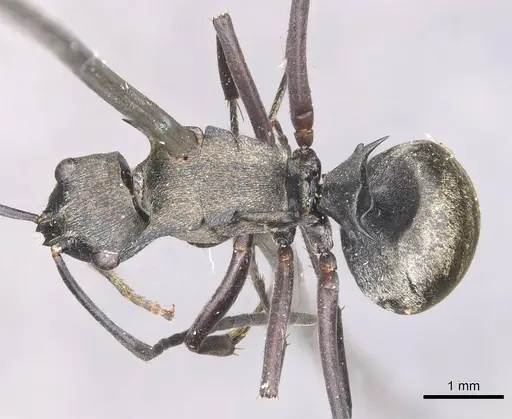
Literatuur
Verspreidingskaart laden...Producten laden...