
Polyrhachis fortis
- Wetenschappelijke naam
- Polyrhachis fortis
- Subgenus
- Myrmhopla
- Tribus
- Camponotini
- Subfamilie
- Formicinae
- Auteur
- Emery, 1893
- Verspreiding
- Gevonden in 0 landen
Introductie
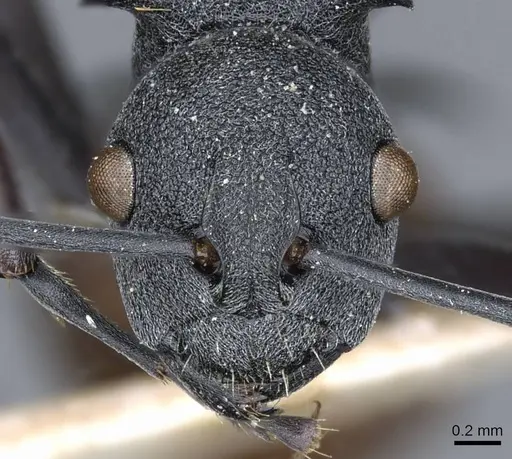
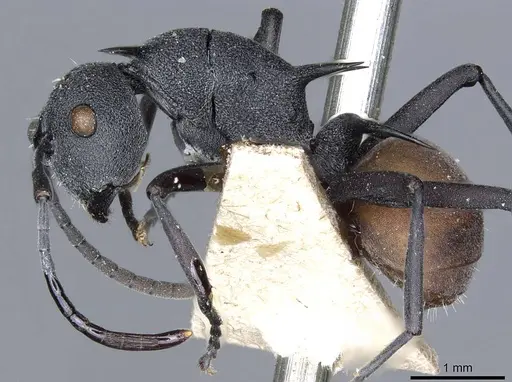
Polyrhachis fortis is a spiny ant species from the subgenus Myrmhopla, first described by Emery in 1893 from a worker collected in Myanmar . Workers have a classic spiny appearance with dark brown to black coloration and a waxy coating on the exoskeleton. The species is found in the Indomalaya region including Myanmar, Singapore, and Borneo . These ants are arboreal, nesting in vegetation and tree hollows rather than in soil. Like other Polyrhachis, they are generally docile and non-aggressive. When threatened, they rely on their formic acid spray - a trait shared with the Formicinae subfamily. Because no detailed biological studies exist for this species, some care recommendations are inferred from closely related Polyrhachis species.
Quick Summary
- Difficulty: Medium
- Origin & Habitat: Native to tropical Southeast Asia, recorded in Myanmar [1], Singapore, and Borneo [2]. Inhabits forested areas where they nest in vegetation, tree hollows, or under bark.
- Colony Type: Colony structure is not documented for this species. Based on typical Polyrhachis patterns, colonies are likely single-queen (monogyne), but this is unconfirmed.
- Size & Growth:
- Queen: Size data unavailable, no queen measurements are available in published literature for this species.
- Worker: Size data unavailable, worker size was described by Emery (1893) but specific measurements are not recorded in the available context. Based on the Polyrhachis genus, workers typically range from 5-10 mm.
- Colony: Unknown for this species, based on genus patterns, colonies likely reach several hundred workers.
- Growth: Moderate (inferred from tropical Formicinae patterns)
- Development: Estimated 6-8 weeks at optimal tropical temperatures (inferred from related Polyrhachis species) (Development time is not directly studied for Polyrhachis fortis. The estimate assumes conditions of 24-28°C and high humidity.)
- Antkeeping:
- Temperature: Keep at 24-28°C with a gentle heat gradient. These are tropical ants that need consistent warmth year-round. Below 22°C growth may slow or stop.
- Humidity: High humidity, keep the nest substrate consistently moist but not waterlogged. Mist the outworld regularly. If using a hygrometer, aim for 70-80%.
- Diapause: No, as a tropical species, they do not require hibernation. Maintain warm conditions year-round.
- Nesting: Arboreal nesting preferences. Provide Y-tong (AAC), plaster, or cork-based nests with vertical chambers and wood/branch elements. Avoid fully soil-based or acrylic nests. They may not readily accept test tube setups.
- Behavior: Docile and non-aggressive. Workers are active foragers and will search for food in the outworld. Their defense is formic acid spray (no sting). They have a normal waxy coating that helps with moisture regulation, do not confuse with mold. Escape risk is low for a medium-sized ant, standard Fluon barriers are sufficient.
- Common Issues: tropical temperature requirements mean colonies can struggle in cool rooms, high humidity needs can lead to mold if ventilation is poor, arboreal nesting means they may not accept test tube setups readily, wild-caught colonies may carry parasites that affect survival in captivity
Housing and Nest Preferences
Polyrhachis fortis is an arboreal species. In the wild, they nest in tree hollows or under bark. In captivity, they do best in Y-tong (AAC), plaster, or cork nests that mimic vertical wood chambers. Avoid acrylic or fully soil-based nests. Provide an outworld for foraging, a simple plastic box with ventilation works. They may reject test tube setups, so start them in a small temporary nest with a water source. Maintain high humidity by misting the outworld and keeping a water tube in the nest.
Feeding and Diet
Like other Polyrhachis, these ants are omnivorous. Offer a constant sugar source (honey or sugar water). For protein, provide small insects such as fruit flies, small crickets, or mealworms. They also accept honeydew if available. Feed every 2-3 days, removing uneaten prey after 24 hours. A varied diet promotes healthy colony growth.
Temperature and Seasonal Care
As a tropical species from Southeast Asia, Polyrhachis fortis needs warm conditions year-round. Keep the nest area at 24-28°C with a gentle thermal gradient. Use a heating cable on one side of the nest, but avoid direct heat that could dry out the nest. They do not require hibernation, maintain consistent tropical conditions. Temperatures below 22°C can halt development.
Behavior and Temperament
Polyrhachis fortis is docile and non-aggressive. Workers are active foragers and will explore the outworld. Their primary defense is formic acid spray (Formicinae characteristic), they do not sting. The waxy coating on their exoskeleton is normal and helps reduce water loss, do not mistake it for mold. Standard escape prevention (Fluon on outworld walls) is sufficient. They are not prone to escaping if kept properly.
Frequently Asked Questions
How long does it take for Polyrhachis fortis to produce first workers?
Not documented for this species. Based on related Polyrhachis, expect first workers roughly 6-8 weeks after eggs are laid, assuming optimal temperatures of 24-28°C.
Can I keep Polyrhachis fortis in a test tube?
It's not recommended. This is an arboreal species that prefers wood-based or Y-tong nests. Test tube setups are often rejected.
What temperature do Polyrhachis fortis need?
Keep them at 24-28°C year-round. As tropical ants, they need consistent warmth and will not tolerate prolonged cool conditions.
Do Polyrhachis fortis need hibernation?
No, they are tropical and do not require hibernation or diapause. Maintain warm temperatures throughout the year.
How big do Polyrhachis fortis colonies get?
Colony size is not recorded for this species. Based on other Polyrhachis species, they likely reach several hundred workers at maturity.
What do Polyrhachis fortis eat?
They are omnivorous. Provide a constant sugar source (honey or sugar water) and offer small insects (fruit flies, small crickets) every 2-3 days for protein.
Are Polyrhachis fortis good for beginners?
They are medium difficulty. Their arboreal nesting needs and tropical temperature/humidity requirements make them better suited for keepers with some experience.
Where is Polyrhachis fortis found?
They are native to Southeast Asia, specifically Myanmar, Singapore, and Borneo, where they inhabit tropical forests [2][1].
Why is my Polyrhachis fortis colony not growing?
Check temperature first, they need 24-28°C. Also ensure high humidity and a varied protein diet. Cool temperatures or dry conditions will slow growth.
Report an Issue
The current care sheet is based fully on literature. See inconsistencies, or something that's incorrect? Please , it will be resolved after review from an admin. Contributing to the blogs tab also helps providing information, to make us be able to further improve the caresheets. Thank you for your support!
References

Dit verzorgingsblad is gelicentieerd onder CC BY-SA 4.0 .
Community-blogs
CASENT0905601
Bekijk op AntWeb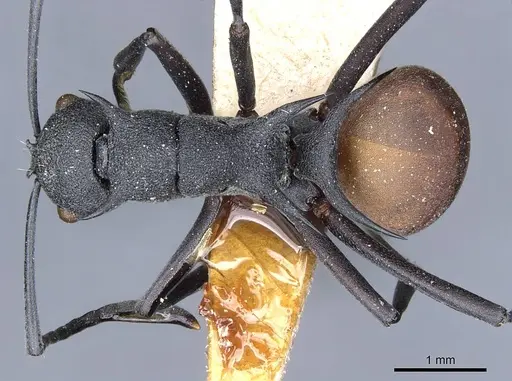
Literatuur
Verspreidingskaart laden...Producten laden...