
Plagiolepis capensis
- Wetenschappelijke naam
- Plagiolepis capensis
- Tribus
- Plagiolepidini
- Subfamilie
- Formicinae
- Auteur
- Mayr, 1865
- Verspreiding
- Gevonden in 0 landen
Introductie
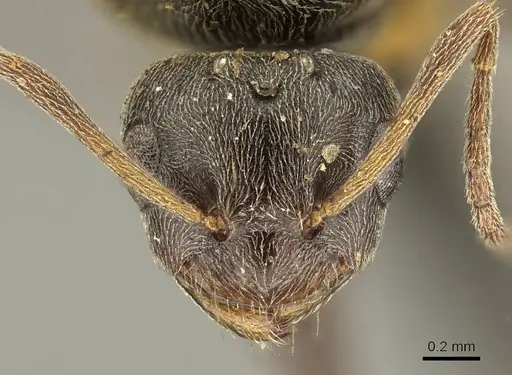
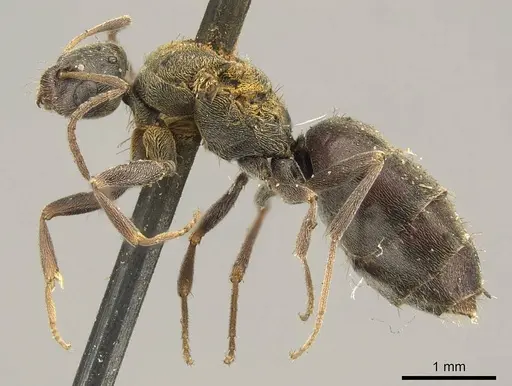
Plagiolepis capensis is a small ant species native to South Africa. The queen was described by Mayr in 1865 . Workers are small and slender, typically yellowish to brownish . This species is found in both invaded and non-invaded sites in South Africa . Plagiolepis capensis has been documented in areas invaded by the Argentine ant, Linepithema humile, showing adaptability to disturbed habitats .
Quick Summary
- Difficulty: Hard
- Origin & Habitat: Native to South Africa, found in natural and disturbed habitats, including sites invaded by Linepithema humile [2][3][1].
- Colony Type: Colony structure is unconfirmed. Based on typical Plagiolepis patterns, likely monogyne (single queen) but not directly documented.
- Size & Growth:
- Queen: Size data unavailable, no total length measurements. Inferred from Plagiolepis genus: approximately 4-6 mm [1].
- Worker: Size data unavailable, no total length measurements. Inferred from Plagiolepis genus: approximately 1.5-3 mm [1].
- Colony: Up to several hundred workers.
- Growth: Unknown
- Development: Unknown, no species-specific data. Based on typical Formicinae development, estimated 6-10 weeks at optimal temperature. (Temperature-dependent, warmer temperatures may speed up development.)
- Antkeeping:
- Temperature: Unconfirmed. Based on South African distribution, likely tolerates 18-28°C. Start around 22-25°C and observe colony activity.
- Humidity: Keep nest substrate lightly moist, allowing for some drying between waterings.
- Diapause: Unknown, no studies on overwintering. South Africa has mild winters, so diapause may not be required.
- Nesting: Based on genus patterns, likely nests in soil or under stones. Use Y-tong or plaster nest with moderate humidity [1].
- Behavior: Plagiolepis species are generally docile and non-aggressive [1]. Workers are small and forage individually or in small groups. Escape prevention is critical due to their tiny size, they can easily escape through standard gaps [1].
- Common Issues: limited documentation means care requirements are estimated from genus patterns., tiny size creates high escape risk, use fine mesh and tight-fitting barriers., no confirmed feeding preferences, start with sugar water and small protein sources., wild-caught colonies may carry parasites or diseases not well-understood.
Housing and Nest Setup
Since specific nesting requirements are unconfirmed for Plagiolepis capensis, use a setup that works well for small Plagiolepis species. A clean test tube setup with a water reservoir works well for founding colonies. For established colonies, a Y-tong (AAC) nest or plaster nest with narrow chambers scaled to their tiny size is appropriate. Ensure excellent escape prevention, these ants are very small and can squeeze through gaps that seem impossible. Use fine mesh on any ventilation holes and check all seams regularly. Keep the nest moderately humid with a gradient so workers can choose their preferred moisture level. [1]
Feeding and Diet
Feeding preferences have not been documented for this specific species. Based on typical Plagiolepis behavior, they are generalist foragers that likely consume honeydew, nectar, and small insects. Offer sugar water or honey as a constant carbohydrate source. For protein, start with small prey items like fruit flies, pinhead crickets, or mealworm pieces. Observe what your colony accepts and adjust accordingly. Remove uneaten food promptly to prevent mold. Given their small size, prey items should be appropriately sized, nothing larger than the workers themselves. [1]
Temperature and Seasonal Care
Temperature requirements are not well-documented for this species. Based on its South African distribution, it likely tolerates a range from roughly 18°C to 28°C, with an optimal range around 22-25°C. Use a heating cable on one side of the nest to create a temperature gradient, allowing workers to regulate their own exposure. Monitor colony activity, if workers cluster consistently in warmer areas, increase heat slightly, if they avoid heated areas, reduce it. Winter care is uncertain since this species comes from a relatively mild climate. A slight cool period (15-18°C) for 2-3 months during winter months may be beneficial but is likely not required for survival.
Behavior and Handling
Specific behavioral observations for Plagiolepis capensis are limited, but the genus is known for being docile and non-confrontational. Workers are small and likely forage primarily individually or in small groups rather than forming large raiding parties. They possess the typical Formicinae ability to spray formic acid as a defense, though given their tiny size, this is unlikely to be noticeable to humans. They are not known to be aggressive toward keepers. The primary concern for keepers is their small size making escape prevention critical, even small gaps in tubing or lid seals can allow escape. Regular colony checks and fine mesh barriers are essential. [1]
Colony Development and Growth
No specific development timeline has been documented for Plagiolepis capensis. Based on typical Formicinae development patterns, expect roughly 6-10 weeks from egg to first worker (nanitic) at optimal temperature. Initial colony growth will likely be slow as the queen raises her first few workers alone. Once the first nanitics emerge, growth typically accelerates but remains moderate compared to faster-growing genera like Lasius or Camponotus. Be patient with founding colonies, disturbing them too often can cause stress and abandonment. Ensure consistent food availability and appropriate temperature to support development.
Frequently Asked Questions
How long does it take for Plagiolepis capensis to produce first workers?
The exact timeline is unconfirmed for this species. Based on typical Formicinae development, expect approximately 6-10 weeks from egg to first worker at optimal temperature (around 22-25°C). Initial founding can be slow, be patient and avoid disturbing the queen during this critical period.
What do Plagiolepis capensis ants eat?
Feeding preferences are not documented for this specific species. Based on typical Plagiolepis behavior, offer sugar water or honey as a constant carbohydrate source. For protein, provide small prey items like fruit flies, small mealworms, or appropriately-sized insects. Remove uneaten food promptly to prevent mold. [1]
Can I keep Plagiolepis capensis in a test tube?
Yes, a test tube setup is appropriate for founding colonies. Use a clean test tube with a water reservoir and cotton barrier. Ensure the tube is sealed with appropriate material (cotton or foam) and place it in a dark, quiet location. For established colonies, consider transitioning to a small formicarium with chambers scaled to their tiny size. [1]
What temperature do Plagiolepis capensis ants need?
Temperature requirements are unconfirmed, but based on South African distribution, aim for 22-25°C as a starting point. Create a gradient using a heating cable on part of the nest so workers can self-regulate. They likely tolerate 18-28°C range but avoid extremes.
Do Plagiolepis capensis need hibernation?
Diapause requirements are unknown. South Africa has relatively mild winters in most of this species' range, so a true hibernation may not be necessary. If your colony shows reduced activity in winter, providing a cool period (15-18°C) for 2-3 months may be beneficial but is likely not required for survival.
How big do Plagiolepis capensis colonies get?
Colony size is unconfirmed for this species. Based on typical Plagiolepis colony sizes, expect moderate colonies of up to several hundred workers. Growth will be slow during founding but typically accelerates once the first workers emerge.
Are Plagiolepis capensis good for beginners?
This species has limited documentation, making it challenging even for experienced keepers. The lack of specific care information means you'll be relying heavily on genus-level estimates. For beginners, species with more established care guides (like Lasius or Messor) would be more suitable.
Why are my Plagiolepis capensis escaping?
Their tiny size makes escape common. Check all connections, lid seals, and ventilation holes. Use fine mesh (at least 0.5mm or smaller) on any openings. Inspect tubing connections for gaps. Small Plagiolepis species can escape through remarkably tiny spaces. [1]
When should I move Plagiolepis capensis to a formicarium?
Move to a formicarium once the colony reaches roughly 20-30 workers and the test tube setup becomes cramped. Ensure the formicarium has appropriately sized chambers, too-large chambers can stress small colonies. A Y-tong or plaster nest with small chambers works well. [1]
Report an Issue
The current care sheet is based fully on literature. See inconsistencies, or something that's incorrect? Please , it will be resolved after review from an admin. Contributing to the blogs tab also helps providing information, to make us be able to further improve the caresheets. Thank you for your support!
References

Dit verzorgingsblad is gelicentieerd onder CC BY-SA 4.0 .
Community-blogs
CASENT0915713
Bekijk op AntWeb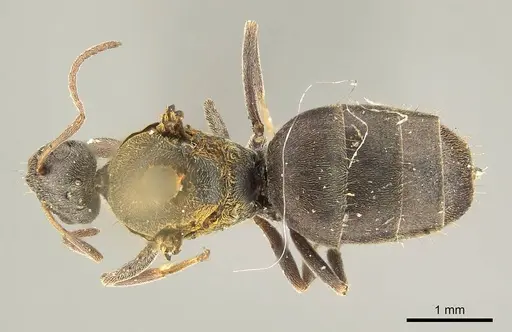
Literatuur
Verspreidingskaart laden...Producten laden...