
Pheidole bruchi
- Wetenschappelijke naam
- Pheidole bruchi
- Tribus
- Attini
- Subfamilie
- Myrmicinae
- Auteur
- Forel, 1914
- Verspreiding
- Gevonden in 0 landen
Introductie
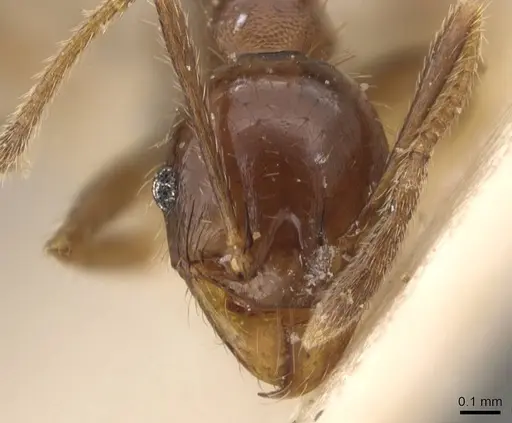
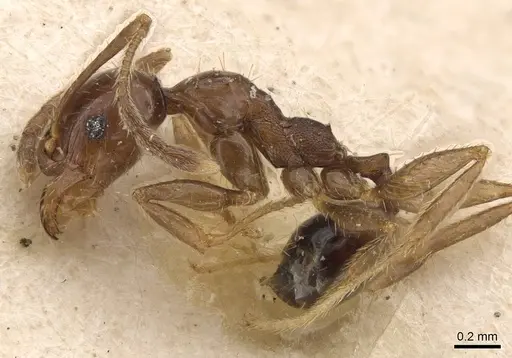
Pheidole bruchi is a tiny ant species native to southern South America, recorded in Argentina, Brazil, Paraguay, and Colombia . Workers are medium brown with slightly lighter yellowish-brown appendages . The species was named after Argentine entomologist Carlos Bruch . Very little is known about the specific biology of P. bruchi. The original description only covers the minor worker caste, and no research has documented its colony structure, founding behavior, or care requirements . As a Neotropical Pheidole, it likely shares traits with related species, but keepers should observe and learn through experimentation.
Quick Summary
- Difficulty: Medium
- Origin & Habitat: Neotropical region, recorded in Argentina, Brazil, Paraguay, and Colombia [1][2]. Found in ground-nesting habitats across subtropical and warm temperate areas.
- Colony Type: Unconfirmed, no specific data on queen number or social structure for this species.
- Size & Growth:
- Queen: Size data unavailable, no total length measurements available.
- Worker: Size data unavailable, no total length measurements available.
- Colony: Unknown, based on genus patterns, colonies may reach hundreds of workers.
- Growth: Unknown, estimated Moderate based on genus patterns.
- Development: Estimated 6-8 weeks at warm temperatures. (No direct data exists for this species, estimates based on genus-level patterns for small Neotropical Pheidole.)
- Antkeeping:
- Temperature: Based on Neotropical distribution [1][2], aim for 22-26°C. Room temperature is likely acceptable, but adjust based on colony activity.
- Humidity: Keep nest substrate moderately moist but not waterlogged. Provide a water source in the outworld.
- Diapause: Unknown, no data on dormancy requirements for this species.
- Nesting: Natural nesting habits are unknown. In captivity, use a test tube setup for founding colonies, transitioning to a Y-tong or plaster nest as the colony grows.
- Behavior: Likely docile, major workers defend the colony, while minors handle foraging and brood care. Their tiny size requires excellent escape prevention.
- Common Issues: escapes due to tiny size, use fine mesh barriers and Fluon on outworld rims., limited biological data, keepers must observe colony behavior to learn., slow growth may require patience compared to larger species.
Nest Preferences
No specific data exists on natural nesting for Pheidole bruchi. Based on typical Pheidole patterns, they are ground-nesting ants that excavate soil or use existing cavities [3]. In captivity, a standard test tube setup works well for founding colonies. As the colony grows, transition to a Y-tong or plaster nest with appropriately sized chambers for their tiny workers. Avoid tall, open spaces and provide tight, enclosed chambers to help them feel secure.
Feeding and Diet
Pheidole species are typically omnivorous with a preference for protein sources [3]. For P. bruchi, offer a varied diet including small live or frozen prey (e.g., fruit flies, pinhead crickets) and sugar sources (e.g., honey water). Start with protein-rich foods and observe what the colony accepts. Remove uneaten prey after 24-48 hours to prevent mold.
Temperature and Care
As a Neotropical species from Argentina, Pheidole bruchi likely prefers warmer temperatures [1][2]. Aim for 22-26°C, with room temperature (20-24°C) as a baseline. Use a heating cable on one side of the nest if needed, but always provide a temperature gradient. Monitor colony behavior for signs of appropriate conditions.
Behavior and Temperament
Pheidole bruchi will likely show typical Pheidole behavior: minor workers handle daily tasks, while major workers defend the colony [3]. The species is not considered aggressive toward keepers, but their tiny size is their main defense. Escape prevention is critical, use fine mesh on all openings and apply Fluon barriers.
Colony Development
No specific development timeline exists for P. bruchi. Based on typical Pheidole patterns, expect the queen to lay eggs within a week of mating, with first workers emerging in approximately 6-8 weeks at warm temperatures. Initial colonies grow slowly, and full maturity may take 1-2 years.
Frequently Asked Questions
How long does it take for Pheidole bruchi to produce first workers?
No specific data exists, but based on typical Pheidole development, expect 6-8 weeks from egg to first worker at warm temperatures (24-26°C).
What do Pheidole bruchi ants eat?
While not specifically documented, Pheidole ants are typically omnivorous [3]. Offer small protein sources like fruit flies or tiny crickets, along with sugar water or honey.
Can I keep multiple Pheidole bruchi queens together?
No data exists on colony structure for this species. Most Pheidole are single-queen colonies, and combining unrelated queens is not recommended due to potential fights.
What temperature is best for Pheidole bruchi?
Based on their Neotropical distribution [1][2], aim for 22-26°C. Room temperature is likely acceptable, but warmer conditions may increase activity.
How big do Pheidole bruchi colonies get?
Colony size is not documented. Based on typical Pheidole patterns, colonies may reach hundreds of workers over time.
Do Pheidole bruchi need hibernation?
No specific data exists. Argentine populations experience cooler winters, but dormancy requirements are unknown for this species.
Why are my Pheidole bruchi escaping?
Their tiny size makes them excellent escape artists. Use fine mesh (at least 0.5mm or smaller) on all ventilation holes and apply Fluon or similar barrier gel to the rim of the outworld.
Is Pheidole bruchi good for beginners?
This species is suitable for beginners who understand that limited biological data exists. Follow standard Pheidole care guidelines and be prepared to learn through observation.
When should I move my colony to a formicarium?
Move to a larger nest when the test tube becomes crowded or the colony reaches 30-50 workers. Ensure the new nest has appropriately sized chambers for their tiny body size.
Report an Issue
The current care sheet is based fully on literature. See inconsistencies, or something that's incorrect? Please , it will be resolved after review from an admin. Contributing to the blogs tab also helps providing information, to make us be able to further improve the caresheets. Thank you for your support!
References

Dit verzorgingsblad is gelicentieerd onder CC BY-SA 4.0 .
Community-blogs
CASENT0908163
Bekijk op AntWeb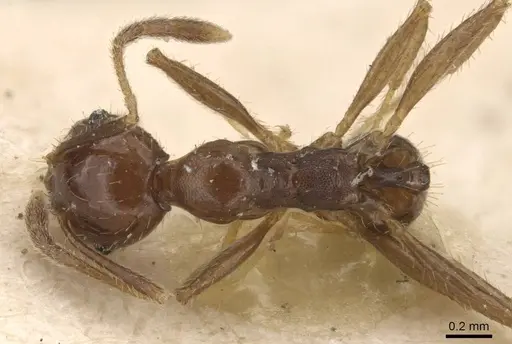
Literatuur
Verspreidingskaart laden...Producten laden...