
Pheidole alina
- Wetenschappelijke naam
- Pheidole alina
- Tribus
- Attini
- Subfamilie
- Myrmicinae
- Auteur
- Salata & Fisher, 2020
- Verspreiding
- Gevonden in 1 landen
Introductie
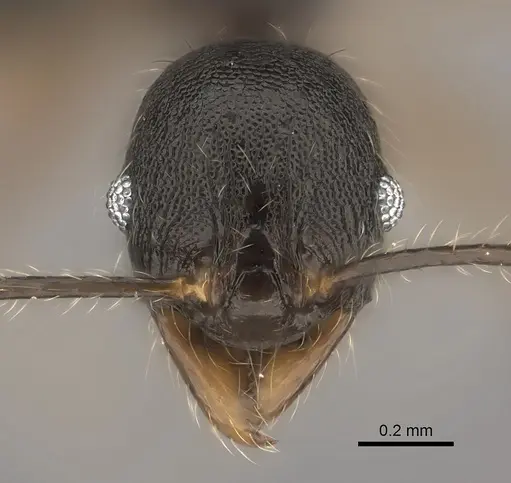
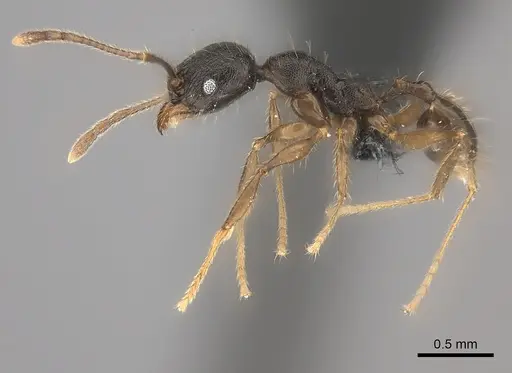
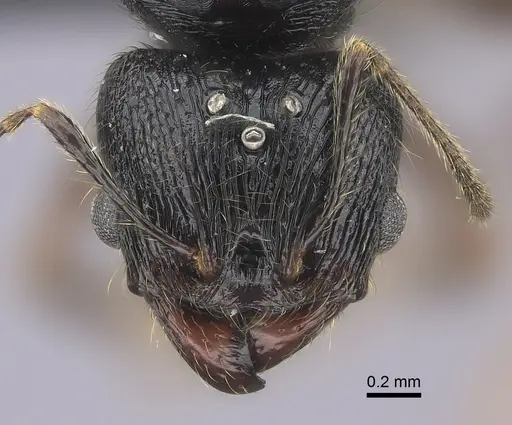
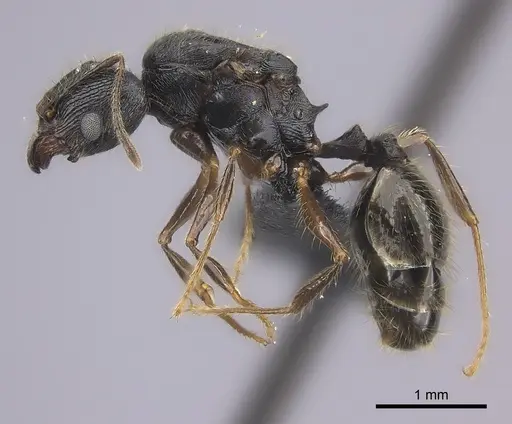
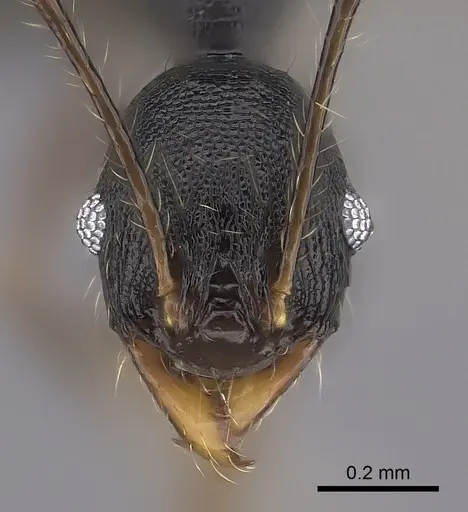
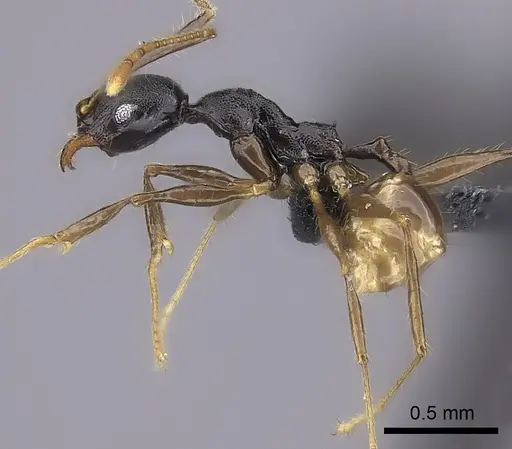
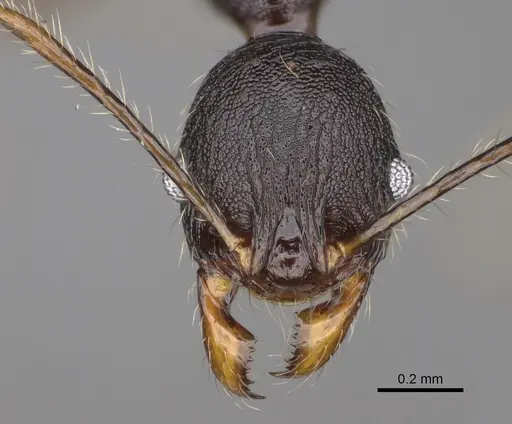
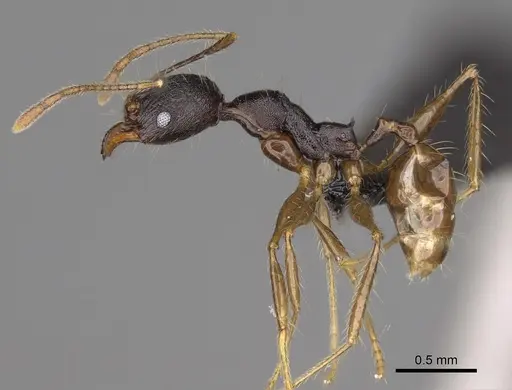
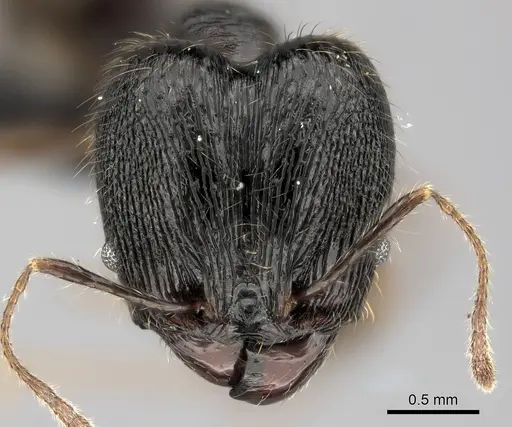
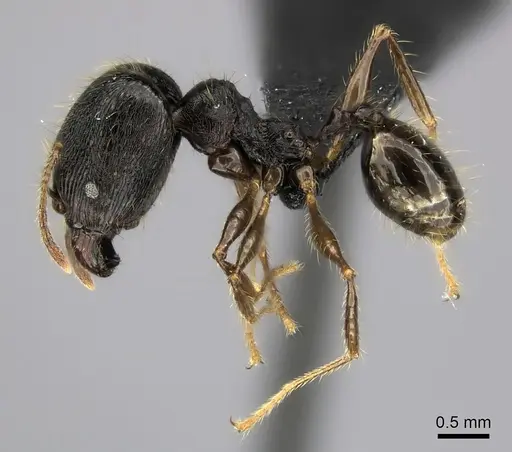
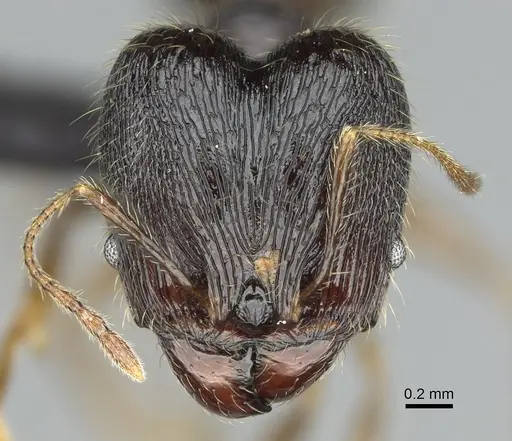
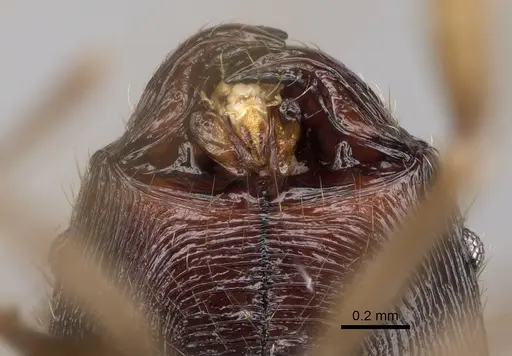
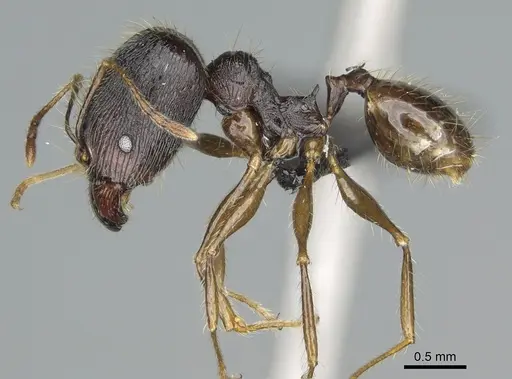
Pheidole alina is a moderately large ant species from northern Madagascar, described in 2020 . Major workers have a black body with distinctive head features, while minor workers are smaller and range from black to dark brown . The species is found only in the northernmost parts of Madagascar, particularly in Antsiranana prefecture, in montane rainforest and shrubland at elevations between 1270-2000m . Nests are located in rotten logs, under moss, or in twigs . This species is part of a unique group of three dark-bodied Pheidole that are sympatric in northern Madagascar. Major workers have thick longitudinal rugae on the head and bulge-like inner hypostomal teeth, distinguishing them from relatives Pheidole trichotos and Pheidole mainty .
Quick Summary
- Difficulty: Medium
- Origin & Habitat: Northern Madagascar (Antsiranana prefecture), specifically Parc National de Marojejy. Found in montane rainforest and montane shrubland at 1270-2000m elevation. Nests are located in rotten logs, under moss above and on the ground, and in Melastomataceae twigs [1].
- Colony Type: Colony structure is unconfirmed. No specific data exists for Pheidole alina regarding queen number or social structure.
- Size & Growth:
- Queen: Size data unavailable, no total length measurements provided in research [1].
- Worker: Size data unavailable, measurements in research are for head length, not body length [1].
- Colony: Colony size is not documented. Based on typical Pheidole patterns, colonies may reach up to several thousand workers, but this is inferred.
- Growth: Moderate, inferred from genus patterns.
- Development: Estimated 6-10 weeks based on typical Pheidole development at optimal temperature. (Development time is inferred from genus-level data since species-specific timing has not been documented. Expect faster development in warmer conditions and slower in cooler conditions.)
- Antkeeping:
- Temperature: Based on montane habitat, keep at cooler temperatures around 20-24°C. This is inferred from elevation and habitat [1].
- Humidity: High humidity is likely required due to montane rainforest habitat. Keep the nest substrate consistently moist but not waterlogged.
- Diapause: Diapause requirements are unconfirmed. However, based on elevation, a cooler period may be beneficial for colony health.
- Nesting: Natural nesting sites include rotten logs, moss, and twigs [1]. In captivity, use moist substrate or nests that retain humidity, such as Y-tong or plaster nests.
- Behavior: Pheidole alina is likely to show typical Pheidole behavior, active foragers that harvest seeds and scavenge for protein. Major workers defend the colony, while minors handle foraging. They are moderately aggressive when defending but not dangerous to keepers. Escape prevention is critical due to tiny minor workers.
- Common Issues: escape prevention is critical due to tiny minor workers, they can squeeze through small gaps., high humidity requirements can lead to mold if ventilation is poor., slow colony growth may cause beginners to overfeed or disturb the colony., wild-caught colonies may carry parasites that can harm the colony., montane origin means they may not tolerate prolonged heat exposure.
Housing and Nest Setup
You should set up a naturalistic habitat that mimics montane forest conditions. Use a substrate mix that holds moisture well, such as soil, peat, and sand. Keep the substrate consistently moist but never waterlogged [1]. Nests like Y-tong or plaster work well if humidity is maintained. Because minor workers are very small, escape prevention is essential, use fine mesh on ventilation holes and seal all connections. Provide a water tube for drinking and humidity maintenance. Include a foraging area with seeds and protein sources.
Feeding and Diet
Based on typical Pheidole behavior, offer small seeds like millet, chia, or dandelion as a staple. Provide protein sources such as fruit flies, pinhead crickets, or mealworms 2-3 times per week. Sugar water or honey can be offered occasionally. Feed seeds continuously and remove uneaten food to prevent mold.
Temperature and Seasonal Care
Keep the nest area at 20-24°C, as this species comes from high-elevation montane habitats [1]. A gentle temperature gradient allows workers to self-regulate. Avoid temperatures above 28°C. During winter, consider a cooler period at 15-18°C for 2-3 months, as this may benefit colony health.
Humidity Management
Aim for high humidity due to the montane rainforest habitat. Keep the nest substrate moist but not waterlogged. A water tube helps maintain humidity and provides drinking water. Monitor for condensation and mold, and ensure good ventilation.
Colony Development
Expect slow initial growth, with first workers appearing in 6-10 weeks at optimal temperature. The colony will start small and accelerate once workers establish. Major workers develop as the colony matures, handling seed processing and defense. Be patient during founding to avoid overfeeding or disturbance.
Handling and Temperament
Pheidole alina is not particularly aggressive toward keepers but will defend the colony if threatened. Major workers have stingers but are unlikely to penetrate human skin effectively. The main concern is escape prevention due to tiny minor workers. Observe quietly and avoid vibrations to minimize stress.
Frequently Asked Questions
How long does it take for Pheidole alina to have first workers?
Based on typical Pheidole development, expect 6-10 weeks from egg to first worker at optimal temperature. The exact timing depends on temperature and feeding.
What do Pheidole alina ants eat?
They are typical Pheidole, offer small seeds as a staple and protein sources like fruit flies or crickets 2-3 times per week.
Can I keep multiple queens together?
Colony structure is unconfirmed for this species. Most Pheidole are single-queen colonies, but it is not recommended to combine unrelated queens, house them separately.
What temperature do Pheidole alina ants need?
Keep them at 20-24°C, as they come from high-elevation montane Madagascar [1]. Avoid temperatures above 28°C.
Are Pheidole alina good for beginners?
This is a medium-difficulty species. They require high humidity and cool temperatures, which may be challenging. Their tiny size demands excellent escape prevention.
When should I move Pheidole alina to a formicarium?
Keep colonies in a test tube setup until they have 50+ workers. Once the colony is stable, move them to a formicarium with appropriate humidity control.
Do Pheidole alina need hibernation?
Diapause is unconfirmed, but based on elevation, a cooler period may be beneficial for colony health.
Why are my Pheidole alina escaping?
Minor workers are extremely small and can squeeze through tiny gaps. Check all ventilation holes and lid seams, and use fine mesh for escape prevention [1].
How big do Pheidole alina colonies get?
Colony size is not documented, but based on typical Pheidole patterns, they may reach up to several thousand workers.
Report an Issue
The current care sheet is based fully on literature. See inconsistencies, or something that's incorrect? Please , it will be resolved after review from an admin. Contributing to the blogs tab also helps providing information, to make us be able to further improve the caresheets. Thank you for your support!
References

Dit verzorgingsblad is gelicentieerd onder CC BY-SA 4.0 .
Community-blogs
CASENT0153229
Bekijk op AntWeb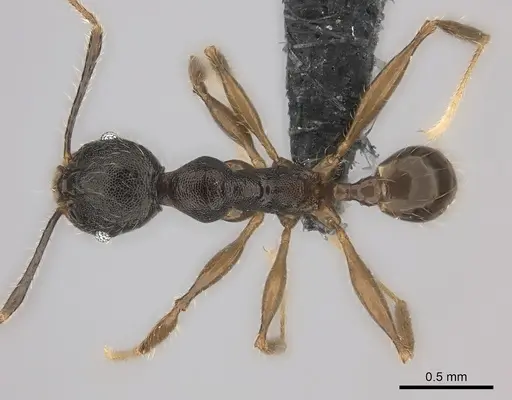
CASENT0235123
Bekijk op AntWeb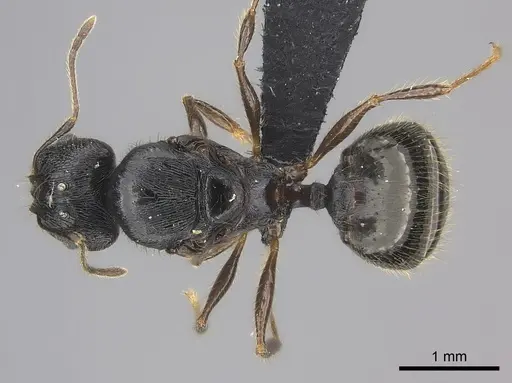
CASENT0487331
Bekijk op AntWeb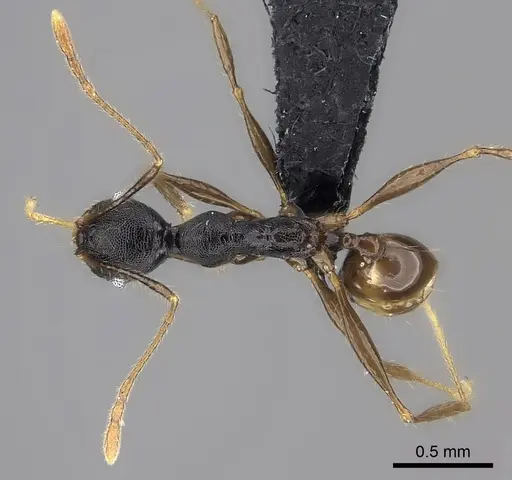
CASENT0487334
Bekijk op AntWeb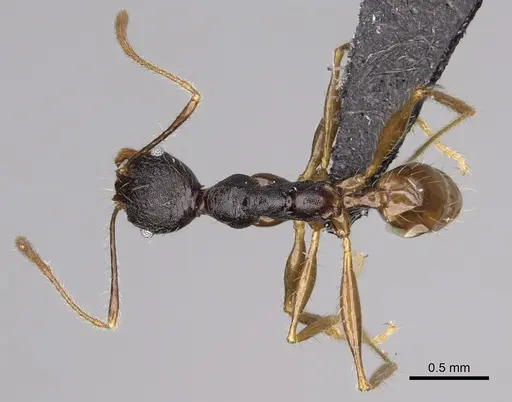
CASENT0487336
Bekijk op AntWeb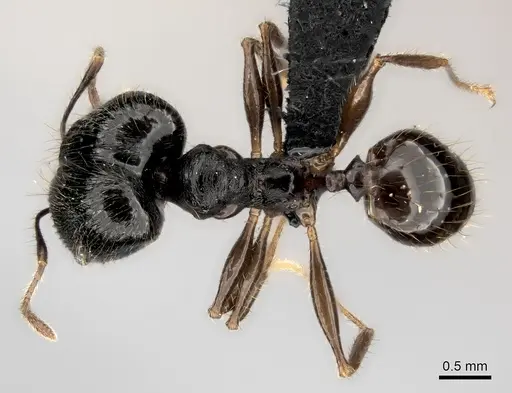
CASENT0923257
Bekijk op AntWeb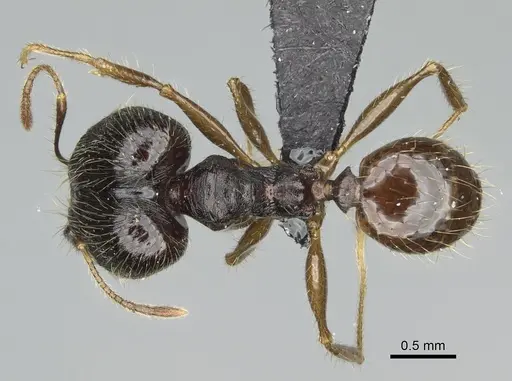
Literatuur
Verspreidingskaart laden...Producten laden...