
Pachycondyla inca
- Wetenschappelijke naam
- Pachycondyla inca
- Tribus
- Ponerini
- Subfamilie
- Ponerinae
- Auteur
- Emery, 1901
- Verspreiding
- Gevonden in 0 landen
Introductie
Pachycondyla inca is a large predatory ant native to South America, found in Peru, Brazil, and Bolivia. Workers measure approximately 16mm in total length, with queens at 18mm and males at 12mm . Specimens have been collected at elevations between 1525-1600 meters . This species is poorly studied and closely resembles Pachycondyla impressa and Pachycondyla purpurascens, distinguished by its smooth mandible surface . As a Ponerinae ant, it has a potent sting, but specific biological details are unknown .
Quick Summary
- Difficulty: Hard
- Origin & Habitat: Native to Peru, Brazil, and Bolivia in the Neotropical region, collected at 1525-1600 meters elevation [1][2]. Habitat specifics are unknown.
- Colony Type: Unconfirmed, no scientific documentation on colony structure.
- Size & Growth:
- Antkeeping:
- Temperature: Unknown, based on Neotropical distribution, aim for warm conditions around 24-28°C, but this is an estimate [1].
- Humidity: Unknown, as a Neotropical species, moderate to high humidity is likely, but keep substrate consistently moist but not waterlogged [1].
- Diapause: Unknown, no data on overwintering requirements.
- Nesting: Natural nesting habits unknown. Based on typical Pachycondyla preferences, likely nest in soil or rotting wood. In captivity, use Y-tong or plaster nests with moisture reservoirs [1].
- Behavior: Behavior is poorly documented. As a Ponerinae ant, it likely has a potent sting and is predatory. Workers are large (16mm), so escape prevention is moderate. They are likely defensive but not aggressive unless threatened.
- Common Issues: very limited biological data makes specific care recommendations uncertain., no documented colony size or growth rate, keepers must establish their own baselines., founding behavior is unconfirmed, do not assume claustral without evidence., nuptial flight timing is unknown., high-elevation origin suggests some tolerance for cooler conditions, but optimal range is unstudied.
Appearance and Identification
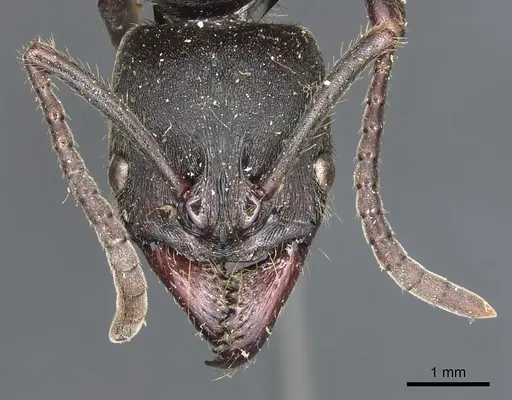
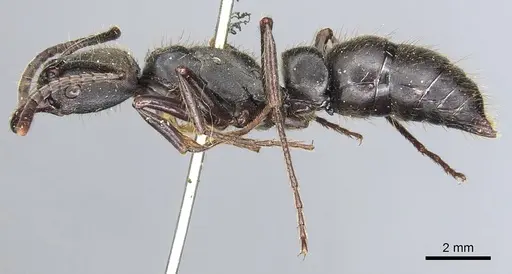
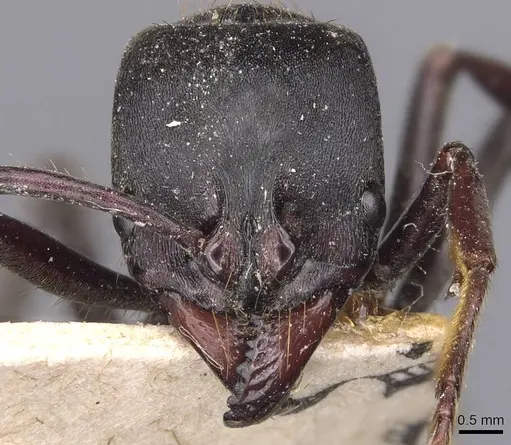
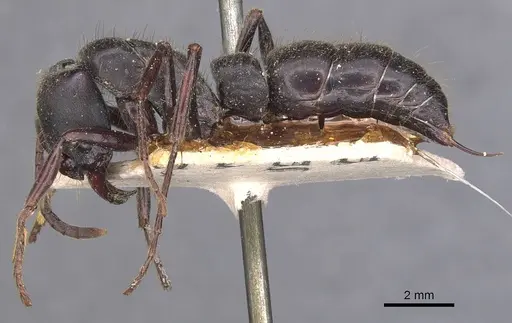
Pachycondyla inca workers are large ants measuring approximately 16mm in total length, with a dark reddish-brown body and reddish-brown appendages [1]. The queen is larger at 18mm, and males are about 12mm [1]. The mandibles are smooth near the bases, with striae and punctures elsewhere [1]. This species can be distinguished from similar Pachycondyla species by its longer clypeus and smooth mandible surface [1].
Distribution and Habitat
Pachycondyla inca is found in Peru, Brazil, and Bolivia, with specimens collected at elevations between 1525-1600 meters [1][2]. The specific habitat type is not documented [1].
Nest Preferences and Housing
Natural nesting habits are unknown. Based on typical Pachycondyla genus behavior, they likely nest in soil or rotting wood [1]. In captivity, use Y-tong or plaster nests with moisture reservoirs for this large species [1]. Maintain moderate to high humidity by keeping the substrate consistently moist but not waterlogged [1].
Feeding and Diet
As a Ponerinae ant, Pachycondyla inca is likely predatory on insects, but no specific diet studies exist [1]. In captivity, offer protein prey like mealworms or crickets 2-3 times per week, and provide sugar sources such as honey water [1]. Remove uneaten prey after 24-48 hours to prevent mold.
Temperature and Seasonal Care
Temperature requirements are unknown. Based on its Neotropical distribution, aim for warm conditions around 24-28°C, but this is an estimate [1]. Create a temperature gradient using a heating cable or mat on one side of the nest, allowing the colony to self-regulate [1].
Behavior and Temperament
Specific behavior is poorly documented. As a Ponerinae ant, it likely has a potent sting and is predatory [1]. Workers are large (16mm), so escape prevention is moderate with standard barriers [1]. They are defensive but not aggressive unless threatened [1].
Frequently Asked Questions
How long does it take for Pachycondyla inca to produce first workers?
The egg-to-worker timeline is unknown as no development studies exist [1]. Based on typical Pachycondyla genus patterns, it may take 6-10 weeks at warm temperatures, but this is an estimate [1].
What do Pachycondyla inca ants eat?
No specific diet studies exist, but as a Ponerinae ant, it is likely predatory on insects [1]. Feed protein prey like mealworms or crickets 2-3 times per week, and provide sugar sources [1].
Do Pachycondyla inca ants sting?
Yes, as a Ponerinae ant, they have a potent sting [1]. Handle with care and use proper escape prevention.
What temperature and humidity do Pachycondyla inca need?
Specific requirements are unknown. Aim for warm conditions around 24-28°C and moderate to high humidity, keeping substrate moist but not waterlogged [1].
Are Pachycondyla inca good for beginners?
No, this species is not recommended for beginners due to the complete lack of documented care information. Experienced keepers may adapt, but beginners should choose species with well-documented requirements.
How big do Pachycondyla inca colonies get?
Colony size is unknown, no scientific data exists [1].
Can I keep multiple Pachycondyla inca queens together?
Colony structure is unconfirmed. No data exists on whether this species is monogyne or polygyne. Do not combine unrelated queens unless documented polygyny is observed.
What type of nest should I use for Pachycondyla inca?
Natural nesting is undocumented. Use Y-tong or plaster nests with moisture reservoirs for this large species [1].
Does Pachycondyla inca need hibernation or diapause?
Diapause requirements are unknown. No specific overwintering studies exist [1].
Where is Pachycondyla inca found in the wild?
This species is found in South America, specifically Peru, Brazil, and Bolivia, at elevations between 1525-1600 meters [1][2].
Report an Issue
The current care sheet is based fully on literature. See inconsistencies, or something that's incorrect? Please , it will be resolved after review from an admin. Contributing to the blogs tab also helps providing information, to make us be able to further improve the caresheets. Thank you for your support!
References

Dit verzorgingsblad is gelicentieerd onder CC BY-SA 4.0 .
Community-blogs
CASENT0903888
Bekijk op AntWeb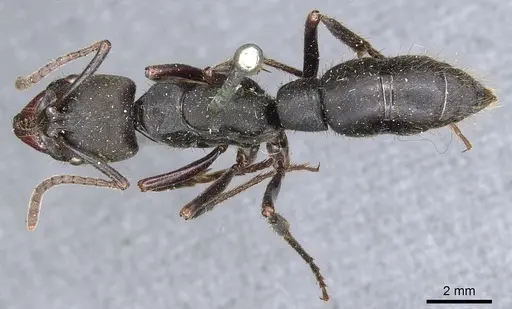
CASENT0907247
Bekijk op AntWeb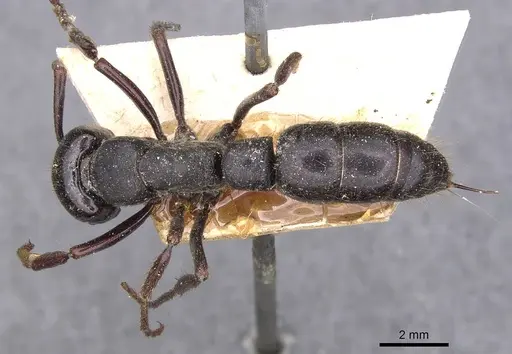
Literatuur
Verspreidingskaart laden...Producten laden...