
Odontomachus banksi
- Wetenschappelijke naam
- Odontomachus banksi
- Tribus
- Ponerini
- Subfamilie
- Ponerinae
- Auteur
- Forel, 1910
- Verspreiding
- Gevonden in 1 landen
Introductie
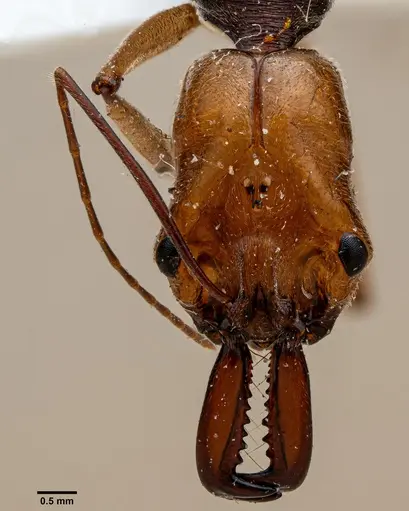
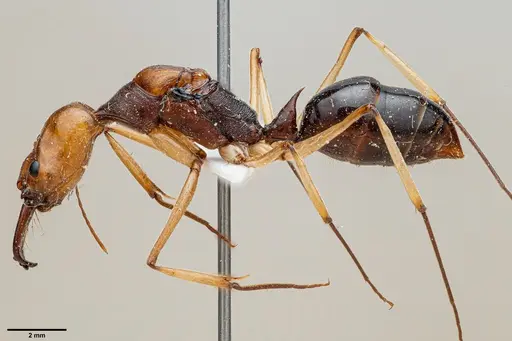
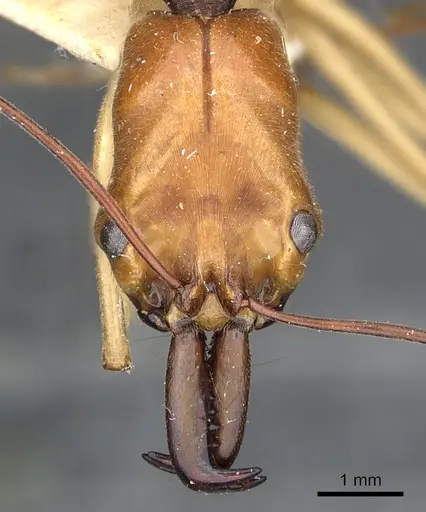
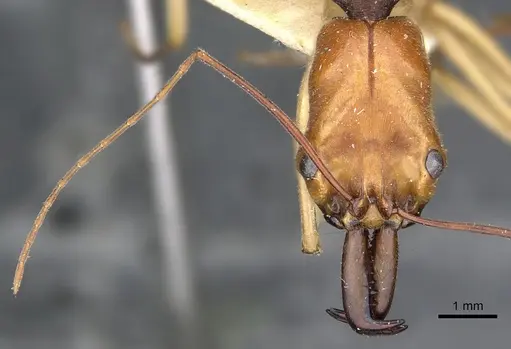
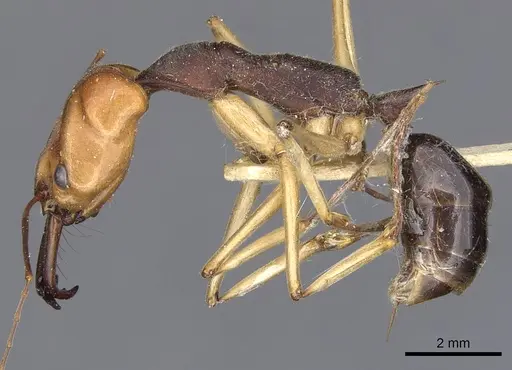
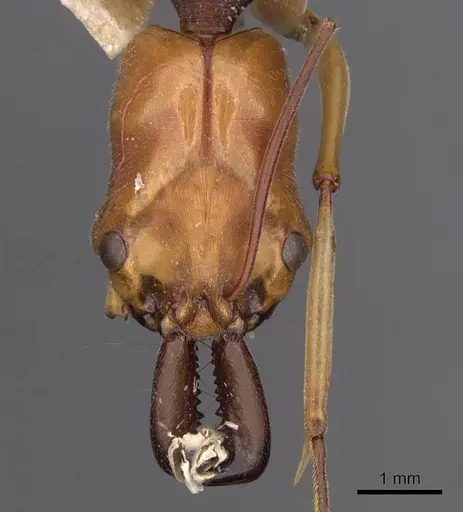
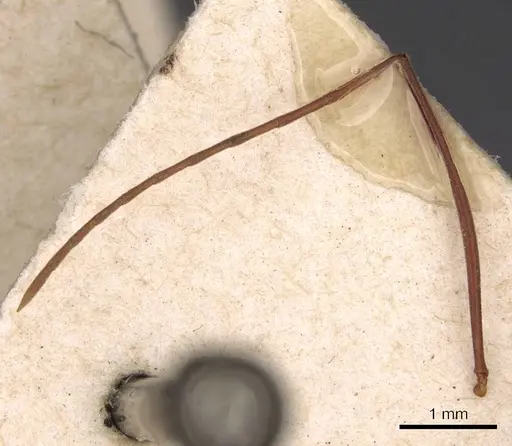
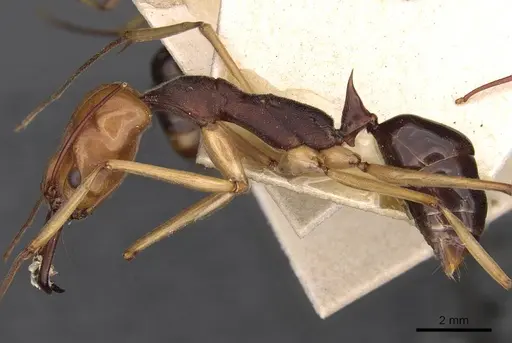
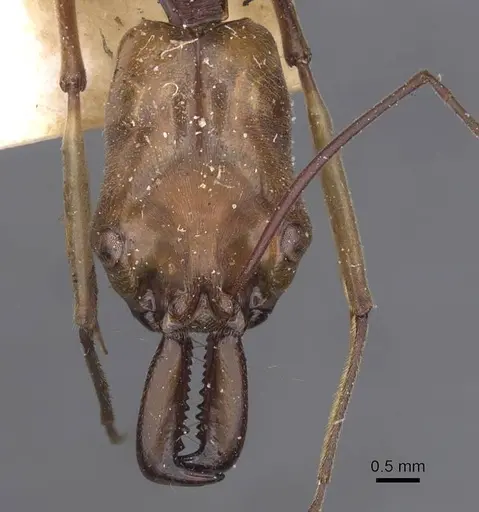
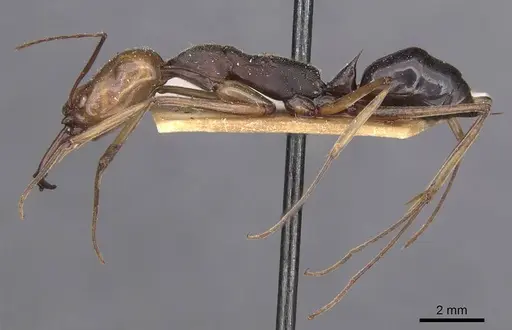
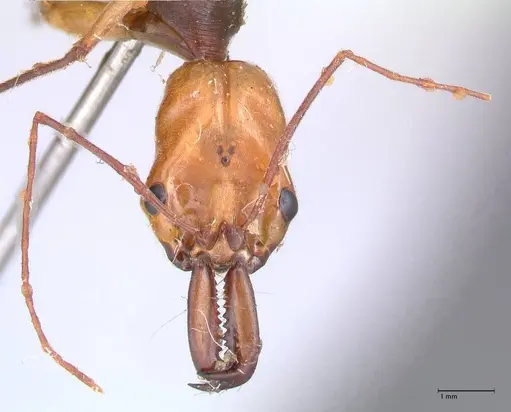
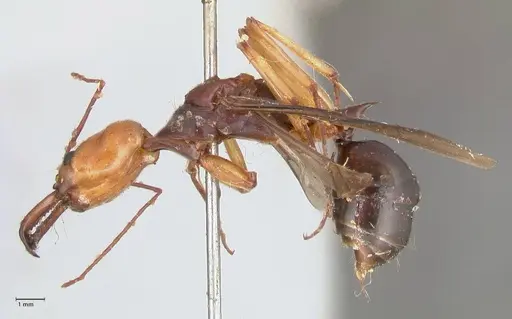
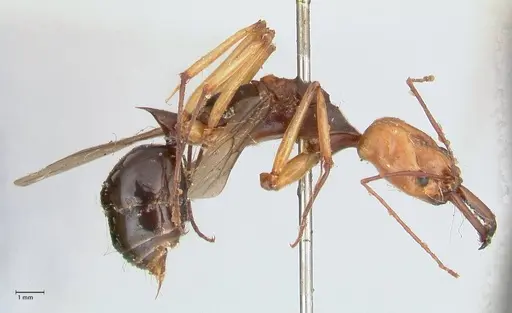
Odontomachus banksi is a medium-sized trap-jaw ant endemic to the Philippines, found only in central and southern Luzon Island . Workers measure 12.38-15.75 mm in total length, with a bicolored appearance: light brown head, reddish-brown mesosoma and petiole, and dark brown gaster . This species belongs to the Odontomachus infandus group and is distinguished by long, dense pilosity on the mesosoma and striation on the petiole . It inhabits dipterocarp forests on mountain slopes, sometimes in degraded areas, and is active in leaf litter during both day and night .
Quick Summary
- Difficulty: Medium
- Origin & Habitat: Endemic to the Philippines, specifically central and southern Luzon Island in provinces like Laguna, Quezon, Camarines Norte, and Camarines Sur. Found in dipterocarp forests on mountain slopes, sometimes degraded [1][4].
- Colony Type: Likely monogyne (single-queen colonies) based on typical Odontomachus patterns, but unconfirmed for this species [1].
- Size & Growth:
- Queen: Size data unavailable, no total length measurements in research. Inferred from Odontomachus genus as ~16-20 mm.
- Worker: 12.38-15.75 mm total length [1].
- Colony: Unconfirmed, no specific data on maximum colony size.
- Growth: Moderate, inferred from tropical origin and related species.
- Development: Unknown, no specific study exists for this species. (Development time is unconfirmed, tropical conditions suggest moderate growth.)
- Antkeeping:
- Temperature: Keep warm, roughly 24-28°C, as they are from tropical Philippines. Provide a thermal gradient [1].
- Humidity: Keep substrate consistently moist but not waterlogged, mimicking their forest floor habitat [1][4].
- Diapause: No, tropical species do not require hibernation.
- Nesting: Use Y-tong (AAC) or plaster nests with dark, humid chambers. Provide a moisture gradient for choice.
- Behavior: Trap-jaw ants with powerful mandibles for prey capture and defense. Predatory and moderately aggressive when defending the nest. Nocturnal to crepuscular, active in leaf litter day and night [4]. Escape risk is moderate due to medium size, use standard barriers like Fluon.
- Common Issues: tropical species requires consistent warmth, cold temperatures can slow brood development [1]., humidity must be maintained, too dry desiccates brood, too wet causes mold [1][4]., predatory diet needs regular protein input, sugar alone is insufficient., founding phase may be challenging, queens need access to prey during early stages., wild-caught colonies may harbor parasites that harm captive colonies.
Natural History and Distribution
Odontomachus banksi is endemic to the Philippines, found only on Luzon Island in central and southern regions [1]. It inhabits dipterocarp forests on mountain slopes, sometimes in degraded areas [1]. This species is the most distinct Philippine member of the Odontomachus infandus group, recognized by long, dense pilosity on the mesosoma and striation on the petiole [1][3]. It is ground-dwelling, found in leaf litter, and active during both day and night [4].
Housing and Nest Preferences
Use Y-tong (AAC) or plaster nests for this species. Provide dark, humid chambers scaled to their medium size, with a moisture gradient to allow ants to choose their preferred humidity. For founding colonies, test tubes with water reservoirs work well. The outworld should have moderate humidity to match their forest floor habitat.
Feeding and Diet
Odontomachus banksi is predatory and needs live prey such as fruit flies, small crickets, or mealworms. Protein should make up most of their diet, with occasional sugar water or honey as supplementary energy. Feed every 2-3 days and remove uneaten prey to prevent mold.
Temperature and Seasonal Care
As a tropical species, maintain warm conditions year-round at roughly 24-28°C. Use a heating cable to create a thermal gradient. No hibernation is needed, but consistent warmth is key for colony growth [1].
Colony Founding
Founding behavior is unconfirmed for this species. Queens may need access to small prey if semi-claustral, but no specific data exists. Provide warm, humid conditions and patience during the founding phase.
Behavior and Defense
Trap-jaw ants use powerful mandibles for prey capture and defense. Based on subfamily Ponerinae, they have a sting for defense, but this is general taxonomic knowledge. Workers are moderately aggressive and nocturnal to crepuscular [4]. Escape prevention should be moderate due to their medium size.
Frequently Asked Questions
How long does it take for Odontomachus banksi to raise first workers?
Unknown, no specific study exists. Founding may take several months, but duration is unconfirmed.
Do Odontomachus banksi ants sting?
Yes, based on subfamily Ponerinae, they have a sting for defense, but it is mild for humans due to their size.
Can I keep multiple Odontomachus banksi queens together?
Not recommended, as they are likely monogyne. Combining queens may result in fighting.
What do Odontomachus banksi eat?
They are predatory and need live small insects like fruit flies or crickets. Protein is essential for brood development.
Are Odontomachus banksi good for beginners?
They are intermediate in difficulty due to unconfirmed founding behavior and need for warm, humid conditions.
Do Odontomachus banksi need hibernation?
No, as a tropical species from the Philippines, they do not require hibernation.
When should I move my colony to a formicarium?
Keep founding colonies in test tubes until established, but no specific worker count is confirmed. Move when the colony is stable.
How big do Odontomachus banksi colonies get?
Colony size is unconfirmed, no data on maximum size.
Why is my founding queen not laying eggs?
Possible reasons include incorrect temperature (keep at 24-28°C), humidity issues, or lack of prey access for semi-claustral queens.
Report an Issue
The current care sheet is based fully on literature. See inconsistencies, or something that's incorrect? Please , it will be resolved after review from an admin. Contributing to the blogs tab also helps providing information, to make us be able to further improve the caresheets. Thank you for your support!
References

Dit verzorgingsblad is gelicentieerd onder CC BY-SA 4.0 .
Community-blogs
ANTWEB1060654
Bekijk op AntWeb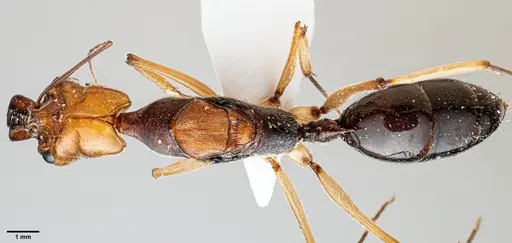
CASENT0901975
Bekijk op AntWeb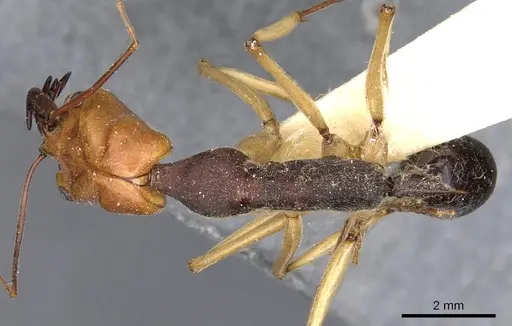
CASENT0907422
Bekijk op AntWeb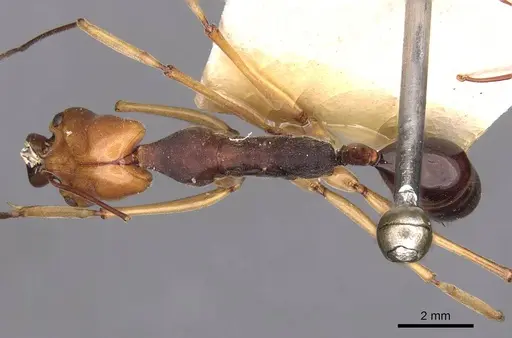
CASENT0915243
Bekijk op AntWeb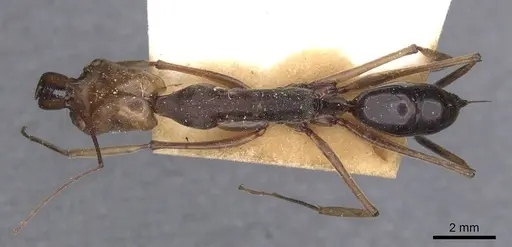
FOCOL1060
Bekijk op AntWeb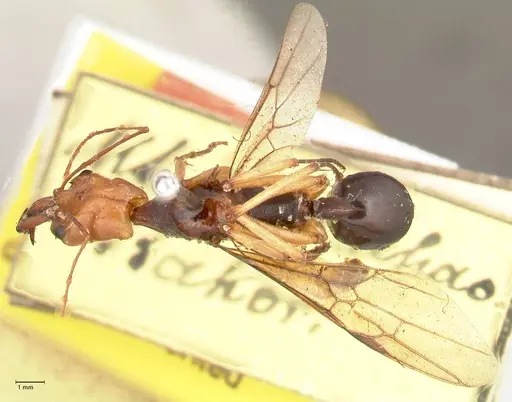
Literatuur
Verspreidingskaart laden...Producten laden...