
Myrmica schulzi
- Wetenschappelijke naam
- Myrmica schulzi
- Tribus
- Myrmicini
- Subfamilie
- Myrmicinae
- Auteur
- Radchenko & Elmes, 2009
- Verspreiding
- Gevonden in 0 landen
Introductie
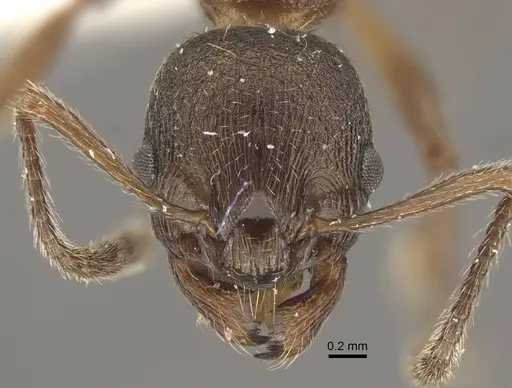
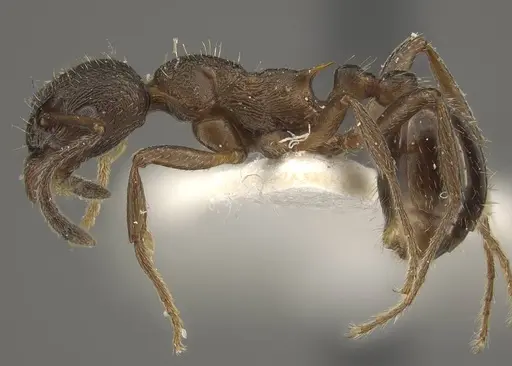
Myrmica schulzi is a small, dark reddish-brown ant belonging to the pachei species group. Workers are characterized by their distinctly longer-than-broad head with convex sides, long propodeal spines, and a densely punctated appearance on the head and alitrunk. This species is known only from four worker specimens collected in mountain meadows at altitudes of 2300-2600 meters in Shaanxi Province, China . The queens and males have never been described, making this one of the most poorly known Myrmica species. The high-altitude mountain meadow habitat suggests this species prefers cooler conditions than many other ants.
Quick Summary
- Difficulty: Unknown, likely Medium
- Origin & Habitat: Shaanxi Province, China, mountain meadows at 2300-2600m elevation in the Qin Ling Mountains [1][2]
- Colony Type: Unknown, only workers have been collected. Colony structure is unconfirmed.
- Size & Growth:
- Queen: Unknown, queens have not been described [1]
- Worker: size unknown, inferred from Myrmica genus (~4-7mm)
- Colony: Unknown, only four workers ever collected [1]
- Growth: Unknown, no colony development data exists
- Development: Unknown, development timeline has not been studied for this species (No species-specific development data exists.)
- Antkeeping:
- Temperature: Likely prefers cooler conditions given high-altitude habitat. Start around 18-22°C and observe colony activity, adjust based on behavior.
- Humidity: Moderate humidity likely preferred. Keep nest substrate moist but not waterlogged. Mountain meadow habitat suggests they tolerate some variation.
- Diapause: Likely requires hibernation based on high-altitude habitat and temperate region. Provide 2-3 months at 5-10°C during winter.
- Nesting: No specific nesting data exists. Based on habitat, likely nests in soil or under stones in cool, shaded locations. Test tube or Y-tong nests work well for Myrmica.
- Behavior: Not documented, no behavioral observations exist in scientific literature. Based on genus, likely typical Myrmica foraging patterns (ground-active, protein-seeking). Escape risk is moderate given typical Myrmica worker size.
- Common Issues: queen and colony information is completely unknown, this species has never been kept in captivity, only four workers have ever been collected in the wild, making natural history data extremely limited, no confirmed food preferences, specific acceptance is unknown, hibernation requirements are not confirmed for this species, difficulty rating is uncertain due to lack of captive keeping data
Species Discovery and Status
Myrmica schulzi was described in 2009 by Radchenko and Elmes based on only four worker specimens collected from mountain meadows in Shaanxi Province, China. The species was named in honor of German myrmecologist Andreas Schulz, who provided the material for study [1]. This ant belongs to the pachei species group, which contains numerous similar species primarily distinguished by variations in body sculpture. Notably, the queens and males of this species have never been described, and no additional specimens have been reported since the original collection. This makes M. schulzi one of the most poorly known Myrmica species and one that antkeepers have essentially never kept.
Identification and Morphology
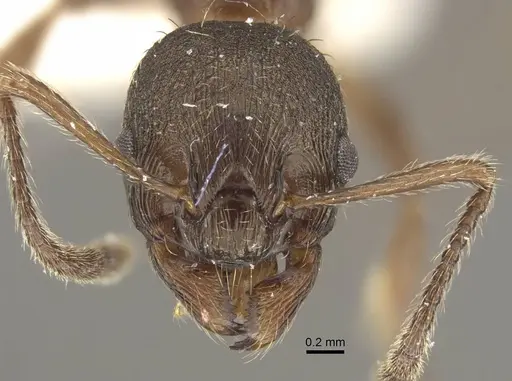
Workers of Myrmica schulzi have a dark reddish-brown body color with somewhat lighter appendages. The head is distinctly longer than broad with somewhat convex sides and a rounded occipital margin. The most distinctive features include the frons with about 20 fine longitudinal rugae, the occiput and temples with fine reticulation giving a dull appearance, and the mesonotal and propodeal dorsum with over 25 transverse sinuous rugae. The propodeal spines are quite long, straight, sharp, and directed backward at about 30 degrees. The petiole has a short but distinct peduncle with a concave anterior surface, while the postpetiole is subglobular. Body hairs are present on the head margins, alitrunk dorsum (with 6-8 long hairs on the petiole), and the scapes have suberect hairs while tibiae have subdecumbent hairs [1].
Natural Habitat and Distribution
This species is known only from the Qin Ling Mountains in Shaanxi Province, China, at altitudes between 2300 and 2600 meters above sea level. The type locality is a mountain meadow, suggesting this is a cool-climate species adapted to higher elevations. The Qin Ling Mountains create a significant geographic barrier in central China and feature diverse habitats due to their elevation gradient. This high-altitude mountain meadow habitat suggests M. schulzi likely experiences significant seasonal temperature variation and probably requires a winter dormancy period [1][2].
Keeping Myrmica schulzi in Captivity
Since this species has never been kept in captivity and basic biology is unknown, any care recommendations are educated guesses based on typical Myrmica husbandry and the known habitat preferences. Start with standard Myrmica setup: a test tube or Y-tong nest with moist (but not waterlogged) substrate. Temperature should be on the cooler side, begin around 18-22°C and monitor colony activity. Since the natural habitat is high-altitude mountain meadows, this species likely tolerates and may prefer cooler temperatures than many common Myrmica species. Provide a temperature gradient so ants can self-regulate. Hibernation is likely required, most temperate Myrmica need 2-3 months at 5-10°C during winter. Feed protein (small insects like fruit flies or mealworms) and sugar sources (honey water or sugar water) and observe acceptance.
Research Gaps and Future Study
Myrmica schulzi represents a significant knowledge gap in antkeeping. The entire colony structure, founding behavior, development timeline, and dietary preferences remain completely unknown. No queens or males have ever been collected or described. The four type specimens represent the entirety of scientific knowledge about this species. Any antkeeper fortunate enough to obtain this species would be contributing genuinely new knowledge to science. Potential collectors should document everything: founding behavior, colony development, worker numbers, behavior, and any unique characteristics. This species would be a project for experienced antkeepers comfortable with uncertainty and interested in contributing to scientific understanding of a poorly known taxon [1].
Frequently Asked Questions
How long does it take for Myrmica schulzi to produce first workers?
The egg-to-worker development time is unknown for this species as it has never been scientifically studied.
What do Myrmica schulzi ants eat?
Diet preferences are unconfirmed for this species. Based on typical Myrmica behavior, they likely accept protein sources (small insects like fruit flies, pinhead crickets, or mealworms) and sugar sources (honey water or sugar water).
Do Myrmica schulzi ants need hibernation?
Hibernation requirements are not directly documented, but based on the high-altitude mountain meadow habitat (2300-2600m in Shaanxi Province), hibernation is likely required. Provide 2-3 months at 5-10°C during winter.
Can I keep multiple Myrmica schulzi queens together?
Colony structure is unknown for this species, queens have never been described or observed. Do not combine unrelated queens without specific knowledge of this species' behavior.
What temperature is best for Myrmica schulzi?
Optimal temperature is not documented. Based on the high-altitude mountain habitat, this species likely prefers cooler conditions than most Myrmica. Start around 18-22°C and provide a gradient so ants can choose their preferred temperature.
How big do Myrmica schulzi colonies get?
Maximum colony size is unknown. Only four workers have ever been collected in the wild.
Is Myrmica schulzi good for beginners?
This species is not recommended for beginners. It has never been kept in captivity, and all care recommendations are educated guesses. The complete lack of basic biological data makes successful keeping very uncertain.
What nest type is best for Myrmica schulzi?
No specific nesting data exists. Based on typical Myrmica husbandry and the mountain meadow habitat, a test tube setup or Y-tong nest with moist substrate would be appropriate.
Do Myrmica schulzi ants sting?
Stinging behavior is not documented for this species. Most Myrmica species can sting, but the pain level is typically mild to moderate for humans.
Where can I get Myrmica schulzi ants?
This species is extremely rare in the antkeeping hobby. It has only been collected a few times in the wild in Shaanxi Province, China, and has never been scientifically cultivated. Unless you have specific connections to Chinese collectors or researchers, this species is essentially unavailable to hobbyists [1].
Report an Issue
The current care sheet is based fully on literature. See inconsistencies, or something that's incorrect? Please , it will be resolved after review from an admin. Contributing to the blogs tab also helps providing information, to make us be able to further improve the caresheets. Thank you for your support!
References

Dit verzorgingsblad is gelicentieerd onder CC BY-SA 4.0 .
Community-blogs
CASENT0917720
Bekijk op AntWeb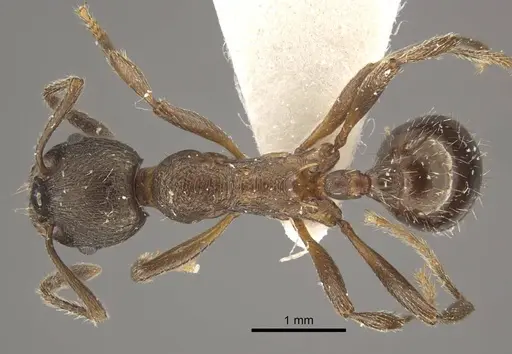
Literatuur
Verspreidingskaart laden...Producten laden...