
Myrmica petita
- Wetenschappelijke naam
- Myrmica petita
- Tribus
- Myrmicini
- Subfamilie
- Myrmicinae
- Auteur
- Radchenko & Elmes, 1999
- Verspreiding
- Gevonden in 0 landen
Introductie
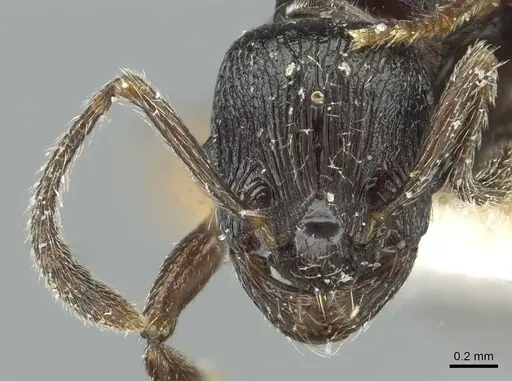
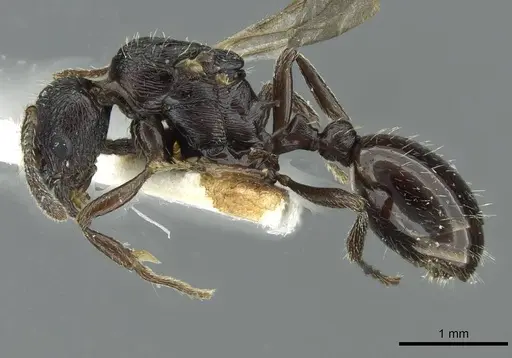
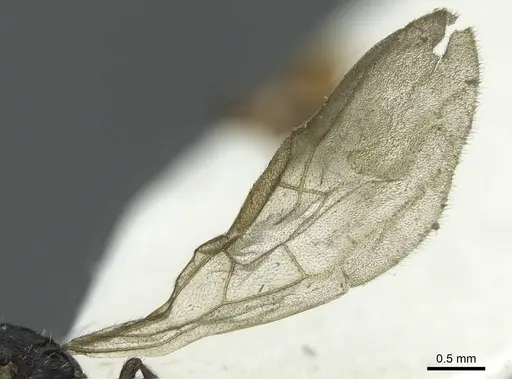
Myrmica petita is one of the smallest known free-living Myrmica queens, named from the French 'petite' for its diminutive size. It was described in 1999 from a single queen specimen collected in the Kashmir region of the Indian Himalayas at an altitude of 2300-2400 meters . The taxonomic position remains uncertain - it most resembles Myrmica wittmeri but has distinct features including a punctated head surface and relatively long propodeal spines. No workers or males have ever been collected, making this one of the most poorly known Myrmica species in existence . This species is endemic to the Kashmir region of India and represents a genuine mystery in ant biology - virtually nothing is known about its colony structure, behavior, or care requirements in captivity.
Quick Summary
- Difficulty: Unknown
- Origin & Habitat: Endemic to the Kashmir region of northern India in the Himalayas, found at 2300-2400 meters elevation [3][1]. The high-altitude Himalayan location suggests a cool, mountainous habitat.
- Colony Type: Unknown, only a single queen specimen has ever been collected.
- Size & Growth:
- Antkeeping:
- Temperature: Unknown, high-altitude origin suggests cool conditions. Start around 15-20°C and observe colony activity.
- Humidity: Myrmica generally prefer moderate to high humidity. Keep the nest substrate consistently moist but not waterlogged.
- Diapause: Likely required, high-altitude Himalayan species typically need winter dormancy. Based on related species, provide 2-3 months of cold storage around 5-10°C during winter.
- Nesting: Unknown in captivity. In nature, Myrmica typically nest in soil or under stones. A test tube setup or Y-tong nest with moist substrate would be a reasonable starting point.
- Behavior: Completely unstudied. Based on typical Myrmica genus behavior, these are likely moderate-sized ants with typical Myrmica temperament, not particularly aggressive but will defend the nest.
- Common Issues: this species has no captive care history, expect a steep learning curve with no established protocols, virtually nothing is known about their diet, feeding may require experimentation, high-altitude origin means temperature sensitivity is likely, avoid overheating, no established breeding in captivity means all colonies must be wild-caught, related Myrmica can be aggressive toward other ant species, use caution in multi-species setups
Why Myrmica petita Is a Unique Keeping Challenge
Myrmica petita represents one of the most poorly documented ant species in the entire genus. Unlike most Myrmica species which have at least basic biological data, this species is known only from a single queen collected in 1976 in Kashmir, India. No workers, no males, no observed colonies, no nesting behavior, no feeding preferences, the entire species exists as a single preserved specimen in a museum. This means you're essentially pioneering all captive care methods from scratch. The species name 'petita' (French for little or dainty) reflects its most distinctive feature: it's among the smallest free-living Myrmica queens ever discovered. This small size is typically associated with social parasites in the ant world, but researchers confirmed it lacks all the typical parasitic characteristics (reduced spurs, ventral lobes, wide postpetiole, excessive hairiness), so it appears to be a genuinely tiny free-living species [2].
Habitat and Origin
This species is endemic to the Himalayas, specifically the Kashmir region of northern India. It was collected at 2300-2400 meters above sea level, this is high-altitude montane terrain with cool temperatures year-round [1]. The Himalayas experience cold winters with snow and mild summers. This altitude suggests the species is adapted to cooler conditions than most lowland ants. The region features dramatic temperature fluctuations between day and night. Related Myrmica species in the Himalayas are typically found in forested areas with moderate humidity, often nesting in soil or under stones. Nothing specific is known about M. petita's preferred microhabitat, but it likely occupies similar niches to other Himalayan Myrmica [4].
Taxonomic Uncertainty
Myrmica petita presents a genuine taxonomic puzzle. It most closely resembles Myrmica wittmeri (known only from workers, queen unknown) but with two key differences: a punctated (dotted) surface on the head and relatively longer propodeal spines (the pointed projections on the back of the thorax). Researchers specifically noted that no Myrmica species is known where queens have proportionally longer propodeal spines than workers, which rules out M. wittmeri as the same species [2]. The species doesn't fit neatly into any established Myrmica species group, it's essentially an outlier that doesn't match typical classification patterns. For keepers, this means there's no established care framework from related species to draw upon, and any identification should be verified by an expert if possible.
Approximate Care Guidelines (Highly Speculative)
Since absolutely no captive care data exists for this species, all recommendations are educated guesses based on typical Myrmica genus behavior and the species' likely adaptations to its Himalayan environment. Start with a standard test tube setup with a water reservoir, Myrmica generally prefer moist but not flooded conditions. Temperature should be cool compared to most ants: begin around 15-20°C and monitor colony behavior. Related Himalayan Myrmica species do best with a winter diapause period of 2-3 months at roughly 5-10°C. For feeding, offer standard Myrmica foods: sugar water or honey as an energy source, and protein sources like small insects or mealworms. However, since workers have never been observed, there's no confirmation of their actual dietary preferences or foraging behavior. Be prepared to experiment and document your findings, any successful captive husbandry of this species would be genuinely novel information.
Legal and Ethical Considerations
Myrmica petita is endemic to India and has never been documented outside its limited range in Kashmir [3]. If collecting from the wild, be aware of Indian wildlife regulations and obtain any necessary permits. Given that this is one of the rarest Myrmica species with essentially no presence in the antkeeping hobby, establishing a captive breeding population would be scientifically valuable. Consider documenting your colony's development and behavior carefully, any observations could contribute to our understanding of this poorly known species. Never release non-native ants or any Myrmica species into regions where they don't naturally occur, as Myrmica can become invasive in some areas.
Frequently Asked Questions
How do I care for Myrmica petita ants?
No established care protocol exists, this is one of the most poorly documented ant species in existence. Start with standard Myrmica conditions: moist test tube setup, cool temperatures around 15-20°C, and a winter diapause period. Offer sugar water and small insects. Document everything and be prepared to adjust based on colony response.
What do Myrmica petita eat?
Unknown, workers have never been collected so no feeding observations exist. Based on typical Myrmica diet, likely a mix of sugar sources (honey, sugar water) and protein (small insects). Experiment and observe what your colony accepts.
How big do Myrmica petita colonies get?
Unknown. No workers or colony size data exists for this species.
Do Myrmica petita queens need hibernation?
Likely yes, based on their high-altitude Himalayan origin. Related Himalayan Myrmica species require a winter dormancy period. Provide 2-3 months of cold storage around 5-10°C during winter months.
Is Myrmica petita a good species for beginners?
No. This is an expert-level species due to complete lack of documented care information. Every aspect of husbandry requires experimentation. Only experienced antkeepers willing to document novel observations should attempt this species.
How long does it take for Myrmica petita to develop from egg to worker?
Unknown, no development data exists for this species.
Where can I get Myrmica petita?
This species is extremely rare in the antkeeping hobby. It has never been documented in commercial trade. Any specimens would need to come from wild collection in the Kashmir region of India, which raises significant legal and ethical concerns.
Do Myrmica petita ants sting?
Unknown, workers have never been observed. Most Myrmica species can sting, though their small size often makes it difficult to feel. Assume stinging capability until proven otherwise.
What temperature should I keep Myrmica petita at?
Based on high-altitude origin, likely prefers cool conditions. Start around 15-20°C and observe colony behavior. Avoid overheating, related Himalayan Myrmica do poorly in warm conditions.
Can I keep multiple Myrmica petita queens together?
Unknown, colony structure has never been documented. Not enough data exists to recommend either way.
What makes Myrmica petita different from other Myrmica?
It's one of the smallest free-living Myrmica queens ever discovered, known only from a single specimen, with uncertain taxonomic placement. Essentially nothing is known about its biology, it's a blank slate in antkeeping [2].
Is Myrmica petita a social parasite?
No. Despite its tiny size (which is often associated with parasites), researchers confirmed it lacks all typical parasitic characteristics: no reduced pectinate spurs, no ventral lobes on the petiole or postpetiole, no relatively wide postpetiole, and no excessive hairiness. It's a genuine free-living species [2].
Report an Issue
The current care sheet is based fully on literature. See inconsistencies, or something that's incorrect? Please , it will be resolved after review from an admin. Contributing to the blogs tab also helps providing information, to make us be able to further improve the caresheets. Thank you for your support!
References

Dit verzorgingsblad is gelicentieerd onder CC BY-SA 4.0 .
Community-blogs
CASENT0913074
Bekijk op AntWeb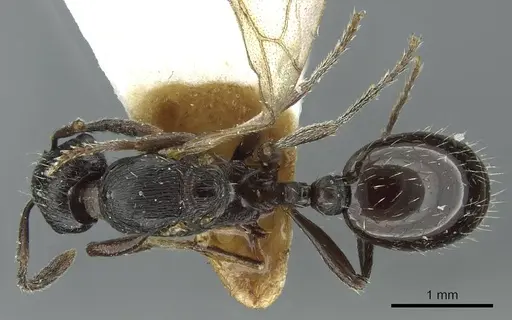
Literatuur
Verspreidingskaart laden...Producten laden...