
Myrmica angulata
- Wetenschappelijke naam
- Myrmica angulata
- Tribus
- Myrmicini
- Subfamilie
- Myrmicinae
- Auteur
- Radchenko <i>et al.</i>, 2001
- Verspreiding
- Gevonden in 0 landen
Introductie
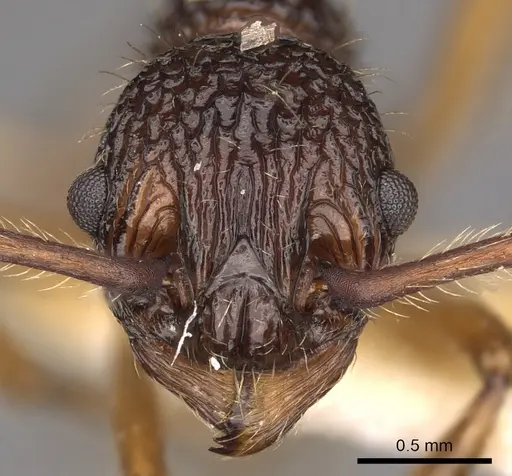
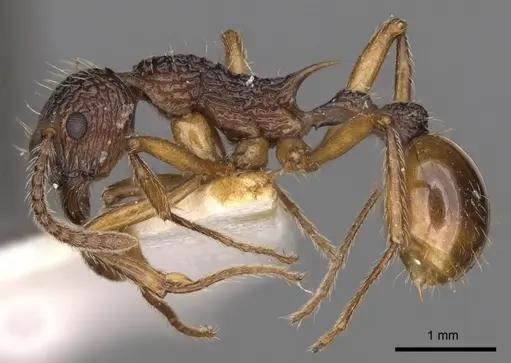
Myrmica angulata is a small Myrmica species native to southern China and northern Vietnam, belonging to the ritae-complex . Workers are small - approximately 4-6mm total length inferred from genus patterns. The species gets its name from the Latin 'angulata' (angled) due to its most remarkable feature - the antennal scape is the longest of any known Myrmica species and is sharply angled at the base, appearing distinctly bent rather than smoothly curved . Workers have a dark reddish-brown to brown body with a brownish-yellow gaster, covered in coarse sculpture and long outstanding hairs. Queens are larger at approximately 6-8mm total length inferred from genus patterns, with a dark brown body and lighter antennae and legs . This species inhabits high-altitude forests - in southern China at 500-1000m elevation and in northern Vietnam at 1700-2200m elevation .
Quick Summary
- Difficulty: Medium
- Origin & Habitat: Southern China (Guangxi Province,500-1000m elevation) and northern Vietnam (mixed forests at 1700-2200m elevation). In China, nests are found in rotten wood in forests. In Vietnam, they nest in rotten wood, in soil under logs and bark, or under stones [4]. The altitude difference between populations reflects regional climate differences, higher latitudes or elevations are cooler, allowing the same species to thrive at different elevations.
- Colony Type: Colony structure is unconfirmed, no specific data on queen number for this species.
- Size & Growth:
- Antkeeping:
- Temperature: Keep at 20-24°C. This species comes from cool high-altitude forests (500-2200m), so avoid overheating. Room temperature or slight heating on one side of the nest works well. Monitor colony activity, if they avoid heated areas, reduce temperature.
- Humidity: High humidity required, they naturally live in damp forest environments. Keep nest substrate consistently moist but not waterlogged. Provide a water tube for drinking water. Mist the outworld occasionally but avoid constant dampness that promotes mold.
- Diapause: Yes, Myrmica species require a winter dormancy period. Reduce temperature to 5-10°C for 3-4 months (roughly October-March in the Northern Hemisphere). Do not feed during diapause but ensure water is available.
- Nesting: Prefers naturalistic setups that mimic their natural nesting in rotten wood, soil under logs, or under stones. Y-tong (AAC) nests with moist substrate work well. They also do well in test tube setups with damp cotton. Provide a gradient of humidity within the nest.
- Behavior: Workers are moderately active and forage for food both in the nest area and outworld. Like most Myrmica, they have a functional stinger but are not particularly aggressive toward keepers, they will sting if handled roughly or when defending the nest. Escape risk is moderate due to their small size, use standard barrier methods (Fluon on container edges). They are not known for being particularly timid or bold, typical Myrmica foraging behavior.
- Common Issues: high-altitude species is sensitive to overheating, keep below 25°C, colonies may struggle if humidity drops too low, monitor substrate moisture, diapause is essential for long-term colony health, skipping hibernation weakens colonies over time, small colony size means slow growth, beginners may lose patience and overfeed, wild-caught colonies may have parasites that cause problems in captivity
Housing and Nest Setup
Myrmica angulata does well in several nest types. A Y-tong (AAC) formicarium with moist substrate mimics their natural rotting wood habitat and allows you to observe the colony easily. Test tube setups work well for founding colonies and small colonies, simply keep the cotton damp and provide a separate feeding area. Because they come from high-altitude forests, they need protection from heat. Place the nest in a cool area of your room, away from direct sunlight and heating sources. A small water tube attached to the nest provides drinking water. For the outworld, a simple plastic container with Fluon on the upper edges prevents escapes. These ants are small but not extreme escape artists, standard barriers are sufficient. [4][3]
Feeding and Diet
Myrmica angulata is a typical omnivorous Myrmica, they accept both protein and sugar sources. Offer protein foods like small insects (fruit flies, small mealworms, crickets) and sugar sources like honey water or sugar water. In the wild, they likely forage for small invertebrates and tend aphids for honeydew. Feed protein 2-3 times per week for growing colonies, and keep a sugar source available at all times. Remove uneaten prey after 24-48 hours to prevent mold. For founding colonies, offer tiny food items, a single fruit fly or small cricket piece is enough. As the colony grows, increase food portions accordingly. [3]
Temperature and Seasonal Care
This species requires cool to moderate temperatures. Keep the nest area between 20-24°C, with room temperature typically being suitable. The key is avoiding overheating, temperatures above 25-27°C can stress or kill colonies. In winter, provide a diapause (hibernation) period of 3-4 months at 5-10°C. This can be done in a garage, basement, or refrigerator (not freezer). During diapause, the colony will be mostly inactive, do not feed them, but ensure water is available by using a moist substrate that won't freeze. Resume normal feeding and warming gradually in spring. Skipping diapause weakens colonies over time and can shorten the queen's lifespan. [3]
Growth and Development
Myrmica angulata colonies start small. A newly mated queen will lay eggs after sealing herself in a chamber. The first workers are typically smaller than normal workers and emerge after some weeks under warm conditions. There is no specific data on maximum colony size for this species. Growth rate is moderate, don't expect rapid expansion. Patience is key, especially in the first year. The queen can live for many years, with colonies potentially lasting a decade or more with proper care. [3]
Behavior and Handling
Myrmica angulata workers are moderately active and will explore their outworld in search of food. They are not particularly aggressive but will defend their nest if threatened. Like most Myrmica, they have a functional stinger, while small, it can penetrate human skin and causes mild pain. Handle them gently and avoid provoking defensive responses. When you open the nest for feeding or observation, tap gently first to warn them. They use chemical communication like all ants, you may notice workers antennating (touching each other with antennae) to communicate. They are not known for unusual behaviors like slave-making or tandem running, typical Myrmica all around. [3]
Frequently Asked Questions
How long does it take for Myrmica angulata to get their first workers?
Specific development time is unconfirmed for this species. At warm temperatures (around 22-24°C), expect first workers after several weeks, but exact timing is unknown.
Can I keep Myrmica angulata in a test tube?
Yes, test tubes work well for founding colonies and small colonies. Keep the cotton damp for humidity and provide a separate feeding area. As the colony grows to 50+ workers, consider moving to a Y-tong or naturalistic setup.
Do Myrmica angulata ants sting?
Yes, they have a functional stinger. The sting is mild, similar to other small Myrmica, causing brief pain and minor irritation. They are not aggressive toward keepers and only sting when handled roughly or when the nest is threatened.
What temperature do Myrmica angulata need?
Keep them cool, 20-24°C is ideal. This is a high-altitude species that does not tolerate heat well. Avoid temperatures above 25°C. Room temperature is usually suitable. In winter, provide a 3-4 month diapause at 5-10°C.
Do Myrmica angulata need hibernation?
Yes, a winter diapause is essential. Reduce temperature to 5-10°C for 3-4 months (roughly October through March in the Northern Hemisphere). Do not feed during diapause but ensure water is available. Skipping hibernation weakens the colony and shortens the queen's lifespan.
How big do Myrmica angulata colonies get?
The exact maximum size is unknown for this species. With proper care, colonies can last many years.
What do Myrmica angulata eat?
They are omnivorous. Offer protein (small insects like fruit flies, small mealworms) 2-3 times per week and keep a sugar source (honey water or sugar water) available at all times. Remove uneaten food after 24-48 hours.
Are Myrmica angulata good for beginners?
They are moderate difficulty. The main challenges are providing proper cool temperatures, maintaining humidity, and providing a proper winter diapause. If you can meet these requirements and are patient with their moderate growth rate, they can be rewarding.
When should I move Myrmica angulata to a formicarium?
Move from a test tube to a Y-tong or naturalistic setup when the colony reaches 30-50 workers and the test tube becomes crowded. Make sure the new setup has appropriate humidity and temperature conditions before transferring.
Can I keep multiple Myrmica angulata queens together?
No specific data exists on colony structure for this species. It is best to keep only one queen per colony unless you have evidence they accept multiple queens.
Report an Issue
The current care sheet is based fully on literature. See inconsistencies, or something that's incorrect? Please , it will be resolved after review from an admin. Contributing to the blogs tab also helps providing information, to make us be able to further improve the caresheets. Thank you for your support!
References

Dit verzorgingsblad is gelicentieerd onder CC BY-SA 4.0 .
Community-blogs
CASENT0900292
Bekijk op AntWeb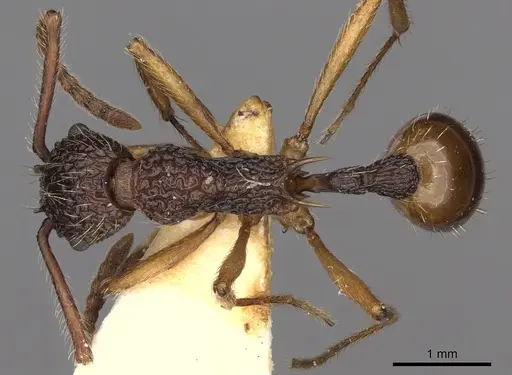
Literatuur
Verspreidingskaart laden...Producten laden...