
Myrmecina macrops
- Wetenschappelijke naam
- Myrmecina macrops
- Tribus
- Crematogastrini
- Subfamilie
- Myrmicinae
- Auteur
- Okido <i>et al.</i>, 2020
- Verspreiding
- Gevonden in 0 landen
Introductie
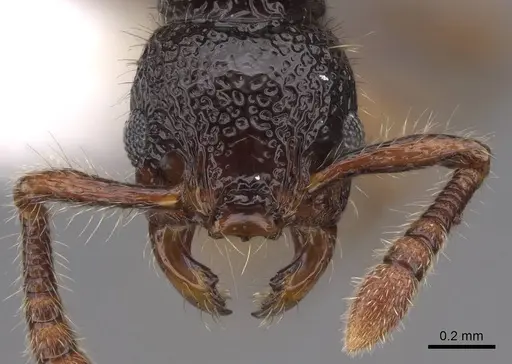
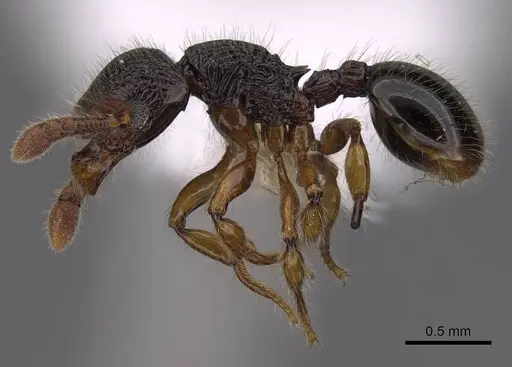
Myrmecina macrops is a tiny ant species native to Southeast Asia, found in Malaysia (Malay Peninsula and Borneo/Sabah) and Indonesia (Sumatra and Java) . Workers measure 2.57-2.80mm in total length, making them one of the smaller ant species kept in captivity . They belong to the Myrmecina macrops complex and are identified by their developed propodeal spine and the distinctive wavy rugae on their pronotum and mesonotum . Their most striking feature is their extremely large eyes relative to their body size - a notable adaptation for their forest floor lifestyle . These ants inhabit soil and leaf litter in tropical rainforest environments .
Quick Summary
- Difficulty: Medium
- Origin & Habitat: Tropical Southeast Asia, found in Malaysia (Malay Peninsula, Borneo/Sabah) and Indonesia (Sumatra, Java). Inhabits soil and leaf litter in rainforest environments, typically collected from pitfall traps in forested areas [1][2].
- Colony Type: Colony structure is unconfirmed for this species.
- Size & Growth:
- Queen: Unconfirmed, only a dealate queen has been documented in type material, but no measurements are available [1].
- Worker: 2.57-2.80mm [1].
- Colony: Unknown for this species.
- Growth: Moderate, estimated based on small body size and tropical distribution.
- Development: Estimated 5-8 weeks at tropical temperatures. This is inferred from typical Myrmicinae development patterns, as specific data for M. macrops is not available. (Small tropical ants typically develop faster than temperate species.)
- Antkeeping:
- Temperature: Keep at 24-28°C. These are tropical ants from warm, humid forests in Borneo and Sumatra. A gentle heat gradient on one side of the nest allows them to regulate their temperature.
- Humidity: High humidity required, think damp forest floor. Keep the nest substrate consistently moist but not waterlogged. Provide a water tube for drinking water.
- Diapause: No diapause required, being a tropical species from lowland rainforests, they do not experience cold winters. Keep them at stable tropical temperatures year-round.
- Nesting: In nature they nest in soil and leaf litter [1]. In captivity, they do well in test tube setups with moist substrate, Y-tong nests, or naturalistic setups with damp soil. They prefer tight, humid chambers scaled to their tiny size.
- Behavior: These are tiny, secretive ants that spend most of their time hidden in the nest or navigating through leaf litter. They are not aggressive and pose no threat to keepers. Their large eyes may indicate some visual capability, but they likely rely more on chemical cues. They are not escape artists in the traditional sense, but their tiny size means they can slip through small gaps, use fine mesh barriers. As Myrmicinae, they have a smear defense mechanism where they wipe venom onto enemies rather than stinging.
- Common Issues: tiny size makes escape prevention critical, use fine mesh and tight-fitting lids, drying out is the main killer, keep substrate consistently moist, slow colony growth can frustrate beginners, be patient, wild-caught colonies may have parasites, quarantine and observe new colonies, overfeeding can cause mold in small nests, remove uneaten food promptly
Housing and Nest Setup
Myrmecina macrops is a tiny ant that requires careful housing. Test tube setups work well for founding colonies, use a small test tube with a water reservoir sealed with a cotton plug. The tube should be kept horizontal or slightly tilted so the ants can access water without drowning. For established colonies, Y-tong nests or small formicaria with tight chambers work well. The nest chambers should be small and scaled to their tiny 2.5-3mm body size. Use a substrate of moist sand, soil, or a sand/soil mix to maintain humidity. Add some leaf litter or debris to the outworld to simulate their natural forest floor habitat. Cover part of the nest to provide dark chambers where they can retreat. [1][2]
Feeding and Diet
Myrmecina macrops is likely a generalist omnivore like other Myrmecina species. Offer small protein sources such as tiny insects (fruit flies, small crickets, mealworm pieces), and provide sugar sources like honey water or sugar water. They have small colonies and individuals, so portion sizes should be tiny. Feed small amounts every 2-3 days and remove uneaten food promptly to prevent mold. A constant supply of clean water is essential. Because they are so small, even tiny prey items are substantial meals for them. Observe their feeding patterns and adjust quantities based on how quickly they consume the food.
Temperature and Humidity
As a tropical species from Borneo and Sumatra, Myrmecina macrops requires warm, humid conditions. Maintain temperatures between 24-28°C year-round. A slight temperature gradient (warm on one side, cooler on the other) allows the colony to self-regulate. Use a heating cable or mat on one side of the nest if room temperature is below 24°C. Humidity should be high, keep the nest substrate consistently moist but not waterlogged. The substrate should feel damp to the touch. Provide a water tube as a permanent water source. Avoid placing the nest near air conditioning or heating vents that could cause rapid temperature swings or drying. [1]
Colony Development and Growth
Myrmecina macrops colonies start with a single queen (likely claustral founding, though unconfirmed). The queen will seal herself in a chamber and lay eggs, raising the first workers (nanitics) on her own. These first workers will be slightly smaller than mature workers. Growth rate is moderate, expect several weeks from egg to first worker at optimal temperatures. Colony growth will be gradual, with each generation adding more workers. Maximum colony size is unknown for this species. Be patient, small tropical colonies often grow steadily but slowly. Avoid disturbing the queen during founding, stress can cause her to abandon or eat her brood.
Handling and Observation
These tiny ants are not suitable for handling and are best observed through the nest walls. They are non-aggressive and will flee rather than fight when disturbed. Their small size makes them difficult to see clearly without magnification, which adds to their appeal for ant enthusiasts who enjoy observing minute behaviors. When cleaning the outworld or moving the nest, use gentle puffing of air or light brushing rather than blowing on them, as they are fragile. Always use excellent escape prevention, even a small gap in your barrier can lead to escapes. Fine mesh is recommended for any ventilation holes. [1]
Seasonal Care
As a tropical species, Myrmecina macrops does not require hibernation or diapause. Keep temperatures stable year-round at 24-28°C. Seasonal changes in their native habitat are minimal, they experience warm, humid conditions throughout the year with occasional monsoons. Do not attempt to cool them down in winter as this could be fatal. Maintain humidity levels consistently high, as indoor heating in winter can dry out the nest. Monitor water levels in the test tube or water reservoir more frequently during dry winter months.
Frequently Asked Questions
How long does it take for Myrmecina macrops to produce first workers?
Expect several weeks from egg to first worker at optimal tropical temperatures (24-28°C). This is inferred from typical Myrmicinae development, as specific development data for this species is not available. The queen will lay eggs, which develop through larval and pupal stages before emerging as nanitic workers.
What do Myrmecina macrops ants eat?
They are generalist omnivores. Offer small protein sources like fruit flies, tiny crickets, or mealworm pieces, along with sugar sources like honey water or sugar water. Feed small amounts every 2-3 days and remove uneaten food promptly.
Can I keep Myrmecina macrops in a test tube?
Yes, test tubes work well for founding colonies. Use a small test tube with a water reservoir sealed with cotton. Keep the tube horizontal or slightly tilted so the ants can access water. The tube should be in a warm, humid location away from direct sunlight.
Do Myrmecina macrops ants sting?
As Myrmicinae, they have a modified stinger used for smearing venom onto enemies rather than piercing flesh. At their tiny size of 2.5-3mm, they pose minimal threat to keepers and will typically flee when disturbed.
What temperature do Myrmecina macrops ants need?
Keep them at 24-28°C year-round. These are tropical ants from Borneo and Sumatra that need consistent warmth. A slight heat gradient allows the colony to regulate their temperature naturally.
How big do Myrmecina macrops colonies get?
Colony size is unknown for this species. Based on similar Myrmecina species, colonies likely reach a few hundred workers at most.
Are Myrmecina macrops good for beginners?
They are rated as medium difficulty. While not aggressive and relatively easy to house, their tiny size requires careful attention to escape prevention and humidity. Their slow growth and specific temperature needs may challenge complete beginners, but they are manageable for those willing to learn.
Do Myrmecina macrops need hibernation?
No, they do not require hibernation. As a tropical species from lowland rainforests in Southeast Asia, they need warm, stable temperatures year-round. Do not expose them to temperatures below 20°C.
Why are my Myrmecina macrops dying?
The most common causes are drying out (keep substrate consistently moist), temperature issues (too cold or fluctuating), and escape (use fine mesh barriers). Also check for mold from overfeeding and ensure they have access to clean water. Wild-caught colonies may also have parasites.
When should I move Myrmecina macrops to a formicarium?
Wait until the colony has at least 20-30 workers and is actively foraging in an outworld. Moving too early can stress the queen. A Y-tong or small nest with moist chambers works well once the colony outgrows the founding test tube.
Where is Myrmecina macrops found in the wild?
They are native to Southeast Asia, specifically Malaysia (Malay Peninsula and Borneo/Sabah) and Indonesia (Sumatra and Java). They live in soil and leaf litter in tropical rainforest environments [1][2].
How do I identify Myrmecina macrops?
Myrmecina macrops workers are 2.57-2.80mm with extremely large eyes. They have a developed propodeal spine and distinctive wavy rugae on their pronotum and mesonotum. They belong to the Myrmecina macrops complex [2].
Report an Issue
The current care sheet is based fully on literature. See inconsistencies, or something that's incorrect? Please , it will be resolved after review from an admin. Contributing to the blogs tab also helps providing information, to make us be able to further improve the caresheets. Thank you for your support!
References

Dit verzorgingsblad is gelicentieerd onder CC BY-SA 4.0 .
Community-blogs
CASENT0922962
Bekijk op AntWeb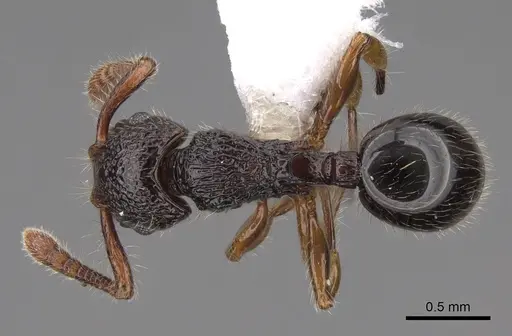
Literatuur
Verspreidingskaart laden...Producten laden...