
Myopias daia
- Wetenschappelijke naam
- Myopias daia
- Tribus
- Ponerini
- Subfamilie
- Ponerinae
- Auteur
- Xu <i>et al.</i>, 2014
- Verspreiding
- Gevonden in 0 landen
Introductie
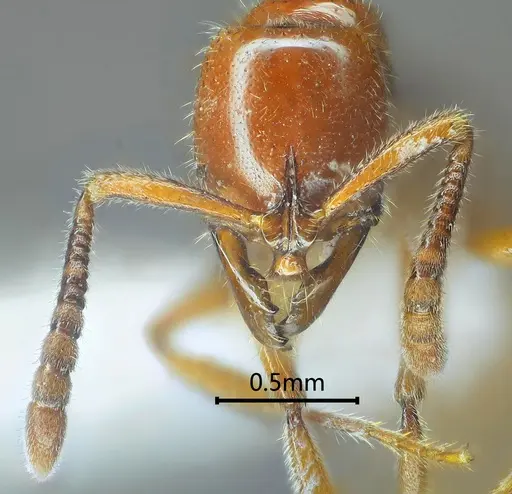
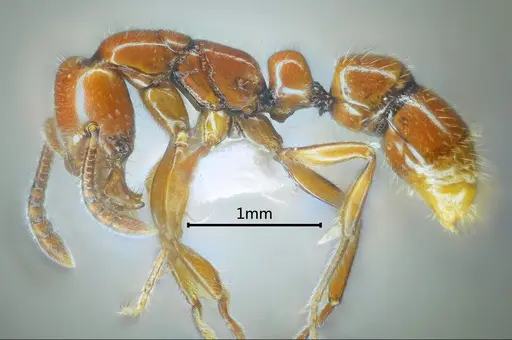
Myopias daia is a small ponerine ant native to the tropical rainforests of Yunnan Province, China. Workers measure approximately 4.3mm in total length, with a distinctive reddish-brown body and yellowish-brown appendages. The head is roughly rectangular with a straight posterior margin, and the body surface is smooth and shining. These ants possess a functional stinger, typical of the Ponerinae subfamily. The species was only recently described in 2014 and remains one of the lesser-known members of its genus, with only the worker caste documented in scientific literature.
Quick Summary
- Difficulty: Unknown, likely Expert
- Origin & Habitat: Yunnan Province, China, tropical rainforest at 985m elevation near Bubeng Village in Mengla County. Collected from leaf litter using the Berlese extraction method [1][2].
- Colony Type: Unconfirmed, colony structure (single-queen or multi-queen) has not been documented for this species.
- Size & Growth:
- Queen: Unknown, queen caste has not been described [1]
- Worker: 4.3mm total length [1]
- Colony: Unknown, no colony size data available
- Growth: Unknown, no development data exists
- Development: Unknown, no direct measurements (Development timeline has not been studied. Ponerine ants typically have slower development than many myrmicines.)
- Antkeeping:
- Temperature: Unknown, no thermal studies exist. Based on the tropical rainforest habitat in Yunnan (21.6°N), aim for warm conditions around 24-28°C with a gradient.
- Humidity: Unknown, no humidity data. The rainforest origin suggests moderate to high humidity needs. Keep substrate consistently moist but not waterlogged.
- Diapause: Unknown, no seasonal data. Yunnan experiences cool winters. A cool period may be beneficial but this is inferred from regional climate, not studied.
- Nesting: No specific nesting data. Based on collection method (leaf litter Berlese) and genus patterns, they likely nest in moist soil or rotting wood in shaded forest floor microhabitats. A naturalistic setup with damp substrate or a Y-tong/plaster nest works well for Ponerinae.
- Behavior: Not studied in captivity. Ponerine ants are typically predatory with a functional stinger, and Myopias species are known to be active hunters. The small eye size (9 facets) suggests limited visual reliance, they likely use chemical and tactile cues. Workers are moderately sized at 4.3mm, so escape prevention should be good but standard barriers (Fluon, tight-fitting lids) are adequate. Their sting is functional but given the small size, effects on humans are likely minimal, similar to other small ponerines.
- Common Issues: this is a newly described species with virtually no captive care information, expect a steep learning curve, queen and colony structure are completely unknown, making colony establishment very difficult, no development data means you cannot predict growth timelines or identify problems, wild-caught colonies may have parasites or diseases with no documented treatment, the natural habitat (rainforest floor) has specific humidity and temperature needs that must be replicated
Discovery and Taxonomy
Myopias daia was formally described in 2014 by Xu, Burwell, and Nakamura in Sociobiology. The species name honors the Dai minority group that resides in the Bubeng village area of Yunnan Province, China. The holotype worker was collected in July 2012 from leaf litter in tropical rainforest at an elevation of 985 meters. The species is closely related to Myopias luoba (another Yunnan species) but can be distinguished by its straight posterior head margin (vs. slightly concave in M. luoba), fewer eye facets (3 vs. 6), and reddish-brown coloration (vs. blackish brown). It also differs from Myopias nops and Myopias menba in having larger eyes with nine facets and a distinctly angled posterodorsal corner on the petiolar node [1].
Natural History
Beyond the type locality data, the natural history of Myopias daia remains essentially undocumented. The collection method (Berlese extraction from leaf litter) indicates these ants live in the moist forest floor layer, typical of many Ponerini species. The genus Myopias comprises predatory ants that likely hunt small invertebrates in the leaf litter environment. The smooth, shining body surface and reduced eye size (9 facets compared to species with more developed eyes) suggest adaptation to life in confined, low-light microhabitats beneath leaf litter and within soil. The functional stinger indicates they can subdue prey and defend themselves effectively. Nothing is known about their colony size, reproductive behavior, nuptial flight timing, or seasonal activity patterns [1].
Housing and Nesting
Since no captive data exists for this species, housing recommendations must be inferred from related Ponerini and the known collection circumstances. A naturalistic setup with damp, loose substrate (a mix of soil and leaf litter) would most closely approximate their natural rainforest floor habitat. Alternatively, a Y-tong or plaster nest with narrow chambers and consistent moisture would work. The key is maintaining high humidity without stagnation, use adequate ventilation while preventing the nest from drying out. A water reservoir connected to the nest helps maintain moisture. Temperature should be warm (24-28°C) based on the tropical Yunnan location. Provide a temperature gradient so the ants can self-regulate.
Feeding and Diet
Diet has not been documented for this species, but Myopias ants are predatory like other Ponerini. In captivity, you should offer small live prey such as fruit flies, pinhead crickets, mealworms, and other appropriately-sized invertebrates. The functional stinger confirms predatory behavior, these ants subdue and consume other arthropods. Sugar sources may be accepted but are not a primary food source for predatory ponerines. Offer protein prey 2-3 times per week and remove uneaten prey within 24-48 hours. Start with small live prey and observe acceptance. Since this is experimental, keep detailed records of what your colony accepts.
Challenges and Considerations
Myopias daia represents a significant challenge for antkeepers due to the complete lack of documented captive care information. This is not a species for beginners. You will essentially be pioneering husbandry techniques with no established guidelines. Key challenges include: establishing a colony (queen has never been documented, so wild colony capture is the only option), determining appropriate temperature and humidity through trial and error, understanding development timelines, and identifying when something goes wrong. The species was only described in 2014,indicating it occupies a very restricted range in Yunnan. Any wild-collected colonies may face significant stress from collection and transport. Expect high mortality and be prepared to experiment [1].
Frequently Asked Questions
How do I keep Myopias daia ants?
No established captive care protocol exists for this species. Based on its rainforest origin and genus, provide a warm, humid naturalistic setup with damp substrate. Start with temperatures around 24-28°C and humidity in the 60-80% range. Offer small live prey. This is an experimental species, expect to develop your own husbandry methods.
What do Myopias daia ants eat?
Like other Ponerini, they are predatory. Offer small live invertebrates such as fruit flies, springtails, small mealworms, and other appropriately-sized prey. Acceptance is not confirmed, experiment with different prey types and observe what your colony consumes.
How big do Myopias daia colonies get?
Unknown, colony size has not been documented.
Do Myopias daia ants sting?
Yes, the holotype specimen shows a sting that is extruded (visible). The stinger is functional. Effects on humans are likely mild given the small size (4.3mm), similar to other small ponerine ants.
Are Myopias daia good for beginners?
No. This is one of the least-documented ant species in captivity. There is no established care protocol, queen biology is unknown, and development has not been studied. This species is suitable only for expert antkeepers willing to experiment and document their findings.
Where does Myopias daia come from?
Only known from Yunnan Province, China, near Bubeng Village in Mengla County. Collected from tropical rainforest leaf litter at 985m elevation. The species was described in 2014.
How long does it take for Myopias daia to develop from egg to worker?
Unknown, no development data exists for this species.
Can I keep multiple Myopias daia queens together?
Unknown, colony structure (monogyne vs polygyne) has not been documented. Without data, combining unrelated queens is not recommended.
What is the ideal temperature for Myopias daia?
Not confirmed. Based on the tropical rainforest origin in Yunnan (21.6°N), aim for 24-28°C with a gradient. Monitor colony activity and adjust accordingly.
Do Myopias daia need hibernation?
Unknown, no seasonal data exists. The Yunnan location experiences cooler winters, so a brief cool period may be beneficial, but this is inferred from regional climate, not studied.
Report an Issue
The current care sheet is based fully on literature. See inconsistencies, or something that's incorrect? Please , it will be resolved after review from an admin. Contributing to the blogs tab also helps providing information, to make us be able to further improve the caresheets. Thank you for your support!
References

Dit verzorgingsblad is gelicentieerd onder CC BY-SA 4.0 .
Community-blogs
ANTWEB1060511
Bekijk op AntWeb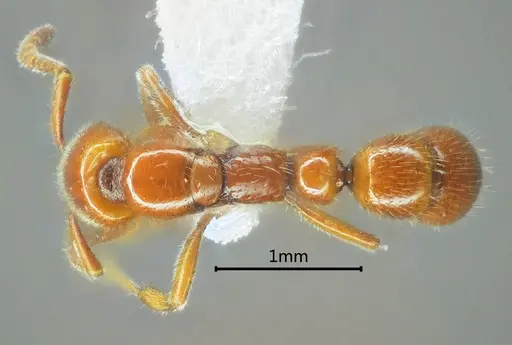
Literatuur
Verspreidingskaart laden...Producten laden...