
Monomorium clavicorne
- Wetenschappelijke naam
- Monomorium clavicorne
- Tribus
- Solenopsidini
- Subfamilie
- Myrmicinae
- Auteur
- André, 1881
- Verspreiding
- Gevonden in 0 landen
Introductie
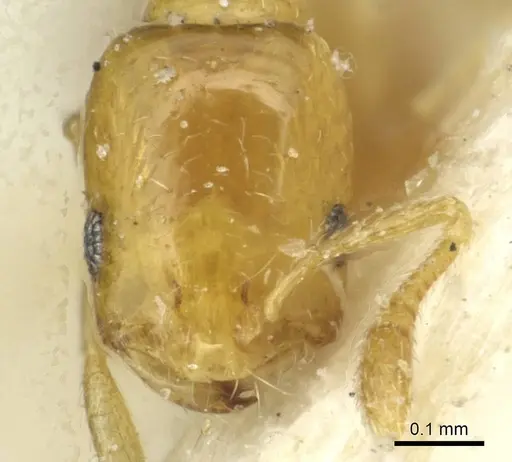
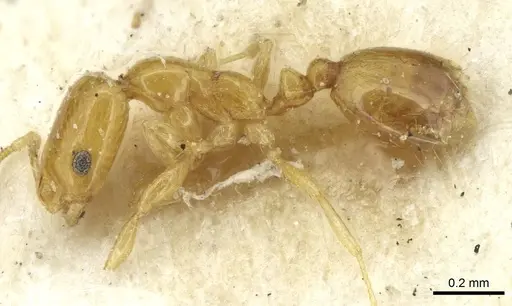
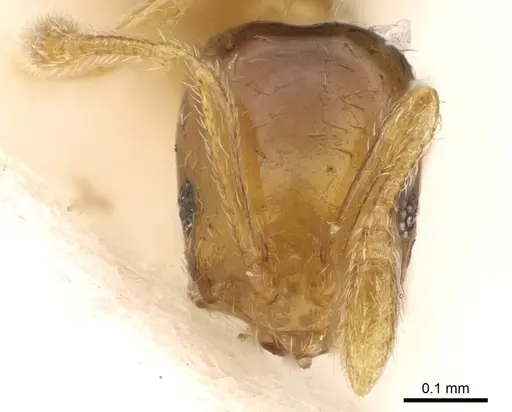
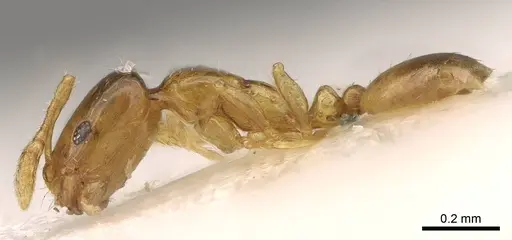
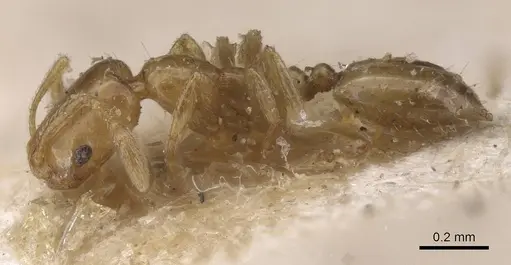
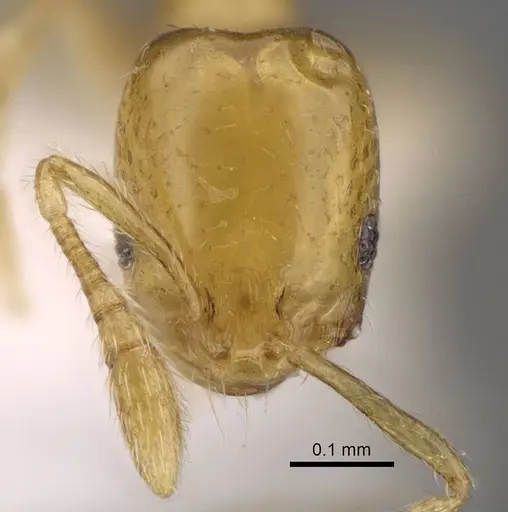
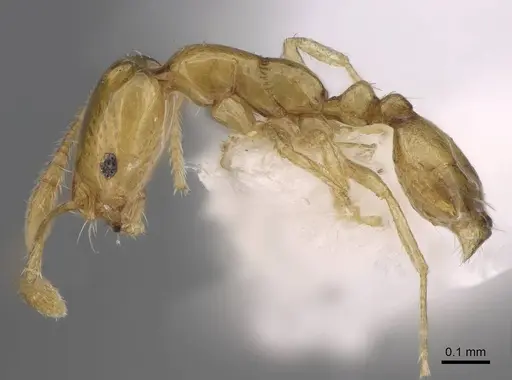
Monomorium clavicorne is a tiny yellow ant from the Monomorium monomorium species group. Workers measure about 1.4-1.9 mm in total length, making them one of the smaller ant species . They have 11-segmented antennae with a notably enlarged terminal segment, and a smooth, shiny yellow body . Originally described from Israel, this species is found across the Middle East and North Africa, including Egypt, Iran, Saudi Arabia, and Oman .
Quick Summary
- Difficulty: Medium
- Origin & Habitat: Middle East and North Africa, from Israel to Saudi Arabia and Oman. Inhabits cultivated areas with water sources and dry leaf litter in arid to semi-arid regions [1][2][3].
- Colony Type: Colony structure is unconfirmed. Based on typical Monomorium patterns, likely forms single-queen colonies, but this requires confirmation.
- Size & Growth:
- Queen: Size data unavailable, no total length measurements for queens in research
- Worker: 1.44-1.48 mm [1]
- Colony: Unknown, no specific data on colony size
- Growth: Unknown, estimated moderate based on small worker size
- Development: Estimated 6-8 weeks at optimal temperature (Direct development data unavailable, estimate based on genus patterns)
- Antkeeping:
- Temperature: Keep around 22-26°C, reflecting their Mediterranean origin
- Humidity: Keep nest substrate moderately dry with occasional moisture zones, based on arid habitats
- Diapause: Likely requires winter diapause, reduce temperature to 15-18°C for 2-3 months
- Nesting: Test tube setups work well for founding colonies, provide dry nest chambers with access to water
- Behavior: Workers are active foragers and coexist with other ant species in the wild, suggesting relatively non-aggressive behavior [1]. Their tiny size makes them excellent escape artists, requiring fine mesh barriers.
- Common Issues: escape prevention is critical due to their small 1.4-1.9 mm size, limited research means colony founding and development specifics are uncertain, overheating risk is significant, they tolerate heat better than excess moisture, wild-caught colonies may carry parasites given their coexistence with multiple ant species
Identification and Key Features
Monomorium clavicorne is easily identified by its 11-segmented antennae with a terminal segment more than twice as long as the two preceding segments [1]. Workers are tiny at 1.44-1.48 mm total length, with a smooth, shiny yellow body and head longer than broad [1][2]. The mesosoma has only two pairs of standing hairs, on the pronotal corners and propodeum [1][4].
Natural History and Distribution
This species is found across the Middle East and North Africa, from Israel to Saudi Arabia and Oman [1][2]. It inhabits cultivated areas with water sources and dry leaf litter, and may be introduced in some regions like Saudi Arabia [1]. Specimens have been collected in diverse habitats, including desert parks and areas with sewage water streams [1][2].
Housing and Nest Setup
Given their tiny size, test tube setups work well for founding colonies. Keep the nest chamber relatively dry, reflecting their arid origin. For established colonies, use Y-tong nests with narrow chambers. Escape prevention is critical, use fine mesh (0.5mm or smaller) and apply barriers like fluon.
Feeding and Diet
Offer sugar water or honey for energy, and small protein sources like fruit flies or pinhead crickets. Feed protein 2-3 times per week and keep sugar water available at all times.
Temperature and Seasonal Care
Keep nest temperatures around 22-26°C for optimal development. During winter, reduce temperature to 15-18°C for 2-3 months to simulate diapause. Monitor colony activity to adjust as needed.
Colony Development and Growth
Specific development data is unavailable. Based on related species, first workers may emerge in 6-8 weeks under optimal conditions. Colony growth is likely moderate, with small ultimate size.
Frequently Asked Questions
How long does it take for Monomorium clavicorne to produce first workers?
Exact timing is unconfirmed, but based on related species, expect first workers about 6-8 weeks after egg-laying at 22-26°C.
What do Monomorium clavicorne ants eat?
They accept sugar water or honey for energy, and small protein like fruit flies or crickets. Keep sugar water available always and offer protein 2-3 times weekly.
What temperature do Monomorium clavicorne ants need?
Keep nest temperatures around 22-26°C, with a slight gradient for choice.
How big do Monomorium clavicorne colonies get?
Colony size is unknown due to limited research, but they likely remain small given their tiny worker size.
Do Monomorium clavicorne ants need hibernation?
Likely yes, reduce temperature to 15-18°C for 2-3 months during winter.
Can I keep multiple Monomorium clavicorne queens together?
Colony structure is unconfirmed. It is not recommended to combine unrelated queens until more is known, as fighting is likely.
Why are my Monomorium clavicorne ants escaping?
Their tiny size (1.4-1.9 mm) requires fine mesh barriers (0.5mm or smaller) and fluon on connections to prevent escapes.
Is Monomorium clavicorne a good beginner ant?
Difficulty is Medium. Their small size and escape risk present challenges, but they are not overly aggressive. Experienced keepers may have success.
Report an Issue
The current care sheet is based fully on literature. See inconsistencies, or something that's incorrect? Please , it will be resolved after review from an admin. Contributing to the blogs tab also helps providing information, to make us be able to further improve the caresheets. Thank you for your support!
References

Dit verzorgingsblad is gelicentieerd onder CC BY-SA 4.0 .
Community-blogs
CASENT0913568
Bekijk op AntWeb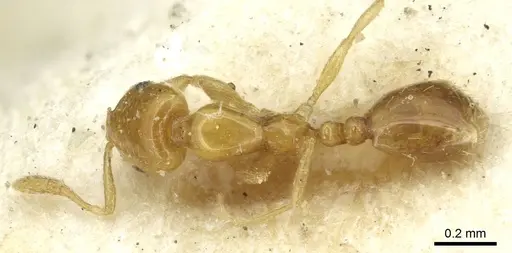
CASENT0914394
Bekijk op AntWeb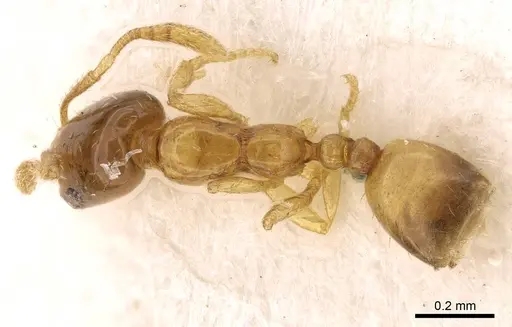
CASENT0915416
Bekijk op AntWeb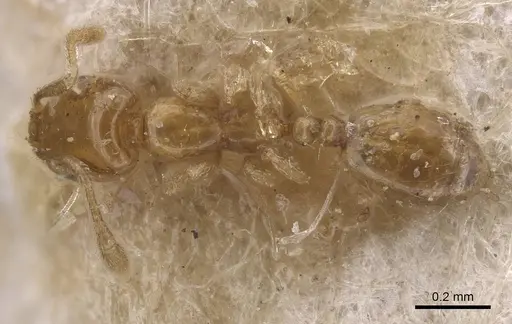
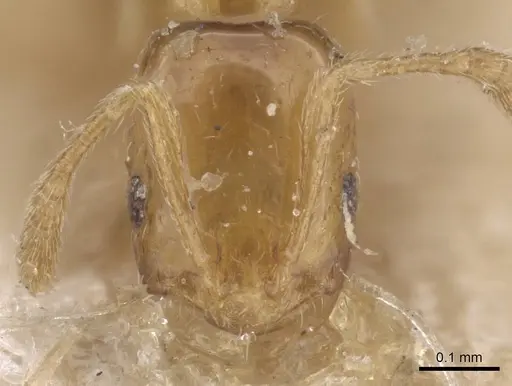
CASENT0922879
Bekijk op AntWeb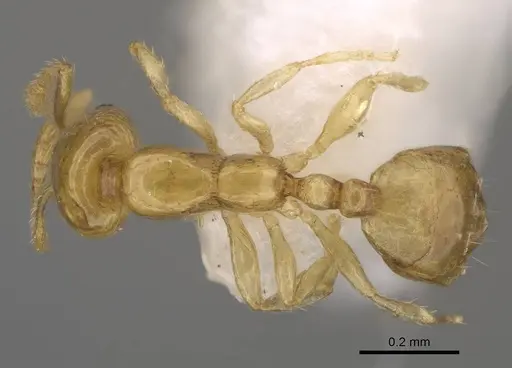
Literatuur
Verspreidingskaart laden...Producten laden...