
Monomorium bequaerti
- Wetenschappelijke naam
- Monomorium bequaerti
- Tribus
- Solenopsidini
- Subfamilie
- Myrmicinae
- Auteur
- Forel, 1913
- Verspreiding
- Gevonden in 1 landen
Introductie
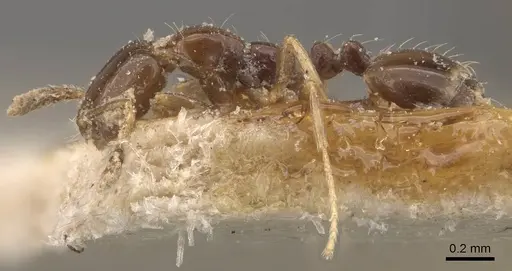
Monomorium bequaerti is a tiny ant species from the Afrotropical region, specifically documented in the Democratic Republic of Congo and Gabon. Workers measure approximately 1.9mm in total length, making them among the smaller ant species . They have a distinctive glossy light brown coloration, an unusually large postpetiole (the segment behind the waist), and a high narrow petiole node that is longer than broad when viewed from above. Their antennae have 11 segments, and their eyes are relatively large for their size. This species belongs to the Monomorium monomorium species group, specifically the bequaerti complex. Almost nothing is known about their biology in the wild - no information exists on their colony structure, founding behavior, diet, or seasonal patterns. This makes them a challenging species for keepers who prefer well-documented species, but also an opportunity to contribute to our understanding of this rarely studied ant.
Quick Summary
- Difficulty: Hard
- Origin & Habitat: Afrotropical region, Democratic Republic of Congo (Katanga/Lubumbashi) and Gabon (Pongara National Park). They inhabit tropical forest environments, though specific nesting habits are unknown [2][3][1].
- Colony Type: Unknown. The colony structure has not been documented in the scientific literature.
- Size & Growth:
- Antkeeping:
- Temperature: Likely 22-28°C based on their tropical origin. Start in the mid-range (24-26°C) and observe colony activity.
- Humidity: Moderate to high, tropical forest species. Keep nest substrate lightly moist but not waterlogged. Provide a moisture gradient so ants can choose their preferred zone.
- Diapause: Unknown if they require hibernation. As a tropical species from central Africa, they likely do not enter true diapause but may reduce activity during cooler periods.
- Nesting: Unknown natural nesting preferences. Based on their small size and related species, they likely nest in small cavities in soil, rotting wood, or under debris. In captivity, a small test tube setup or Y-tong nest with tight chambers works well. Avoid large open spaces.
- Behavior: Not documented. Based on genus patterns, they are likely relatively docile and non-aggressive. Their tiny size means they pose no sting threat to humans. Escape prevention is critical, they can squeeze through standard test tube barriers and require fine mesh or fluon barriers. They are likely omnivorous, accepting both sugary liquids and small protein sources.
- Common Issues: escape prevention is critical due to their very small size, use fine mesh barriers., no documented biology means keepers must experiment with care conditions., slow colony growth is expected, do not overfeed or disturb the colony., wild-caught colonies may have unknown parasites or diseases., temperature stability is important, avoid drafts and temperature fluctuations.
Appearance and Identification
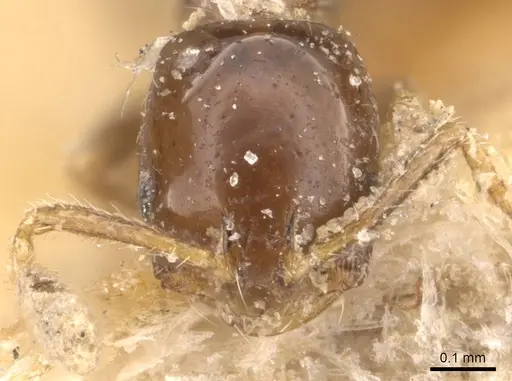
Monomorium bequaerti workers are tiny at approximately 1.9mm total length. They have a distinctive glossy light brown coloration that sets them apart from related species, M. pulchrum is dull yellow and M. rosae is nearly black. Their most distinguishing feature is the relatively large postpetiole (the segment behind the petiole), which is about the same size or slightly larger than the petiole node itself. The petiole node is unusually high and narrow, appearing longer than broad when viewed from above, in the two related species, the petiole node is broader than long. They have 11-segmented antennae and relatively large eyes for their size. All body surfaces are smooth and highly polished, with standing hairs on the head and body [1].
Distribution and Habitat
This species has been documented in two locations across central Africa. The type locality is in the Katanga province of the Democratic Republic of Congo, specifically around Lubumbashi (formerly Elisabethville), where the original specimens were collected in 1912. More recently, specimens matching this species were identified in Gabon (Pongara National Park), where they had previously been misidentified as Monomorium invidium [2]. The 2024 checklist of Congolese ants confirms their presence in multiple provinces [3]. Nothing is known about their specific habitat preferences, nesting sites, or elevation range. As tropical ants from central Africa, they likely inhabit forest edges or shaded areas where humidity remains relatively stable.
Housing and Nest Setup
Given their tiny size, housing requires attention to escape prevention. A small test tube setup works well for founding colonies, use a test tube with a cotton ball providing water access, and ensure the opening is sealed with fine mesh or fluon. The chambers should be appropriately scaled to their tiny size, avoid large, open spaces. A Y-tong nest with narrow chambers also works well. Keep the nest setup simple and avoid excessive disturbance during the founding stage. Because nothing is known about their humidity preferences, start with moderate moisture (lightly moist substrate) and observe, if workers cluster near the water source, increase humidity, if they avoid damp areas, reduce slightly. Provide a gradient of conditions within the setup so the colony can self-regulate.
Feeding and Diet
The diet of Monomorium bequaerti has not been documented, so care must be based on genus-level inference. Most Monomorium species are omnivorous, feeding on small insects, honeydew from aphids, and sugary liquids. For a colony this small, offer tiny food items: a drop of sugar water or honey diluted with water, and small protein sources like fruit flies, pinhead crickets, or other tiny arthropods. Start with small amounts and observe what they accept. Remove uneaten food after 24-48 hours to prevent mold. Because they are so small, even tiny prey items may be too large, consider breaking prey into smaller pieces or culturing springtails as a food source. Do not overfeed, excess food leads to mold which can kill small colonies.
Temperature and Seasonal Care
As a tropical species from central Africa (DRC and Gabon), Monomorium bequaerti likely prefers warm, stable conditions. Start with temperatures in the 24-26°C range and monitor colony behavior. If workers become sluggish and cluster together, the colony may be too cold, increase temperature slightly. If they avoid the heated area and cluster near the cooler end, reduce temperature. Avoid placing the nest near windows, air conditioning vents, or other sources of temperature fluctuation. Nothing is known about their diapause requirements. Based on their tropical origin, they likely do not require true hibernation but may reduce activity during cooler periods. If you notice reduced activity in winter, do not attempt to force hibernation, simply maintain stable room temperature and reduce feeding frequency.
Colony Development and Growth
No data exists on the development timeline of Monomorium bequaerti. Queens have not been documented in the scientific literature, so their size is unknown. Expect slow growth initially, as founding colonies often take months to produce their first workers. Do not disturb the queen or colony during founding, queens may eat their own eggs if stressed. Be patient and maintain consistent care conditions. Once workers emerge, growth typically accelerates but remains slow compared to larger ant species.
Frequently Asked Questions
How long does it take for Monomorium bequaerti to produce first workers?
Unknown, no research has documented their development timeline. Expect the founding process to take several months before workers appear.
What do Monomorium bequaerti eat?
Their diet has not been documented. Based on genus patterns, they likely accept small insects and sugary liquids. Offer sugar water or diluted honey, plus tiny prey like fruit flies, springtails, or small cricket pieces. Start with small amounts and remove uneaten food after 24 hours.
What temperature do Monomorium bequaerti need?
Not confirmed, but as a tropical species from central Africa, they likely need 24-26°C. Start in this range and adjust based on colony behavior. Avoid temperature fluctuations and drafts.
Are Monomorium bequaerti good for beginners?
No. This species is not recommended for beginners because almost nothing is known about their biology in the scientific literature. There are no established care guidelines, so keepers must experiment with conditions. Choose a better-documented species like Lasius niger or Messor barbarus if you are new to ant keeping.
How big do Monomorium bequaerti colonies get?
Unknown, no colony size data exists. Based on their tiny worker size and related species, colonies likely remain relatively small. Do not expect massive colonies.
Do Monomorium bequaerti need hibernation?
Unknown, but unlikely. As a tropical species from central Africa, they likely do not require true diapause. Simply maintain stable warm conditions year-round. If activity decreases in winter, reduce feeding rather than attempting hibernation.
Can I keep multiple queens together?
Unknown, colony structure has not been documented. Do not attempt combining unrelated queens until more is known about their social structure.
What size nest do I need for Monomorium bequaerti?
Use a small setup scaled to their tiny size. A standard test tube works for founding colonies. For established colonies, a Y-tong nest with narrow chambers or a small formicarium is appropriate. Avoid large, open spaces.
Why are my Monomorium bequaerti dying?
Without documented care requirements, trial and error is expected. Common issues include: escape through tiny gaps (use fine mesh), temperature instability, overfeeding causing mold, and stress from disturbance during founding. Review each of these factors and adjust gradually.
Report an Issue
The current care sheet is based fully on literature. See inconsistencies, or something that's incorrect? Please , it will be resolved after review from an admin. Contributing to the blogs tab also helps providing information, to make us be able to further improve the caresheets. Thank you for your support!
References

Dit verzorgingsblad is gelicentieerd onder CC BY-SA 4.0 .
Community-blogs
CASENT0908768
Bekijk op AntWeb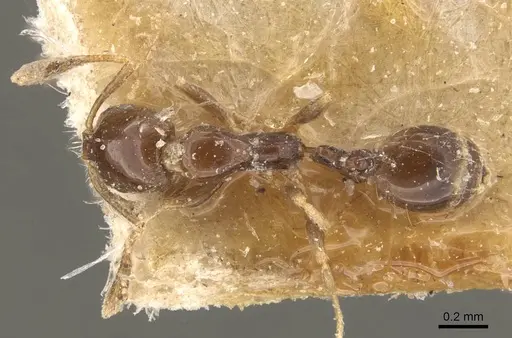
Literatuur
Verspreidingskaart laden...Producten laden...