
Monomorium aeyade
- Wetenschappelijke naam
- Monomorium aeyade
- Tribus
- Solenopsidini
- Subfamilie
- Myrmicinae
- Auteur
- Collingwood & Agosti, 1996
- Verspreiding
- Gevonden in 0 landen
Introductie
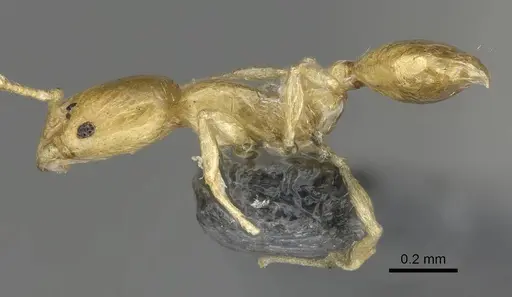
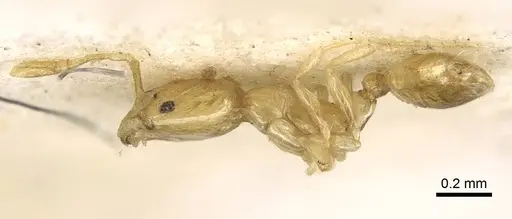
Monomorium aeyade is an extremely small ant species, with workers measuring approximately 1.4-1.5mm in total length. They belong to the Monomorium monomorium species-group and are uniformly light yellow in color with a smooth, glossy body surface. These ants have 11-segmented antennae and distinctive small eyes. The species is endemic to Oman, known only from the type locality of Wadi Aeyad where specimens were collected under a stone in sandy terrain in March 1990. Nothing is known about their biology, colony structure, or captive care requirements - this is one of the most poorly documented ant species in the hobby .
Quick Summary
- Difficulty: Expert
- Origin & Habitat: Endemic to Oman in the Palaearctic region. The type specimens were collected from under a stone in sandy terrain in Wadi Aeyad [1][2].
- Colony Type: Colony structure is unconfirmed. No data exists on whether this species forms single-queen or multi-queen colonies.
- Size & Growth:
- Antkeeping:
- Temperature: Unknown for this species. Related Monomorium species typically thrive at 22-26°C. Start in the low-mid 20s°C range and observe colony behavior.
- Humidity: Unknown. The Oman habitat suggests adaptation to relatively dry conditions, but specific requirements are unstudied. Provide a moisture gradient allowing ants to self-select.
- Diapause: Unknown, no seasonal data exists. Oman has mild winters, so a reduced activity period may be beneficial.
- Nesting: In nature, specimens were found under stones in sandy terrain. A test tube setup with sandy substrate would be appropriate. Provide a moisture source.
- Behavior: Behavior is completely unstudied. Based on genus patterns, they are likely relatively docile. Their tiny size means escape prevention must be excellent, they can squeeze through remarkably small gaps. The species belongs to the subfamily Myrmicinae and tribe Solenopsidini, which typically have a sting mechanism, but stinging behavior has not been documented for this specific species.
- Common Issues: no biological data exists, all care is speculative, colony structure unknown, founding behavior unconfirmed, development timeline completely unknown, no established feeding or husbandry protocols
Species Overview and Identification
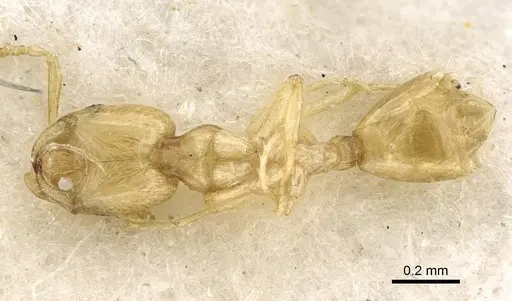
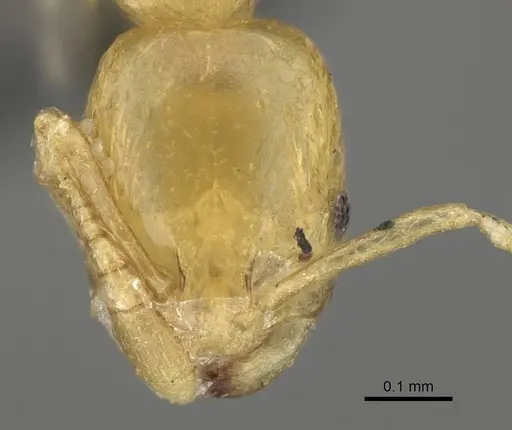
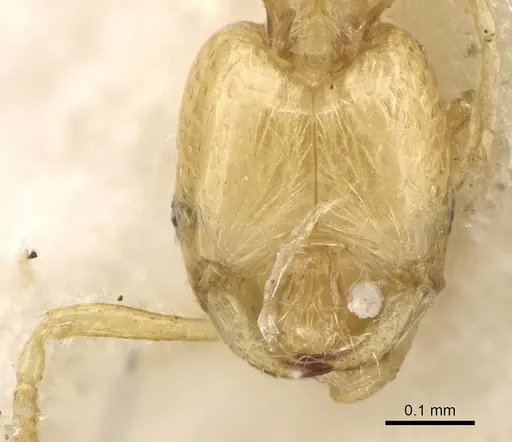
Monomorium aeyade is a minute ant species described in 1996 from Oman. Workers are extremely small at approximately 1.4-1.5mm total length, making them among the smallest ants in the genus. They are uniformly light yellow in color with a smooth, glossy body surface. Key identification features include 11-segmented antennae, small oval eyes, and a complete absence of hairs on the mesosoma. The head is longer than broad with nearly parallel sides, and the petiole node is massive and rounded. This species closely resembles Monomorium guillarmodi from Lesotho but differs in having smaller eyes, a more rounded promesonotal dorsum, and lacking the occipital hairs found in M. guillarmodi [1].
Distribution and Habitat
Monomorium aeyade is endemic to Oman, known only from the Wadi Aeyad locality in the eastern part of the country. The type specimens were collected in March 1990 from under a stone in sandy terrain. This represents an extremely restricted range, one of the narrowest of any described ant species. The Wadi Aeyad area features typical Arabian Peninsula terrain with sandy substrates and rocky outcrops. No additional collection records exist in the scientific literature [1][2][4].
What We Do Not Know
It must be emphasized that literally nothing is known about the biology or ecology of this species. The original description focused solely on physical identification, and subsequent taxonomic reviews have not added any biological data. We do not know: colony structure, founding behavior, diet preferences, temperature and humidity requirements, nuptial flight timing, colony size, development timeline, or any aspects of their natural history. This species has never been kept in captivity by hobbyists, and no care protocols exist. Any advice given must be considered highly speculative [1].
Care Recommendations (Speculative)
Given the complete absence of biological data, care recommendations must be based on inference from related Monomorium species and general antkeeping principles. Start with a standard test tube setup with a water reservoir. Keep temperatures in the low-mid 20s Celsius range as a starting point. Provide a moisture gradient by placing part of the test tube on damp material. For feeding, offer small protein sources like fruit flies or tiny prey items, along with sugar water or honey. The extremely small size means you must use excellent escape prevention, these ants can slip through gaps that seem impossible. Start with very small prey items and observe acceptance. Document your observations carefully, as any captive data would be scientifically valuable for this poorly known species.
Similar Species for Reference
Monomorium aeyade belongs to the M. monomorium species-group, which contains several other tiny, yellow Monomorium species. Related species like Monomorium guillarmodi from southern Africa share similar small size and reduced pilosity. More common hobby species like Monomorium pharaonis and Monomorium carbonarium are in the same genus but different species-groups. While these related species are typically monogyne, claustral founders that prefer warm conditions, M. aeyade may have different requirements given its unique Arabian habitat. Use genus-level knowledge as a starting point only [1][4].
Frequently Asked Questions
How do I care for Monomorium aeyade ants?
No established care protocol exists, this is one of the most poorly documented ant species. Start with a test tube setup, temperatures in the 22-26 Celsius range, and small prey items. Document your observations carefully since any captive data would be scientifically valuable.
What do Monomorium aeyade ants eat?
Diet is completely unstudied. Based on genus patterns, they likely accept small insects and honeydew. Offer tiny live prey like fruit flies, along with sugar water or honey. Start with small quantities and observe acceptance.
How big do Monomorium aeyade colonies get?
Unknown, no colony size data exists.
Is Monomorium aeyade a good species for beginners?
No, this is an expert-level species due to complete lack of biological data. All care is speculative. Beginners should start with well-documented species like Lasius niger, Camponotus species, or common Myrmica species.
What is the colony structure of Monomorium aeyade?
Unconfirmed, no colony structure data exists. We do not know if they are single queen or multi-queen.
How long does it take for Monomorium aeyade to develop from egg to worker?
Unknown, no development data exists for this species.
Where is Monomorium aeyade found?
Monomorium aeyade is endemic to Oman, known only from the Wadi Aeyad locality. This is one of the most restricted ant species distributions known.
Do Monomorium aeyade queens found colonies claustrally?
Unknown, founding behavior has not been documented.
Does Monomorium aeyade need hibernation?
Unknown, no seasonal data exists. Oman has mild winters, so a reduced activity period may be beneficial, but this is speculative. Observe your colony for natural slowing and adjust accordingly.
Report an Issue
The current care sheet is based fully on literature. See inconsistencies, or something that's incorrect? Please , it will be resolved after review from an admin. Contributing to the blogs tab also helps providing information, to make us be able to further improve the caresheets. Thank you for your support!
References

Dit verzorgingsblad is gelicentieerd onder CC BY-SA 4.0 .
Community-blogs
CASENT0922329
Bekijk op AntWeb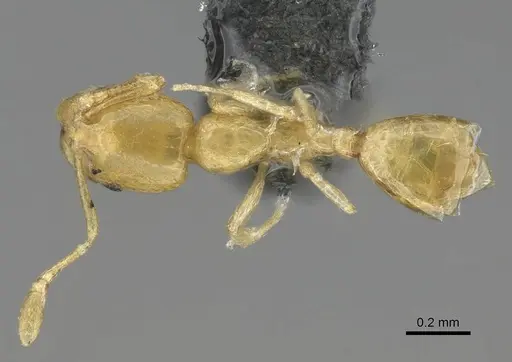
Literatuur
Verspreidingskaart laden...Producten laden...