
Melissotarsus insularis
- Wetenschappelijke naam
- Melissotarsus insularis
- Tribus
- Crematogastrini
- Subfamilie
- Myrmicinae
- Auteur
- Santschi, 1911
- Verspreiding
- Gevonden in 2 landen
Introductie
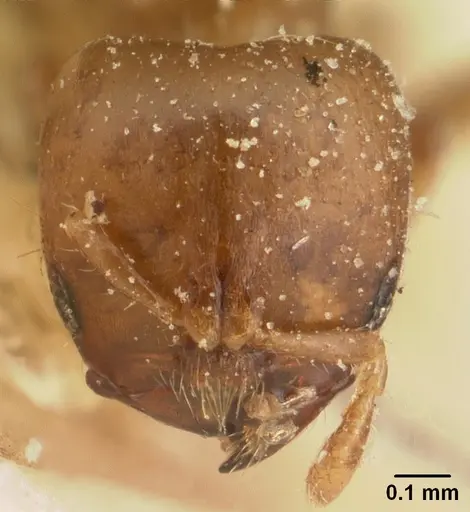
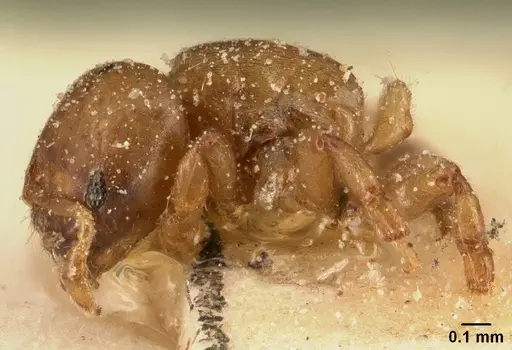
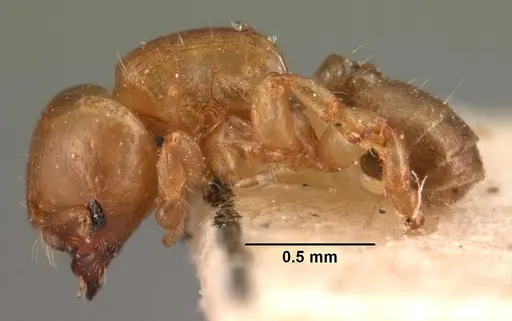
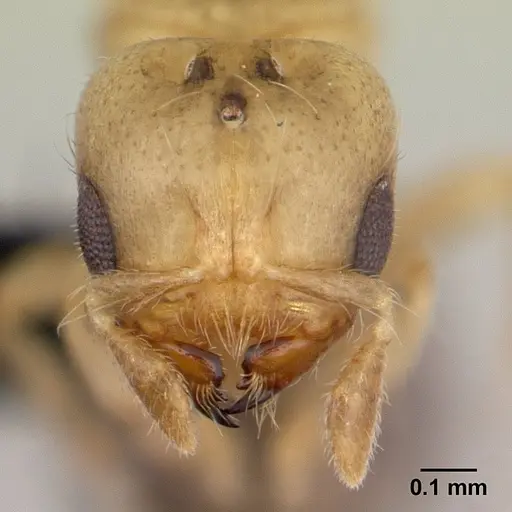
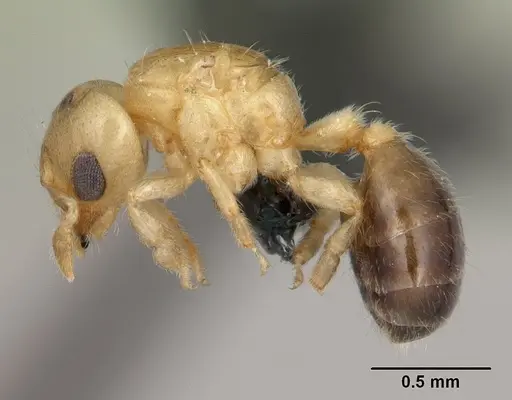
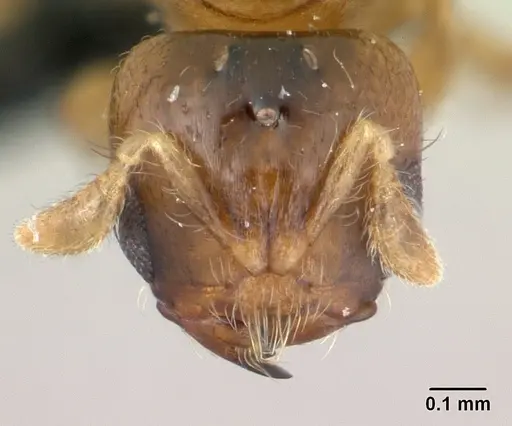
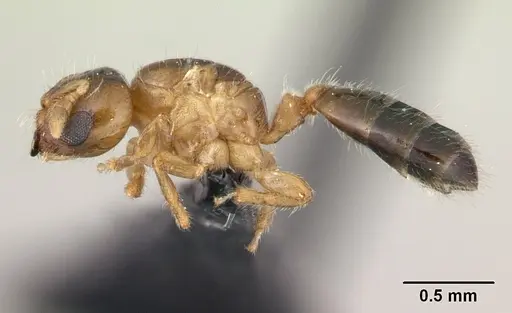
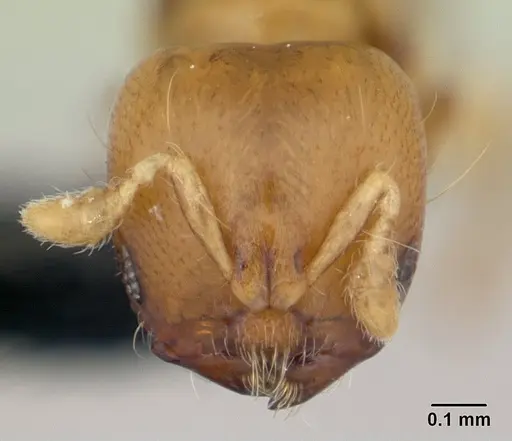
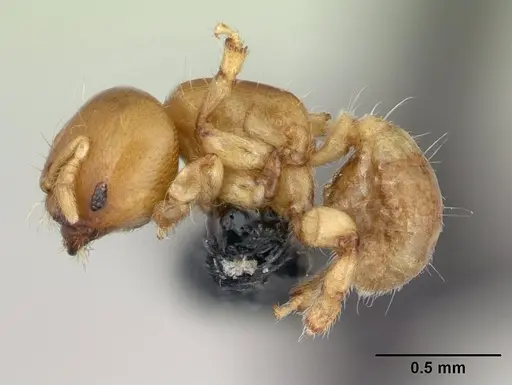
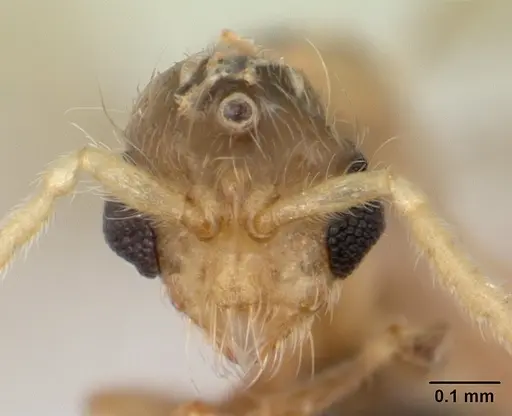
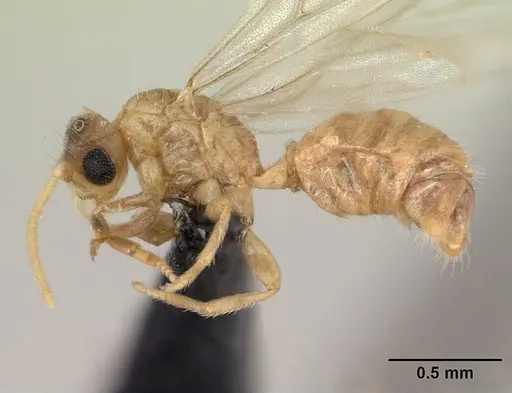
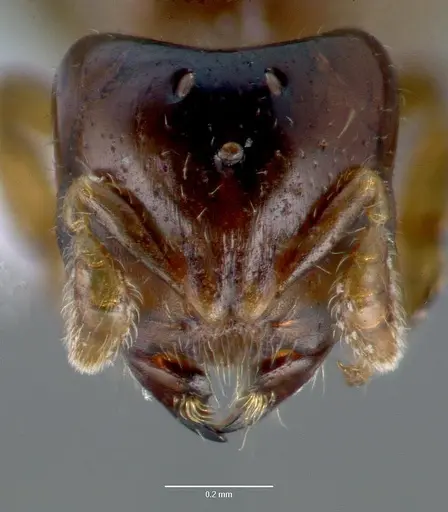
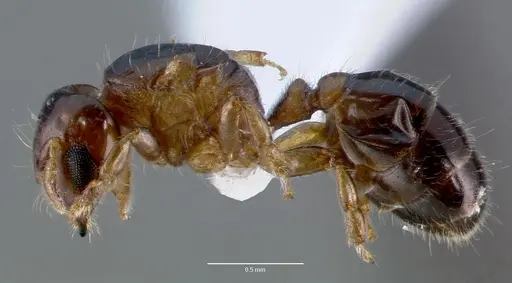
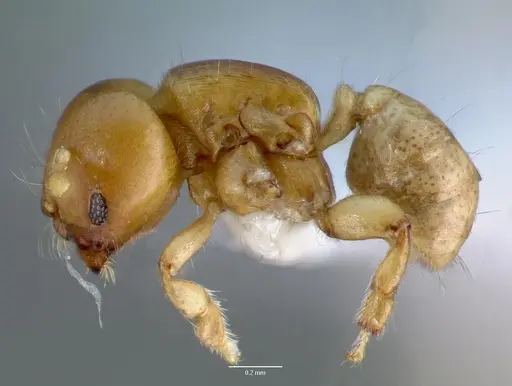
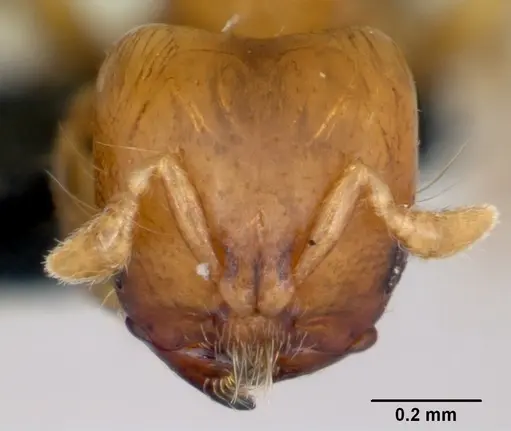
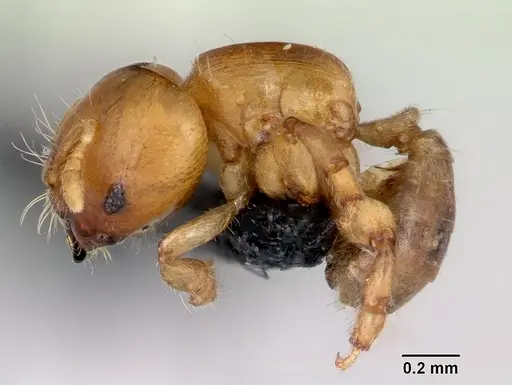
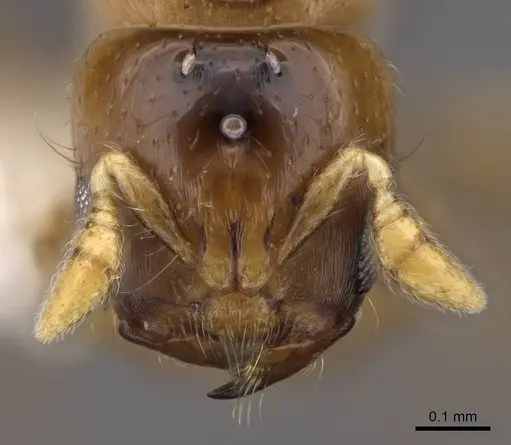
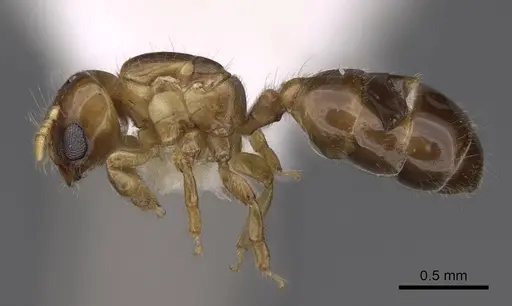
Melissotarsus insularis is a highly specialized small ant species endemic to Madagascar, Comoros, and Mayotte . Workers are tiny and build their nests exclusively inside the living bark of trees, tunneling through the soft tissue beneath the surface where their presence is invisible from outside . This species has a completely unique lifestyle - it farms colonies of armoured scale insects (Diaspididae) inside its galleries, and the coccid honeydew appears to form a major part of the ant's diet . They produce silk to seal cracks and exit holes in their tunnels . Perhaps most unusually, these ants walk on their front and hind legs with their middle legs projecting upward, likely touching the gallery ceiling as they move through their tunnels . Colonies can reach extraordinary sizes of over 1.5 million workers .
Quick Summary
- Difficulty: Expert
- Origin & Habitat: Endemic to Madagascar, also found in Comoros and Mayotte. Nests exclusively in the living bark and wood of trees, tunneling beneath the surface [3][1]. Found across all four of Madagascar's bioclimatic regions and in 23 different dicotyledonous tree species [1].
- Colony Type: Colony structure is unconfirmed. The massive colony size (over 1.5 million workers) suggests multiple queens, but this has not been directly studied.
- Size & Growth:
- Queen: Size data unavailable, the queen has never been scientifically described [5].
- Worker: Small, exact measurements not documented in available literature.
- Colony: Colonies can exceed 1.5 million workers [1].
- Growth: Unknown, no development data available.
- Development: Unknown, no development studies exist for this species. (Development timeline has not been studied.)
- Antkeeping:
- Temperature: As a tropical Madagascar species, keep warm around 24-28°C. This is an estimate based on similar arboreal tropical ants since no specific thermal studies exist.
- Humidity: Moderate to high, they live inside tree bark which provides stable humidity. Mist the outworld occasionally and keep nesting material slightly moist.
- Diapause: No, Madagascar has no true winter. These ants remain active year-round.
- Nesting: This is the critical challenge, Melissotarsus cannot be kept in standard formicaria. They require living wood or a custom-built arboreal setup with passages. They will not survive in soil-based or standard acrylic nests. This species is NOT suitable for typical antkeeping setups.
- Behavior: These ants are extremely specialized and rarely leave their galleries. Workers have been observed foraging outside nests in some areas, but in managed forests in Madagascar, workers have never been seen leaving their nest galleries [3]. They can become pest problems in managed forests due to their scale-insect farming [3]. They possess a modified stinger used to smear venom rather than pierce. Escape risk is minimal since they remain in their wood galleries, but they are not suitable for observation-focused keeping.
- Common Issues: This species cannot be kept in standard formicaria, they require wood-based nesting which is extremely difficult to replicate., The coccid-farming relationship is essential, ants may not survive without their symbiotic scale insects., They are virtually unavailable in the antkeeping hobby due to their specialized biology., Colony size can reach 1.5 million, they need enormous space that few hobbyists can provide., No captive breeding data exists, wild colonies cannot be sustainably harvested.
The Unique Scale-Farming Lifestyle
Melissotarsus insularis is one of only two ant genera known to cultivate scale insects inside their nests (the other being Rhopalomastix) [3]. The ants keep armoured scale insects (family Diaspididae) inside the galleries they carve in living tree bark. These scale insects feed on plant sap and produce honeydew, which the ants consume as their primary food source [3]. The relationship is so specialized that the scale insects have lost their normal protective scale covers, they live entirely within the ant's galleries and are tended by the workers [4]. This farming behavior can become so extensive that Melissotarsus colonies become pest problems in managed forests across Madagascar and Africa [3]. For antkeepers, this means the symbiotic relationship with coccids is absolutely essential, the ants cannot be kept without their scale insect partners.
Nesting and Housing - The Critical Challenge
This is the most important and most difficult aspect of keeping Melissotarsus. In the wild, these ants exclusively nest in living wood, they tunnel through the soft tissue beneath tree bark, creating networks of galleries [3]. They are almost never found outside their nests, which is why they are rarely collected [2]. Standard antkeeping setups (test tubes, Y-tong nests, acrylic formicaria, soil nests) are completely unsuitable. You would need to provide actual wood with internal passages, or construct a custom arboreal setup. Even then, establishing a colony with the necessary coccid symbionts would be extraordinarily difficult. This species is essentially kept only by specialized researchers, not hobbyists.
Distribution and Range
Melissotarsus insularis is endemic to Madagascar and is the only Melissotarsus species restricted to the island [1]. The genus has four species total, three in mainland Africa and one (M. insularis) in Madagascar [2]. It has also been recorded from Comoros and Mayotte [2]. The species has been found in all four of Madagascar's simplified bioclimatic regions and in 14 out of 28 unique habitats identified by researchers [1]. They inhabit 23 different dicotyledonous tree species across the island [1]. This wide distribution shows they are adaptable to different environmental conditions within Madagascar's tropical climate.
Related Species and Taxonomy
Melissotarsus is a genus of four rare species restricted to the Afrotropical and Malagasy regions [2]. Molecular phylogenetics shows Melissotarsus is the sister genus to Rhopalomastix (100% bootstrap support), and together they form a distinct lineage within the Myrmicinae subfamily [6]. Rhopalomastix is the only other ant genus known to cultivate scale insects, making this a rare and specialized lifestyle in the ant family [2]. The genus was revised by Bolton in 1982,who provided a good identification key for the four species [2].
Why This Species Is Not For Beginners
Melissotarsus insularis is one of the most difficult ants to keep in captivity, if it is even possible at all. Unlike typical ants that can adapt to various nesting situations, this species requires living wood with internal passages and cannot survive in artificial nests. The symbiotic relationship with scale insects is essential and cannot be easily replicated. Colonies can reach 1.5 million workers, requiring enormous space. There is no captive breeding data, and wild colonies cannot be sustainably harvested. The ants rarely leave their galleries, making observation essentially impossible. For all these reasons, this species is kept only by specialized researchers studying their unique biology, not by antkeeping hobbyists. [1][3]
Frequently Asked Questions
Can I keep Melissotarsus insularis in a test tube or formicarium?
No. This species cannot be kept in any standard antkeeping setup. They nest exclusively inside living wood and will not survive in test tubes, acrylic nests, or soil-based formicaria. They require wood-based nesting with internal passages, which is extremely difficult to replicate in captivity.
What do Melissotarsus insularis eat?
They primarily consume the honeydew secretions from their farmed scale insects (coccids). The scale insects live inside the ant's galleries and feed on plant sap, producing honeydew that the ants consume [3]. This is not a typical ant you can feed protein or sugar water, the entire symbiotic relationship with coccids is essential.
How big do Melissotarsus insularis colonies get?
Colonies can exceed 1.5 million workers, making them among the largest ant colonies known [1]. This massive size is one reason they are impractical for typical antkeeping.
Are Melissotarsus insularis good for beginners?
No. This is an expert-only species that is essentially impossible for hobbyists to keep. They require wood nesting, symbiotic scale insects, and enormous space. They are virtually unavailable in the antkeeping hobby due to their specialized biology.
Do Melissotarsus insularis ants sting?
These ants are not known for being aggressive. They have a modified stinger used to smear venom rather than pierce flesh, typical of the Myrmicinae subfamily.
Where does Melissotarsus insularis live?
This species is endemic to Madagascar, with additional records from Comoros and Mayotte [2]. They nest exclusively in the living bark and wood of trees across all of Madagascar's bioclimatic regions [1].
How long does it take for Melissotarsus insularis to develop from egg to worker?
This is unknown. No development studies exist for this species. The queen has never even been scientifically described [5].
Can I keep multiple Melissotarsus insularis queens together?
This has not been studied. The massive colony sizes suggest polygynous (multiple queen) colonies, but combining unrelated queens has not been documented and would not be recommended given how specialized and difficult these ants are to maintain.
Do Melissotarsus insularis need hibernation?
No. As a tropical species from Madagascar, they do not experience winter and remain active year-round. No diapause is required.
Why are Melissotarsus ants so rare in collections?
They build their nests inside living wood, tunneling beneath the surface where their presence is invisible from the outside [2]. Most collections are made by luck rather than intent. Additionally, workers rarely forage outside their galleries [3].
Report an Issue
The current care sheet is based fully on literature. See inconsistencies, or something that's incorrect? Please , it will be resolved after review from an admin. Contributing to the blogs tab also helps providing information, to make us be able to further improve the caresheets. Thank you for your support!
References

Dit verzorgingsblad is gelicentieerd onder CC BY-SA 4.0 .
Community-blogs
CASENT0101093
Bekijk op AntWeb
CASENT0101094
Bekijk op AntWeb
CASENT0101466
Bekijk op AntWeb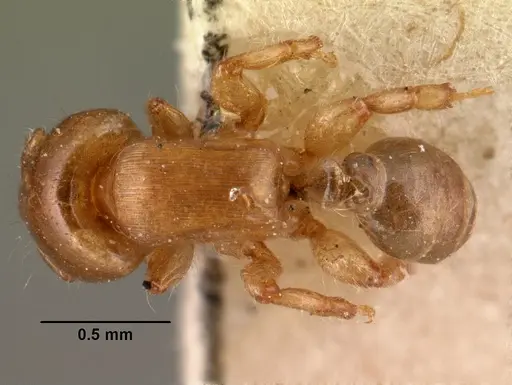
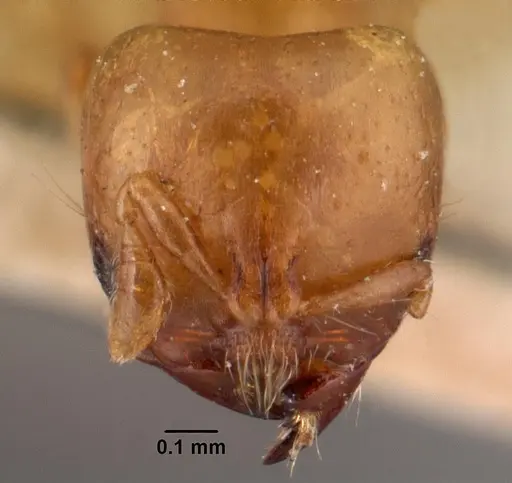
CASENT0125648
Bekijk op AntWeb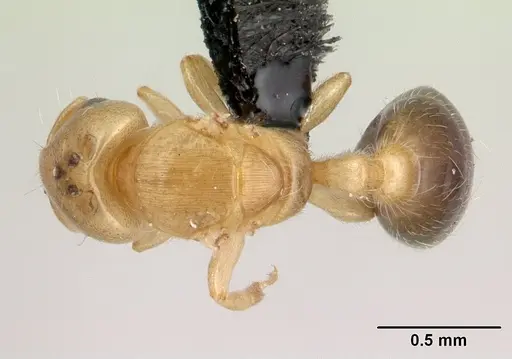
CASENT0125650
Bekijk op AntWeb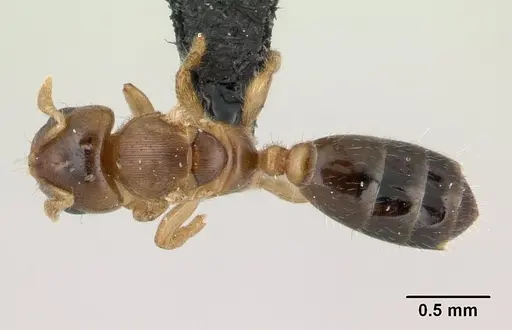
CASENT0125657
Bekijk op AntWeb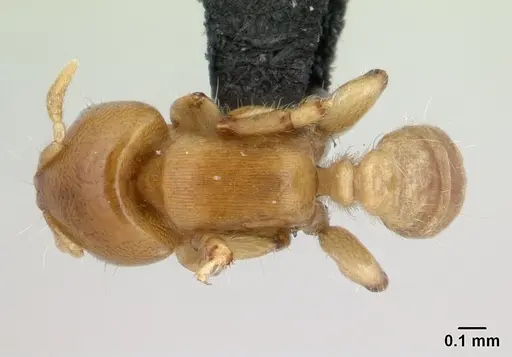
CASENT0132274
Bekijk op AntWeb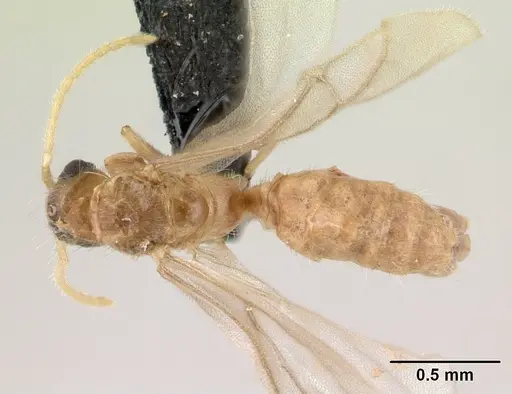
CASENT0303615
Bekijk op AntWeb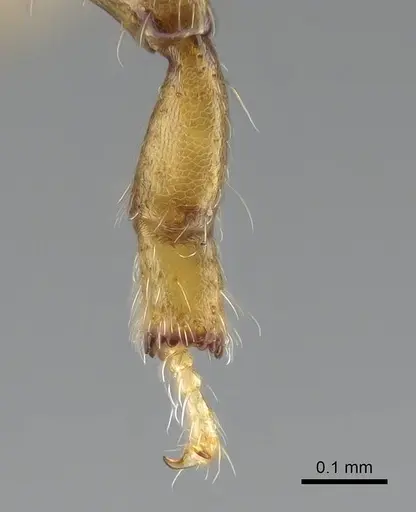
CASENT0422973
Bekijk op AntWeb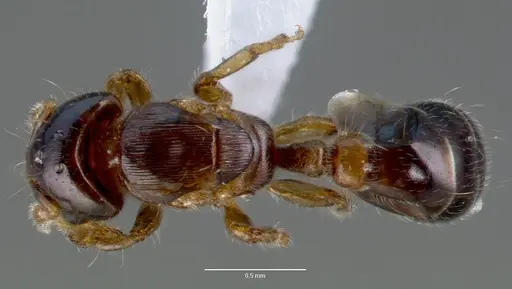
CASENT0426119
Bekijk op AntWeb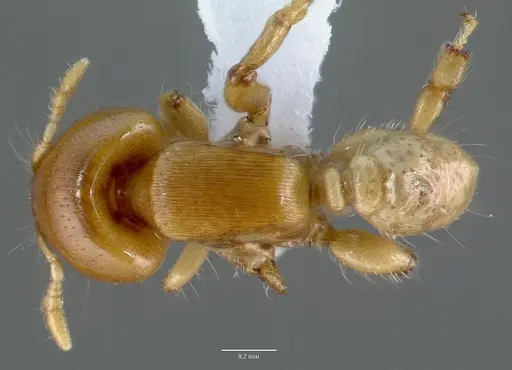
CASENT0498665
Bekijk op AntWeb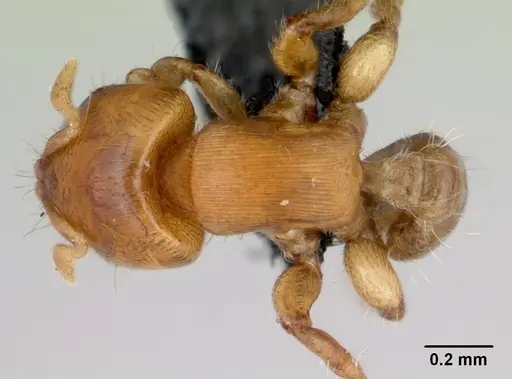
CASENT0922951
Bekijk op AntWeb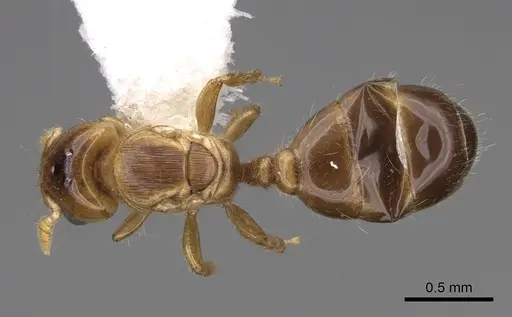
Literatuur
Verspreidingskaart laden...Producten laden...