
Leptogenys pangui
- Wetenschappelijke naam
- Leptogenys pangui
- Tribus
- Ponerini
- Subfamilie
- Ponerinae
- Auteur
- Xu, 2000
- Verspreiding
- Gevonden in 0 landen
Introductie
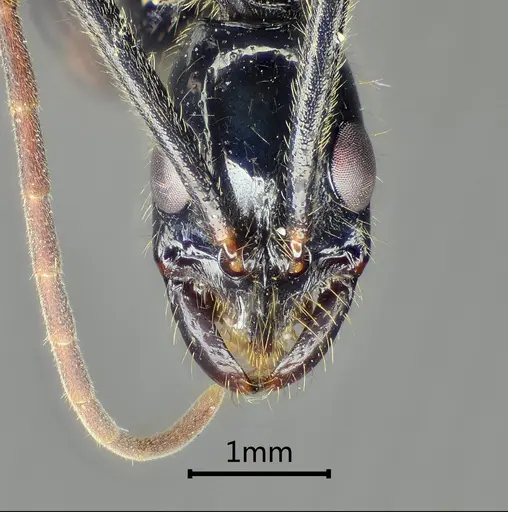
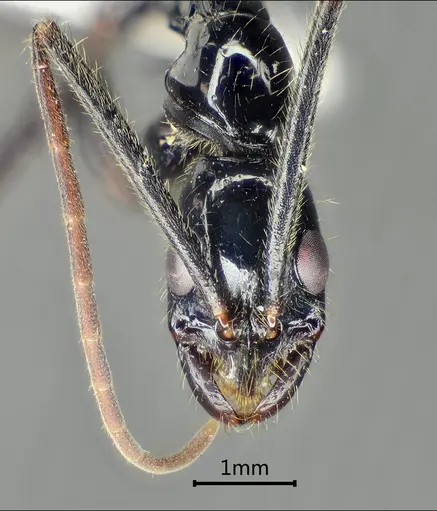
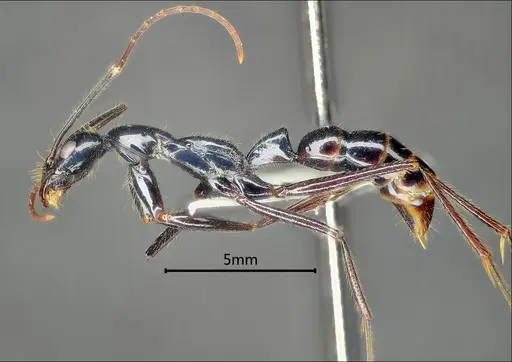
Leptogenys pangui is a large predatory ant species native to Southeast Asia, found in China (Yunnan), Singapore, and Vietnam. Workers measure 12.8-13.5mm in total length, making them one of the larger Leptogenys species . They have a distinctive appearance: a long, narrow head that tapers toward the back, very long antennae that extend past the back of the head by about half the scape length, and a triangular petiolar node. Their body is black with a striking blue metallic luster . This species belongs to the chinensis species group and is known only from the worker caste - the queen has not been described . As a member of the Ponerinae subfamily, these ants are predatory hunters with a functional sting. Nothing specific has been documented about their behavior in captivity, but Leptogenys species are known for their active hunting strategies. This is a rare species in the antkeeping hobby due to limited distribution and the fact only workers have been described .
Quick Summary
- Difficulty: Unknown, no captive husbandry data available
- Origin & Habitat: Southeast Asia and southern China. Found in Yunnan Province at 640-650m elevation in tropical/subtropical forest habitats [2][1].
- Colony Type: Unknown, only worker caste has been described. Colony structure and queen number are unconfirmed.
- Size & Growth:
- Antkeeping:
- Temperature: Infer from habitat: aim for 22-26°C with a gentle gradient. They come from subtropical Yunnan where temperatures are warm year-round.
- Humidity: Infer from habitat: moderate to high humidity. Their native range has distinct wet seasons.
- Diapause: Unknown, no seasonal data available. Southern Chinese populations may experience cooler winters but likely minimal dormancy.
- Nesting: No natural nesting data available. Based on genus patterns, they likely prefer soil nests or rotting wood. A naturalistic setup with moist substrate or a Y-tong/plaster nest would be appropriate.
- Behavior: No behavioral observations have been documented for this specific species. Based on genus Leptogenys patterns, they are likely active predators that hunt alone or in small groups. They have long legs suited for fast movement. Escape prevention should be good given their large size. They have a functional sting as they belong to Ponerinae.
- Common Issues: no captive husbandry data exists, this is an unstudied species in captivity, nothing known about their founding behavior, unknown if claustral or semi-claustral, diet is unconfirmed, genus is predatory but specific prey preferences unknown, no data on colony size or growth rates in captivity, hibernation/diapause requirements completely unknown, queen caste has not been described, cannot establish breeding colonies
Species Background and Identification
Leptogenys pangui was described by Xu in 2000 from Yunnan Province, China. It belongs to the chinensis species group, which is characterized by very long antennae and a distinctive triangular petiolar node. The species is notable for its large size (12.8-13.5mm workers) and striking blue metallic luster on its black body [1]. The type specimens were collected from Menglun, Mengla County in Yunnan at elevations around 640-650m [1].
This species has been recorded from China (Yunnan), Singapore, and Vietnam, making it a Southeast Asian species with a relatively limited distribution [2]. Only the worker caste has been described, the queen caste remains unknown, which is unusual and limits our understanding of their colony structure and reproduction.
Housing and Nesting
Since no natural nesting data exists for this species, we must infer from genus patterns and habitat. Leptogenys species typically nest in soil or rotting wood in forest habitats. For captivity, a naturalistic setup with moist substrate would be a reasonable starting point. Alternatively, a Y-tong or plaster nest with appropriately sized chambers could work.
Given their large size (13mm workers), they will need more spacious accommodations than tiny ants. The nest should have chambers large enough for the colony to move freely. Provide a water reservoir to maintain humidity without frequent misting. Ensure the outworld (foraging area) is appropriately sized with smooth walls to prevent escapes.
Feeding and Diet
Leptogenys are predatory ants in the subfamily Ponerinae, meaning they hunt and kill other insects for food. However, the specific prey preferences of L. pangui are completely unknown. Based on related species, they likely accept a variety of small invertebrates including small crickets and roaches, mealworms and other beetle larvae, other ant species, and various arthropods.
Start with small live prey items appropriate to their size. Since they are large ants, they can handle prey that would be too big for tiny ants. Some Leptogenys species will accept protein gels or dead insects, but live prey is more likely to trigger hunting behavior. Sugar sources are not typically important for Ponerinae, they get energy from protein prey.
Temperature and Seasonal Care
This species comes from southern China (Yunnan) and Vietnam, which have subtropical to tropical climates with warm temperatures year-round. Aim for a temperature range of 22-26°C in the nest area, with a slight gradient so ants can choose their preferred temperature. Room temperature in most homes should work, but you may need a heating cable or mat in cooler climates.
Nothing is known about their seasonal requirements. The Yunnan location experiences cooler winters, but the colony would likely be active year-round in captivity at stable warm temperatures. Do not expose them to temperatures below 15°C unless you have specific evidence they need a cool period.
Behavior and Temperament
No specific behavioral observations exist for L. pangui. However, Leptogenys as a genus are known for their active, hunting-based foraging. They typically have long legs and are fast movers. Some species in this genus are known to conduct raids on other ant colonies, though this is not confirmed for L. pangui.
Given their size and Ponerinae classification, they have a functional sting. While pain level is unknown, you should handle them with care and avoid provoking them. They are not aggressive toward humans but will defend their nest if threatened.
Their large size means they are less likely to escape through tiny gaps compared to tiny ants, but they can still climb smooth surfaces effectively.
Frequently Asked Questions
Is Leptogenys pangui a good species for beginners?
No, this is not a recommended species for beginners. Nothing is known about their captive care requirements, and they are extremely rare in the antkeeping hobby. There is no husbandry data, so keeping them would essentially be experimental. Beginners should start with well-documented species like Lasius niger, Camponotus, or Tetramorium.
What do Leptogenys pangui ants eat?
Their diet is unconfirmed, but based on genus patterns, they are predatory hunters. Offer small live prey like crickets, mealworms, and other insects appropriate to their large size (13mm workers). Some Leptogenys species will accept dead prey or protein gels, but live prey is more likely to trigger hunting behavior.
How long does it take for Leptogenys pangui to develop from egg to worker?
This is completely unknown, no development data exists for this species.
Do Leptogenys pangui ants sting?
Yes, they belong to the Ponerinae subfamily, which includes many stinging ants. The sting is functional. Handle with care and avoid disturbing the colony.
Can I keep multiple Leptogenys pangui queens together?
Unknown, the colony structure is unconfirmed. Only the worker caste has been described, so we don't know if they are single-queen (monogyne) or multi-queen (polygyne) species. Do not attempt to combine unrelated queens without specific evidence they tolerate this.
What temperature do Leptogenys pangui ants need?
Infer from their subtropical habitat: aim for 22-26°C. They come from Yunnan Province, China and Vietnam, which have warm climates. A heating cable on one side of the nest can create a gradient if your room temperature is below this range.
How big do Leptogenys pangui colonies get?
Unknown, no colony size data exists for this species.
What type of nest should I use for Leptogenys pangui?
No specific data exists. Based on genus patterns, a naturalistic setup with moist substrate or a Y-tong/plaster nest with appropriately sized chambers would be appropriate. Their large size requires more spacious accommodations than tiny ants need.
Do Leptogenys pangui need hibernation?
Unknown, no seasonal data is available. Their native range in southern China experiences cooler winters, but captive colonies likely do not need a true hibernation period. Keep them at stable warm temperatures year-round.
Where is Leptogenys pangui found?
This species is known from China (Yunnan Province), Singapore, and Vietnam [2][1]. The type specimens were collected from Menglun in Yunnan at 640-650m elevation.
Report an Issue
The current care sheet is based fully on literature. See inconsistencies, or something that's incorrect? Please , it will be resolved after review from an admin. Contributing to the blogs tab also helps providing information, to make us be able to further improve the caresheets. Thank you for your support!
References

Dit verzorgingsblad is gelicentieerd onder CC BY-SA 4.0 .
Community-blogs
ANTWEB1060506
Bekijk op AntWeb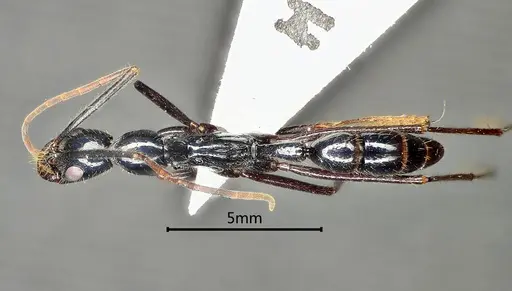
Literatuur
Verspreidingskaart laden...Producten laden...