
Lepisiota schoutedeni
- Wetenschappelijke naam
- Lepisiota schoutedeni
- Tribus
- Plagiolepidini
- Subfamilie
- Formicinae
- Auteur
- Santschi, 1935
- Verspreiding
- Gevonden in 0 landen
Introductie
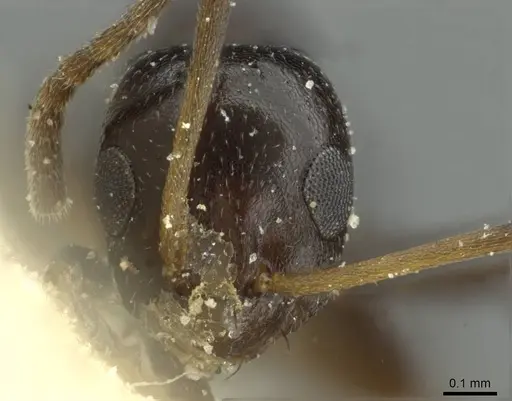
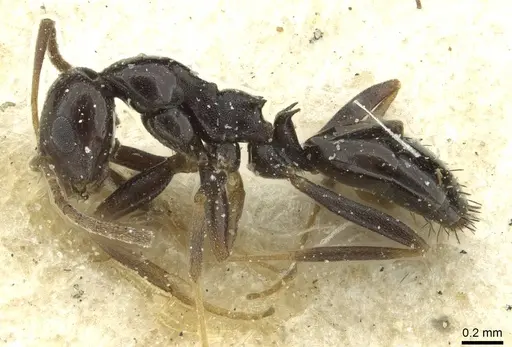
Lepisiota schoutedeni is a small ant species documented from the Democratic Republic of Congo in central Africa . The genus Lepisiota belongs to the Formicinae subfamily, meaning these ants can spray formic acid as a defense mechanism. Workers are small, with the genus characterized by a single node (petiole) between the thorax and abdomen. The species was originally described by Santschi in 1935 . This species remains poorly studied in the scientific literature. No detailed information is available on its specific biology, colony structure, behavior, or size. All care recommendations must be considered experimental due to the lack of species-specific research.
Quick Summary
- Difficulty: Unknown, Insufficient data for difficulty rating
- Origin & Habitat: Democratic Republic of Congo in central Africa [1]. Specific habitat details within this range are unconfirmed.
- Colony Type: Unconfirmed. Colony structure for this specific species has not been documented in available research.
- Size & Growth:
- Queen: Unconfirmed, no species-specific measurements available.
- Worker: Unconfirmed, no species-specific measurements available.
- Colony: Unconfirmed, no colony size data available for this species.
- Growth: Unknown, no development timing data available for this species.
- Development: Unconfirmed, no species-specific development data exists. (No development timing data exists for this species. Any estimates would be pure speculation.)
- Antkeeping:
- Temperature: Unconfirmed, no species-specific temperature data exists. Based on the central African origin, warm conditions are likely appropriate. Observe colony behavior and adjust accordingly.
- Humidity: Unconfirmed, no species-specific humidity data exists. Provide a moisture gradient so ants can choose their preferred zone.
- Diapause: Unknown for this species. Central African ants may not require true hibernation.
- Nesting: Natural nesting behavior unconfirmed. Likely accepts various nest types including test tubes, Y-tong nests, or plaster nests. Provide chambers scaled to their small worker size.
- Behavior: Behavior is unconfirmed for this specific species. Based on genus-level patterns, Lepisiota ants are active foragers and may exhibit defensive behavior when threatened. Their small size makes escape prevention important, tiny ants can squeeze through small gaps. They possess formic acid glands for defense, though the effectiveness is limited against larger organisms.
- Common Issues: lack of species-specific care data makes successful keeping uncertain, escape prevention is important due to small worker size, use fine mesh barriers, no information on accepted foods, start with sugar water and small protein sources and observe, colony founding may be challenging without documented behavior, health issues and mortality causes are unknown for this species
Species Background and Documentation
Lepisiota schoutedeni was originally described by Santschi in 1935 and has been documented in the Democratic Republic of Congo [1]. The species name 'schoutedeni' typically honors the entomologist Henri Schouteden, who was active in central African research. This ant belongs to the genus Lepisiota, which contains numerous species distributed across Africa and parts of Asia. The genus is characterized by workers having a single petiolar node and the ability to produce formic acid for defense [2].
Unfortunately, this species remains poorly studied in the scientific literature. No detailed morphological descriptions, behavioral observations, or ecological studies specific to L. schoutedeni were found in the available research data. This means much of what we know about keeping this species must be inferred from related Lepisiota species and general antkeeping principles.
Housing and Nesting
Since specific nesting preferences are unconfirmed for this species, a versatile approach is recommended. Test tube setups work well for colony founding, providing consistent moisture and dark conditions that queens typically prefer. As the colony grows, consider transitioning to a Y-tong (AAC) nest or plaster nest that allows for humidity control.
Given the small worker size typical of Lepisiota species, ensure any setup has excellent escape prevention. Use tight-fitting lids and consider fine mesh barriers on any ventilation holes. [2]
Feeding and Nutrition
No species-specific dietary data exists for Lepisiota schoutedeni. Based on typical ant behavior, these ants are likely omnivorous, accepting both sugar sources and protein. Start with sugar water (honey water or sugar water solution) and observe acceptance. For protein, offer small prey items like fruit flies, pinhead crickets, or mealworm pieces.
Feed small amounts initially and observe what the colony accepts. Remove uneaten food after 24-48 hours to prevent mold. As the colony grows, increase food quantities accordingly. Always ensure fresh water is available.
Temperature and Seasonal Care
Given the central African origin of this species, warm conditions are likely appropriate. Monitor colony behavior and adjust accordingly. If workers are consistently clustered near the warmest part of the nest, the colony may prefer it warmer. If they avoid heated areas, provide a temperature gradient so they can self-regulate.
Regarding diapause or hibernation, no data exists for this species. Central African ants typically experience less extreme seasonal variation than temperate species, so a winter dormancy period may not be necessary.
Frequently Asked Questions
How long does it take for Lepisiota schoutedeni to produce first workers?
This is unconfirmed, no development timing data exists for this specific species. Without species-specific data, development time cannot be estimated reliably.
What do Lepisiota schoutedeni ants eat?
No species-specific dietary data exists. Based on typical ant behavior, they likely accept sugar sources (honey water, sugar water) and protein (small insects). Start with these and observe what your colony accepts.
Can I keep Lepisiota schoutedeni in a test tube?
Yes, test tubes are suitable for colony founding as with most ant species. Ensure the test tube has a water reservoir and use cotton to create a humid chamber. The small worker size means you should ensure the cotton is packed tightly to prevent escapes.
How big do Lepisiota schoutedeni colonies get?
Colony size is unconfirmed for this species. No specific maximum colony size data exists in available research.
What temperature is best for Lepisiota schoutedeni?
No species-specific temperature data exists. Based on the central African origin, warm conditions are likely appropriate. Start around 24-28°C and adjust based on observed colony behavior. Provide a temperature gradient if possible so the colony can self-regulate.
Is Lepisiota schoutedeni good for beginners?
This species cannot be recommended for beginners due to the complete lack of species-specific care data. The difficulty level is effectively unknown. Experienced antkeepers interested in this species should be prepared for experimental care and careful observation.
Do Lepisiota schoutedeni need hibernation?
Diapause requirements are unknown for this species. Given the central African origin, true hibernation is likely not necessary. However, slight temperature reductions during winter months may be appropriate based on observed colony activity levels.
Can I keep multiple Lepisiota schoutedeni queens together?
Colony structure (monogyne vs polygyne) is unconfirmed for this species. Combining unrelated queens is not recommended given the lack of data on their social structure. If you capture multiple queens, it is safer to house them separately.
Why are my Lepisiota schoutedeni dying?
No specific health issues or mortality causes are documented for this species. Common antkeeping issues to watch for include: mold from overwatering, escape through small gaps, stress from incorrect temperature or humidity, and poor nutrition. The complete lack of species-specific data means careful observation is essential.
Report an Issue
The current care sheet is based fully on literature. See inconsistencies, or something that's incorrect? Please , it will be resolved after review from an admin. Contributing to the blogs tab also helps providing information, to make us be able to further improve the caresheets. Thank you for your support!
References

Dit verzorgingsblad is gelicentieerd onder CC BY-SA 4.0 .
Community-blogs
RMCAENT000017804
Bekijk op AntWeb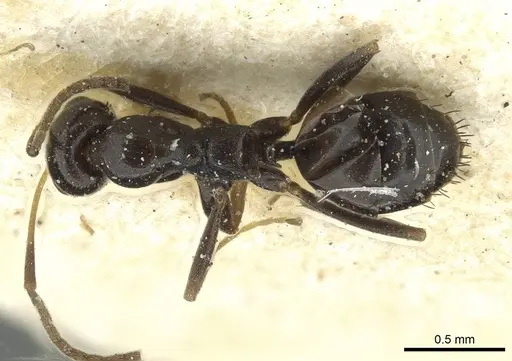
Literatuur
Verspreidingskaart laden...Producten laden...