
Lepisiota modesta
- Wetenschappelijke naam
- Lepisiota modesta
- Tribus
- Plagiolepidini
- Subfamilie
- Formicinae
- Auteur
- Forel, 1894
- Verspreiding
- Gevonden in 1 landen
Introductie
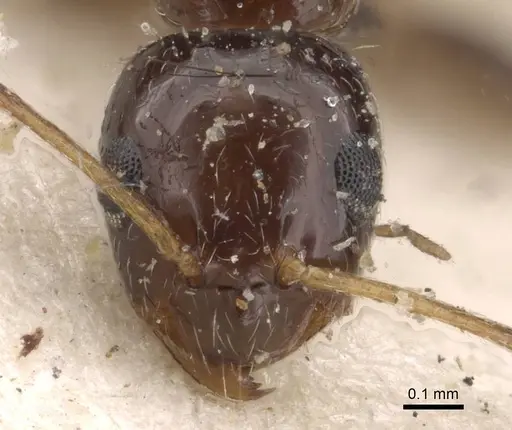
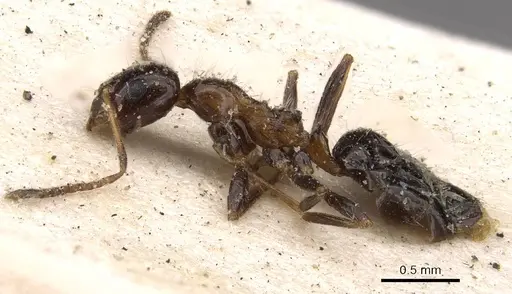
Lepisiota modesta is a medium-sized black ant native to the Himalayan region of India and Nepal. Workers measure approximately 2.3mm in total length with a distinctive appearance: a black body with yellow-brown antennae, legs, and mandibles. They are covered in abundant erect hairs and have a bispinose (two-spined) petiole. These ants prefer higher altitudes above 1200 meters and are typically found nesting under stones in mountainous areas. While collected infrequently, they appear widespread across their range from Himachal Pradesh through Uttarakhand to Nepal.
Quick Summary
- Difficulty: Medium
- Origin & Habitat: Himalayan region of India (Himachal Pradesh, Jammu and Kashmir, Punjab, Uttarakhand) and Nepal. Found at altitudes above 1200 meters, with records up to 2200 meters. Nests under stones in mountainous terrain. [1][3][2]
- Colony Type: Colony structure is unconfirmed for this species.
- Size & Growth:
- Queen: Size data unavailable, inferred from related Lepisiota species as approximately 4-6mm
- Worker: Approximately 2.3mm total length [1]
- Colony: Colony size is unconfirmed for this species
- Growth: Growth rate is unconfirmed
- Development: Timeline is unconfirmed for this species (Given their Himalayan origin and higher altitude preference, development may be slower than tropical species.)
- Antkeeping:
- Temperature: Keep at 18-24°C. Their Himalayan mountain origin suggests they prefer cooler conditions than tropical ants. A temperature gradient allowing them to choose their preferred warmth is ideal.
- Humidity: Moderate humidity around 50-70%. They naturally nest under stones in mountainous areas where conditions are damp but not wet. Keep substrate moderately moist but allow some drying between waterings.
- Diapause: Yes, Himalayan species require a winter rest period. Reduce temperature to 10-15°C for 2-3 months during winter. This mimics their natural cycle at high altitudes where temperatures drop significantly.
- Nesting: Natural nesting: under stones in mountainous areas. In captivity, a Y-tong or test tube setup works well. Provide a shallow water reservoir and keep the nest area moderately humid. The small worker size means escape prevention should be moderate, standard barriers should contain them.
- Behavior: These ants are relatively calm and not particularly aggressive. Workers forage actively and are attracted to sweet substances (honey baits successful in the wild). They are ground-nesting and likely moderate foragers. Escape risk is moderate, small but not tiny, standard formicarium barriers should contain them.
- Common Issues: Himalayan origin means they need proper winter diapause, colonies that are kept warm year-round may decline., Higher altitude preference means they can overheat in warm rooms, keep away from direct heat sources., Limited documentation means colony founding success rates are unknown, be prepared for a learning curve., Altitude stress, wild-caught colonies from high elevations may struggle in lowland captive conditions.
Natural History and Distribution
Lepisiota modesta is a mountain-dwelling ant species found across the Himalayan foothills of northern India and into Nepal. They prefer elevations above 1200 meters, with some records from areas as high as 2200 meters. Workers are medium-sized (approximately 2.3mm total length) with a distinctive black body and yellow-brown appendages. The species is characterized by abundant erect hairs covering its body and a double-spined petiole. In the wild, colonies nest under stones where the microclimate stays cool and relatively stable. They are attracted to sweet baits like honey, suggesting they forage for honeydew and nectar in addition to hunting small insects. [1][2][3]
Temperature and Seasonal Care
Because these ants come from high-altitude Himalayan regions, they need cooler temperatures than most commonly kept ant species. Aim for a range of 18-24°C in the nest area, with a slight temperature gradient allowing workers to choose their preferred spot. During summer, avoid placing the colony in warm rooms that might exceed their ideal range. Critically, Lepisiota modesta requires a proper winter diapause. Reduce temperatures to 10-15°C for 2-3 months during winter to match their natural seasonal cycle. This cold period is essential for colony health and likely triggers reproductive cycles. Failure to provide adequate winter rest will likely cause colony decline over time. [3][1]
Nesting and Housing
In nature, Lepisiota modesta nests under stones in mountainous areas, creating simple ground nests. For captive care, a Y-tong nest or a well-set-up test tube setup works well. The nest should have access to a shallow water reservoir to maintain moderate humidity. Because workers are small (approximately 2.3mm), standard escape prevention measures are sufficient. Provide a foraging area where you can offer food. The colony will likely remain relatively modest in size compared to some tropical species, so avoid giving them excessively large spaces. [1]
Feeding and Diet
Field data shows these ants are readily attracted to honey baits, confirming they accept sugar sources. In captivity, offer sugar water or honey water regularly as a carbohydrate source. For protein, provide small insects like fruit flies, small mealworms, or similar appropriately-sized prey. Based on their size and genus behavior, they are likely generalist feeders that combine honeydew and foraging with predatory hunting. Feed protein prey once or twice per week, and keep a sugar source available at all times. Remove uneaten prey after 24-48 hours to prevent mold. [1]
Colony Development
The colony development timeline for Lepisiota modesta is not directly documented. Based on related species and their temperate Himalayan origin, expect a moderate growth rate. Colonies likely remain relatively small compared to tropical species. The queen size is not documented for this species. Be patient with founding colonies as high-altitude species often develop more slowly than their lowland cousins. [1]
Frequently Asked Questions
How long does it take for Lepisiota modesta to produce first workers?
The exact timeline is unconfirmed for this species. Based on related species and their temperate origin, expect several weeks from egg to first worker at optimal temperatures around 20-22°C. High-altitude species often develop more slowly than tropical ants.
Do Lepisiota modesta ants need hibernation?
Yes, absolutely. As a Himalayan mountain species from elevations above 1200m, they require a winter rest period. Reduce temperatures to 10-15°C for 2-3 months during winter. Without this diapause, colonies will likely decline over time.
What temperature should I keep Lepisiota modesta at?
Keep them at 18-24°C with a slight gradient. Their mountain origin means they prefer cooler conditions than most ant species, avoid warm rooms and direct heat sources. A range around 20°C is ideal for active colonies.
How big do Lepisiota modesta colonies get?
Colony size is not directly documented for this species. Based on their infrequent collection in the wild, colonies likely remain modest in size.
What do Lepisiota modesta ants eat?
They accept sugar sources (honey water, sugar water) and small insects. Field data shows they are attracted to honey baits, confirming they forage for sweets in addition to hunting prey. Offer protein prey once or twice weekly and keep sugar water available.
Are Lepisiota modesta good for beginners?
This species is rated as Medium difficulty. While not the hardest species, the need for proper winter diapause and cooler temperatures makes them better suited for keepers who understand seasonal ant care. Their limited documentation also means less established husbandry knowledge exists.
Can I keep multiple Lepisiota modesta queens together?
The colony structure is unconfirmed for this species. Combining unrelated queens is not recommended as it has not been documented for this species.
Where does Lepisiota modesta live in the wild?
They are found in the Himalayan region of India (Himachal Pradesh, Jammu and Kashmir, Punjab, Uttarakhand) and Nepal, at altitudes above 1200 meters. Colonies nest under stones in mountainous areas.
When should I move Lepisiota modesta to a formicarium?
Wait until the colony has a decent number of workers before moving from a founding test tube setup. These colonies stay relatively modest in size, so a small to medium formicarium or continued test tube setup works well for their entire lifecycle.
Report an Issue
The current care sheet is based fully on literature. See inconsistencies, or something that's incorrect? Please , it will be resolved after review from an admin. Contributing to the blogs tab also helps providing information, to make us be able to further improve the caresheets. Thank you for your support!
References

Dit verzorgingsblad is gelicentieerd onder CC BY-SA 4.0 .
Community-blogs
CASENT0909892
Bekijk op AntWeb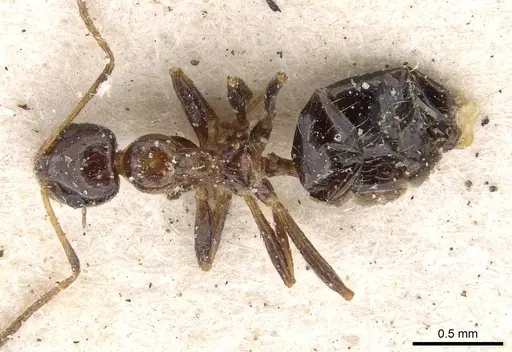
Literatuur
Verspreidingskaart laden...Producten laden...