
Lepisiota hirsuta
- Wetenschappelijke naam
- Lepisiota hirsuta
- Tribus
- Plagiolepidini
- Subfamilie
- Formicinae
- Auteur
- Santschi, 1914
- Verspreiding
- Gevonden in 1 landen
Introductie
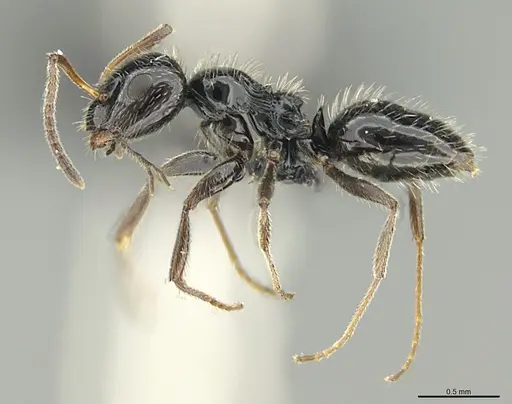
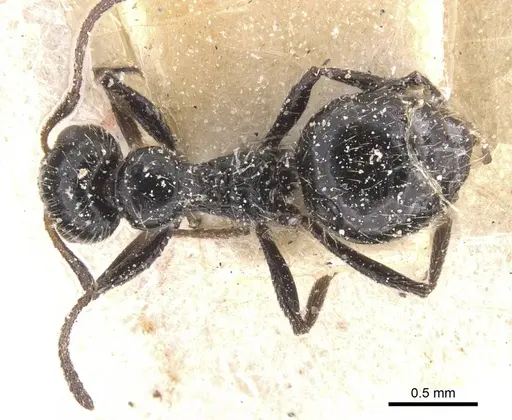
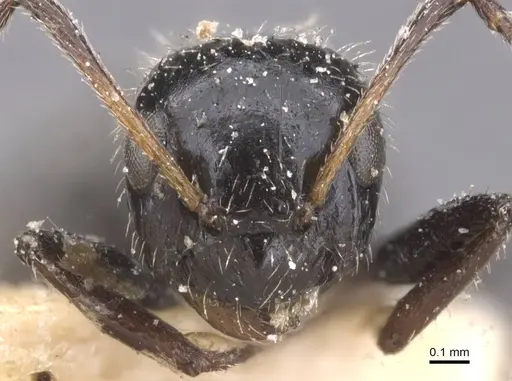
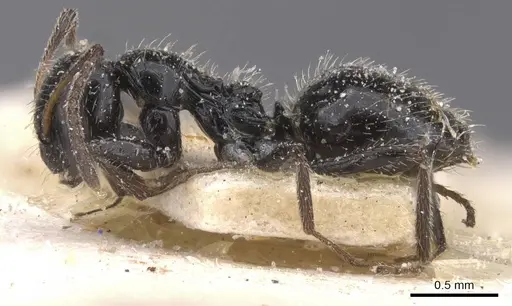
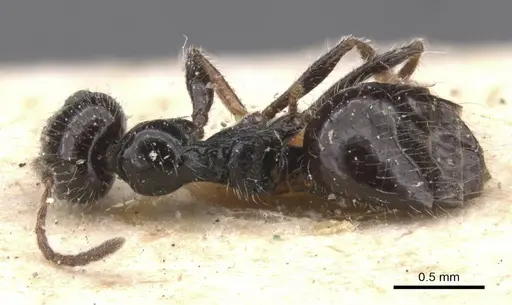
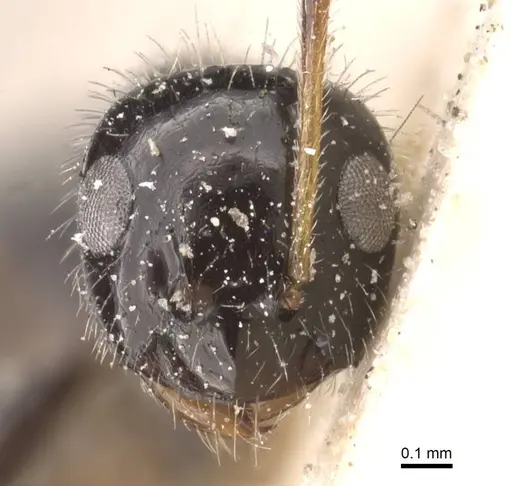
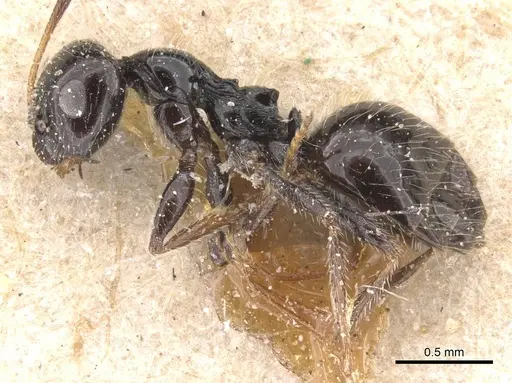
Lepisiota hirsuta is an ant species native to the Afrotropical region, documented across Kenya, the Democratic Republic of Congo, Rwanda, and Zimbabwe . Workers are dark brown to black with a smooth, glossy body. The genus Lepisiota belongs to the subfamily Formicinae and tribe Plagiolepidini. These ants are notable for their mutualistic relationship with the critically endangered Sinai Baton Blue butterfly - they tend the butterfly larvae in exchange for sugar-rich secretions . This species is a generalist forager that nests in varied locations including rotten wood, soil, and standing trees .
Quick Summary
- Difficulty: Medium
- Origin & Habitat: Afrotropical region, Kenya, Democratic Republic of Congo, Rwanda, and Zimbabwe [1][2]. Found in diverse habitats from tropical rainforests in Rwanda to mountain areas in the Sinai [4][5]. Nests in rotten wood, in ground, or in standing trees [4].
- Colony Type: Colony structure is not well-documented in scientific literature.
- Size & Growth:
- Queen: Size data unavailable, no specific measurements found in research
- Worker: Size data unavailable, no specific measurements found in research
- Colony: Up to 40 workers in study samples [5]
- Growth: Moderate, estimated
- Development: Estimated 6-10 weeks based on related Formicinae species at optimal temperature (Development timeline is not directly studied for this species.)
- Antkeeping:
- Temperature: Keep at 24-28°C. Adjust based on colony activity, they are found in both tropical and warmer areas [4].
- Humidity: Moderate humidity around 50-70%. Provide a moisture gradient with a damp area for brood and drier areas for foraging.
- Diapause: Likely no true diapause given Afrotropical distribution, but may show reduced activity in cooler periods.
- Nesting: Use a naturalistic setup with rotting wood pieces, or a Y-tong/plaster nest with chambers scaled to their size. They accept varied nesting materials [4].
- Behavior: Generalist foragers that actively search for food across multiple plant types [4]. They show consistent foraging patterns on the same plants over weeks and years [3]. Workers are moderately aggressive when defending the colony but not particularly territorial. Escape prevention should be adequate, they are small but not extremely tiny. They form mutualistic relationships with insects that provide honeydew, demonstrating their ecological flexibility.
- Common Issues: limited species-specific care information means some trial and error is expected, humidity control can be challenging, avoid both drying out and waterlogging the nest, wild-caught colonies may carry parasites that can cause problems in captivity, their small size requires attention to escape prevention, generalist foraging means they may ignore specialized food preferences, offer varied diet to see what they accept
Housing and Nest Setup
Lepisiota hirsuta nests in varied locations in the wild, rotten wood, soil, and standing trees [4]. For captive care, a naturalistic setup works well with pieces of rotting wood or cork as nesting material. You can also use a Y-tong or plaster nest with appropriately sized chambers. The key is providing a moisture gradient, some areas should stay damp for brood development while drier areas allow workers to regulate their own humidity. A small water tube or reservoir connected to the nest helps maintain humidity. Because they are generalists, they adapt to different nest types, but a naturalistic setup with some wood material mimics their natural preferences.
Feeding and Diet
These ants are generalist foragers [4] and will accept a variety of foods. In captivity, offer protein sources like small insects (fruit flies, small crickets, mealworms) and sugar sources (honey water, sugar water). Their known relationship with the Sinai Baton Blue butterfly larvae for honeydew suggests they readily accept sugar secretions [3]. Feed protein 2-3 times per week and keep sugar water available at all times. Remove uneaten prey after 24-48 hours to prevent mold. They consistently forage on the same plants in the wild [3], suggesting they establish reliable foraging routes, in captivity, they may prefer feeding from consistent locations.
Temperature and Seasonal Care
As an Afrotropical species, Lepisiota hirsuta prefers warmer conditions. Start with temperatures around 24-28°C and observe your colony's behavior, if workers cluster near heat sources, increase slightly, if they avoid heated areas, reduce temperature. A heating cable on one side of the nest can create a useful temperature gradient. Unlike temperate species, they likely do not require a true diapause period, but may show reduced activity during cooler periods. Room temperature within the 22-26°C range is likely suitable for most of the year. Monitor for signs of stress like lethargy or clustering away from the brood area.
Behavior and Colony Dynamics
Lepisiota hirsuta shows interesting ecological behaviors, they form mutualistic relationships with the Sinai Baton Blue butterfly, tending larvae in exchange for sugar-rich honeydew [3]. This demonstrates their ecological flexibility and willingness to interact with other species. Workers forage consistently on the same plants over extended periods [3], suggesting strong site fidelity. In captivity, you may observe similar foraging patterns with workers establishing regular routes to food sources. They are not particularly aggressive toward humans but will defend their colony vigorously. The species was dominant in certain study areas at Mount Sinai [5], indicating they can thrive in competitive environments when conditions suit them.
Growth and Development
Specific development data for Lepisiota hirsuta is not available in scientific literature. Based on typical Formicinae patterns and related Lepisiota species, expect development from egg to first worker to take approximately 6-10 weeks at optimal temperature. The first workers (nanitics) will likely be smaller than mature workers. Growth rate appears moderate. Be patient during the founding phase, queens may seal themselves in and may take several weeks before the first workers emerge.
Frequently Asked Questions
How long does it take for Lepisiota hirsuta to produce first workers?
The exact timeline is not documented for this species, but based on related Formicinae ants, expect 6-10 weeks from egg to first worker at optimal temperature (around 24-28°C). The first workers will be smaller (nanitics) and the colony will grow gradually from there.
What do Lepisiota hirsuta ants eat?
They are generalist foragers and accept both protein and sugar. Offer small insects like fruit flies or mealworms as protein, and keep honey water or sugar water available at all times. They readily form mutualistic relationships for honeydew in the wild, so sugar sources are likely a preferred part of their diet.
What temperature should I keep Lepisiota hirsuta at?
Start with 24-28°C. As an Afrotropical species, they prefer warmer conditions. Use a heating cable on one side of the nest to create a gradient, allowing workers to choose their preferred temperature. Adjust based on colony behavior.
Can I keep multiple Lepisiota hirsuta queens together?
The colony structure is not well-documented for this species. Single-queen colonies are most common in the genus. Combining unrelated queens is not recommended as it has not been studied and may result in aggression.
What type of nest should I use for Lepisiota hirsuta?
A naturalistic setup with rotting wood or cork works well, as they naturally nest in rotten wood and trees [4]. Y-tong or plaster nests with appropriately sized chambers are also suitable. Provide a moisture gradient with damp areas for brood.
Are Lepisiota hirsuta good for beginners?
This species is rated as Medium difficulty. While they are relatively adaptable, the lack of species-specific care information means some trial and error is expected. They are more suitable for antkeepers who have some experience with general ant care and can adapt based on colony behavior.
Do Lepisiota hirsuta need hibernation?
Likely no. As an Afrotropical species from Kenya, Congo, Rwanda, and Zimbabwe, they are not adapted to cold winters. They may show reduced activity during cooler periods but do not require a true diapause like temperate species.
How big do Lepisiota hirsuta colonies get?
Colony size is not directly documented. They were found in significant numbers in some study areas (40 individuals in one sample at Mount Sinai) [5]. Established colonies are likely larger.
Why are my Lepisiota hirsuta dying?
Common issues include improper humidity (too dry or too wet), temperature stress (too cold or too hot), and parasites from wild-caught colonies. Ensure proper moisture gradient, maintain warm temperatures (24-28°C), and quarantine wild colonies before introducing to your setup. Their small size also means escape prevention should be adequate.
Report an Issue
The current care sheet is based fully on literature. See inconsistencies, or something that's incorrect? Please , it will be resolved after review from an admin. Contributing to the blogs tab also helps providing information, to make us be able to further improve the caresheets. Thank you for your support!
References

Dit verzorgingsblad is gelicentieerd onder CC BY-SA 4.0 .
Community-blogs
Literatuur
Verspreidingskaart laden...Producten laden...