
Hypoponera orba
- Wetenschappelijke naam
- Hypoponera orba
- Tribus
- Ponerini
- Subfamilie
- Ponerinae
- Auteur
- Emery, 1915
- Verspreiding
- Gevonden in 0 landen
Introductie
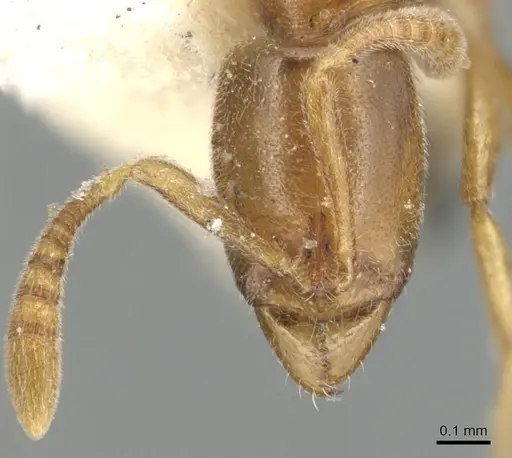
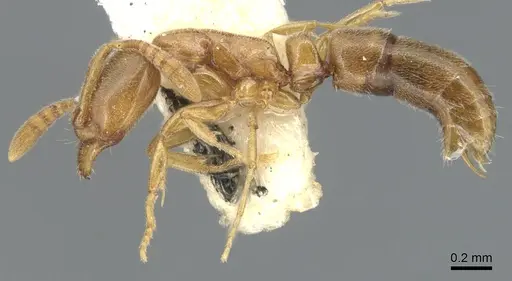
Hypoponera orba is a tiny yellow ponerine ant native to East Africa, specifically found in Eritrea and Ethiopia. Workers are approximately 2mm in length, making them one of the smaller ant species kept in captivity. They are completely blind - like all Hypoponera species, they have no eyes - and navigate using chemical cues. This species belongs to the Hypoponera abeillei group and is closely related to H. camerunensis and H. coeca, which are known to live in leaf litter and rotting wood on rainforest floors. The workers are a uniform yellow color with relatively long antennae for their size. Unfortunately, almost nothing is known about the specific biology of this species - we don't know how they found colonies, what they eat in the wild, or how many queens they have .
Quick Summary
- Difficulty: Medium
- Origin & Habitat: East Africa (Eritrea, Ethiopia), found in the Ghinda region of Eritrea. Related species inhabit leaf litter and rotting wood in rainforest zones, suggesting they prefer humid, shaded microhabitats [1][2].
- Colony Type: Unknown, no research documents colony structure. Based on typical Hypoponera patterns, likely single-queen colonies.
- Size & Growth:
- Queen: Undocumented, no queen measurements available
- Worker: ~2mm, inferred from head measurements (HW 0.39-0.40mm) [2]
- Colony: Unknown, related species like H. coeca are described as relatively common in leaf litter but colony sizes have not been studied
- Growth: Unknown, no development data exists for this species
- Development: Unknown, no direct data. Temperature-dependent development likely follows typical Ponerine patterns. (No development studies exist for this species.)
- Antkeeping:
- Temperature: Keep around 22-26°C. No specific thermal data exists for this species, but related rainforest litter ants prefer warm, stable conditions.
- Humidity: High humidity required, aim for 70-85%. These are forest floor species related to ants that live in constantly moist leaf litter. The nest substrate should remain damp but not waterlogged.
- Diapause: Unknown, no research on seasonal behavior. East African ants from Eritrea/Ethiopia may not require true hibernation, but a cool period during winter months may be beneficial.
- Nesting: Related species nest in rotting wood and leaf litter. In captivity, they do well in Y-tong (AAC) nests or naturalistic setups with moist substrate. Their tiny size means they need tight chambers and narrow passages.
- Behavior: Very shy and non-aggressive, like most Hypoponera species, they are cryptic ants that avoid confrontation. Workers are slow-moving and spend most of their time in the nest or just outside. They have a functional stinger but rarely use it, posing minimal threat to keepers. Their small size and blindness mean they are poor climbers but can squeeze through tiny gaps, escape prevention is critical. They likely use chemical trails to forage rather than visual navigation.
- Common Issues: escape prevention is critical, their tiny size means they can squeeze through gaps too small for most ants, no biological data exists, keepers are essentially pioneering captive care for this species, slow growth is likely, Ponerine ants typically develop slower than Myrmicinae, high humidity requirements can lead to mold problems if ventilation is poor, wild-caught colonies may have unknown parasites or diseases since nothing is known about their health
Nest Preferences and Housing
Hypoponera orba is a tiny, blind ant that naturally lives in humid microhabitats like leaf litter and rotting wood on forest floors. In captivity, they do well in Y-tong (AAC) nests with moist chambers, or in naturalistic setups with a deep layer of moist substrate. Because they are so small, the nest chambers should be relatively tight, these ants don't need the large open spaces that species like Camponotus require. A test tube setup can work for founding colonies, but you may need to use a smaller diameter tube or modify it since standard test tubes are quite large relative to these tiny workers. Whatever nest type you choose, ensure it retains moisture well, these ants will quickly desiccate in dry conditions. Provide a water tube or moisture reservoir that can be refilled without disturbing the colony [2][3].
Feeding and Diet
The diet of Hypoponera orba has never been studied in the wild or in captivity. Based on related Hypoponera species and general Ponerine biology, they are likely predators or omnivores that hunt small invertebrates. In captivity, you should offer small live prey appropriate to their size, fruit flies, pinhead crickets, small mealworms, and other tiny arthropods. They may also accept sugar sources like honey water, though Ponerines are generally less interested in sweets than Formicines or Myrmicines. Start with small live prey and observe whether they accept it. Given their tiny size, even small fruit flies are substantial prey. Feed small amounts every few days and remove uneaten prey to prevent mold.
Temperature and Seasonal Care
No specific temperature requirements have been documented for Hypoponera orba. Based on their likely habitat in East African forests and their relation to rainforest-dwelling species, they probably prefer warm, stable conditions around 22-26°C. Avoid temperature extremes, don't let them get below 18°C or above 30°C. A small heating cable on one side of the nest can create a gradient, but ensure the heating element is placed on top of the nest rather than underneath to prevent excessive drying. Regarding winter dormancy, we have no data on whether they require a cool period. The climate in Eritrea is subtropical with mild winters, so they may not need true hibernation. However, a slight reduction in temperature during winter months is likely safe and may help simulate natural seasonal cycles.
Behavior and Handling
Hypoponera orba is an extremely docile species, they have a functional stinger but rarely use it. Workers are slow-moving and spend most of their time in the nest. Because they are completely blind, they navigate using chemical signals and vibrations rather than sight. This makes them fascinating to observe, they move with deliberate, careful movements, exploring with their antennae. They are not aggressive and pose minimal threat to humans, making them safe for keepers of all experience levels. However, their small size and cryptic nature mean they are not particularly exciting to watch, they are a watching-under-a-magnifying-glass species rather than an active foraging species. Escape prevention is critical because of their tiny size, even standard test tube cotton can have gaps they can squeeze through. Use fine mesh barriers and check all connections regularly [2].
Colony Establishment and Growth
Since nothing is known about the founding behavior of Hypoponera orba, we must make educated guesses based on related species. Most Ponerine ants are claustral, the queen seals herself in a chamber and lives off stored body fat until her first workers emerge. However, this has not been confirmed for H. orba. If you obtain a founding queen, keep her in a small, humid setup and do not disturb her. Expect a long wait, Ponerine ants typically develop more slowly than common species like Lasius or Tetramorium. The first workers will likely be very small and few in number. Growth will be slow, and colonies probably won't reach large sizes. Be patient, these ants are a long-term project, not a species for keepers who want rapid growth.
Frequently Asked Questions
How long does it take for Hypoponera orba to produce first workers?
Unknown, no development data exists for this species. Based on typical Ponerine development, expect several months from egg to worker at optimal temperature, but this is a rough estimate. Be prepared for a long wait.
Can I keep Hypoponera orba in a test tube?
Yes, test tubes work for founding colonies, but you may need to use smaller diameter tubes or modify them because these ants are extremely tiny, workers are only about 2mm. Standard test tube barriers may not be tight enough to prevent escapes.
What do Hypoponera orba eat?
Their diet is unconfirmed, but based on related species, they likely hunt small invertebrates. In captivity, offer small live prey like fruit flies, tiny crickets, or small mealworms. They may accept sugar water occasionally, but protein prey should be the primary food.
Are Hypoponera orba good for beginners?
They are not typically recommended for beginners mainly because almost nothing is known about their care in captivity, you would essentially be pioneering their husbandry. They also require excellent escape prevention due to their tiny size. However, they are docile and harmless, making them safe to keep.
Do Hypoponera orba need hibernation?
Unknown, no research exists on their seasonal behavior. The climate in their native Eritrea/Ethiopia is subtropical with mild winters, so they may not require true hibernation. A slight cool period during winter may be beneficial but is probably not required.
How big do Hypoponera orba colonies get?
Unknown, no colony size data exists for this species. Based on related species that live in leaf litter, colonies are likely small, probably under 100 workers at maturity. They are not a species that produces large, impressive colonies.
Why are my Hypoponera orba dying?
Without any species-specific data, we can only guess at common problems. Likely causes include: desiccation (they need high humidity), escape through tiny gaps, mold from overwatering, temperature extremes, or stress from disturbance. Since nothing is known about their health, wild-caught colonies may also have unknown parasites.
Can I keep multiple queens together?
Unknown, no research documents whether Hypoponera orba is single-queen or multi-queen. Do not combine unrelated foundresses unless you are prepared for aggression. If you obtain multiple founding queens, house them separately until you learn more about their behavior.
When should I move Hypoponera orba to a formicarium?
Wait until the colony has at least 20-30 workers and the test tube is becoming crowded. For these tiny ants, even a small formicarium with tight chambers will suffice. Moving too early can stress the colony.
Report an Issue
The current care sheet is based fully on literature. See inconsistencies, or something that's incorrect? Please , it will be resolved after review from an admin. Contributing to the blogs tab also helps providing information, to make us be able to further improve the caresheets. Thank you for your support!
References

Dit verzorgingsblad is gelicentieerd onder CC BY-SA 4.0 .
Community-blogs
CASENT0903908
Bekijk op AntWeb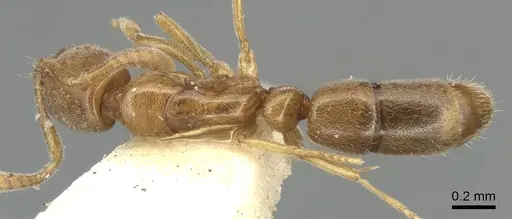
Literatuur
Verspreidingskaart laden...Producten laden...