
Holcoponera solomonensis
- Wetenschappelijke naam
- Holcoponera solomonensis
- Tribus
- Ectatommini
- Subfamilie
- Ectatomminae
- Auteur
- Lattke, 2004
- Verspreiding
- Gevonden in 0 landen
Introductie
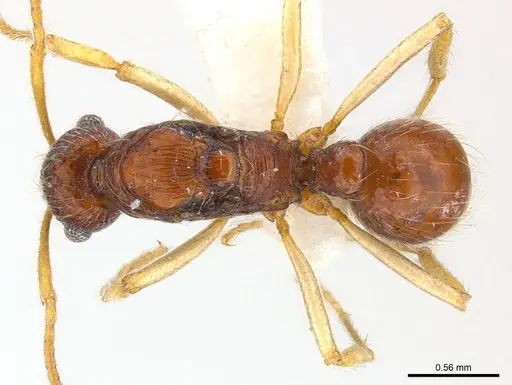
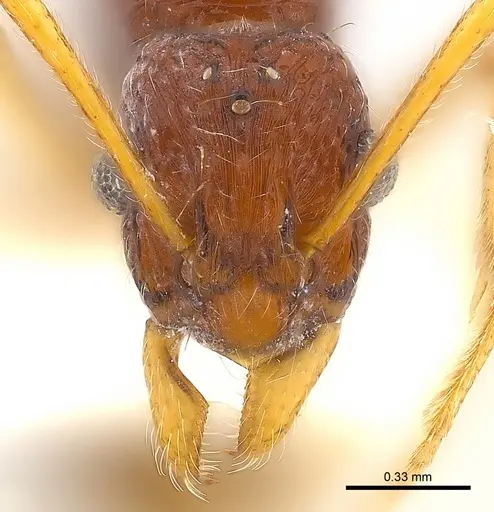
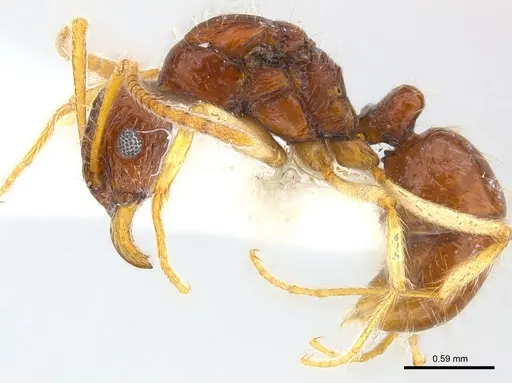
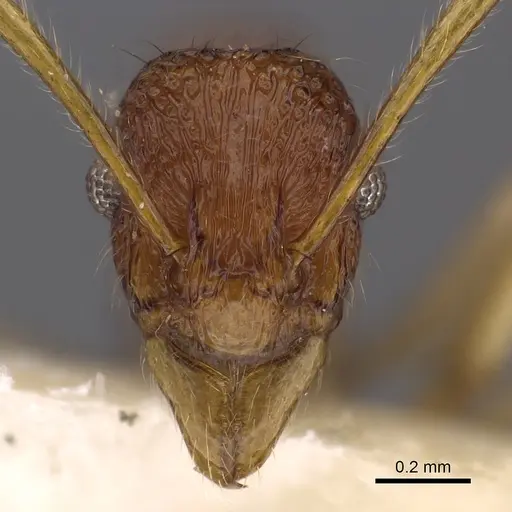
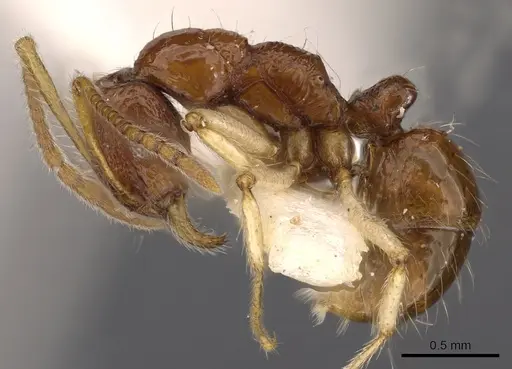
Holcoponera solomonensis is a small ponerine ant endemic to the Solomon Islands, specifically recorded from Kolombangara, Guadalcanal, and Makira islands . Workers are tiny, measuring roughly 2.5-3mm total length inferred from genus patterns, with a distinctive appearance featuring bulging compound eyes with large ommatidia and a broad, concave metanotal sulcus that helps identify this species . The body is ferruginous brown with beige to pale yellow mandibles and legs, and orange antennae and coxae. This species was originally described as Gnamptogenys solomonensis in 2004 by Lattke before being transferred to Holcoponera in 2022 . Almost nothing is known about the biology of this species in the wild. As a member of the Ectatomminae subfamily, it likely shares some characteristics with related ponerine ants, but specific details about nesting behavior, diet, colony structure, and development remain unstudied. This makes it an advanced species to keep primarily for enthusiasts interested in observing a poorly documented species.
Quick Summary
- Difficulty: Expert
- Origin & Habitat: Endemic to the Solomon Islands in the Oceania region, found on Kolombangara, Guadalcanal, and Makira islands at elevations around 305 meters [1][2]
- Colony Type: Unknown, colony structure has not been documented
- Size & Growth:
- Queen: ~2.5-3.5mm total length, inferred from genus patterns
- Worker: ~2.5-3mm total length, inferred from genus patterns
- Colony: Unknown, no colony size data available
- Growth: Unknown, no development data exists
- Development: Unknown, no development studies exist for this species (Based on typical ponerine patterns, expect 6-12 weeks at warm temperatures, but this is entirely estimated)
- Antkeeping:
- Temperature: Unknown for this species. Based on Solomon Islands tropical climate, aim for 24-28°C with a gradient allowing cooler areas. Monitor colony activity to find their preferred range.
- Humidity: Unknown, likely prefers humid conditions given the tropical island habitat. Keep nest substrate moist but not waterlogged, with some drier areas available.
- Diapause: Unknown, tropical species may not require formal diapause, but may show reduced activity during cooler seasons
- Nesting: No natural nesting data exists. Based on related Ectatomminae, likely nests in soil, under stones, or in rotting wood. Test tubes and naturalistic setups with moist substrate are reasonable starting points.
- Behavior: Behavior is unstudied. As an ectatommine ant, it possesses a functional sting used to inject neurotoxins for prey capture and defense. Their small size makes escape prevention important. Activity levels and foraging patterns are completely unknown.
- Common Issues: no biological data exists, keepers must experiment with care conditions, colony growth rate is unknown making it hard to assess if something is wrong, escape prevention is critical due to tiny worker size, no known diet preferences, keepers must test various foods, may be difficult to establish wild-caught queens due to unknown founding requirements
Species Overview and Identification
Holcoponera solomonensis is a tiny ponerine ant that was originally described as Holcoponera solomonensis in 2004 before being transferred to Holcoponera in 2022 [2]. It is endemic to the Solomon Islands, making it one of the more geographically restricted ant species in the hobby. Workers are small at roughly 2.5-3mm total length, with distinctive bulging eyes and a broad metanotal sulcus that sets them apart from related species. The only similar species is Holcoponera albiclava, which can be distinguished by its differently shaped postpetiolar process [2]. This species represents an opportunity to work with a genuinely understudied ant, though the lack of available biological information makes it challenging for even experienced keepers.
Housing and Nest Setup
No specific nesting information exists for this species. Based on its placement in Ectatomminae and the tropical forest habitat of the Solomon Islands, a naturalistic setup with moist substrate would be a reasonable starting point. Test tubes can work for founding colonies, but you may need to transition to a more spacious setup as the colony grows. Given the tiny worker size, ensure any setup has appropriately scaled chambers and excellent escape prevention. The species likely prefers humid conditions, so maintaining moisture in the nest substrate is important. A small water reservoir connected to the nest can help maintain humidity without flooding.
Feeding and Diet
Diet preferences are completely unstudied for this species. As a ponerine ant, it likely has predatory tendencies similar to other members of the subfamily, but specific prey preferences are unknown. Start by offering small live prey items appropriate for their tiny size, such as springtails, fruit flies, or other micro-arthropods. Sugar sources may or may not be accepted, some Ectatomminae take honeydew or nectar while others are strictly predatory. Offer a variety of foods and observe what the colony accepts. Given the complete lack of data, experimental feeding is necessary to establish what works in captivity.
Temperature and Seasonal Care
No temperature tolerance data exists for this species. The Solomon Islands have a tropical climate with year-round warm temperatures, so aim for warm conditions around 24-28°C. A temperature gradient allows the ants to choose their preferred zone. Monitor colony behavior, if workers become sluggish, warm slightly, if they avoid the heated area, reduce temperature. Whether this species requires any form of winter rest is completely unknown. Tropical ants often maintain activity year-round, but reduced feeding during cooler periods may occur. Approach any seasonal adjustments based on your colony's behavior rather than fixed schedules.
Colony Establishment
How this species founds colonies is completely unknown. Most Ectatomminae are claustral, with queens sealing themselves in and raising the first workers alone on stored fat reserves, but this is not confirmed for H. solomonensis. If you obtain a wild-caught queen, the safest approach is to provide a small test tube setup with moist cotton, keep it in darkness, and wait. Do not disturb the queen during the founding period. Monitor quietly for signs of eggs or larvae after 1-2 weeks. Without specific data, expect a lengthy founding period and be patient, some ponerine species can take months to produce their first workers.
Frequently Asked Questions
How do I care for Holcoponera solomonensis ants?
Care is largely unknown since this species has never been studied in captivity. Based on its tropical island habitat and subfamily, provide warm temperatures (24-28°C), high humidity, and small live prey. This is an expert-level species where you will need to experiment to determine what works.
What do Holcoponera solomonensis eat?
Diet is completely unstudied. As a ponerine ant, they likely accept small live prey like springtails or fruit flies. Some Ectatomminae accept sugar sources, but this is uncertain for this species. Offer a variety and observe what gets accepted.
How long does it take for Holcoponera solomonensis to produce first workers?
Unknown, no development data exists for this species. Based on typical ponerine patterns, expect 6-12 weeks at warm temperatures, but this is entirely an estimate. Founding may take longer since nothing is known about their biology.
Do Holcoponera solomonensis ants sting?
Most Ectatomminae can sting, but the pain level for this tiny species is unknown. Given their very small size, any sting would likely be minimal.
Are Holcoponera solomonensis good for beginners?
No, this is an expert-level species due to the complete lack of biological data. There are no established care guidelines, so keepers must experiment with temperature, humidity, diet, and nesting to find what works.
What size do Holcoponera solomonensis colonies reach?
Unknown, no colony size data has been documented. Related Ectatomminae typically form colonies ranging from dozens to a few hundred workers.
Where is Holcoponera solomonensis found?
This species is endemic to the Solomon Islands in the Oceania region, specifically recorded from Kolombangara, Guadalcanal, and Makira islands [1].
Can I keep multiple Holcoponera solomonensis queens together?
Unknown, colony structure has not been documented. Without data on whether they are single-queen or multi-queen colonies, combining unrelated queens is not recommended.
What temperature should I keep Holcoponera solomonensis at?
No specific data exists. Based on the tropical Solomon Islands climate, aim for 24-28°C with a gradient. Observe your colony's behavior to find their preferred range.
Why is so little known about Holcoponera solomonensis?
This species was only described in 2004 and is endemic to a remote region (Solomon Islands). It has never been the subject of biological study, and no one has documented its behavior in captivity. This makes it one of the least-known ant species in the hobby.
How big are Holcoponera solomonensis workers?
Workers are tiny at roughly 2.5-3mm total length, inferred from genus patterns. Queens are similarly small at approximately 2.5-3.5mm total length [2].
Do Holcoponera solomonensis need hibernation?
Unknown, as a tropical species from the Solomon Islands, they likely do not require formal hibernation. However, reduced activity during cooler periods may occur.
Report an Issue
The current care sheet is based fully on literature. See inconsistencies, or something that's incorrect? Please , it will be resolved after review from an admin. Contributing to the blogs tab also helps providing information, to make us be able to further improve the caresheets. Thank you for your support!
References

Dit verzorgingsblad is gelicentieerd onder CC BY-SA 4.0 .
Community-blogs
CASENT0179950
Bekijk op AntWeb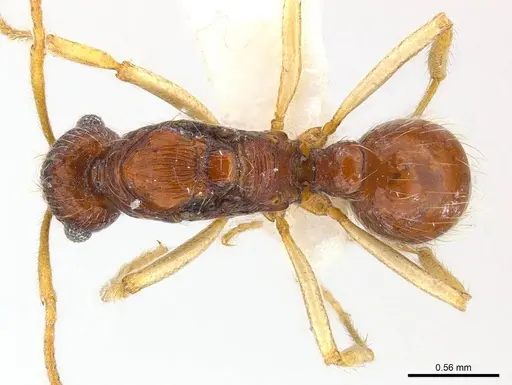
CASENT0900566
Bekijk op AntWeb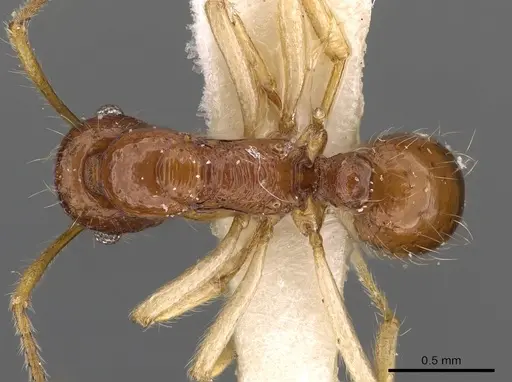
Literatuur
Verspreidingskaart laden...Producten laden...