
Holcoponera brunnea
- Wetenschappelijke naam
- Holcoponera brunnea
- Tribus
- Ectatommini
- Subfamilie
- Ectatomminae
- Auteur
- Lattke, 1995
- Verspreiding
- Gevonden in 0 landen
Introductie
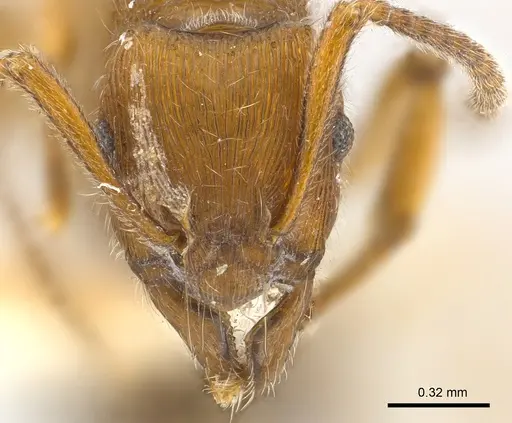
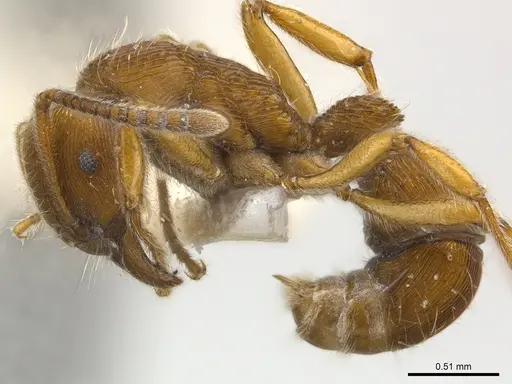
Holcoponera brunnea is a small predatory ant species native to the humid forests of western Colombia. Workers have a distinctive reddish-brown body with yellow-brown legs. The species is characterized by longitudinal ridges (costae) on the head, triangular mandibles, and a concave vertex margin. This species belongs to the Ectatomminae subfamily and the striatula species group, specifically the porcata subgroup. It was originally described as Gnamptogenys brunnea in 1995 and recently transferred to the genus Holcoponera. The species is known only from a few specimens collected in the departments of Cauca, Chocó, Nariño, and Valle del Cauca at elevations below 1,000 meters .
Quick Summary
- Difficulty: Expert
- Origin & Habitat: Western Colombia in humid forest localities below 1,000m elevation in the departments of Cauca, Chocó, Nariño, and Valle del Cauca [1][2]. The type locality is in Chocó at 760m elevation in a humid forest setting [4].
- Colony Type: Colony structure is unconfirmed. No data exists on queen number or colony organization for this species.
- Size & Growth:
- Queen: ~6-7 mm, inferred from Holcoponera genus patterns (no direct measurements available)
- Worker: ~5-6 mm, inferred from Holcoponera genus patterns (no direct measurements available)
- Colony: Unknown, no colony size data available
- Growth: Unknown, no development data available
- Development: Unconfirmed, no development data exists for this species (No direct development studies exist for this species. Any timeline would be speculative.)
- Antkeeping:
- Temperature: Keep at 24-28°C as a starting point, adjust based on colony activity. This range reflects their origin in humid tropical forests of western Colombia [1][2].
- Humidity: High humidity required, these ants come from humid forest environments. Keep nest substrate consistently moist but not waterlogged. Provide a water tube for drinking water.
- Diapause: No, as a tropical species from low elevation Colombia near the equator, they do not require hibernation or diapause.
- Nesting: No specific nesting data exists. Based on related forest-dwelling ectatommine ants, they likely prefer humid, dark spaces. A test tube setup or acrylic nest with moisture provision would be appropriate.
- Behavior: Behavior is unstudied. Based on genus patterns, these are predatory ants that hunt small invertebrates. They possess a stinger typical of Ectatomminae but their small size means any sting would be minimal to humans. Escape prevention is critical due to their tiny size. They likely prefer to forage in humid, dark conditions.
- Common Issues: no biological data exists, this is one of the least studied ant species in captivity, colony founding success is uncertain, no documented captive colonies exist, escape prevention is critical due to their tiny size, humidity management is essential, they require humid forest conditions, predatory diet may be difficult to provide, small live prey needed
Species Identification and Appearance
Holcoponera brunnea is a small ant species. The body is reddish-brown with yellow-brown legs. Key identification features include longitudinal ridges (costae) on the head, a concave vertex margin, and triangular mandibles with distinctive smooth and shining fringes along the apical and basal margins. The pronotum has 6-8 transverse costae near the anterior margin that arch and become longitudinal toward the dorsum. The species is very similar to Holcoponera nigrivitrea but can be distinguished by its reddish-brown coloration versus the darker piceous color of nigrivitrea. Queens are slightly larger and share the same general morphology with typical caste differences [4][1][5].
Distribution and Habitat
This species is known only from western Colombia in the Pacific lowland region. Specimens have been collected from humid forest localities in the departments of Cauca, Chocó, Nariño, and Valle del Cauca, all below 1,000 meters elevation [1][2][3]. The type locality is in Chocó department,10km southwest of San José del Palmar at Finca Los Guaduales at 760m elevation [4]. Another record exists from Valle del Cauca in the middle basin of the Calima River at 750m elevation [4]. These locations represent the humid tropical forest zone of Colombia's Pacific region. The species appears to be rare or locally uncommon, with few specimens ever collected.
Nest Preferences and Housing
No specific data exists on the natural nesting habits of this species. However, based on the habitat data (humid forests below 1,000m) and related species in the Ectatomminae, they likely nest in soil, rotting wood, or under stones in humid microhabitats. For captive care, a test tube setup with a constant water reservoir works well for founding colonies. Established colonies can be kept in acrylic nests or naturalistic setups with moist substrate. The key requirement is maintaining high humidity, these are forest floor ants that need consistently damp conditions. Avoid dry environments entirely.
Feeding and Diet
No specific feeding data exists for this species. Based on its placement in Ectatomminae (subfamily that includes predatory ants), Holcoponera brunnea is likely predatory on small invertebrates. Related species in Gnamptogenys and other ectatommine ants typically hunt small arthropods. In captivity, offer small live prey such as fruit flies, pinhead crickets, mealworm pieces, and other small insects. Given their small worker size, prey should be appropriately sized. Sugar sources may be accepted but are not a primary food source for predatory species. Fresh water should always be available.
Temperature and Seasonal Care
As a tropical species from low elevation Colombia, Holcoponera brunnea requires warm, stable temperatures. Based on the humid forest habitat, aim for temperatures in the 24-28°C range. Avoid temperatures below 20°C or above 30°C. Since they come from a region near the equator, they do not require a true diapause or hibernation period. No specific data exists on their seasonal biology. Monitor colony activity, if workers become sluggish, slightly increase temperature, if they avoid heated areas, reduce temperature. [1][2]
Behavior and Temperament
No specific behavioral observations exist for this species in captivity or in the wild. Based on related ectatommine ants, they are predatory and have a stinger, though their small size means any sting would be minimal to humans. They probably forage on the forest floor in humid conditions. Workers are likely solitary foragers or may use simple recruitment to food sources. There is no data on colony aggression or territorial behavior. Given their very small size, escape prevention is essential, they can squeeze through tiny gaps. Use fine mesh barriers and ensure all openings are sealed.
Frequently Asked Questions
How difficult is Holcoponera brunnea to keep?
This is an expert-level species due to the complete lack of biological data. No captive colonies have been documented, and all care recommendations are based on inference from related species. Expect a steep learning curve and be prepared to experiment with conditions.
What do Holcoponera brunnea ants eat?
Based on related species in the Ectatomminae, they are likely predatory. Feed small live prey such as fruit flies, small crickets, and other tiny insects. Prey should be appropriately sized for their small workers.
What temperature do Holcoponera brunnea ants need?
Start with 24-28°C based on their humid tropical forest origin in western Colombia. Adjust based on colony behavior, if workers avoid heated areas, reduce temperature, if they cluster near warmth, you can increase slightly.
Do Holcoponera brunnea ants need hibernation?
No, as a tropical species from low elevation Colombia near the equator, they do not require hibernation or diapause.
How big do Holcoponera brunnea colonies get?
Unknown, no colony size data exists for this species. Based on similar small forest-dwelling ants, colonies are likely modest in size.
Can I keep multiple Holcoponera brunnea queens together?
Unknown, no data exists on colony structure or queen behavior. Do not attempt combining unrelated queens without documented evidence of success.
How long does it take for Holcoponera brunnea to produce first workers?
Unconfirmed, no development data exists for this species. Any timeline would be speculative.
Do Holcoponera brunnea ants sting?
Yes, Ectatomminae ants have a stinger. However, given their very small size, any sting would be negligible to humans.
What humidity do Holcoponera brunnea ants need?
High humidity is essential, they come from humid forests in western Colombia. Keep nest substrate consistently moist but not waterlogged. Provide a water tube for drinking water.
Are Holcoponera brunnea ants good for beginners?
No, this species is not recommended for beginners. There is no captive husbandry data, and all care must be inferred from related species. This is an expert-level species for experienced antkeepers comfortable with experimental care.
Report an Issue
The current care sheet is based fully on literature. See inconsistencies, or something that's incorrect? Please , it will be resolved after review from an admin. Contributing to the blogs tab also helps providing information, to make us be able to further improve the caresheets. Thank you for your support!
References

Dit verzorgingsblad is gelicentieerd onder CC BY-SA 4.0 .
Community-blogs
CASENT0179997
Bekijk op AntWeb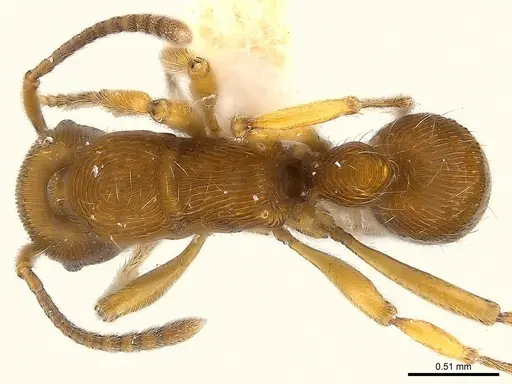
Literatuur
Verspreidingskaart laden...Producten laden...