
Goniomma decipiens
- Wetenschappelijke naam
- Goniomma decipiens
- Tribus
- Stenammini
- Subfamilie
- Myrmicinae
- Auteur
- Espadaler, 1997
- Verspreiding
- Gevonden in 1 landen
Introductie
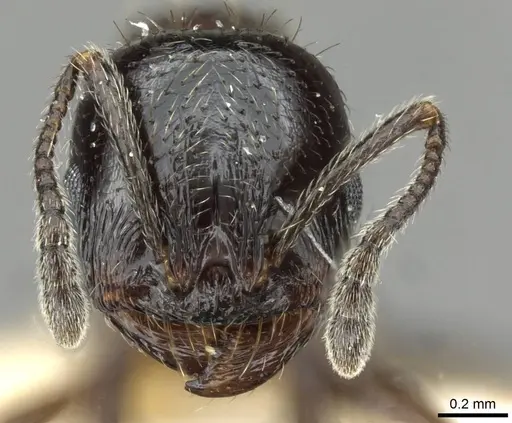
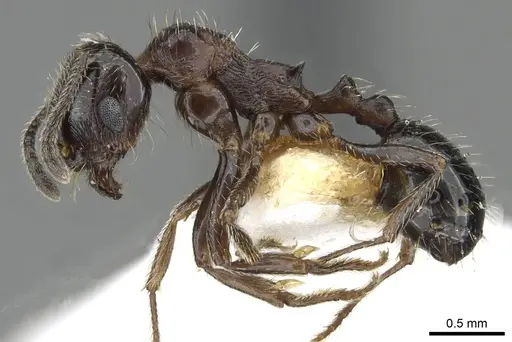
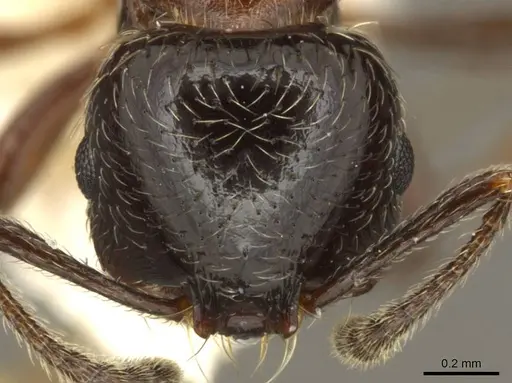
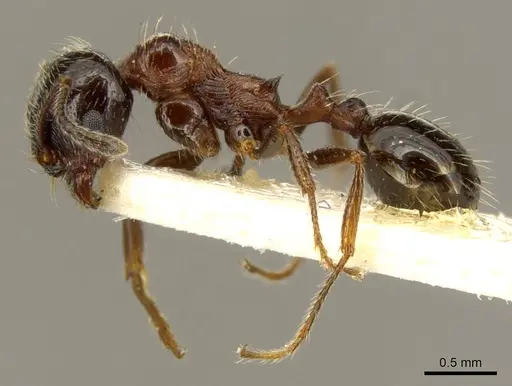
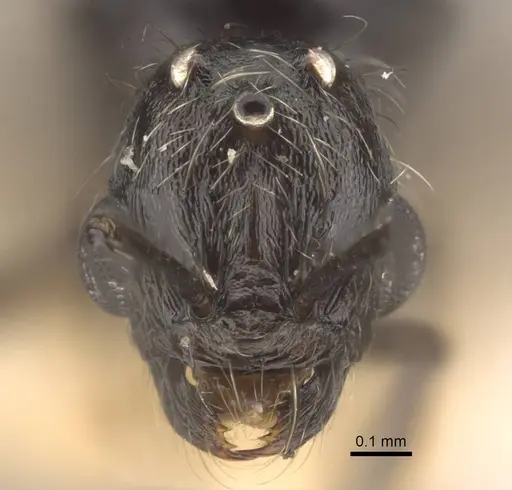
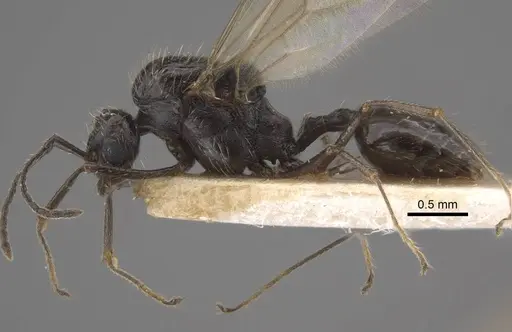
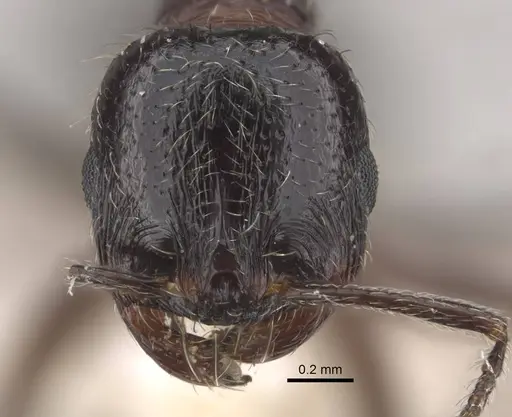
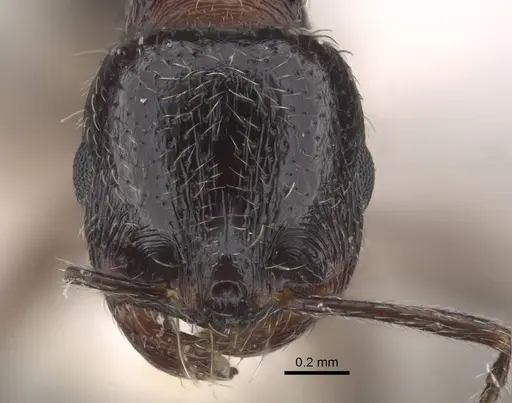
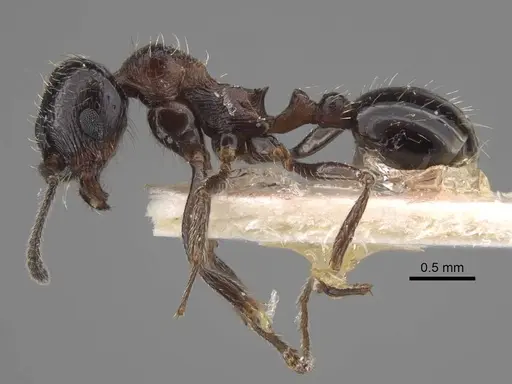
Goniomma decipiens is a small Myrmicine ant native to mainland Spain. Workers are small (size not precisely measured, estimated at roughly 3-4 mm based on genus patterns) with a distinctive bicolor pattern: the head and gaster are dark, while the mesosoma is reddish with darkened areas on the pronotum and mesopleuron . The most striking feature is a prominent longitudinal carina (ridge) on the forehead, which distinguishes this species from related Goniomma . The promesonotum is gibbous (hump-shaped) when viewed from the side, falling toward the propodeum at about 130° . The head is largely smooth and shiny, and the mesonotum has a striated-reticulate texture. Described by Xavier Espadaler in 1997,it is known from provinces including Huesca (type locality Sariñena), Ciudad Real, Albacete, Cádiz, and more recently from Catalonia . This species inhabits arid continental steppe with carbonate-rich soils and low vegetation . Goniomma is an extratropical Palearctic lineage . Captive care data is very limited, making this a species best left to keepers with some experience who are interested in an uncommon Mediterranean ant.
Quick Summary
- Difficulty: Medium
- Origin & Habitat: Iberian Peninsula, Spain – arid continental steppe with carbonate-rich soils and low vegetation at low altitudes [5][6][7]
- Colony Type: Unconfirmed – colony structure has not been studied. Probably single-queen (monogyne) based on typical genus patterns, but not verified.
- Size & Growth:
- Queen: Size data unavailable – estimated from Goniomma genus to be around 5-6 mm (unconfirmed)
- Worker: Size data unavailable – estimated from Goniomma genus to be roughly 3-4 mm (not directly measured) [1][2]
- Colony: Unknown – likely small to moderate based on related Myrmicinae, but no data exists
- Growth: Moderate (inferred from typical Myrmicinae development)
- Development: Unknown – no species-specific data, estimated 6-10 weeks at optimal temperature if following Myrmicinae patterns, but this is speculative (Development time is inferred, actual timeline is unconfirmed.)
- Antkeeping:
- Temperature: Not documented. Based on Mediterranean origin, likely needs warm active season (estimated 25-28°C) and a cooler winter diapause period.
- Humidity: Low to moderate – natural habitat is arid, keep nest substrate mostly dry with occasional light moisture. Avoid waterlogging.
- Diapause: Yes – as a temperate Mediterranean species, it likely requires a winter rest. Reduce temperature to 10-15°C for 2–3 months from November to February if in the Northern Hemisphere. Ensure some moisture during diapause.
- Nesting: Likely nests in soil under stones in arid habitats. In captivity, a Y-tong (AAC) nest or plaster formicarium works well. Chambers should be small to match the tiny workers. Do not use overly humid setups.
- Behavior: Workers are small and active. They likely forage individually or in small groups for prey and honeydew – characteristic of Myrmicinae. Their tiny size (∼3-4 mm) means escape prevention is critical, use fine mesh barriers and tight fittings. Temperament is probably moderate, not particularly aggressive. No significant sting to humans.
- Common Issues: limited availability – this species is rarely kept and queens/colonies are hard to obtain, escape risk is high due to tiny size – they can squeeze through gaps smaller than 1 mm, winter diapause requirements may surprise keepers unfamiliar with temperate species, colony growth may be slow, testing beginner patience, no species‑specific care data – keepers must adapt from related species and observe closely
Natural History and Distribution
Goniomma decipiens is endemic to mainland Spain, with records from Huesca (type locality Sariñena [2]), Ciudad Real, Albacete, Cádiz, and more recently Catalonia [3][4][5][6]. It inhabits arid continental steppe with carbonate‑rich soils and sparse vegetation [5][6]. The type specimens were collected by Xavier Espadaler in 1980–1989 from various locations [2]. Goniomma is an extratropical Palearctic genus, with G. decipiens occurring at a latitude midpoint of about 39°N [7].
Identification and Morphology
Workers of Goniomma decipiens are small (size not precisely measured, estimated at 3–4 mm from genus). They are bicolored: head and gaster dark, mesosoma reddish with darkened areas on the mesoepisternum and pronotal dorsum [1][2]. The most distinctive feature is a longitudinal carina on the front of the head, which separates this species from all other Goniomma, including the similar Goniomma otini from Morocco [1][2]. The head is smooth and shiny. In side view, the promesonotum is hump‑shaped and drops toward the propodeum at about 130° [1][2]. The pronotum is smooth except for anterior transverse striae, the mesonotum is striated‑reticulate. The propodeum typically has transverse striae dorsally that become longitudinal on the sides, though this is less pronounced in the smallest workers [1][2].
Nest Preferences and Housing
Natural nest sites have not been documented for Goniomma decipiens, but in their arid steppe habitat they likely nest in soil under stones, as is common for small Myrmicinae in Mediterranean regions. For captive colonies, a Y‑tong (AAC) or plaster formicarium with small chambers scaled to the tiny workers (roughly 3–4 mm) is appropriate. The nest should be kept relatively dry – allow the substrate to dry partly between waterings. Provide a small outworld for foraging. Escape prevention is critical: use fine mesh (smaller than 1 mm openings) and seal all connections.
Feeding and Diet
No direct feeding observations are available for this species. As a typical Myrmicinae, it is likely a generalist forager that accepts both protein and carbohydrates. Offer small prey such as fruit flies, pinhead crickets, or small mealworms a couple of times per week. Provide constant access to diluted honey or sugar water. Remove uneaten prey after 24–48 hours to prevent mould. Food may be taken back to the nest.
Temperature and Seasonal Care
Exact temperature requirements are unknown, but based on its Mediterranean origin, the colony likely needs a warm active season (estimated 25–28°C) and a cooler winter rest. A heating cable on one side of the nest creates a temperature gradient. During winter (November–February in the Northern Hemisphere), reduce temperature to 10–15°C for 2–3 months to allow diapause. Provide some moisture (e.g., from a water tube) during diapause. Resume normal heating and feeding gradually in spring.
Colony Development and Growth
Colony development has not been studied for Goniomma decipiens. Based on related Myrmicinae, the timeline from egg to first worker might be 6–10 weeks at optimal temperature, but this is purely speculative. The queen likely raises the first brood alone (claustral founding is typical for Myrmicinae, but not confirmed for this species). Colony growth is probably moderate, and maximum colony size is unknown but likely small to moderate (under a few hundred workers).
Frequently Asked Questions
How long does it take for Goniomma decipiens to produce first workers?
The exact timeline is unknown. If it follows typical Myrmicinae patterns, it might be 6–10 weeks from egg to worker at 25–28°C, but this is an estimate without species‑specific data.
What do Goniomma decipiens eat?
Not specifically documented. It likely accepts small live prey (fruit flies, pinhead crickets) and sugar water or honey, as typical for Myrmicinae.
What temperature do Goniomma decipiens need?
Exact requirements are unknown. Based on its Mediterranean habitat, aim for 25–28°C in the active season and a winter diapause at 10–15°C for 2–3 months.
Do Goniomma decipiens ants sting?
They are Myrmicinae and possess a stinger, but due to their tiny size (≈3–4 mm), it is unlikely to penetrate human skin significantly. They are not considered a stinging risk.
Are Goniomma decipiens good for beginners?
This species is not ideal for complete beginners because care information is very limited and specific needs (diapause, dry conditions) require experience. It is better suited for keepers wanting an uncommon Mediterranean species.
How big do Goniomma decipiens colonies get?
Maximum colony size is unknown. Based on related Goniomma species, it is likely small to moderate (probably under 500 workers).
Do Goniomma decipiens need hibernation?
Yes, as a temperate Mediterranean species they likely require a winter diapause. Reduce temperature to 10–15°C for 2–3 months (November–February in the Northern Hemisphere). Provide some moisture during this period.
Can I keep multiple Goniomma decipiens queens together?
Colony structure is unconfirmed. It is not recommended to place multiple foundresses together, as they may fight if the species is monogyne.
What type of nest is best for Goniomma decipiens?
A Y‑tong (AAC) nest or plaster formicarium with small chambers works well. Keep it relatively dry – avoid high moisture.
Why are my Goniomma decipiens escaping?
Their tiny size (≈3–4 mm) lets them squeeze through very small gaps. Use fine mesh (smaller than 1 mm), seal all connections, and apply barrier fluids such as fluon to container rims.
Report an Issue
The current care sheet is based fully on literature. See inconsistencies, or something that's incorrect? Please , it will be resolved after review from an admin. Contributing to the blogs tab also helps providing information, to make us be able to further improve the caresheets. Thank you for your support!
References

Dit verzorgingsblad is gelicentieerd onder CC BY-SA 4.0 .
Community-blogs
CASENT0911171
Bekijk op AntWeb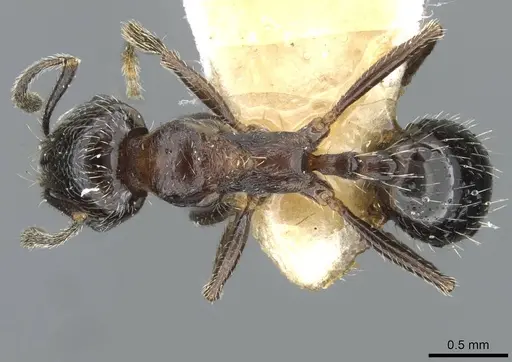
CASENT0916044
Bekijk op AntWeb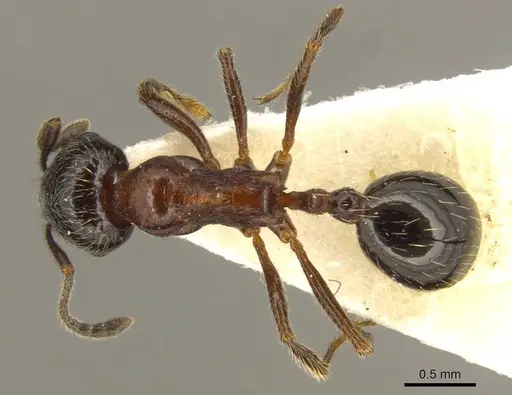
CASENT0917467
Bekijk op AntWeb
CASENT0917468
Bekijk op AntWeb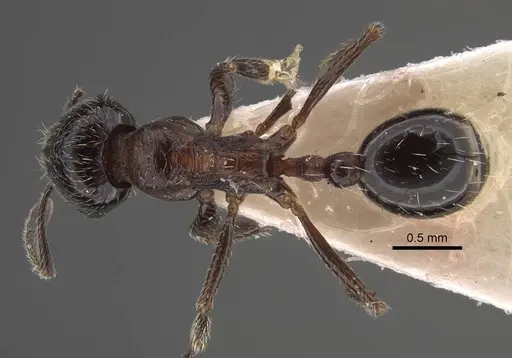
Literatuur
Verspreidingskaart laden...Producten laden...