
Eutetramorium mocquerysi
- Wetenschappelijke naam
- Eutetramorium mocquerysi
- Tribus
- Crematogastrini
- Subfamilie
- Myrmicinae
- Auteur
- Emery, 1899
- Verspreiding
- Gevonden in 1 landen
Introductie
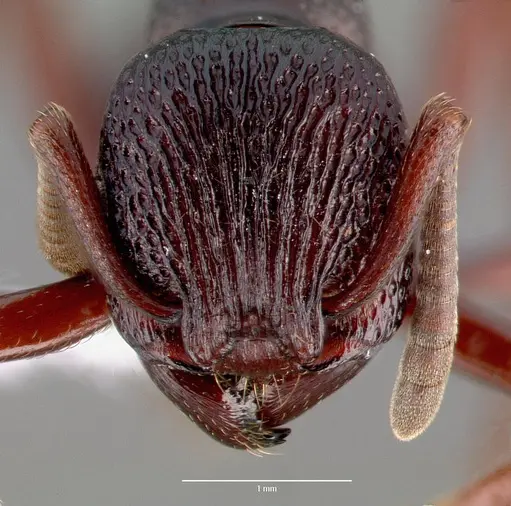
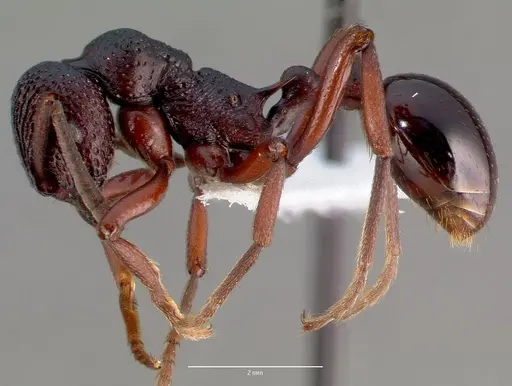
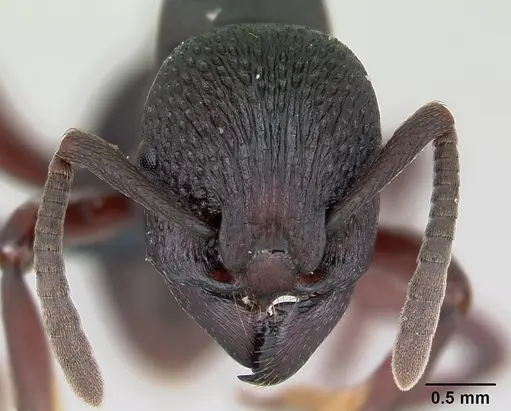
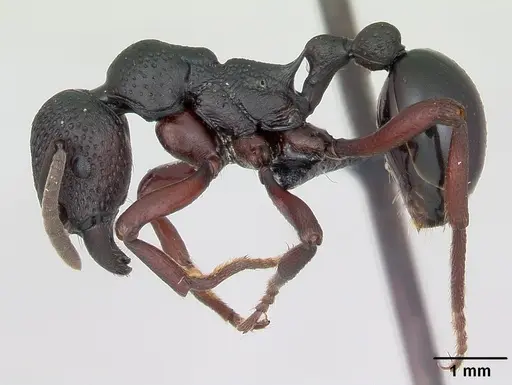
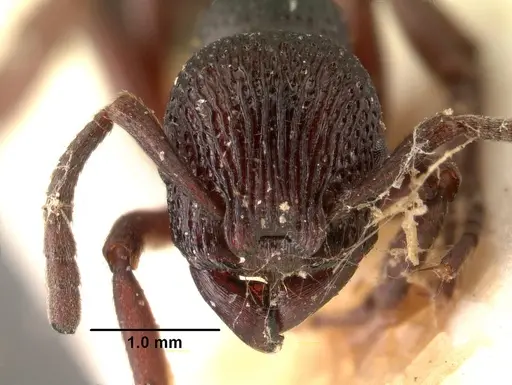
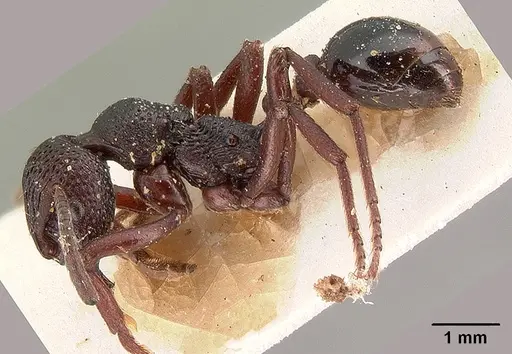
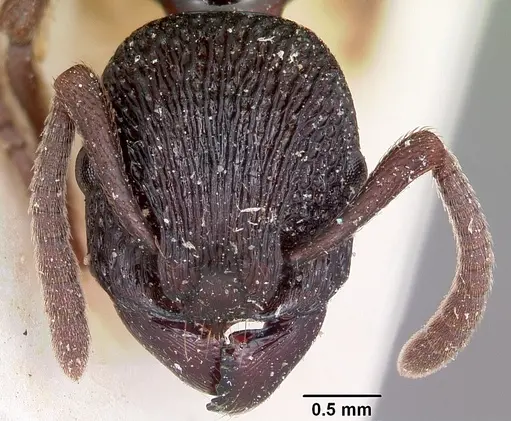
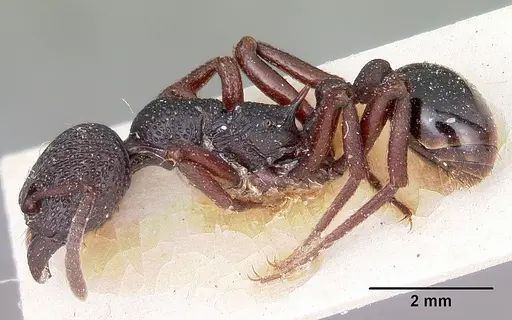
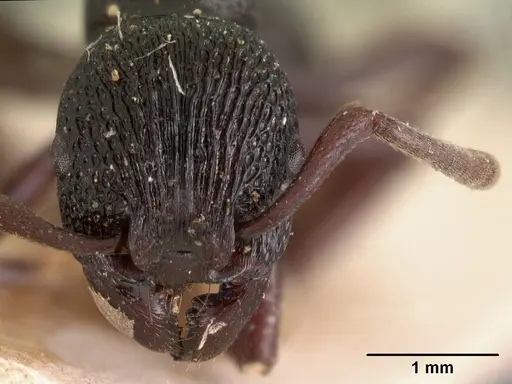
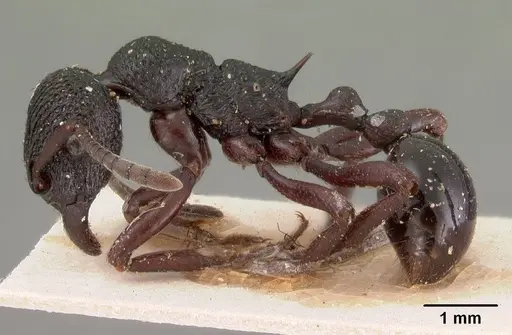
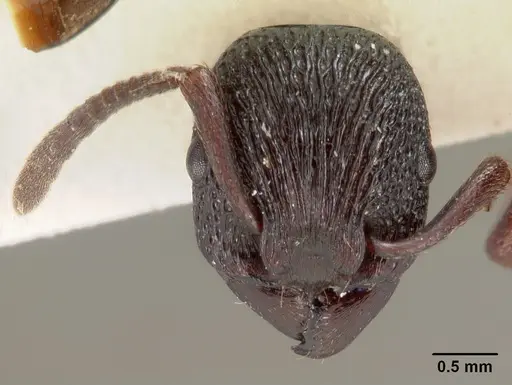
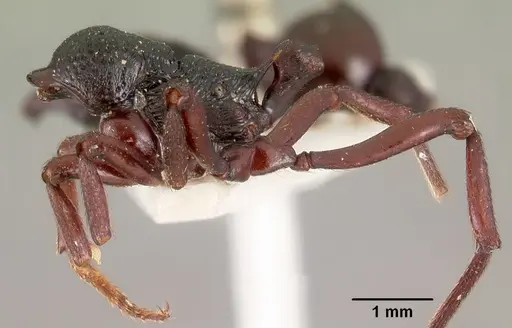
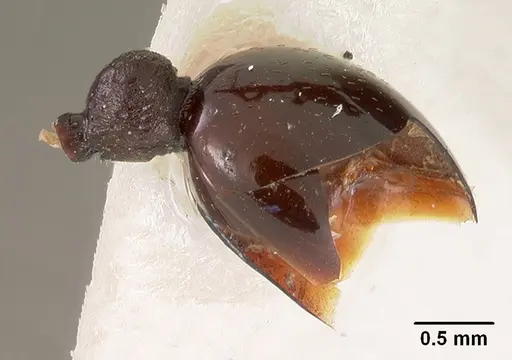
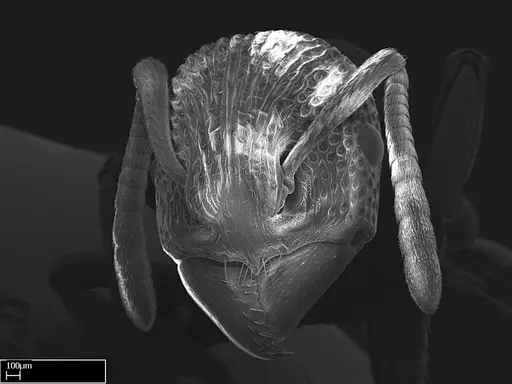
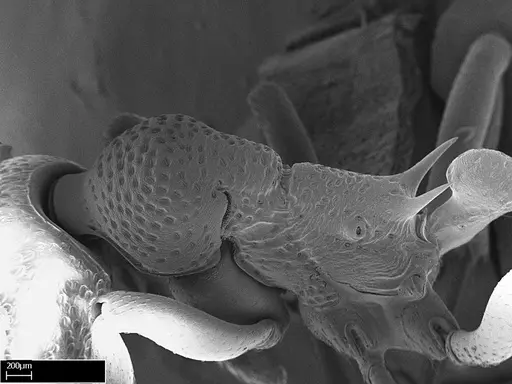
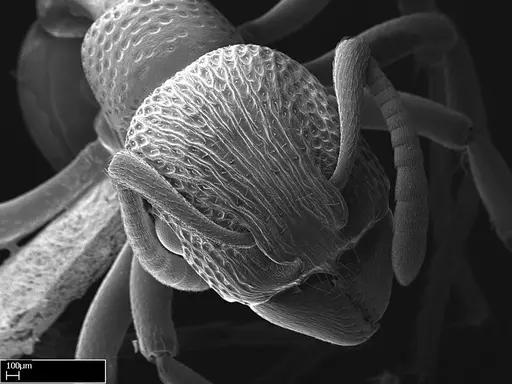
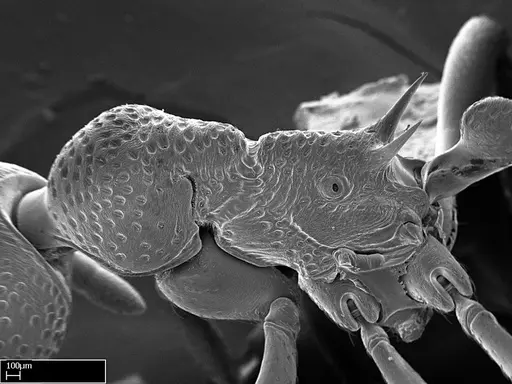
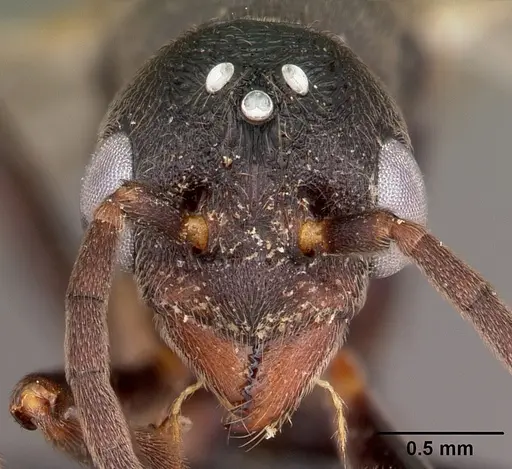
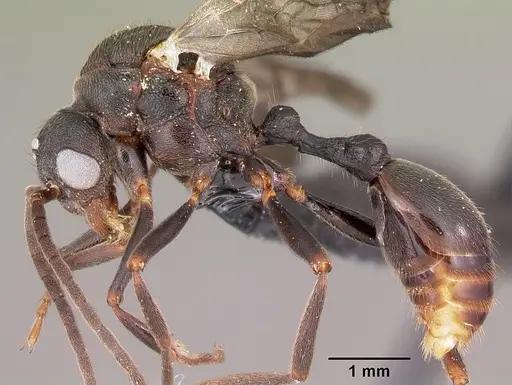
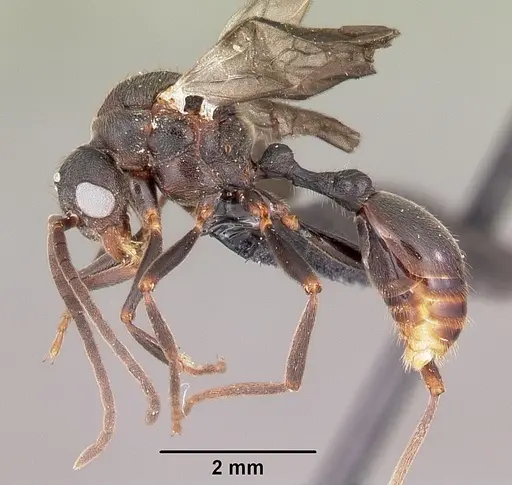
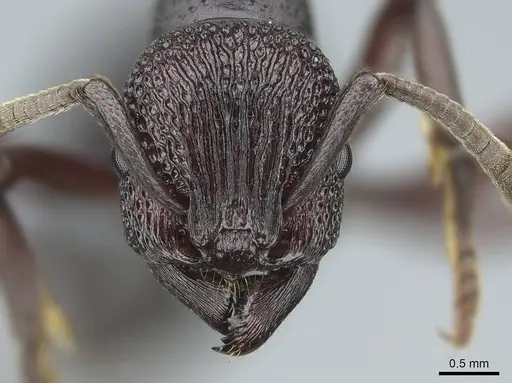
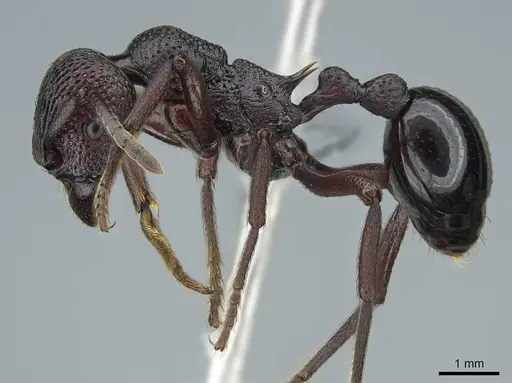
Eutetramorium mocquerysi is a rare Madagascar endemic ant known for its unusual social structure. Workers are large for a Myrmicinae, measuring 9.8-10.4mm total length, with a distinctive black coloration and coarse surface sculpture including longitudinal costae on the head and foveate pits on the body . The most remarkable feature is that queens look exactly like workers - they are ergatoid (wingless) and externally indistinguishable without examining their ovaries . This species nests in moist decaying wood on the rainforest floor at elevations around 875m in eastern Madagascar . Colonies are small, typically containing around 35 adults with more ergatoid gynes than workers .
Quick Summary
- Difficulty: Medium
- Origin & Habitat: Eastern Madagascar endemic, found in rainforest at elevations around 875m in the Réserve Spéciale d'Anjanaharibe-Sud and RNI de Marojejy [2]. Nests inside moist decaying wood lying on the forest ground [1].
- Colony Type: Monogyne with ergatoid queen, colonies have a single dominant egg-laying ergatoid queen that is externally indistinguishable from workers. The colony contains multiple ergatoid gynes (potential replacement queens), with more gynes than workers. The mated ergatoid queen maintains dominance through behavioral displays [1].
- Size & Growth:
- Queen: 9.8-10.4mm total length (ergatoid queen, externally identical to workers) [1]
- Worker: 9.8-10.4mm total length [1]
- Colony: Up to approximately 50 adults per colony [1]
- Growth: Moderate, small colony size suggests moderate growth rate
- Development: Estimated 6-8 weeks based on typical Myrmicinae development in tropical conditions (Direct development data unavailable, estimate based on related genera and tropical climate conditions)
- Antkeeping:
- Temperature: Keep at 22-26°C, this is a tropical rainforest species from Madagascar. A gentle gradient allowing warmer and cooler areas is recommended.
- Humidity: High humidity is essential, they naturally nest in moist decaying wood on the rainforest floor. Keep nest substrate consistently damp but not waterlogged. Aim for 70-85% humidity.
- Diapause: No true diapause required, Madagascar is tropical with year-round warm temperatures. However, activity may slow slightly during cooler months.
- Nesting: Naturalistic setup with moist decaying wood pieces works best. Alternatively, a well-humidified plaster nest with chambers scaled to their large worker size. Avoid dry conditions.
- Behavior: This species is relatively docile and not aggressive. Workers forage and perform nest maintenance while the ergatoid queen handles reproduction and can participate in brood care. They use trail pheromones (pyrazines from venom gland) for recruitment and nest migration [3]. Workers are moderately active and will explore their environment. Escape risk is moderate, their large size makes them easier to contain than tiny ants, but they are strong climbers.
- Common Issues: small colony size means slow population growth, beginners may lose patience, high humidity requirements can lead to mold if ventilation is poor, ergatoid queens cannot fly, nuptial flights don't occur, making colony establishment different from typical ants, wild-caught colonies may have parasites that are difficult to treat in small populations, moist wood nesting requires careful water management to prevent flooding or drying out
Understanding Ergatoid Queens
Eutetramorium mocquerysi has one of the most unusual queen systems in ant keeping. Unlike typical ants where queens are much larger and morphologically distinct, this species has ergatoid queens, wingless females that look almost exactly like workers [1]. You can only tell them apart by examining their ovaries: the queen has 6 ovarioles (egg-producing tubes) and a spermatheca (sperm storage organ), while workers have only 2 ovarioles and no spermatheca [1]. In the colony, the mated ergatoid queen maintains dominance through a 'high-on-legs' posture and antennal boxing displays, she literally stands taller and physically challenges rivals [1]. Other ergatoid gynes in the colony remain as workers, performing nursing and foraging tasks while waiting for their chance to take over if the queen dies [1]. This means your colony has built-in replacement reproductives, which is fascinating to observe.
Housing and Nest Setup
This species naturally nests in moist decaying wood on the rainforest floor, so your setup should replicate those conditions [1]. A naturalistic terrarium-style setup with pieces of moist hardwood, cork, or pre-made wooden formicarium works well. The key is maintaining consistently damp conditions without creating standing water. If using a plaster nest, ensure the chambers are appropriately sized for their large 10mm workers, too small and they'll feel cramped, too large and they may not use the space efficiently. Provide a water reservoir or moisture chamber connected to the nest area. Cover part of the setup to create darker, more humid microclimates they naturally prefer. A small outworld for foraging completes the setup.
Feeding and Nutrition
As a Myrmicinae species, Eutetramorium mocquerysi is omnivorous and will accept a variety of foods. Offer protein sources like small insects (fruit flies, small crickets, mealworms) regularly, along with sugar sources such as honey water or sugar water. In the wild, they likely forage for small invertebrates and tend aphids for honeydew. Feed them small prey items 2-3 times per week, removing any uneaten food within 24 hours to prevent mold. Keep a constant supply of sugar water available, replacing every few days. Their small colony size means you don't need large quantities of food, a few small insects and a drop of sugar water is sufficient. [1]
Temperature and Humidity Management
Being from Madagascar rainforest at 875m elevation, this species needs warm and humid conditions. Keep temperatures in the 22-26°C range, room temperature is often suitable, but you may need a gentle heat source in cooler environments. Use a digital thermometer to monitor. Humidity is critical: maintain 70-85% relative humidity. The nest substrate should feel consistently damp, like a wrung-out sponge. Mist the nest area occasionally, but avoid excess water that could flood the colony. Good ventilation is necessary to prevent mold while maintaining humidity, small ventilation holes or mesh work well. Avoid placing the setup near air conditioning or heating vents that could cause temperature swings. [2][1]
Colony Dynamics and Behavior
Watching an ergatoid queen colony is fundamentally different from typical ant colonies. The queen doesn't hide away in a deep chamber, she may actively move around the nest and even participate in brood care [4]. The colony contains multiple ergatoid gynes that perform worker tasks while waiting for succession opportunities. When the dominant queen is removed, one of these replacement gynes will likely take over, this is called serial monogamy and is fascinating to observe. Workers handle foraging, nursing, and nest maintenance. They use chemical recruitment trails (pyrazines from their venom gland) to coordinate group foraging and nest relocations [3]. The colony remains relatively small (around 35-50 workers), so you can observe individual behaviors easily.
Seasonal Care and Long-Term Maintenance
Since Madagascar is tropical with year-round warm temperatures, this species does not require a true hibernation or diapause period [1]. However, you may notice reduced activity during cooler months, this is normal and they simply become less active. Continue regular feeding but reduce portions during low-activity periods. The main challenge is maintaining consistent humidity over time as water evaporates. Check moisture levels weekly and rehydrate the nest as needed. With their small colony size, growth will be gradual, don't expect rapid population explosion. A healthy colony may eventually reach 50-100 workers over several years. The ergatoid queen system means your colony has natural succession built in, which is reassuring for long-term keeping.
Frequently Asked Questions
How long does it take for Eutetramorium mocquerysi to produce first workers?
Based on typical Myrmicinae development in tropical conditions, expect first workers approximately 6-8 weeks after the colony establishes. The exact timeline depends on temperature and feeding.
Can I keep multiple ergatoid queens together?
No, colonies are naturally monogyne with a single dominant ergatoid queen. Multiple ergatoid gynes exist in the colony but only one reproduces at a time. Introducing unrelated queens will likely result in fighting.
Do Eutetramorium mocquerysi ants sting?
As Myrmicinae ants, they have a stinger but are not aggressive and rarely sting. Their large size makes them noticeable, but they are docile and focused on foraging rather than defense.
What is the best nest type for this species?
A naturalistic setup with moist hardwood or cork pieces works best, replicating their natural wood-nesting behavior. Alternatively, a well-humidified plaster nest with appropriately sized chambers suits them. Avoid dry nests.
Are Eutetramorium mocquerysi good for beginners?
This species is rated Medium difficulty. While fascinating due to their ergatoid queen system, their high humidity requirements and small colony size make them better suited for keepers with some experience maintaining humid ant setups.
How big do colonies get?
Colonies remain relatively small, typically reaching 35-50 workers in established colonies. Wild colonies average around 35 adults, so expect similar sizes in captivity [1].
Do they need hibernation?
No, as a tropical Madagascar species, they do not require hibernation or diapause. Simply maintain normal warm, humid conditions year-round.
Why does the queen look like a worker?
This species has ergatoid queens, a primitive trait where queens are wingless and externally identical to workers. You can only distinguish them by examining their ovaries, which have more ovarioles for egg production [1].
What do they eat?
They are omnivorous Myrmicinae. Offer small insects (fruit flies, small crickets) for protein and sugar sources (honey water, sugar water) for energy. They likely also collect honeydew in the wild.
How do they establish new colonies?
Unlike typical ants with nuptial flights, ergatoid queens are wingless. New colonies likely form through colony fission, a mated ergatoid queen leaves with workers to establish a new nest, or through succession when the dominant queen dies.
Report an Issue
The current care sheet is based fully on literature. See inconsistencies, or something that's incorrect? Please , it will be resolved after review from an admin. Contributing to the blogs tab also helps providing information, to make us be able to further improve the caresheets. Thank you for your support!
References

Dit verzorgingsblad is gelicentieerd onder CC BY-SA 4.0 .
Community-blogs
CASENT0005927
Bekijk op AntWeb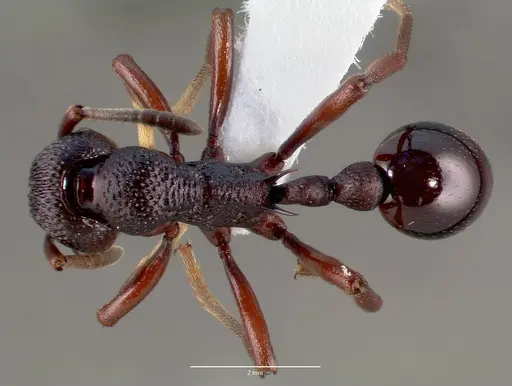
CASENT0077435
Bekijk op AntWeb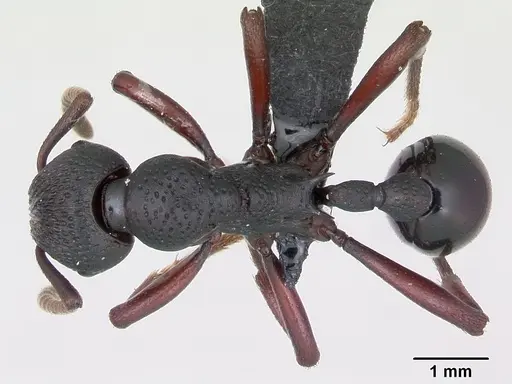
CASENT0101486
Bekijk op AntWeb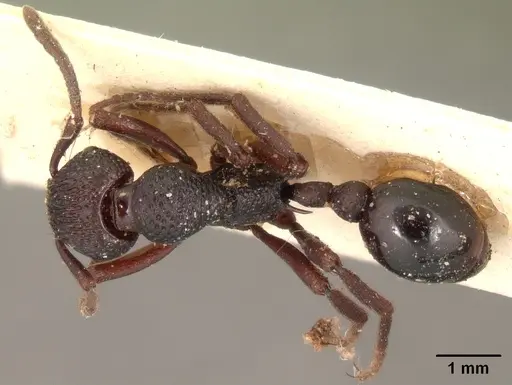
CASENT0101660
Bekijk op AntWeb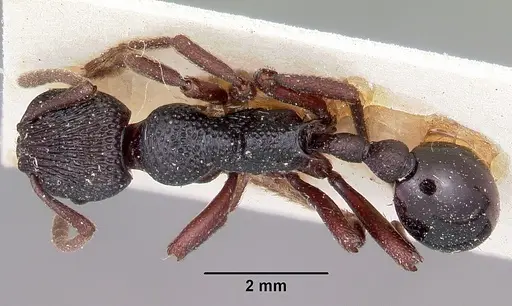
CASENT0102074
Bekijk op AntWeb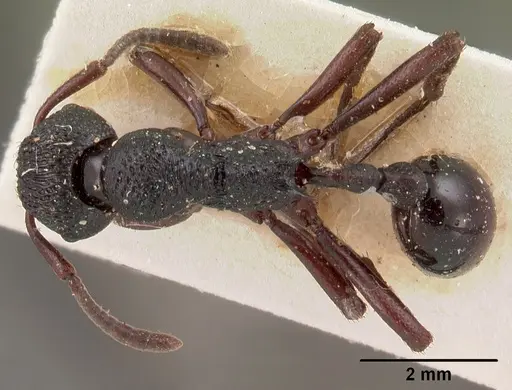
CASENT0102075
Bekijk op AntWeb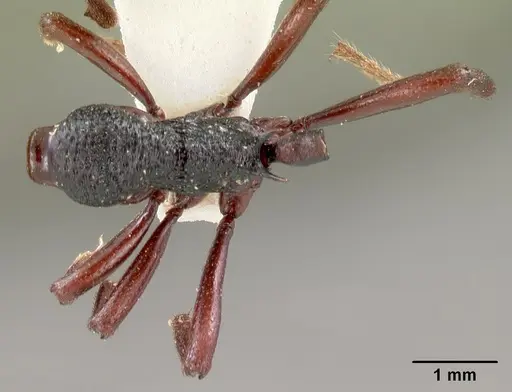
CASENT0217041
Bekijk op AntWeb
CASENT0217042
Bekijk op AntWeb
CASENT0243677
Bekijk op AntWeb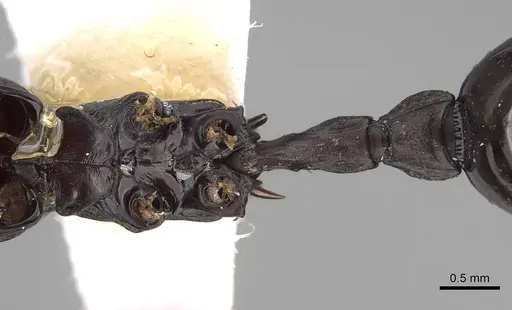
CASENT0495192
Bekijk op AntWeb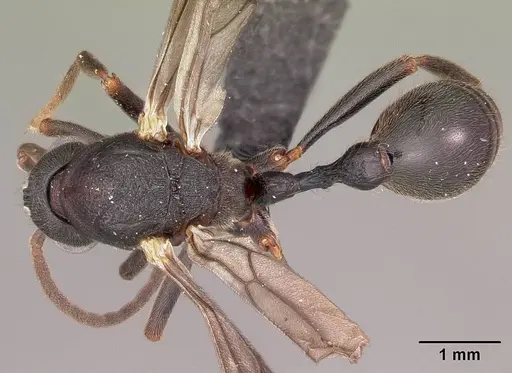
CASENT0840870
Bekijk op AntWeb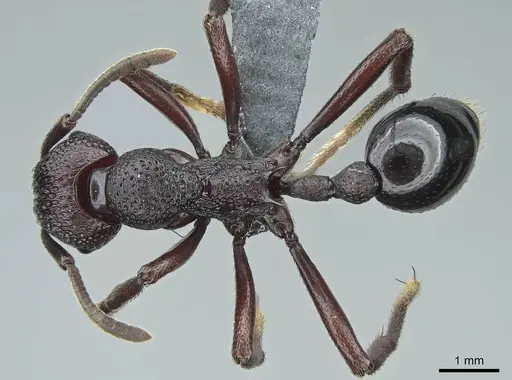
Literatuur
Verspreidingskaart laden...Producten laden...