
Dorylus rufescens
- Wetenschappelijke naam
- Dorylus rufescens
- Subfamilie
- Dorylinae
- Auteur
- Santschi, 1915
- Verspreiding
- Gevonden in 0 landen
Introductie
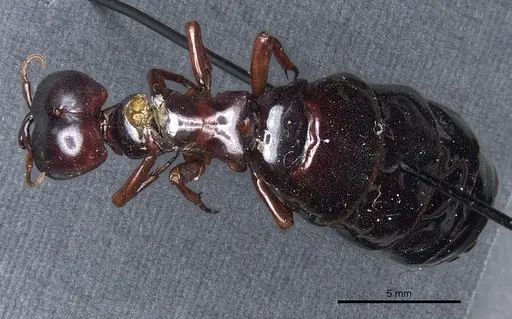
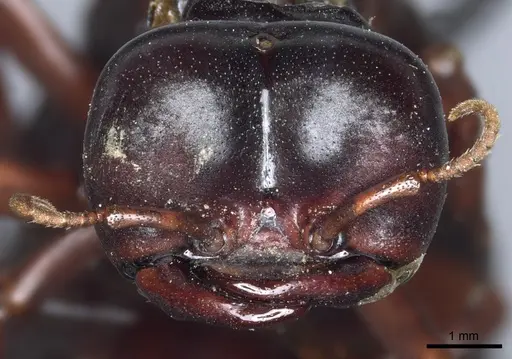
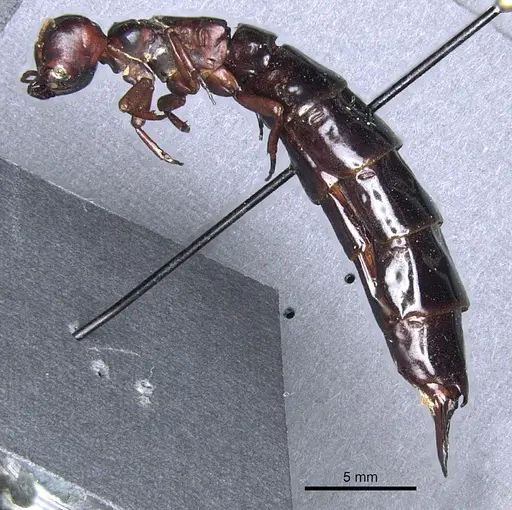
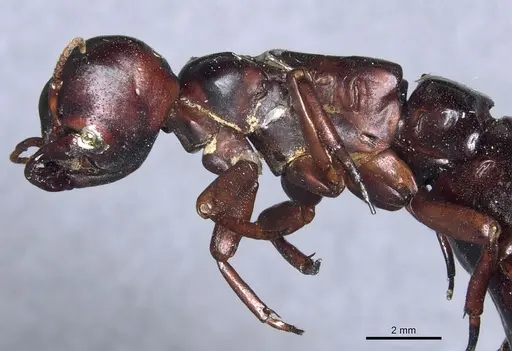
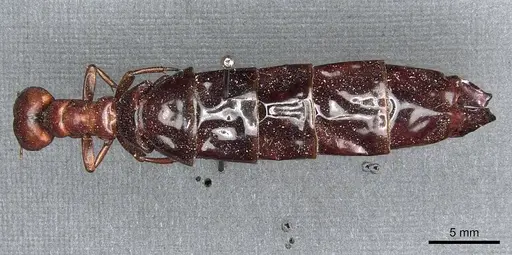
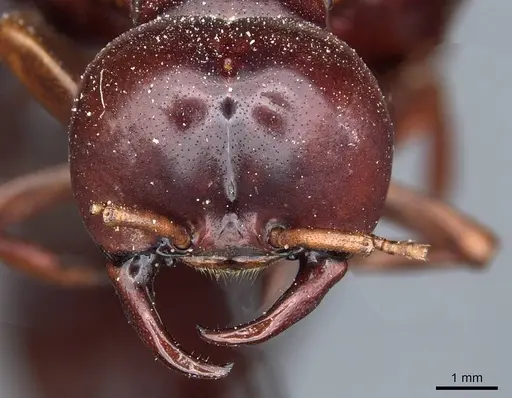
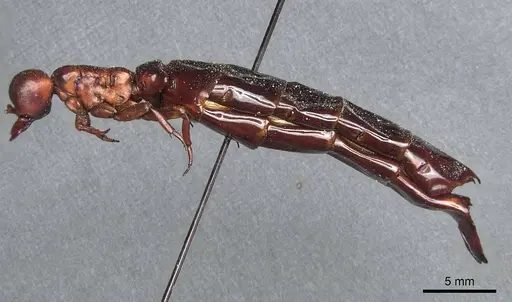
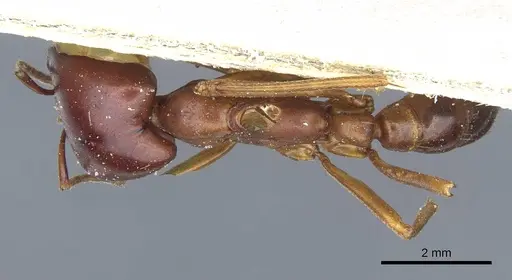
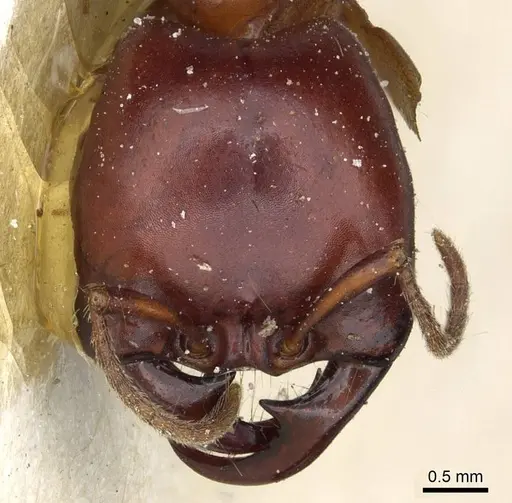
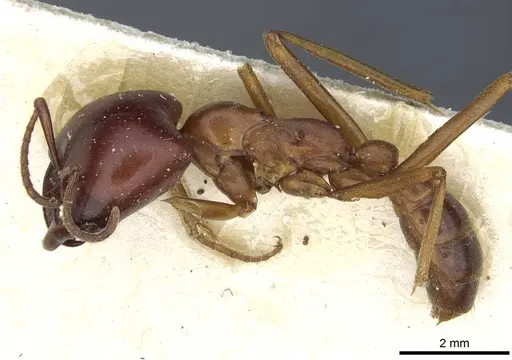
Dorylus rufescens is a West African army ant species belonging to the Dorylus nigricans-group. Workers are typically dark brown to reddish-brown with the characteristic army ant morphology: powerful mandibles for hunting, a flexible abdomen, and relatively short legs adapted for rapid movement in columns. This species is found across the Afrotropical region including Gambia, Cameroon, Nigeria, Senegal, and Gabon [AntWiki]. Army ants like Dorylus rufescens are among the most specialized and behaviorally complex ants on Earth. Unlike most ants that build permanent nests, army ants are permanently nomadic - they never settle in one location. Instead, they form bivouacs (temporary shelters made from their own bodies) and move their entire colony every few days in search of prey. Their colonies can reach enormous sizes, and they conduct massive raids that sweep through the forest floor like a living carpet [AntWiki].
Quick Summary
- Difficulty: Expert
- Origin & Habitat: West Africa (Gambia, Cameroon, Nigeria, Senegal, Gabon) in tropical forest and savanna habitats. They are primarily hypogaeic (underground) army ants that raid through the leaf litter and soil [1].
- Colony Type: Colony structure is not fully documented for this species. Dorylus colonies typically contain multiple queens, though specific data for D. rufescens is limited [1].
- Size & Growth:
- Queen: Queens are among the largest of all ant species, estimated at around 50mm based on genus patterns.
- Worker: Workers range from small to medium-sized, approximately 3-12mm based on genus patterns.
- Colony: Colonies can reach very large numbers of workers, typical Dorylus colonies reach 100,000-500,000+ workers, though specific data for D. rufescens is limited [1].
- Growth: Fast, colonies grow rapidly due to high queen fecundity
- Development: Development timeline is unconfirmed for this specific species. (Army ant development is temperature-dependent. Nanitics (first workers) are typically smaller than normal workers.)
- Antkeeping:
- Temperature: Keep at 24-28°C, army ants thrive in warm, humid tropical conditions. A heating cable on one side of the enclosure creates the gradient they prefer.
- Humidity: High humidity (70-85%) is essential. These are tropical forest ants that need consistently moist substrate. Keep the nesting area damp but not waterlogged.
- Diapause: No, being a tropical species, Dorylus rufescens does not hibernate. They maintain year-round activity in their native habitat.
- Nesting: Army ants do not build traditional nests. In captivity, they require a large, open foraging area connected to a humid bivouac chamber. They will form a living cluster rather than excavate tunnels. A naturalistic setup with a large foraging arena (at least 30x30cm) and a humid retreat space works best. Provide a water reservoir for humidity maintenance.
- Behavior: Dorylus rufescens is a highly aggressive, predatory army ant. They form massive raiding columns that sweep through their territory, capturing any invertebrate prey they encounter. Workers have powerful mandibles and can deliver a painful bite. They are primarily nocturnal or crepuscular raiders. Colonies are nomadic, they constantly relocate their bivouac in search of new hunting grounds. Escape prevention is critical: they will exploit any gap or crack, and their ability to squeeze through tiny spaces is legendary. They are not suitable for observation-focused keeping, they spend most of their time hidden in dense bivouacs [1].
- Common Issues: keeping army ants in captivity is extremely difficult and rarely successful, they require conditions that are nearly impossible to replicate in a home setting, colonies can become aggressive and stressful to maintain due to their need for constant movement and large spaces, escape prevention is critical, they will find and exploit any gap in their enclosure, they require massive numbers of prey items to sustain their colony, feeding costs can become prohibitive, the nomadic lifestyle means colonies may abandon their bivouac location repeatedly, making observation difficult
Why Dorylus rufescens Is an Advanced Species
Dorylus rufescens represents one of the most challenging ant species to keep in captivity. Army ants have a fundamentally different biology from most ant species that makes captive husbandry extremely problematic. Unlike typical ants that build permanent nests and maintain a stationary colony, army ants are permanently nomadic. They form temporary bivouacs (living shelters made from linked bodies) and relocate every few days in search of prey. This nomadic lifestyle cannot be replicated in a standard formicarium.
Their colonies can reach extraordinary sizes, hundreds of thousands of workers moving in coordinated columns. Feeding such a colony requires enormous quantities of prey items, and the constant movement means you cannot observe them in a stable nest setup. Additionally, army ants are highly aggressive predators with powerful mandibles, and they will attack and consume anything that moves in their territory. For these reasons, Dorylus rufescens is not recommended for any keeper except those with extensive experience and the ability to provide specialized, large-scale housing [1].
Housing and Enclosure Requirements
If you attempt to keep army ants, you need a setup unlike any other ant species. Standard formicariums with tunnels and chambers are completely unsuitable. Instead, you need a large, open foraging arena (at least 30x30cm, larger is better) connected to a humid retreat area where the bivouac can form. The foraging area should have a deep substrate (at least 5cm) of moist soil or sand to allow the ants to form their living cluster.
The enclosure must have absolutely flawless escape prevention. Army ants are legendary for their ability to squeeze through impossibly small gaps, even a 1mm crack will eventually be found and exploited. All seams must be sealed with silicone, and any ventilation must use fine mesh (at least 0.5mm). The bivouac area should maintain high humidity (70-85%) through a water reservoir or damp substrate, as army ants desiccate quickly if their cluster dries out. Temperature should be maintained at 24-28°C using a heating cable on one side of the enclosure.
Feeding and Nutrition
Army ants are obligate predators, they do not collect honeydew or tend aphids like many ant species. Their entire colony depends on capturing live prey through their massive raids. In captivity, you must provide a constant supply of appropriately-sized prey items. This typically means large quantities of mealworms, crickets, cockroaches, and other insects. The prey should be small enough for the ants to subdue (roughly 3-10mm depending on the worker caste present).
A single established army ant colony can consume thousands of prey items per week. This makes feeding both time-consuming and expensive. Some keepers report success with providing pre-killed frozen insects, but live prey is generally preferred as it triggers the hunting response that drives army ant behavior. Sugar sources are typically not accepted, army ants are strict predators.
The Nomadic Cycle
Understanding the army ant lifestyle is crucial for any potential keeper. Dorylus species alternate between two phases: the statary phase (1-3 weeks) when the colony remains in one bivouac location and the queen lays eggs, and the nomadic phase when the colony breaks camp and moves to a new location daily while the brood develops. This cycle continues indefinitely, army ants never settle permanently.
In captivity, this presents unique challenges. The colony will periodically abandon their bivouac location and relocate within the enclosure. During the nomadic phase, the entire colony becomes highly active and may appear chaotic. The brood development timeline is tied to this cycle, eggs are laid during the statary phase, and larvae pupate during the nomadic phase. Replicating this natural cycle in captivity is one of the greatest challenges facing army ant keepers.
Frequently Asked Questions
Can I keep Dorylus rufescens in a test tube?
No. Dorylus rufescens cannot be kept in a test tube or any traditional ant nest. They are army ants that form massive colonies (100,000+ workers) and require large, open foraging spaces. They do not excavate tunnels but instead form living bivouacs. Attempting to keep them in a test tube or small formicarium will result in colony death.
Are Dorylus rufescens good for beginners?
No. Dorylus rufescens is absolutely not suitable for beginners. Army ants are among the most difficult species to keep in captivity due to their enormous colony size requirements, need for constant prey, nomadic lifestyle, and specialized humidity and temperature needs. Even experienced antkeepers rarely succeed with army ants. If you are new to antkeeping, start with species like Lasius niger, Camponotus species, or Messor species.
How long does it take for first workers to hatch?
The exact egg-to-worker timeline for Dorylus rufescens has not been documented. Based on typical Dorylus genus patterns, development takes approximately 1-2 months from egg to adult worker at optimal temperatures (24-28°C). The first workers (nanitics) will be smaller than normal workers and may have reduced functionality until the colony grows larger.
Can I keep multiple queens together?
Dorylus colonies typically have multiple reproductive queens. Wild colonies typically maintain multiple queens that work together. However, introducing multiple unrelated queens in captivity is risky and can lead to fighting until dominance hierarchies are established. It is generally recommended to start with a single queen if possible, though established colonies naturally maintain multiple queens.
Do Dorylus rufescens need hibernation?
No. As a tropical species from West Africa, Dorylus rufescens does not require hibernation or winter diapause. They should be kept at warm, stable temperatures (24-28°C) year-round. Attempting to hibernate them or exposing them to cool temperatures will stress the colony and may cause death.
What do Dorylus rufescens eat?
Dorylus rufescens are strict predators. They do not eat sugar, honey, or plant matter, only other insects and arthropods. In captivity, they need a constant supply of live or freshly killed insects such as mealworms, crickets, roaches, and other appropriately-sized prey. A single colony can consume thousands of prey items per week.
How big do Dorylus rufescens colonies get?
Dorylus colonies can reach extraordinary sizes, typically 100,000 to 500,000+ workers in established colonies. The queens are among the largest of any ant species. Worker size varies significantly, with major workers being larger than minors.
Why are my army ants dying?
Army ant colonies fail in captivity for several common reasons: inadequate humidity (they desiccate quickly), insufficient prey (starvation is common), temperature stress (too cold or too hot), enclosure stress (unable to form proper bivouac), and escape (colonies abandon enclosures through tiny gaps). Additionally, wild-caught colonies may carry parasites or diseases that manifest in captivity. Army ants have very specific requirements that are difficult to meet in a home setting.
Report an Issue
The current care sheet is based fully on literature. See inconsistencies, or something that's incorrect? Please , it will be resolved after review from an admin. Contributing to the blogs tab also helps providing information, to make us be able to further improve the caresheets. Thank you for your support!
References

Dit verzorgingsblad is gelicentieerd onder CC BY-SA 4.0 .
Community-blogs
Literatuur
Verspreidingskaart laden...Producten laden...