
Diacamma vagans
- Wetenschappelijke naam
- Diacamma vagans
- Tribus
- Ponerini
- Subfamilie
- Ponerinae
- Auteur
- Smith, 1860
- Verspreiding
- Gevonden in 0 landen
Introductie
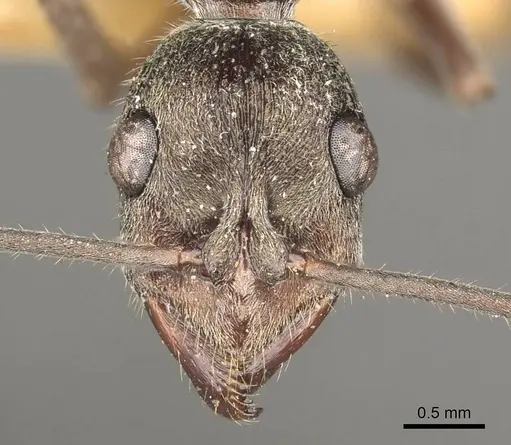
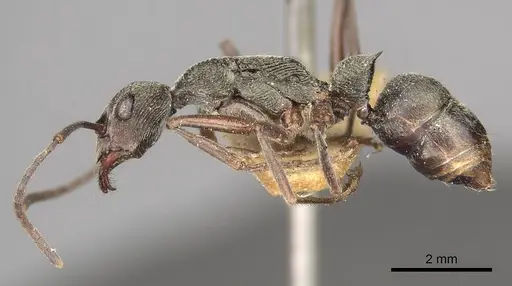
Diacamma vagans is a relatively small ponerine ant measuring around 10mm in total length. Workers have a black body with pale to dark brown on the anterior head, mandibles, antennae, legs, and part of the gaster. They have large, protruding eyes and a stout petiole with short teeth. This species is part of the queenless ant group - instead of a true queen, colonies are headed by a gamergate, which is a mated worker that takes on the reproductive role. Unlike most other Diacamma species, D. vagans workers retain their gemmae (reproductive organs) throughout life without mutilation. The species is found across Southeast Asia including the Moluccas (Bacan Island), Indonesia, Nepal, and Singapore, typically nesting in soil, under stones, or in brickwork .
Quick Summary
- Difficulty: Medium
- Origin & Habitat: Southeast Asian distribution spanning the Moluccas (Bacan Island), Indonesia, Nepal, and Singapore [1][3]. Found in both mixed deciduous and dry dipterocarp forests at ground level [4]. Nests in walls or brickwork, under bricks or stones [2].
- Colony Type: Queenless, no distinct queen caste, reproduction by gamergates (reproductive workers).
- Queen Status: Queenless Colony
- Special: Gamergates
- Size & Growth:
- Queen: Queenless species, reproduction by gamergate (reproductive worker) instead of a distinct queen caste.
- Worker: ~10mm total length [1]
- Colony: Up to 250 workers per colony [5]
- Growth: Moderate
- Development: Unknown for this specific species (Development timeline has not been directly studied. Related Diacamma species typically require 2-3 months from egg to worker at tropical temperatures.)
- Antkeeping:
- Temperature: Keep at 24-28°C, this is a tropical species from Southeast Asia. A gentle heating gradient allows workers to regulate their temperature.
- Humidity: Moderate to high humidity. Native to tropical forests with ground-nesting habits. Keep substrate moist but not waterlogged, with some drier areas for the ants to choose.
- Diapause: No, being a tropical species, they do not require hibernation. Keep at stable warm temperatures year-round.
- Nesting: Ground-nesting species that accepts various nest types. They do well in naturalistic setups with soil substrate, test tubes with water reservoirs, or acrylic nests. Provide damp substrate for burrowing and a shallow foraging area. They will nest under stones or in pre-existing cavities [2].
- Behavior: Diacamma vagans is described as a most intelligent species [2]. They possess a pungent sting and should be handled with care. Colonies are not populous, typically reaching only up to 250 workers. The gamergate system creates a dominance hierarchy, the top-ranked worker patrols, threatens rivals with antennal boxing, and becomes the sole reproductive. When the gamergate is removed, violent fighting erupts among workers within one day to establish a new hierarchy [5]. Workers are ground-foragers and will hunt small prey. Escape risk is moderate, use standard barrier methods.
- Common Issues: queenless system complexity, beginners may struggle with the gamergate hierarchy dynamics and colony stability., small colony size means slower population growth and less buffer against mistakes., stinging, this species has a pungent sting and can be aggressive when disturbed [2]., limited availability, this species is rarely available in the antkeeping hobby., dominance conflicts, removing the gamergate triggers fighting among workers within one day [5].
The Gamergate System: Understanding Queenless Ants
Diacamma vagans is a queenless ant species, there is no true queen caste. Instead, colonies are headed by a gamergate, which is a mated worker that functions as the sole reproductive. This is one of the most fascinating aspects of keeping this species. All workers retain their gemmae (small organs on the thorax that contain reproductive tissue), unlike other Diacamma species like D. rugosum where workers mutilate each other's gemmae to establish dominance [5][6]. In an established colony, only one gamergate reproduces. She maintains dominance through physical interactions, patrolling with her body held high, directing antennal boxing or mandible threats toward nestmates, and rubbing her hind legs against her abdomen to spread sexual pheromones [5]. When the gamergate is removed from a colony, violent fighting erupts among workers within a day as they compete to become the new reproductive [5]. For keepers, this means you cannot simply add a 'queen', you must acquire an established colony with an existing gamergate, or allow workers to establish their hierarchy naturally.
Housing and Nest Setup
Diacamma vagans is a ground-nesting species that naturally nests in soil, under stones, or in brickwork [2]. For captive care, a naturalistic setup works well, a container with damp soil substrate allows them to burrow and create chambers. You can also use test tubes with water reservoirs connected to a foraging area, or acrylic nests with dirt chambers. The key is providing a humid, dark nesting area with access to a foraging space. Since colonies remain relatively small (up to 250 workers), you do not need massive setups. A nest area of roughly 10x10cm with connecting tubes to a foraging arena works well. Keep the nesting material consistently moist but not soggy, these are tropical ants that need humidity but also need some dry areas to regulate moisture exposure.
Feeding and Diet
As a ponerine ant, Diacamma vagans is predatory and will hunt small invertebrates. In the wild, they are ground-foragers hunting springtails, small insects, and other arthropods. In captivity, offer small live prey such as fruit flies, pinhead crickets, small mealworms, and other appropriately-sized insects. They likely accept protein-based foods as their primary diet. Sugar sources may be accepted but are not a primary food source for this predatory species. Feed them small prey items 2-3 times per week, removing any uneaten prey after 24 hours. The small colony size means they do not need large quantities of food, adjust based on what they actually consume. [4]
Temperature and Seasonal Care
Being a tropical Southeast Asian species, Diacamma vagans requires warm temperatures year-round. Keep the nest area at 24-28°C. You can use a heating cable or mat on one side of the nest to create a gentle temperature gradient, allowing workers to move between warmer and cooler areas as needed. Do not hibernate this species, they do not have a diapause requirement. Room temperature within their preferred range works well for most keepers. Temperature affects development speed, warmer temperatures within their range speed up brood development while cooler temperatures slow it. Avoid temperatures below 20°C or above 32°C.
Handling and Safety
Diacamma vagans possesses a pungent sting [2]. While not dangerously venomous, their sting can cause pain and irritation. Handle with care and avoid disturbing the colony unnecessarily. When working with the nest, use gentle movements and give them time to adjust to any changes. They are described as intelligent [2] and likely can learn to recognize their keeper over time, but they remain defensive of their nest. Use standard escape prevention methods, these are medium-sized ants that cannot squeeze through the small gaps that trouble tiny species, but still use proper barrier techniques.
Colony Acquisition and Establishment
Acquiring Diacamma vagans is challenging because they are queenless, you cannot start a colony from a lone queen like you would with most ant species. Instead, you must obtain an established colony fragment that already contains a gamergate. When you get a colony, observe the social dynamics carefully. The gamergate will be the dominant individual exhibiting 'strutting' behavior and receiving deference from other workers. Do not remove the gamergate or the colony will descend into fighting as workers compete to replace her. If you need to split a large colony, do so carefully and expect a period of hierarchy establishment in each fragment. This species is rarely available in the antkeeping hobby, making established colonies particularly valuable. [5]
Frequently Asked Questions
Does Diacamma vagans have a queen?
No, Diacamma vagans is a queenless ant species. Instead of a true queen, colonies are headed by a gamergate, which is a mated worker that takes on the reproductive role. All workers have the potential to become reproductives, but only one typically does so in an established colony [5].
How do I start a Diacamma vagans colony?
You cannot start a colony from a single ant like you would with most species. You must acquire an established colony fragment that already contains a gamergate (reproductive worker). Queenless ants cannot be founded like typical ants, they reproduce through colony fission where a group of workers leaves with a new gamergate.
How big do Diacamma vagans colonies get?
Colonies reach up to 250 workers [5]. This is relatively small compared to many common ant species. The small colony size is typical for queenless ponerines and reflects their social structure.
What do Diacamma vagans eat?
They are predatory ants that hunt small invertebrates. Feed them small live prey such as fruit flies, small crickets, mealworms, and other appropriately-sized insects. They likely accept protein as their primary food source.
What temperature do Diacamma vagans need?
Keep them at 24-28°C, this is a tropical species from Southeast Asia. A heating cable on one side of the nest creates a gradient. Do not hibernate them as they have no diapause requirement.
Are Diacamma vagans good for beginners?
No, this is not a beginner species. The queenless gamergate system is more complex to manage than typical ant colonies. Additionally, they are rarely available in the hobby, small colonies are fragile, and they have a painful sting. They are best suited for experienced antkeepers interested in queenless species.
Why do my Diacamma vagans workers fight when I move them?
This is normal behavior. When the gamergate is removed or absent, workers fight to establish a new dominance hierarchy [5]. The fighting is how they determine which worker will become the new reproductive. If you need to move them, try to keep the gamergate and established social structure intact.
How long does it take for Diacamma vagans to develop from egg to worker?
The exact development timeline is unknown for this specific species. Based on related Diacamma species, expect approximately 2-3 months from egg to worker at optimal tropical temperatures (around 26°C).
Can I keep multiple Diacamma vagans colonies together?
No, different colonies will likely fight. Diacamma vagans colonies have a single gamergate and established colonies should be kept separate. If you want to expand your colony, you would need to carefully split an existing colony and allow each fragment to establish its own hierarchy.
Report an Issue
The current care sheet is based fully on literature. See inconsistencies, or something that's incorrect? Please , it will be resolved after review from an admin. Contributing to the blogs tab also helps providing information, to make us be able to further improve the caresheets. Thank you for your support!
References

Dit verzorgingsblad is gelicentieerd onder CC BY-SA 4.0 .
Community-blogs
CASENT0915957
Bekijk op AntWeb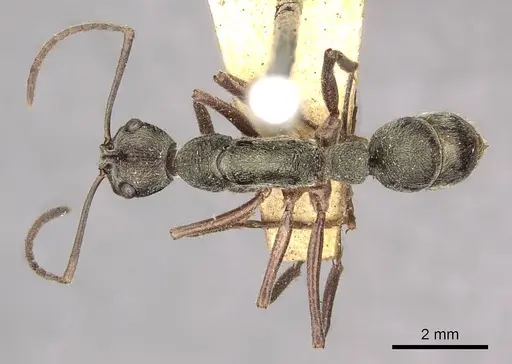
Literatuur
Verspreidingskaart laden...Producten laden...