
Crematogaster physothorax
- Wetenschappelijke naam
- Crematogaster physothorax
- Tribus
- Crematogastrini
- Subfamilie
- Myrmicinae
- Auteur
- Emery, 1889
- Verspreiding
- Gevonden in 0 landen
Introductie
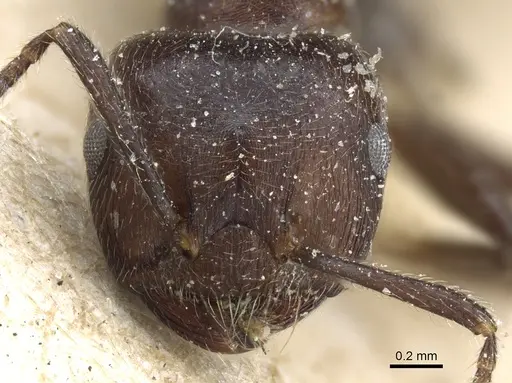
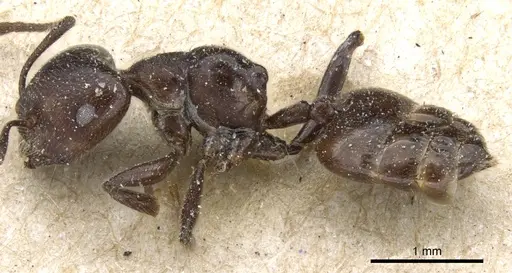
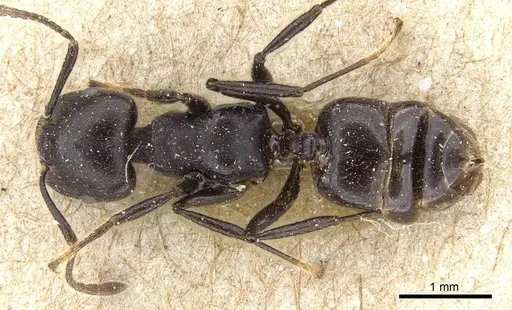
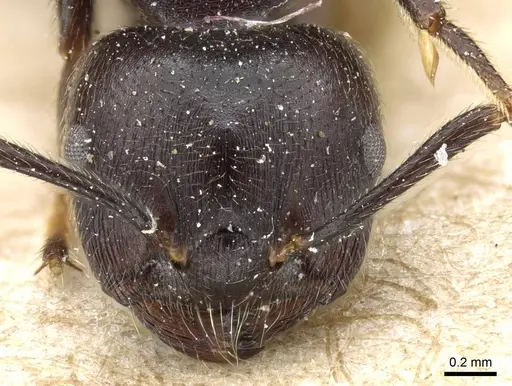
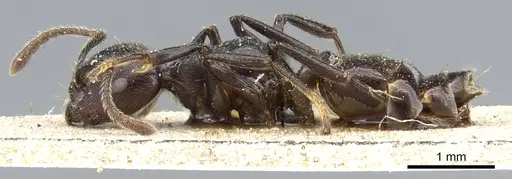
Crematogaster physothorax is a small ant species native to Southeast Asia, found across the Malay Peninsula, southern Thailand, and southeastern Myanmar. Workers are entirely black with a smooth, shiny body surface. This species belongs to the C. inflata-subgroup within the subgenus Physocrema, characterized by a strongly swollen propodeum that rises above the rest of the thorax, and the complete absence of propodeal spines. The pronotum has distinctive transverse rugulae that help separate it from the similar-looking C. onusta. These ants are monomorphic or weakly polymorphic, meaning workers come in roughly the same size with only slight variation. As with most Crematogaster species, they likely nest in rotting wood or under bark in their natural forest habitat.
Quick Summary
- Difficulty: Medium
- Origin & Habitat: Southeast Asia, found in the Malay Peninsula, southern Thailand, and southeastern Myanmar. Inhabits tropical forest environments where they likely nest in rotting wood or under bark [1][2].
- Colony Type: Colony structure is unconfirmed. No specific data exists for this species.
- Size & Growth:
- Queen: size data unavailable
- Worker: ~3-4mm, inferred from Crematogaster genus patterns
- Colony: Unknown, no colony size data available
- Growth: Unknown, no development data available for this species
- Development: Unknown, no species-specific development data exists (No direct development data exists for this species.)
- Antkeeping:
- Temperature: Keep at 24-28°C, this species comes from tropical Southeast Asia and requires warm conditions.
- Humidity: Moderate to high humidity (60-80%), typical for tropical forest ants. Keep the nest substrate slightly moist but not waterlogged. Provide a water source.
- Diapause: Unknown, tropical species may not require true hibernation
- Nesting: In captivity, they do well in Y-tong (AAC), plaster, or naturalistic setups with rotting wood or bark pieces. They prefer tight, enclosed spaces. Avoid dry conditions, they originate from damp forest habitats.
- Behavior: Crematogaster physothorax is a generalist forager that likely scavenges for honeydew, small insects, and nectar like other Crematogaster species. They have a smear-type defense mechanism, using a flattened stinger to wipe venom onto enemies rather than piercing. Workers will raise their abdomen in a threat display when disturbed, this is a signature Crematogaster behavior. They are moderately active foragers and can be aggressive when defending the nest. Escape risk is moderate, their ~3-4mm size means standard formicarium barriers work well.
- Common Issues: lack of species-specific care data makes precise recommendations difficult, tropical humidity requirements can lead to mold problems if ventilation is poor, their small size means they can slip through gaps that larger ants would be stopped by, wild-caught colonies may have parasites or diseases since nothing is known about their biology in captivity
Appearance and Identification
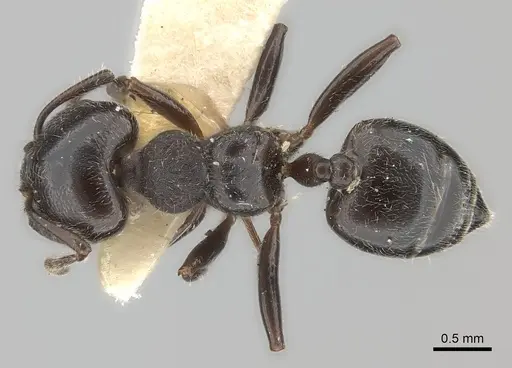
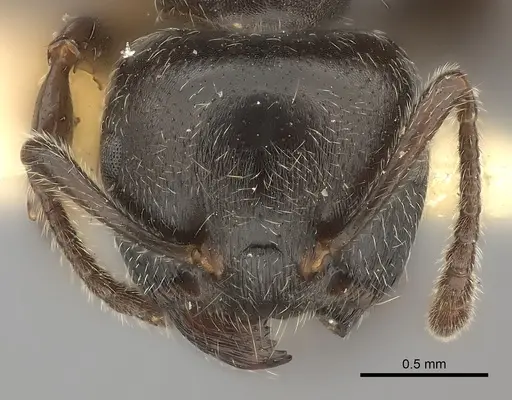
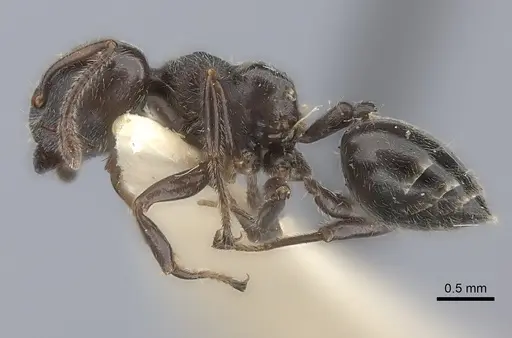
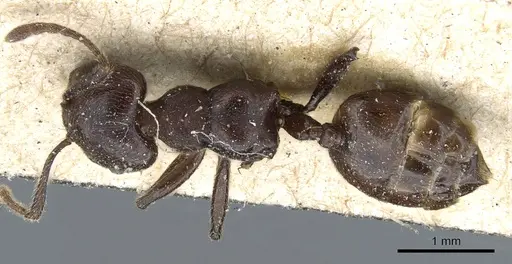
Crematogaster physothorax workers are small ants measuring approximately 3-4mm in total length. They are entirely black with a smooth, shiny body surface, this smooth integument is actually a key identifying feature of the species. The most distinctive physical trait is the strongly swollen propodeum, which rises higher than the promesonotum when viewed from the side. Unlike many Crematogaster species, they completely lack propodeal spines. Workers are monomorphic or only weakly polymorphic, meaning most workers are roughly the same size. The antennae have 11 segments with a 4-segmented club, and the scape reaches the back corner of the head. The dorsal portion of the pronotum has characteristic transverse rugulae that help distinguish this species from the similar C. onusta [1][3].
Natural History and Distribution
This species is native to Southeast Asia, specifically found in the Malay Peninsula, southern Thailand, and southeastern Myanmar. The type locality is Thagata in the Tenasserim region of Myanmar. They are a member of the C. inflata-subgroup within the subgenus Physocrema, and are sister species to C. inflata with an estimated divergence of 6.44 million years ago. They are sympatric with C. inflata in the Malay Peninsula, meaning they occur in the same areas. In their natural habitat, they likely nest in rotting wood or under bark in tropical forest environments, which is typical for Crematogaster species in the Physocrema subgenus. However, nothing has been specifically documented about their biology, nesting behavior, or colony size in the wild [4][1][2].
Housing and Nest Setup
For captive care, provide a nest that mimics their natural rotting wood habitat. Y-tong (AAC) nests, plaster nests, or naturalistic setups with pieces of rotting wood or bark work well. They prefer tight chambers and narrow passages, these ants feel secure in enclosed spaces. The nest material should retain some moisture to maintain moderate-to-high humidity (around 60-80%). Avoid completely dry conditions. A water test tube should always be available. Since this is a tropical species, room temperature may be insufficient, use a heating cable on one side of the nest to maintain 24-28°C. Ensure the setup has good ventilation to prevent mold while maintaining humidity. Standard escape prevention measures work well for this species given their small size.
Feeding and Diet
Like other Crematogaster species, C. physothorax is likely a generalist feeder. In captivity, they should accept sugar sources (honey water, sugar water, or sucrose solutions) as they likely tend aphids and collect honeydew in the wild. For protein, offer small insects like fruit flies, small mealworms, or pinhead crickets. They may also accept nectar or fruit. Feed protein sources 2-3 times per week and keep sugar water available at all times. Remove uneaten prey after 24-48 hours to prevent mold.
Temperature and Seasonal Care
As a tropical species from Southeast Asia, C. physothorax requires warm conditions. Keep the nest area at 24-28°C. A heating cable placed on one side of the nest creates a temperature gradient allowing workers to self-regulate. Place the heating on top of the nest, not underneath, to avoid drying out the substrate too quickly. Since they come from a region with year-round warm temperatures, they likely do not require true hibernation. However, they may show reduced activity during cooler periods or if room temperature drops significantly. Monitor colony behavior, if workers become sluggish, gradually increase temperature. Maintain humidity despite the heat by providing a water source and occasional misting of the outworld.
Behavior and Temperament
Crematogaster physothorax displays typical Crematogaster defensive behaviors. When threatened, workers will raise their abdomen in a characteristic threat display, this is a signature behavior of the genus. They have a smear-type defense mechanism, using a flattened stinger to wipe venom onto enemies rather than piercing. They are moderately aggressive when defending the nest but are not typically aggressive toward keepers during routine care. Workers are active foragers and will readily explore the outworld in search of food. They likely use chemical trails to recruit nestmates to food sources, a common behavior in Crematogaster. Colonies should be housed in secure setups with good escape prevention.
Frequently Asked Questions
How long does it take for Crematogaster physothorax to develop from egg to worker?
The exact development time is unknown, no research exists on this species specifically.
What do Crematogaster physothorax ants eat?
They are generalist feeders. Offer sugar water or honey water constantly, and protein sources like small insects (fruit flies, small mealworms) 2-3 times per week. They likely also accept nectar and fruit.
What temperature do Crematogaster physothorax ants need?
Keep them at 24-28°C. This tropical species from Southeast Asia requires warm conditions. Use a heating cable on one side of the nest to create a gradient, and monitor colony activity to adjust as needed.
Do Crematogaster physothorax ants sting?
They have a smear-type defense mechanism, using a flattened stinger to wipe venom onto enemies rather than piercing. They are not considered dangerous to humans. Their typical defensive behavior is raising the abdomen in a threat display.
How big do Crematogaster physothorax colonies get?
The maximum colony size is unknown, no research documents colony size for this species.
What type of nest is best for Crematogaster physothorax?
Y-tong (AAC), plaster, or naturalistic setups with rotting wood pieces work well. They prefer tight, enclosed chambers that mimic their natural rotting wood habitat. Keep the nest material slightly moist.
Do Crematogaster physothorax ants need hibernation?
Probably not, as a tropical species from Southeast Asia, they likely do not require true hibernation. They may show reduced activity during cooler periods, but a full diapause is not necessary. Keep temperatures stable at 24-28°C year-round.
Are Crematogaster physothorax ants good for beginners?
This species is rated Medium difficulty. While their care requirements are straightforward (warm, humid conditions), the lack of species-specific care data means keepers must rely on general Crematogaster knowledge. They are not the best choice for complete beginners, but experienced antkeepers should find them manageable.
Can I keep multiple Crematogaster physothorax queens together?
The colony structure is unconfirmed for this species. No data exists on whether they are monogyne, polygyne, or oligogyne. Combining unrelated queens is not recommended without documented evidence.
Why is so little known about Crematogaster physothorax care?
This species has not been studied in captivity, and very little field research exists on its biology. The AntWiki explicitly states 'Nothing is known about the biology of C. physothorax.' Most care recommendations are inferred from related species in the same genus and subgenus.
Report an Issue
The current care sheet is based fully on literature. See inconsistencies, or something that's incorrect? Please , it will be resolved after review from an admin. Contributing to the blogs tab also helps providing information, to make us be able to further improve the caresheets. Thank you for your support!
References

Dit verzorgingsblad is gelicentieerd onder CC BY-SA 4.0 .
Community-blogs
Literatuur
Verspreidingskaart laden...Producten laden...