
Crematogaster marthae
- Wetenschappelijke naam
- Crematogaster marthae
- Tribus
- Crematogastrini
- Subfamilie
- Myrmicinae
- Auteur
- Forel, 1892
- Verspreiding
- Gevonden in 1 landen
Introductie
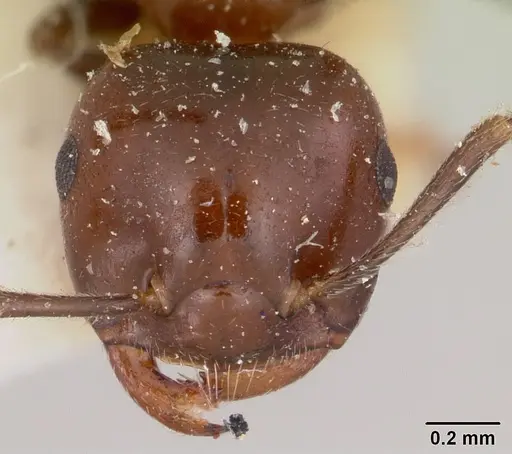
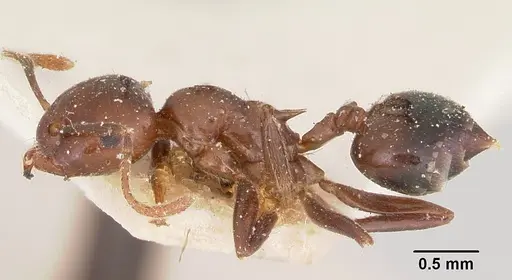
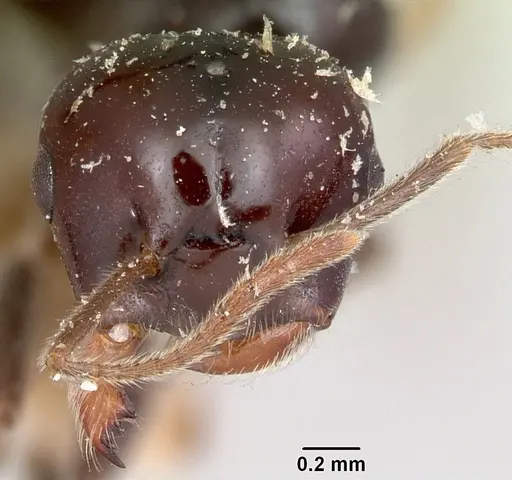
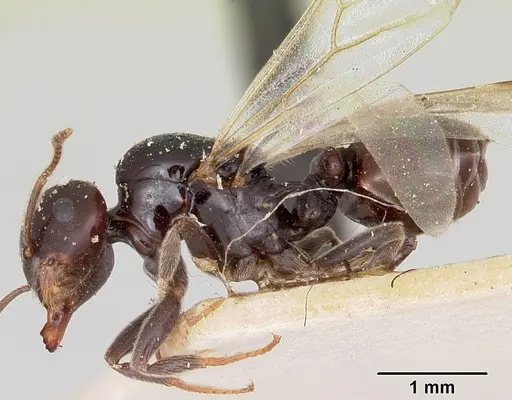
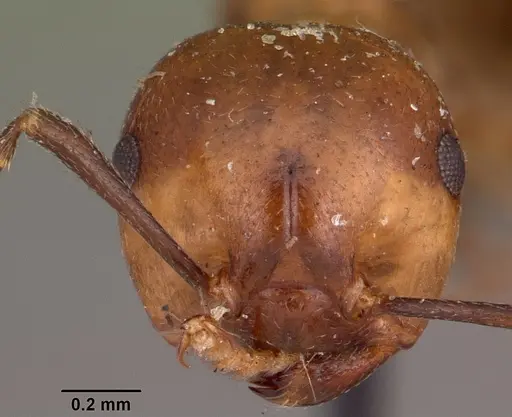
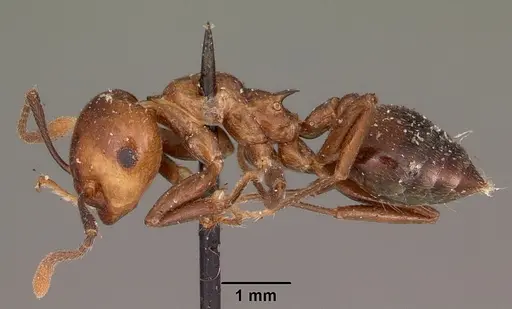
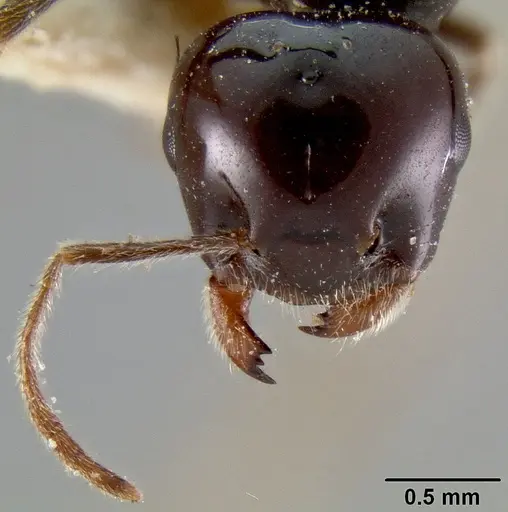
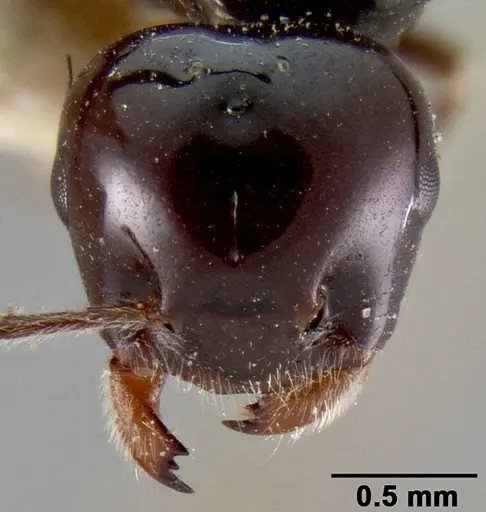
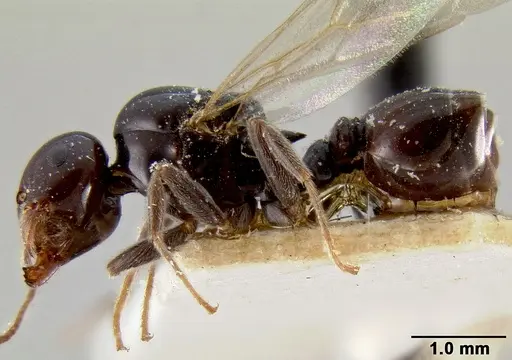
Crematogaster marthae is a small ant species endemic to central Madagascar, belonging to the Crematogaster ranavalonae group. Workers are approximately 2-3mm total length - inferred from Crematogaster genus. They have the characteristic heart-shaped abdomen that acrobat ants are known for, and feature small but stout propodeal spines. Queens are larger at approximately 4-5mm total length - inferred from Crematogaster genus, and have distinctive four-toothed mandibles that set them apart from other species in the subgenus Oxygyne. This species is known only from two locations in central Madagascar: Amparafaravantsiv near Moramanga and Andasibe National Park . This is a poorly studied species with limited available information. The Andasibe area receives high rainfall year-round, suggesting this species prefers consistently moist conditions typical of humid tropical forests.
Quick Summary
- Difficulty: Medium
- Origin & Habitat: Central Madagascar, specifically humid forest areas near Moramanga and Andasibe National Park [1]. This region experiences a tropical highland climate with year-round rainfall.
- Colony Type: Unconfirmed, no specific data on colony structure for this species.
- Size & Growth:
- Queen: Approximately 4-5mm total length, inferred from Crematogaster genus
- Worker: Approximately 2-3mm total length, inferred from Crematogaster genus
- Colony: Size data unavailable, no colony size data exists for this species
- Growth: Unknown, no development data available for this species
- Development: Unknown, no specific development data exists for this species (This is a poorly studied species with no available development data.)
- Antkeeping:
- Temperature: Keep at 24-28°C, typical for tropical Madagascar species. A slight gradient allowing cooler areas around 22°C is beneficial. Avoid temperatures below 20°C or above 32°C.
- Humidity: High humidity required, aim for 70-85%. This species comes from the humid forests of central Madagascar. Keep the nest substrate consistently moist but not waterlogged. Provide a water source.
- Diapause: No, being a tropical species from Madagascar, no hibernation period is required. Maintain stable temperatures year-round.
- Nesting: In captivity, small test tubes or Y-tong nests work well. The small worker size means passages must be very small. They likely nest in rotting wood or under bark in nature, so a naturalistic setup with moist substrate works well.
- Behavior: Typical Crematogaster behavior, workers are active and agile, constantly running and exploring. They have the characteristic acrobat behavior of raising their abdomen over their head when disturbed. Workers are small but not particularly aggressive. Escape prevention is critical due to their small size, they can squeeze through very small gaps. Use fine mesh and tight-fitting lids.
- Common Issues: escape prevention is critical due to small worker size, they can squeeze through gaps that larger ants cannot, high humidity requirements can lead to mold if ventilation is poor, balance is essential, lack of species-specific data means care is based on genus inference, some experimentation may be needed, small colony size at maturity makes them vulnerable to stress, handle gently during transfers
Housing and Nest Setup
Due to their small size, Crematogaster marthae requires careful housing. Test tubes work well for founding colonies, use small diameter tubes with a cotton barrier and water reservoir. For established colonies, small Y-tong style nests with narrow chambers work well. The nest material should retain moisture well, plaster or acrylic with water channels maintains humidity effectively. Provide a small outworld for foraging. Because of their small size, use fluon barriers on the edges of any outworld to prevent escapes. [1]
Feeding and Diet
Like other Crematogaster species, they likely accept a varied diet. Offer sugar water or honey as a constant energy source, these ants are known to tend aphids for honeydew in the wild. For protein, offer small prey items: fruit flies, small pinhead crickets, or other tiny insects. Given their small size, prey should be appropriately sized. Feed protein 2-3 times per week, and keep sugar water available at all times. Remove uneaten prey after 24 hours to prevent mold.
Temperature and Humidity
Maintain temperatures between 24-28°C, reflecting their origin in central Madagascar's tropical forests. A slight temperature gradient is beneficial, allow one area of the nest to be around 22°C while another reaches 28°C so the ants can choose their preferred spot. Humidity should be high at 70-85%. The Andasibe region where they occur is humid year-round, so mist the nest regularly and keep the substrate moist. Use a water source like a test tube with water and a cotton wick. Avoid both drying out and waterlogging, the substrate should feel damp but not soggy. [1]
Behavior and Handling
Crematogaster marthae displays typical acrobat ant behavior, when disturbed, workers raise their abdomen over their thorax and head. This is a defensive display but they are not particularly aggressive. They are active foragers and will quickly explore new areas. The most critical aspect of keeping this species is escape prevention, at around 2-3mm, workers can squeeze through small gaps. Use fine mesh, apply fluon to container edges, and check all connections regularly. When moving colonies, do so gently as small colonies are sensitive to stress. [1]
Colony Development
No specific development data exists for this species. Based on typical Crematogaster patterns, a founding queen would seal herself in a claustral chamber and lay eggs after establishing. Expect the first workers to emerge in several weeks at optimal temperatures. Growth rate is unknown for this species. Colony size data is unavailable.
Frequently Asked Questions
How long does it take for Crematogaster marthae to produce first workers?
Unknown, no specific development data exists for this species. Small tropical ants typically develop faster than temperate species, but exact timing is unconfirmed.
What do Crematogaster marthae ants eat?
They likely accept standard ant foods: sugar water or honey for energy, and small insects like fruit flies or pinhead crickets for protein. Being small, prey items must be appropriately sized.
Do Crematogaster marthae ants sting?
Crematogaster ants have a modified stinger used to smear venom onto enemies rather than piercing flesh. They are not considered dangerous to humans. Their small size means any defensive contact would be barely noticeable.
What temperature do Crematogaster marthae ants need?
Keep them at 24-28°C, typical for tropical species. A slight gradient allowing cooler areas around 22°C is beneficial. Avoid temperatures below 20°C.
Are Crematogaster marthae good for beginners?
This species is moderate difficulty. The main challenge is their small size requiring excellent escape prevention and small prey items. If you have experience with small Myrmicinae ants, it should be manageable.
How big do Crematogaster marthae colonies get?
Colony size is unknown, no data exists for this species in scientific literature.
Do Crematogaster marthae need hibernation?
No, being a tropical species from Madagascar, they do not require hibernation. Maintain stable warm temperatures year-round.
Can I keep multiple Crematogaster marthae queens together?
This is unconfirmed. No specific data exists about colony structure for this species. Most Crematogaster are single-queen, and combining unrelated queens is not recommended without evidence they accept this.
Why are my Crematogaster marthae escaping?
Their small size means they can squeeze through small gaps. Use fine mesh, apply fluon to edges, and check all connections. Even standard ant keeping setups may have gaps too large for them.
What humidity do Crematogaster marthae need?
High humidity at 70-85%, they come from the humid forests of central Madagascar. Keep the nest substrate consistently moist but not waterlogged.
When should I move Crematogaster marthae to a formicarium?
Wait until the colony has established workers and the test tube becomes crowded. For this species, that may take several months. Move them when the test tube becomes crowded or the water reservoir is depleted.
Is Crematogaster marthae aggressive?
They are not particularly aggressive but will defend the nest using their characteristic acrobat display, raising the abdomen. They are more likely to flee than to attack.
Report an Issue
The current care sheet is based fully on literature. See inconsistencies, or something that's incorrect? Please , it will be resolved after review from an admin. Contributing to the blogs tab also helps providing information, to make us be able to further improve the caresheets. Thank you for your support!
References

Dit verzorgingsblad is gelicentieerd onder CC BY-SA 4.0 .
Community-blogs
CASENT0101802
Bekijk op AntWeb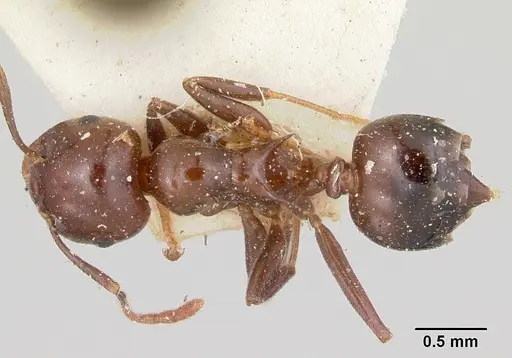
CASENT0101858
Bekijk op AntWeb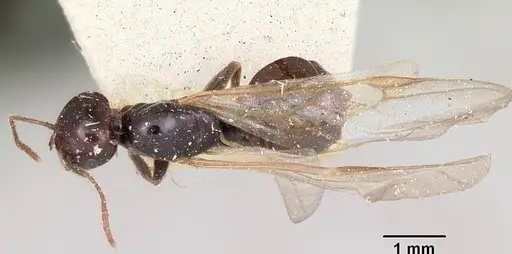
CASENT0102939
Bekijk op AntWeb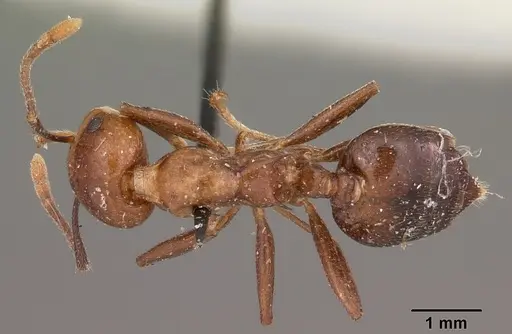
CASENT0171185
Bekijk op AntWeb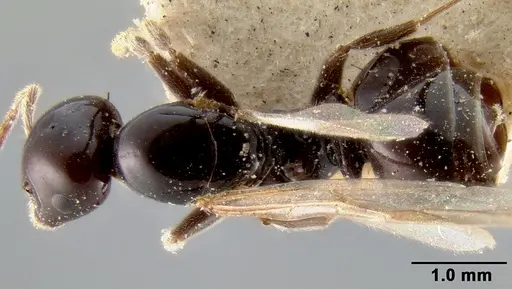
Literatuur
Verspreidingskaart laden...Producten laden...