
Colobopsis reichenspergeri
- Wetenschappelijke naam
- Colobopsis reichenspergeri
- Tribus
- Camponotini
- Subfamilie
- Formicinae
- Auteur
- Santschi, 1926
- Verspreiding
- Gevonden in 0 landen
Introductie
Colobopsis reichenspergeri is a small to medium-sized ant species native to the island of Sumatra in Indonesia. Originally described as Camponotus reichenspergeri in 1926, it was transferred to the genus Colobopsis in 2021 based on taxonomic revisions . Only the worker caste has been described; queens and other castes remain undescribed. This species belongs to the Formicinae subfamily and Camponotini tribe, meaning it lacks a functional sting and instead defends by biting and spraying formic acid from its acidopore. The genus Colobopsis is known for a unique 'head-cork' defense mechanism where workers use their specialized head to seal nest entrances, though this has not been specifically documented for C. reichenspergeri.
Quick Summary
- Difficulty: Unknown
- Origin & Habitat: Sumatra, Indonesia, tropical rainforest environment. The species is known only from the type locality in Sumatra [1][2].
- Colony Type: Colony structure is unconfirmed. Only the worker caste has been described. No species-specific data exists about queen number or colony organization.
- Size & Growth:
- Queen: size data unavailable, queen caste has not been described
- Worker: size data unavailable, measurements not provided in source material
- Colony: Unknown, no colony size data available
- Growth: Unknown
- Development: Unknown, development has not been studied for this species (No species-specific development data exists.)
- Antkeeping:
- Temperature: Keep at tropical room temperature, roughly 24-28°C. This species comes from Sumatra's warm, humid climate.
- Humidity: High humidity is recommended, mimicking their likely rainforest habitat. Keep nest substrate consistently moist but not waterlogged.
- Diapause: No, as a tropical species from Sumatra, they do not require diapause. Keep at warm temperatures year-round.
- Nesting: Colobopsis species are typically arboreal or semi-arboreal, nesting in hollow stems, rotting branches, or under bark. In captivity, a Y-tong (AAC) nest or plaster nest with narrow chambers works well. Provide damp nesting material that can hold humidity.
- Behavior: Behavior is unstudied for this specific species. Based on genus patterns, they may exhibit the characteristic head-cork defense mechanism where workers seal nest entrances with their specialized heads. Escape prevention should be standard, use proper barriers regardless. Formicinae ants lack a sting but can bite and spray formic acid as defense.
- Common Issues: very limited species-specific information makes accurate care recommendations difficult, colony may fail if kept in conditions that don't match their unknown but likely specific habitat needs, no documented feeding preferences, unknown if they prefer sugar, protein, or both, queen and founding behavior completely unstudied, adding a wild-caught queen requires careful observation, lack of established husbandry guidelines means this species is best suited for experienced keepers comfortable with experimental care
Taxonomy and Classification
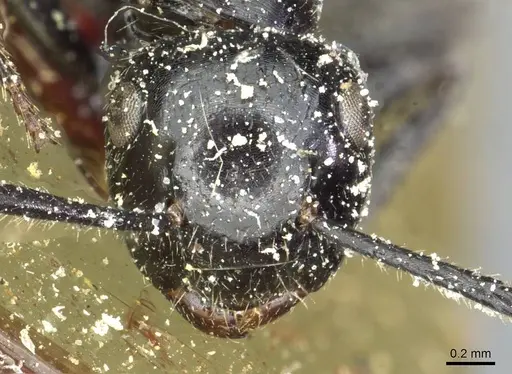
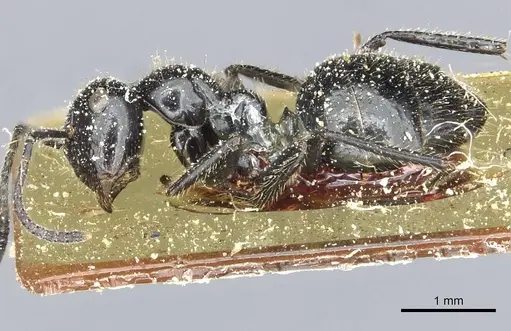
Colobopsis reichenspergeri was originally described by Santschi in 1926 as Camponotus (Myrmotemnus) reichenspergeri based on a worker specimen collected from Sumatra, Indonesia [1]. The species remained in the genus Camponotus for nearly a century until Ward and Boudinot's 2021 taxonomic revision reassigned it to Colobopsis [1]. This transfer was part of a broader effort to separate true Camponotus species from the morphologically similar Colobopsis genus. The holotype worker (specimen CASENT0911793) is housed at the Natural History Museum in Basel, Switzerland [1]. The genus Colobopsis is part of the subfamily Formicinae and tribe Camponotini.
Distribution and Habitat
This species is known only from the island of Sumatra in Indonesia, which is part of the Indomalaya biogeographic region [2]. Sumatra is a large tropical island with a warm, humid climate year-round. The specific microhabitat where the holotype was collected is not detailed in the original description. However, other Colobopsis species are typically found in forested areas where they nest in hollow stems, rotting branches, or under bark.
Defense Mechanism
As a member of the Formicinae subfamily and Camponotini tribe, Colobopsis reichenspergeri lacks a functional sting. Instead, its primary defense involves biting the target and spraying a stream of concentrated formic acid from an acidopore into the wound. Additionally, the genus Colobopsis is known for a unique defensive adaptation: workers have a specialized, flattened head that can act as a living cork to seal nest entrances. This head-cork behavior provides effective defense against predators and intruders. While not specifically documented for C. reichenspergeri, it is characteristic of the genus. [2]
Known Biology
The biology of Colobopsis reichenspergeri is essentially unknown, this is one of the most poorly studied ant species in cultivation. Only the worker caste has been described, and no information exists about queens, males, colony structure, or behavior. The species almost certainly requires tropical conditions given its Sumatran origin. [2]
Keeping This Species - What We Don't Know
Honest antkeeping requires acknowledging what we don't know, and C. reichenspergeri presents significant challenges because so little is documented. We don't know the queen's size, what she eats, how many workers a mature colony has, or even the basic colony structure. What we can do is make educated guesses based on related species: expect tropical temperature needs (24-28°C), high humidity, and likely arboreal or semi-arboreal nesting preferences. Start with standard Formicinae care and adjust based on colony behavior. This species is best considered experimental, document your observations carefully as they may contribute to future husbandry knowledge.
Recommended Care Approach
Given the lack of species-specific information, use a cautious, adaptive approach when keeping Colobopsis reichenspergeri. Housing: Use a Y-tong (AAC) or plaster nest that can maintain humidity. Provide a water reservoir to prevent drying. Temperature: Keep at 24-28°C, avoiding both cool temperatures and excessive heat. Humidity: Maintain consistently damp nest material, these are likely humidity-sensitive. Feeding: Offer both sugar water/honey and protein sources (insects) and observe what the colony prefers. Start with small amounts and adjust based on consumption. Since founding behavior is unknown, if you obtain a queen, provide a small, dark chamber with stable humidity and minimal disturbance.
Frequently Asked Questions
How do I keep Colobopsis reichenspergeri?
Specific care is unknown due to minimal research. Follow a conservative approach: keep at 24-28°C with high humidity in a nest that holds moisture (Y-tong or plaster works well). Offer both sugar and protein foods and observe preferences. This is an experimental species, be prepared to adjust based on colony behavior.
What does Colobopsis reichenspergeri eat?
Feeding preferences are unstudied for this species. Based on typical ant diets, they likely accept both sugar sources (honey, sugar water) and protein (insects). Start with standard ant foods and note what gets consumed. Remove uneaten food to prevent mold.
How big do Colobopsis reichenspergeri colonies get?
Unknown, no colony size data exists for this species. Related Colobopsis species vary in colony size. Expect moderate colony growth over time.
Is Colobopsis reichenspergeri good for beginners?
No, this species is not recommended for beginners due to the complete lack of species-specific care information. The extensive unknowns make it difficult to troubleshoot problems. Experienced keepers who can adapt care experimentally would be more suited to attempt this species.
Do Colobopsis reichenspergeri need hibernation?
No. As a tropical species from Sumatra, they do not require a diapause period. Keep them at warm, stable tropical temperatures year-round.
How long does it take for Colobopsis reichenspergeri to develop from egg to worker?
Unknown, no development data exists for this species.
Where is Colobopsis reichenspergeri found?
Only known from Sumatra, Indonesia. The species was described in 1926 and remains known only from the type locality.
Can I keep multiple Colobopsis reichenspergeri queens together?
Unknown, colony structure has not been studied. Do not attempt combining unrelated queens without research to support it.
What nest type is best for Colobopsis reichenspergeri?
Based on genus patterns, they likely prefer arboreal or semi-arboreal nesting in hollow stems. In captivity, a Y-tong (AAC) or plaster nest with good humidity retention works well.
Report an Issue
The current care sheet is based fully on literature. See inconsistencies, or something that's incorrect? Please , it will be resolved after review from an admin. Contributing to the blogs tab also helps providing information, to make us be able to further improve the caresheets. Thank you for your support!
References

Dit verzorgingsblad is gelicentieerd onder CC BY-SA 4.0 .
Community-blogs
CASENT0911793
Bekijk op AntWeb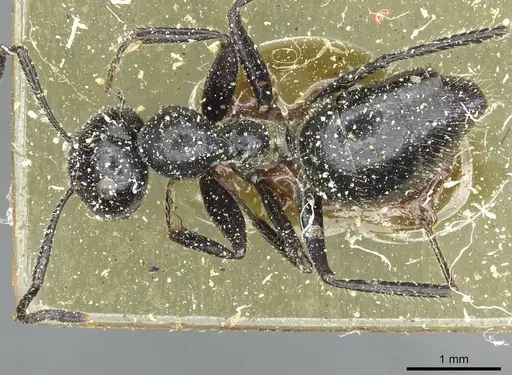
Literatuur
Verspreidingskaart laden...Producten laden...