
Cataglyphis aphrodite
- Wetenschappelijke naam
- Cataglyphis aphrodite
- Tribus
- Formicini
- Subfamilie
- Formicinae
- Auteur
- Salata <i>et al.</i>, 2023
- Verspreiding
- Gevonden in 1 landen
Introductie
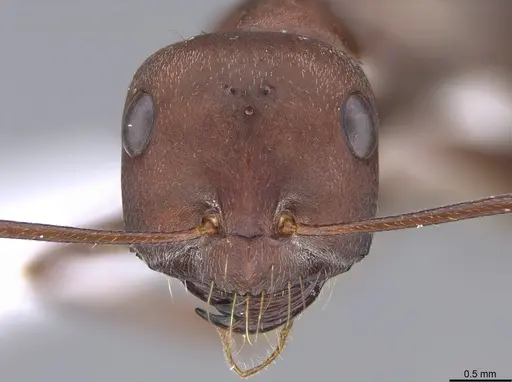
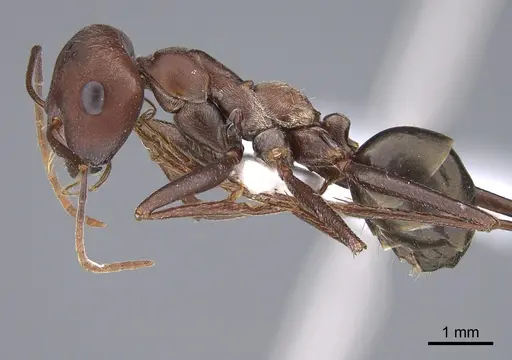
Cataglyphis aphrodite is a newly described species (2023) endemic to Cyprus, belonging to the Cataglyphis nodus complex within the bicolor species group . These are striking bicolored ants with a red head, mesosoma, petiole, legs, and antennae contrasting against a black gaster . Workers are of medium size - total length is not directly reported in the literature, but based on related Cataglyphis species they likely measure around 5-8 mm. The queen is slightly larger. This is a thermophilic ant adapted to hot, sunny Mediterranean conditions - workers are most active during the hottest part of the day, foraging in open areas around their ground nests .
Quick Summary
- Difficulty: Medium
- Origin & Habitat: Endemic to Cyprus, found from sea level up to 1196 m altitude in pine and cedar forests. Prefers sunny, open habitats like roadsides, salt lake coasts, dry riverbanks, and dry meadows with Mediterranean bushes. Also noted in urban areas on grasses and in gardens [1][2].
- Colony Type: Inferred to be monogyne (single queen colonies) based on type series containing only one queen [1].
- Size & Growth:
- Queen: ~7-9 mm total length (estimated from related Cataglyphis species, total length not directly measured in the literature)
- Worker: ~5-8 mm total length (estimated from related Cataglyphis species, the research only reports mesosomal length, not total length)
- Colony: Up to several hundred workers (estimated from related Cataglyphis species, colony size not yet documented for this species)
- Growth: Moderate
- Development: Estimated 6-10 weeks at warm temperatures based on related Cataglyphis species. Exact timing is not documented for this species. (Development likely faster at higher temperatures given their thermophilic nature.)
- Antkeeping:
- Temperature: Likely need warm conditions around 26-32°C based on their thermophilic activity in the wild [1]. Use a heating cable on part of the nest to create a temperature gradient. Room temperature alone (20°C) may be too cool for optimal development.
- Humidity: Low to moderate. These are dry habitat ants from Mediterranean Cyprus. Keep nest substrate mostly dry, but provide a small water reservoir for drinking. Avoid damp conditions.
- Diapause: Likely required based on their Mediterranean climate. Provide a cooling period of 2-3 months at 10-15°C during winter. This is an inference as diapause has not been specifically studied for this species.
- Nesting: Ground-nesting species [1]. In captivity, use a naturalistic setup with soil/sand substrate or a Y-tong/plaster nest with dry conditions. Provide sufficient substrate depth (at least 5 cm) for digging. Connect to a spacious outworld for foraging.
- Behavior: Active foragers that prefer high temperatures, expect most activity during the warmest part of the day. Workers are fast and cover large areas around the nest entrance in search of food. Not aggressive toward humans but will spray formic acid (common to Formicinae) if their nest is disturbed. Medium-sized ants (about 5-8 mm), standard escape barriers are usually sufficient, but ensure tight seals.
- Common Issues: high temperature requirements, colonies may fail if not kept warm enough (26-32°C ideal), cool rooms can stunt growth or kill the queen., limited captive data, this species was only described in 2023 and has practically no documented husbandry, expect to experiment with conditions., diapause needs, skipping winter rest likely affects colony health and future reproduction, but exact duration is unknown., escape risk, although not tiny, their speed and small size (approx. 5-8 mm) mean standard barriers may not be enough if not properly maintained, use fluon or oil barriers., substrate depth, insufficient depth for digging can stress the queen during founding and limit colony expansion later.
Report an Issue
The current care sheet is based fully on literature. See inconsistencies, or something that's incorrect? Please , it will be resolved after review from an admin. Contributing to the blogs tab also helps providing information, to make us be able to further improve the caresheets. Thank you for your support!
References

Dit verzorgingsblad is gelicentieerd onder CC BY-SA 4.0 .
Community-blogs
CASENT0923726
Bekijk op AntWeb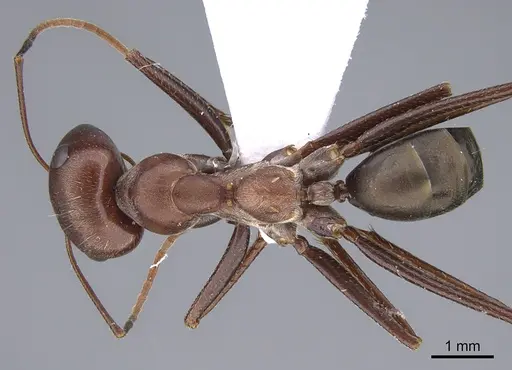
Literatuur
Verspreidingskaart laden...Producten laden...