
Carebara reticulata
- Wetenschappelijke naam
- Carebara reticulata
- Tribus
- Crematogastrini
- Subfamilie
- Myrmicinae
- Auteur
- Fernández, 2004
- Verspreiding
- Gevonden in 1 landen
Introductie
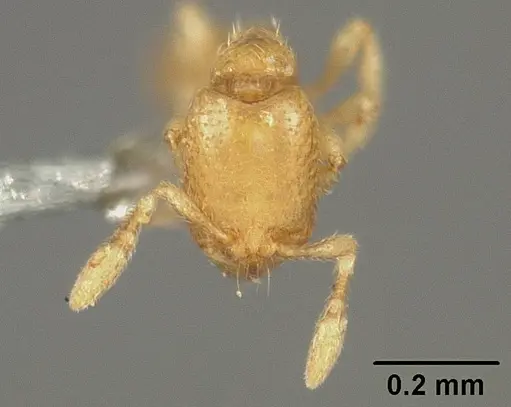
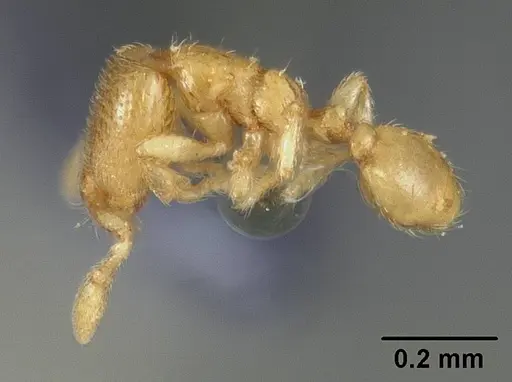
Carebara reticulata is a tiny myrmicine ant species native to the mountains of central Colombia. Workers measure just 1.24-1.28mm in total length, making them among the smaller ants you can keep . They have a distinctive reddish-brown coloration with dense reticulation on the sides of their thorax that extends to the petiole and postpetiole - this is the key identifying feature that separates them from other Carebara species in the lignata complex . The queen is substantially larger at 4.9mm total length . This species is known only from the Central Cordillera of Colombia, specifically the Quindío department, where they live in soil and leaf litter at elevations between 1200-1600m, particularly in coffee agroecosystems with shade trees .
Quick Summary
- Difficulty: Expert
- Origin & Habitat: Endemic to the Central Cordillera mountains in Quindío, Colombia, found at 1200-1600m elevation in cloud forest and coffee agroecosystem environments [1][2][4]
- Colony Type: Colony structure is unconfirmed, only known from worker and queen specimens collected in Winkler traps from leaf litter [1]
- Size & Growth:
- Antkeeping:
- Temperature: Unknown, their cloud forest habitat at 1200-1600m elevation suggests they prefer cooler conditions than typical tropical ants. Start around 18-22°C and observe colony behavior.
- Humidity: High humidity likely required, their native habitat is cloud forest with consistent moisture. Keep substrate consistently damp but not waterlogged.
- Diapause: Unknown, being from a tropical mountain environment, they may not require true hibernation
- Nesting: In nature they live in soil and leaf litter. In captivity, a small test tube setup with moist substrate or a small Y-tong/plaster nest with tight chambers scaled to their tiny size would work.
- Behavior: Behavior is unstudied. Based on their tiny size and leaf-litter habitat, they are likely cryptic foragers that move slowly and carefully. Workers likely forage individually for small prey and honeydew. Their minute size means any sting would be negligible to humans.
- Common Issues: no captive husbandry information exists for this species, their tiny size makes them extremely difficult to house and observe properly, escape prevention is critical, they can squeeze through standard mesh, temperature and humidity requirements are inferred, not confirmed, this species has never been kept in captivity before
Species Identification and Range
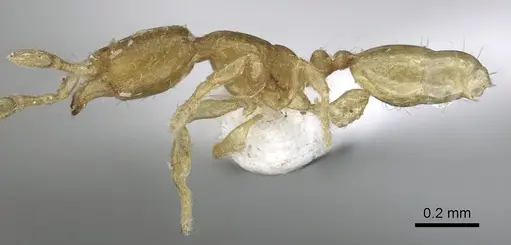
Carebara reticulata is a member of the Carebara lignata species complex and can be identified by its distinctive dense reticulation pattern on the sides of the thorax that extends to the petiole, postpetiole, and dorsum of the petiolar peduncle [1]. The ventral spine of the petiole is strong and directed forward, which is visible in specimens with the petiole raised [1]. This species is known only from the Central Cordillera of Colombia, specifically from the Quindío department at elevations between 1200-1600m [2]. Type specimens were collected from Winkler traps in forest and coffee plantation environments with shade trees [1]. The species was described by Fernando Fernández in 2004 based on worker specimens [1][2].
Size and Morphology
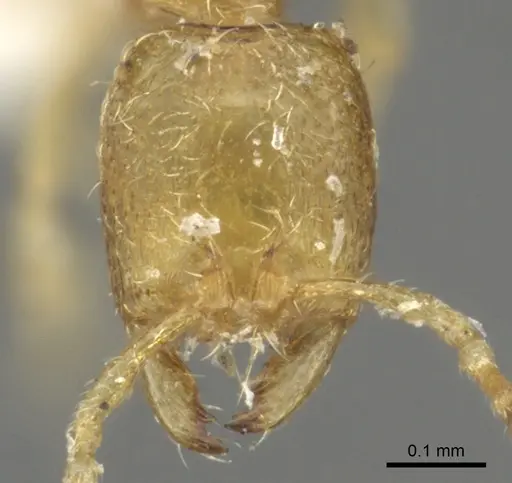
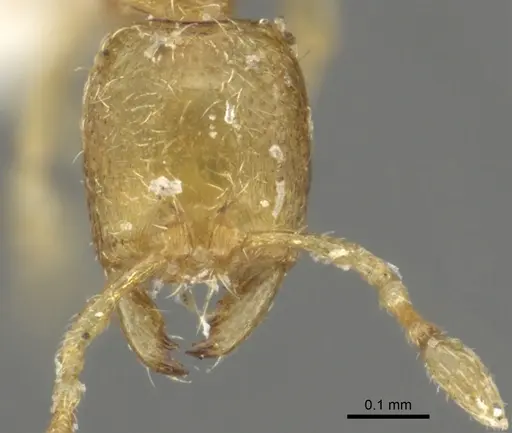
This is a tiny ant species, workers measure only 1.24-1.28mm in total length [1]. The queen is substantially larger at 4.9mm total length [2]. Workers have a slightly longer-than-wide head with a faintly concave posterior border, and their scapes fail to reach the vertexal border by about one-third of the head length [1]. The body is smooth and shining, with dense punctures on the head and fine reticulation on the sides of the alitrunk, petiole, and postpetiole [1]. They have reddish-brown coloration [2]. This minute size means they occupy a niche similar to other tiny leaf-litter ants, foraging in confined spaces and requiring very small prey items.
Natural Habitat and Collection
Carebara reticulata has been collected exclusively from Winkler traps in soil and leaf litter samples in coffee agroecosystems in the mountains of central Colombia [1]. The elevation range of 1200-1600m places them in cloud forest transitional zones where humidity is consistently high [2]. The coffee plantations where they've been found include shade trees, indicating the ants prefer humid, shaded environments with organic debris [1]. This is typical of cryptic leaf-litter ant species that are rarely seen on the surface. The limited distribution to a specific mountain range in Colombia makes this a geographically restricted species [4][5].
Keeping Considerations
This species is not recommended for beginners due to the complete lack of captive husbandry information. There are no established care protocols, and everything would need to be developed through careful experimentation. Based on their natural habitat, they likely require high humidity and cooler temperatures than typical tropical ants. Their tiny size means they require very small enclosures with tight-fitting lids and fine mesh for ventilation, standard ant keeping setups may allow escapes. Feeding would likely require very small prey items like springtails, fruit flies, or other micro-arthropods. Sugar sources may be accepted but this is unconfirmed. If you obtain a colony, document your observations carefully as any captive data would be valuable for advancing knowledge of this poorly studied species.
Frequently Asked Questions
How long do Carebara reticulata workers live?
This has not been studied. Typical myrmicine workers live several months to a year in captivity, but specific lifespan data does not exist for this species.
What do Carebara reticulata ants eat?
Unconfirmed. Based on genus patterns, they likely eat small insects, honeydew, and may tend aphids. Their tiny size means prey must be very small, springtails, fruit flies, or micro-arthropods would be appropriate to offer.
Are Carebara reticulata good for beginners?
No. This is an essentially unstudied species in captivity with no established care protocols. There are no captive colonies known to exist in the antkeeping hobby. This species would be suitable only for expert antkeepers interested in pioneering husbandry of poorly studied species.
Do Carebara reticulata ants sting?
Given their minute size, any sting would be negligible to humans. Their stingers are present but too small to penetrate human skin meaningfully.
How big do Carebara reticulata colonies get?
Unknown. The maximum colony size has not been documented for this species.
What temperature do Carebara reticulata ants need?
Not definitively known. Based on their cloud forest habitat at 1200-1600m elevation in Colombia, they likely prefer cooler temperatures than typical tropical ants. Start around 18-22°C and observe colony activity.
Do Carebara reticulata need hibernation?
Unknown. Being from a tropical mountain environment, they likely do not require true hibernation but may have reduced activity during seasonal changes.
Can I keep multiple queens together?
Not documented. The colony structure of this species has not been studied. Without data on their natural colony founding and structure, combining unrelated queens is not recommended.
How long until first workers in Carebara reticulata?
Unknown. No development data exists for this species.
Where is Carebara reticulata found?
Only in the Central Cordillera mountains of Quindío, Colombia, at elevations between 1200-1600m. They are known from forest leaf litter and coffee agroecosystems with shade trees.
Is Carebara reticulata invasive anywhere?
No. This species has a very restricted native range in central Colombia and has not been documented as invasive anywhere.
Why is Carebara reticulata so hard to find?
They are cryptic leaf-litter ants that live in soil and decomposing organic material, rarely coming to the surface. They are collected primarily through Winkler extraction of leaf litter samples, which is why they were only described in 2004 despite being in a well-studied region of Colombia.
Report an Issue
The current care sheet is based fully on literature. See inconsistencies, or something that's incorrect? Please , it will be resolved after review from an admin. Contributing to the blogs tab also helps providing information, to make us be able to further improve the caresheets. Thank you for your support!
References

Dit verzorgingsblad is gelicentieerd onder CC BY-SA 4.0 .
Community-blogs
CASENT0902399
Bekijk op AntWeb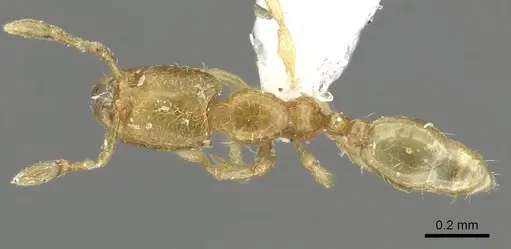
USNMENT00447122
Bekijk op AntWeb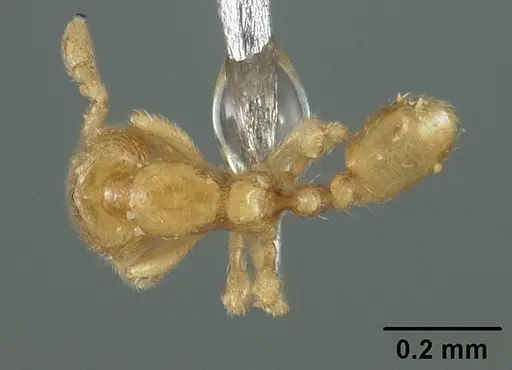
Literatuur
Verspreidingskaart laden...Producten laden...