
Cardiocondyla verdensis
- Wetenschappelijke naam
- Cardiocondyla verdensis
- Tribus
- Crematogastrini
- Subfamilie
- Myrmicinae
- Auteur
- Seifert, 2023
- Verspreiding
- Gevonden in 0 landen
Introductie
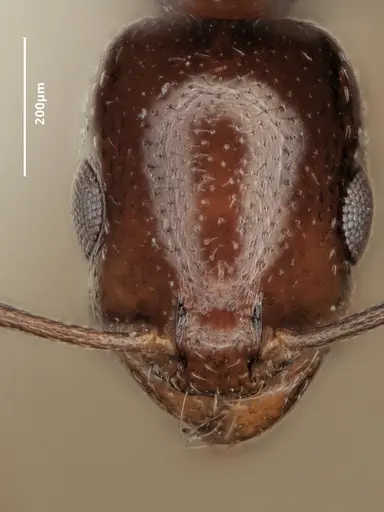
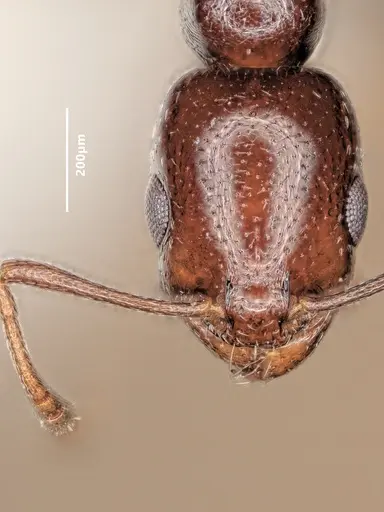
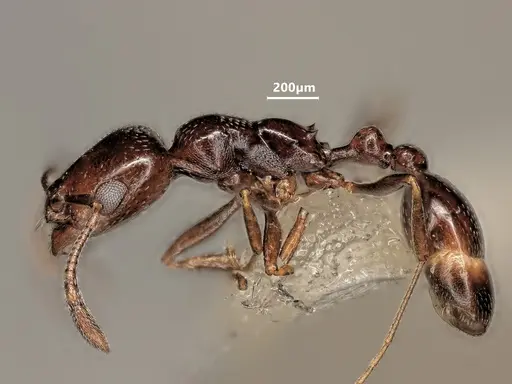
Cardiocondyla verdensis is an extremely tiny ant species recently described in 2023,belonging to the batesii species group. Workers are among the smallest ants in the genus, with a dark brown coloration throughout their body. They have notably long antennae and large eyes relative to their tiny size. Their head is unusually elongated compared to other Cardiocondyla in the batesii group. This species is endemic to the island of Sao Nicolao in Cape Verde, where it was discovered in a garden with trees at 385 meters elevation within a semidesert landscape. It appears to have evolved extreme morphological features through genetic bottlenecking after its ancestors were introduced to the island, likely from Africa, sometime since Portuguese colonization in the 15th century .
Quick Summary
- Difficulty: Unknown, newly described species with no captive husbandry data
- Origin & Habitat: Cape Verde island of Sao Nicolao (16.588°N,24.328°W) at 385m elevation. Found in a garden with trees within a semidesert landscape. This is an endemic island species that likely arrived via human introduction from Africa [1][2][3].
- Colony Type: Unknown, only two specimens (holotype and paratype) have ever been collected. Most Cardiocondyla species are monogyne (single queen colonies), but colony structure for C. verdensis specifically has not been documented [1].
- Size & Growth:
- Queen: Unknown, queen caste has not been described or collected [1]
- Worker: Workers are extremely tiny, estimated at 1.5-2mm based on Cardiocondyla genus patterns (no total length measurement available) [1][2]
- Colony: Unknown, colony size has not been documented [1]
- Growth: Unknown, no development data exists for this species
- Development: Unknown, no development data exists for this species. (This is a newly described species with essentially no biological data.)
- Antkeeping:
- Temperature: Likely prefers warm conditions similar to other Cardiocondyla species. Cape Verde has a subtropical arid climate with year-round warmth. Start around 24-28°C and observe colony activity. A gentle heat gradient allows ants to regulate their temperature [3].
- Humidity: Cape Verde is semidesert to arid, so likely prefers drier conditions than many ants. Keep nest substrate moderately dry to slightly moist, with some variation available. Avoid overly damp conditions [3].
- Diapause: Unknown, no seasonal data exists. Cape Verde has minimal seasonal temperature variation, so this species may not require a diapause period. Monitor for natural activity cycles [3].
- Nesting: No specific nesting data exists. Related Cardiocondyla species often nest in soil, under stones, or in small cavities. A small test tube setup would be appropriate for their tiny size. The semidesert garden habitat suggests they tolerate drier conditions [3].
- Behavior: No behavior has been documented for this species. Cardiocondyla ants are generally active foragers that hunt small prey and may tend aphids for honeydew. They are known to be somewhat aggressive for their tiny size and have functional stingers, though the sting is too small to affect humans. Their extremely small size means escape prevention must be excellent, they can squeeze through gaps invisible to the naked eye. Use fine mesh barriers and tightly sealed setups [3].
- Common Issues: no captive husbandry data exists, this is one of the least-studied ant species in the hobby, extremely small size makes escape likely without proper barriers, no information on accepted foods, start with small live prey and sugar sources, colony founding may be difficult given no queen or colony specimens have ever been kept, no data on temperature tolerance or humidity preferences specific to this species
Species Discovery and Rarity
Cardiocondyla verdensis is an exceptionally rare species in both the scientific literature and the antkeeping hobby. It was only formally described in 2023 by Bernhard Seifert, making it one of the newest ant species to receive a scientific name. The entire known population consists of just two specimens, the holotype and a single paratype, both collected in 2003 from the island of Sao Nicolao in Cape Verde. This species represents an interesting case of island evolution, where a small founding population underwent genetic bottlenecking that produced extreme morphological characteristics. It has the longest head and longest antennae (scapes) of any species in the batesii group, features that distinguish it clearly from its closest relatives [1][2].
Why This Species Is Challenging to Keep
C. verdensis presents unique challenges for antkeepers. First, no live colonies have ever been exported or maintained in captivity, the species is known only from two museum specimens. Second, the workers are extremely tiny, making them difficult to house, feed, and observe. Third, we have no information about their queen, their founding behavior, what they eat, or how fast their colonies grow. This is essentially an unstudied species in terms of husbandry. If you obtain this species, you would be pioneering its captive care entirely through observation and experimentation rather than following established protocols [1].
Housing Recommendations
Given their minute size, C. verdensis requires specialized housing. A standard test tube setup would work, but ensure the cotton is packed tightly enough to prevent escape, these ants are small enough to potentially squeeze through standard cotton fibers. Alternatively, a small nest with very narrow chambers scaled to their tiny size would be appropriate. The nest should be kept at room temperature or slightly above, around 24-28°C, with low to moderate humidity reflecting their semidesert origin. Escape prevention is critical, even standard ant farm setups may have gaps too large to contain them. Use fine mesh on any ventilation holes [3].
Feeding and Diet
No specific feeding data exists for this species. Based on general Cardiocondyla biology, they likely function as omnivores that hunt small arthropods and collect honeydew from aphids or scale insects. Start with tiny live prey such as springtails, fruit flies, or other micro-arthropods. You might also offer sugar water or honey diluted with water, though acceptance is uncertain. Given their tiny size, any prey items must be appropriately scaled, even a fruit fly would be a significant meal for these ants. Feed small amounts frequently and remove uneaten prey to prevent mold [3].
Comparison to Related Species
Cardiocondyla verdensis belongs to the batesii species group, which contains several other small, dark-colored ants. Its closest known relative appears to be a dark, shiny morph of Cardiocondyla nigra, which occurs on the nearby island of Sao Vicente,50km away. Other Cardiocondyla species in the hobby include C. emeryi, C. fajumensis, and C. nigra, all of which are small, active ants that typically form colonies of a few hundred workers. However, C. verdensis is distinct in its extreme morphometric values and isolated island distribution. If you have experience with other Cardiocondyla species, use that as a starting point, but expect this species may have unique requirements [1][2][3].
Frequently Asked Questions
Can I keep Cardiocondyla verdensis in captivity?
It is extremely unlikely you will find this species for sale or be able to acquire it. Only two specimens have ever been collected, both in 2003,and no live colonies are known to exist in captivity. This is one of the rarest ant species in the world to keep.
How big do Cardiocondyla verdensis workers get?
Workers are extremely tiny, estimated at 1.5-2mm based on Cardiocondyla genus patterns. No definitive body measurement exists for this species, but it is among the smallest Cardiocondyla known. This makes them one of the smallest ant species kept in the hobby, requiring specialized housing and escape prevention [1][2].
What do Cardiocondyla verdensis eat?
No feeding data exists for this specific species. Based on related Cardiocondyla, they likely accept small live prey (springtails, fruit flies) and sugar sources (honeydew, sugar water). Start with tiny live prey appropriately sized for their minute size.
Do Cardiocondyla verdensis ants sting?
Cardiocondyla ants have functional stingers, but given the workers are extremely tiny, any sting would be far too small to penetrate human skin. They are not considered dangerous to humans [3].
What temperature should I keep Cardiocondyla verdensis at?
No specific temperature data exists. Cape Verde has a warm subtropical climate, so start around 24-28°C and observe colony behavior. A gentle heat gradient allows ants to self-regulate. This is an educated estimate based on their origin.
How long does it take for Cardiocondyla verdensis to develop from egg to worker?
Unknown, no development data exists for this species.
Are Cardiocondyla verdensis good for beginners?
No. This species is not available in the antkeeping hobby, and even if it were, its extreme rarity, tiny size, and complete lack of husbandry data would make it unsuitable for beginners. Start with more established species like Lasius niger or Messor barbarus.
Where does Cardiocondyla verdensis live in the wild?
This species is only known from the island of Sao Nicolao in Cape Verde, off the west coast of Africa. It was collected at 385m elevation in a garden with trees within a semidesert landscape. It is considered an endemic island species [1][2].
Can I keep multiple Cardiocondyla verdensis queens together?
No information exists about colony structure for this specific species. Most Cardiocondyla form single-queen colonies, but polygyny has been documented in some related species. Without any data on this species, combining queens is not recommended.
Do Cardiocondyla verdensis need hibernation?
Unknown, no seasonal data exists. Cape Verde has minimal seasonal temperature variation, so this species may not have evolved a diapause requirement. Monitor for natural activity cycles and adjust care accordingly.
Report an Issue
The current care sheet is based fully on literature. See inconsistencies, or something that's incorrect? Please , it will be resolved after review from an admin. Contributing to the blogs tab also helps providing information, to make us be able to further improve the caresheets. Thank you for your support!
References

Dit verzorgingsblad is gelicentieerd onder CC BY-SA 4.0 .
Community-blogs
ANTWEB1048546
Bekijk op AntWeb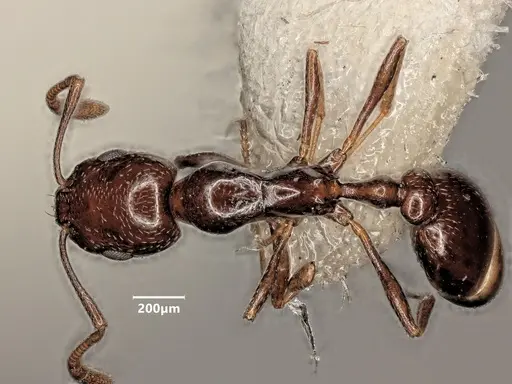
Literatuur
Verspreidingskaart laden...Producten laden...