
Cardiocondyla kushanica
- Wetenschappelijke naam
- Cardiocondyla kushanica
- Tribus
- Crematogastrini
- Subfamilie
- Myrmicinae
- Auteur
- Pisarski, 1967
- Verspreiding
- Gevonden in 0 landen
Introductie
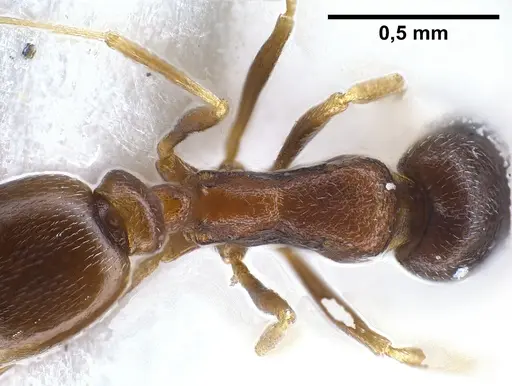
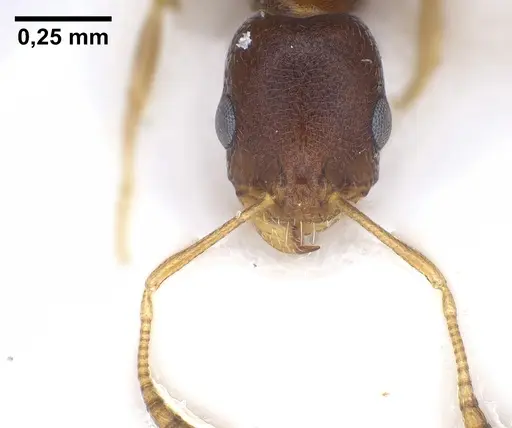
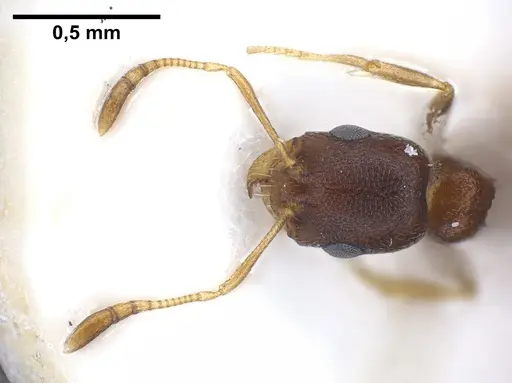
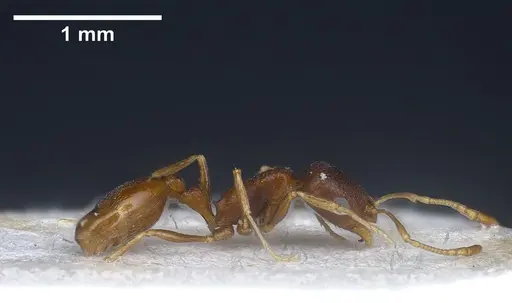
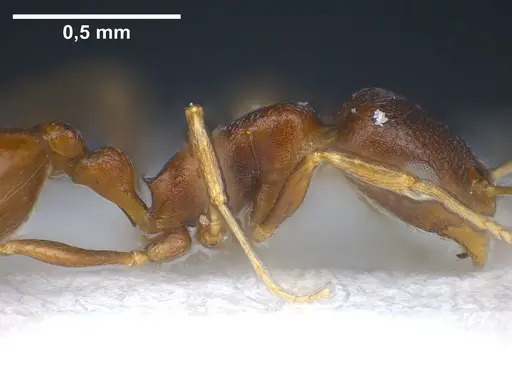
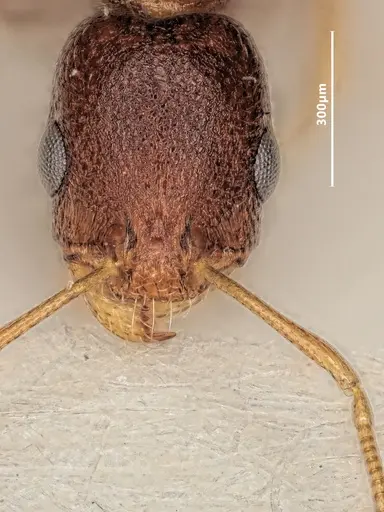
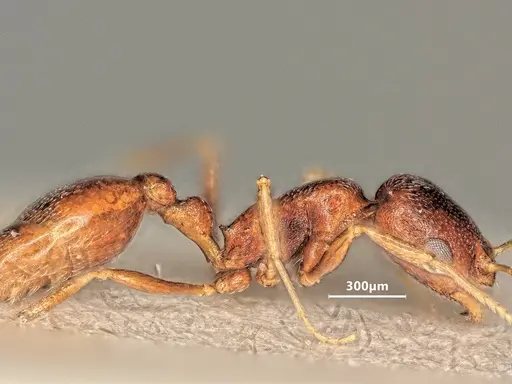
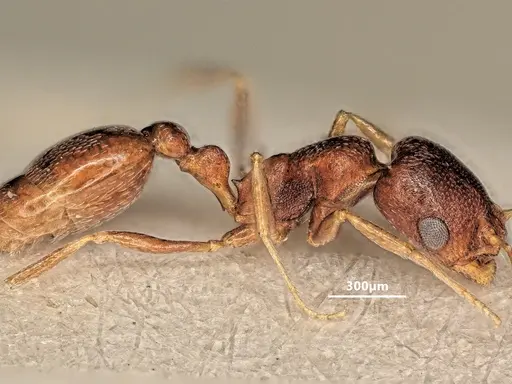
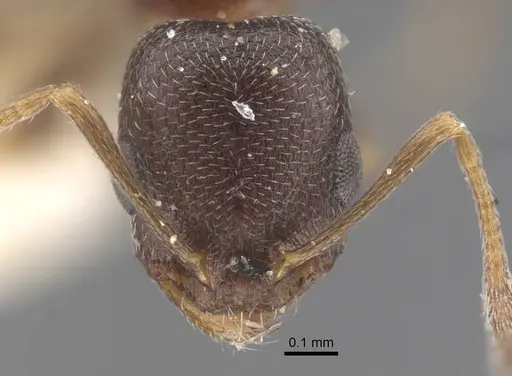
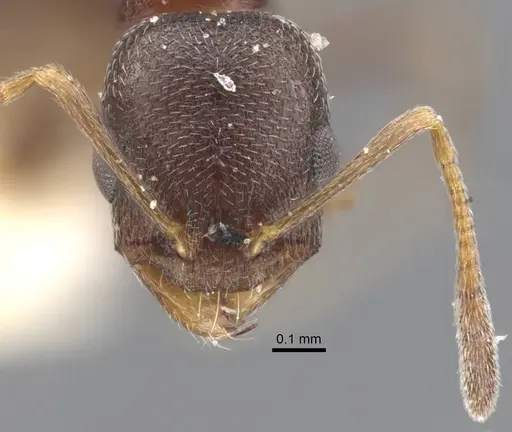
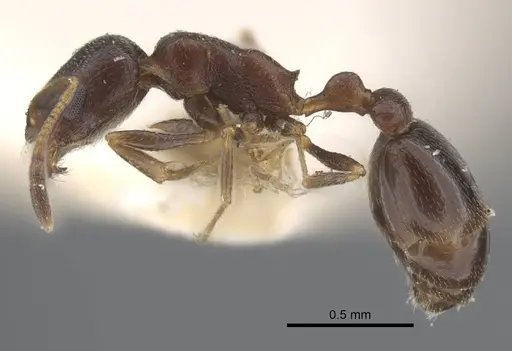
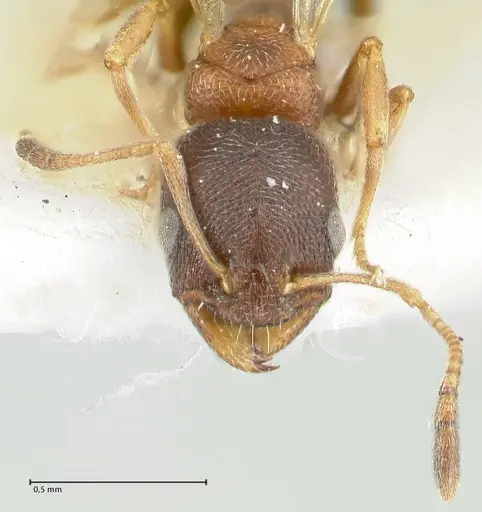
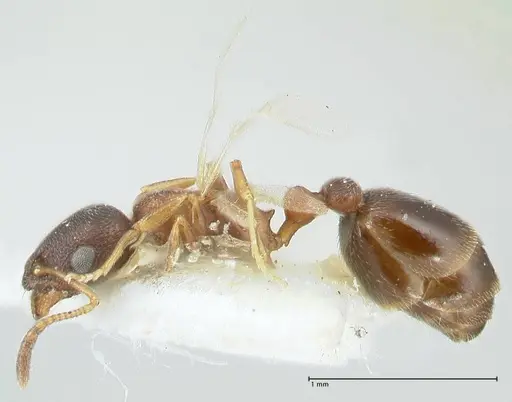
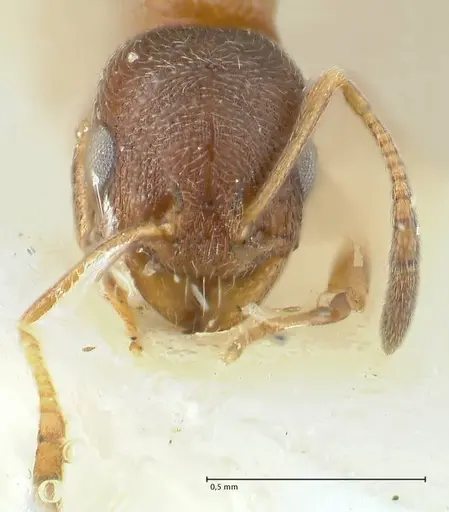
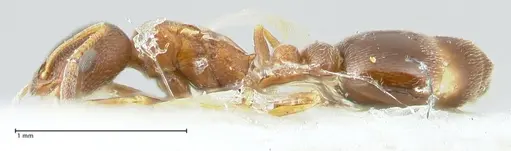
Cardiocondyla kushanica is a tiny ant species belonging to the batesii species group, known only from Afghanistan with unconfirmed reports from Iran and Turkmenistan. Workers are very small, among the smallest Cardiocondyla species in the region, with a moderately elongated head, large eyes, and a high postpetiole roughly twice as wide as the petiole. The most distinguishing feature is their very long body hairs (pubescence) on the abdominal segments, which helps separate them from related species. Queens are slightly larger than workers and uniquely brachypterous - they have reduced, non-functional wings and cannot fly. This species was described from specimens collected at Darountah near Jalalabad, Afghanistan at 592 meters elevation.
Quick Summary
- Difficulty: Unknown, this species has never been kept in captivity
- Origin & Habitat: Known only from the type locality of Darountah, Afghanistan (34.477°N, 70.365°E) at 592m elevation, with unconfirmed reports from Iran and Turkmenistan [1][2]. The region has a continental climate with hot summers and cold winters.
- Colony Type: Colony structure is unconfirmed. Most Cardiocondyla species form single-queen colonies, but this has not been documented for C. kushanica specifically.
- Size & Growth:
- Queen: ~2-2.5 mm, inferred from Cardiocondyla genus patterns (no total length data available)
- Worker: ~1.5-2 mm, inferred from Cardiocondyla genus patterns (no total length data available)
- Colony: Unknown, only type specimens have been studied
- Growth: Unknown
- Development: Unknown, no development data exists for this species (Development timeline is unstudied.)
- Antkeeping:
- Temperature: Unconfirmed. The Afghan habitat has a continental climate with extreme temperatures. Room temperature (20-24°C) is a reasonable starting point.
- Humidity: Unconfirmed. The natural habitat receives low annual precipitation. Provide a humidity gradient with both moist and dry areas.
- Diapause: Unknown. Temperate Cardiocondyla species may require a winter rest period, but specific requirements are unstudied.
- Nesting: No nesting data exists. Related species in the batesii group typically nest in soil or under stones in open habitats.
- Behavior: Behavior is completely unstudied in captivity. Based on genus patterns, they are likely docile. Their tiny size means escape prevention is critical, standard mesh barriers may not contain them. Queens are brachypterous so mating likely occurs on the ground or within the nest.
- Common Issues: no captive husbandry information exists, this species has never been kept in captivity, tiny size makes escape prevention extremely difficult, standard mesh may not contain them, colony size is unknown, winter care requirements are completely unconfirmed, no information on acceptable foods or feeding schedules
Species Identification and Distinction
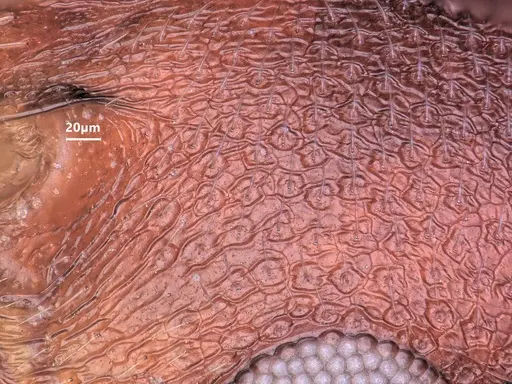
Cardiocondyla kushanica belongs to the batesii species group, which contains several similar-looking tiny ants. The species can be distinguished by a combination of very long body hairs (pubescence) on the abdominal segments, a high and wide postpetiole, and characteristic head sculpture with irregular foveolae (pit-like structures). Workers are very small, among the smallest Cardiocondyla in the region. Queens are uniquely brachypterous, they have reduced, non-functional wings and cannot fly, which is unusual among Cardiocondyla queens. The type specimens were collected from Darountah near Jalalabad, Afghanistan in January 1958 [1][3].
Distribution and Habitat
This species is known only from the type locality of Darountah in Afghanistan, with unconfirmed reports from Iran and Turkmenistan [1][2]. The type locality sits at 592 meters elevation near Jalalabad. This area has a continental climate with extreme temperatures, summers are very hot and winters are cold. Annual precipitation is low, typically under 300mm. The ants were collected in January, suggesting they are active during winter months in the lowlands. No specific microhabitat information exists, but the batesii group species typically nest in open ground habitats under stones or in soil.
Why This Species Is Rare in Cultivation
Cardiocondyla kushanica has never been documented in the antkeeping hobby. There are several reasons for this: the species has an extremely limited known distribution, it was only described from a handful of specimens collected decades ago, and the queens are brachypterous (wingless) which means they cannot disperse via nuptial flights. This makes them essentially impossible to find through typical queen-hunting methods. Additionally, their tiny size makes them extremely difficult to locate and collect even if you were in the right location. The complete lack of biological data also means no one has attempted to keep this species in captivity, there is simply no information available to guide husbandry [1][3].
Related Species in the Genus
Cardiocondyla is a genus of tiny ants with over 80 species worldwide. Many species are tramp ants that have spread globally through human commerce, but C. kushanica appears to be a rare, localized species. The batesii group to which this species belongs contains several other Palaearctic species including C. batesii, C. nigra, and C. bicoronata. Most Cardiocondyla species are docile, form small colonies, and can be kept in standard setups. However, C. kushanica remains a complete mystery in terms of captive care, even basic information like preferred temperature or diet is unknown. [3]
Frequently Asked Questions
Can I keep Cardiocondyla kushanica as a pet ant?
No, this species has never been kept in captivity and no information exists about its care. It is also extremely rare in the wild and has never been found by modern ant collectors. There are no established husbandry protocols for this species.
Where does Cardiocondyla kushanica live?
It is known only from the type locality of Darountah in Afghanistan, with unconfirmed reports from Iran and Turkmenistan. The region has a continental climate with hot summers and cold winters.
How big are Cardiocondyla kushanica ants?
Workers are very small, among the smallest Cardiocondyla species in the Palaearctic region, estimated at 1.5-2 mm. Queens are slightly larger at 2-2.5 mm. These are among the smallest ants in the region.
Do Cardiocondyla kushanica queens fly?
No, queens are brachypterous, meaning they have reduced, non-functional wings and cannot fly. Their forewings are only about 1.2 mm long.
What do Cardiocondyla kushanica ants eat?
Unknown, no feeding observations have been documented.
Are Cardiocondyla kushanica ants aggressive?
Unknown, behavior has not been studied. Most Cardiocondyla species are docile and non-aggressive, but specific behavior of C. kushanica is unconfirmed.
Do Cardiocondyla kushanica need hibernation?
Unknown, no overwintering data exists. The natural habitat has cold winters, so they likely tolerate or require a cool period, but specific requirements are unstudied.
How many queens does Cardiocondyla kushanica have?
Unknown, colony structure has not been documented. Most Cardiocondyla species form single-queen colonies, but this has not been confirmed for C. kushanica.
What makes Cardiocondyla kushanica different from other Cardiocondyla?
They have unusually long body hairs (pubescence) compared to related species, a high and wide postpetiole, and the queens are brachypterous (cannot fly). They are also among the smallest Cardiocondyla species known.
Is Cardiocondyla kushanica available for purchase?
No, this species is not available in the antkeeping hobby. It has never been documented in captivity and is extremely rare in the wild with only a handful of specimens ever collected.
Report an Issue
The current care sheet is based fully on literature. See inconsistencies, or something that's incorrect? Please , it will be resolved after review from an admin. Contributing to the blogs tab also helps providing information, to make us be able to further improve the caresheets. Thank you for your support!
References

Dit verzorgingsblad is gelicentieerd onder CC BY-SA 4.0 .
Community-blogs
ANTWEB1041249
Bekijk op AntWeb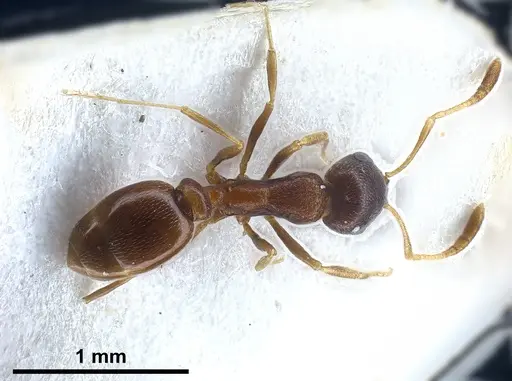
ANTWEB1048518
Bekijk op AntWeb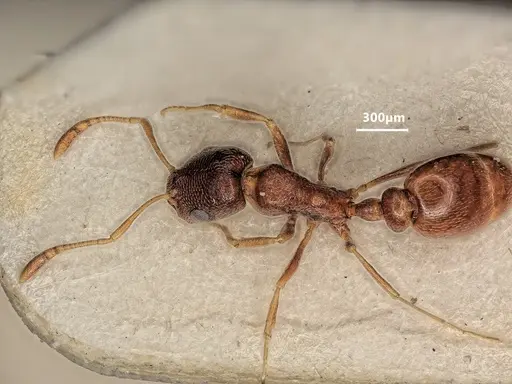
CASENT0917207
Bekijk op AntWeb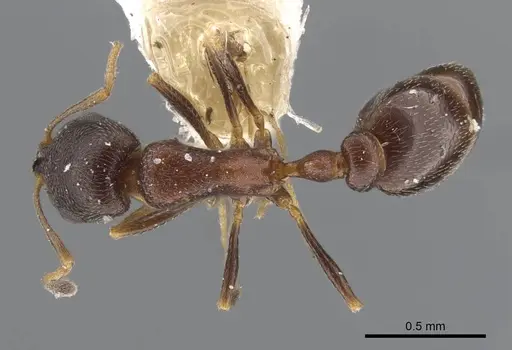
FOCOL1849-1
Bekijk op AntWeb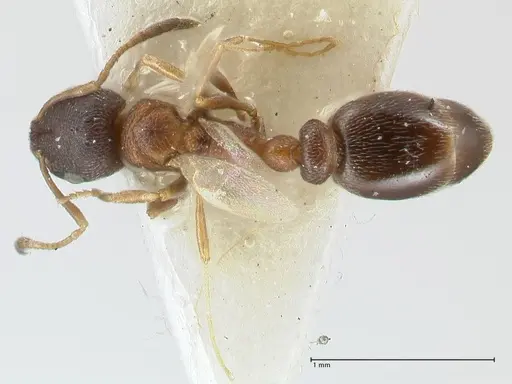
FOCOL1849-2
Bekijk op AntWeb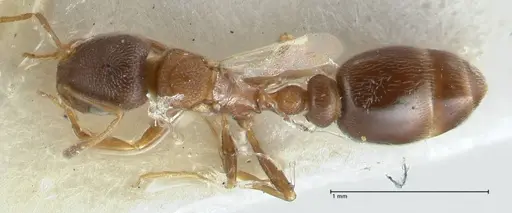
Literatuur
Verspreidingskaart laden...Producten laden...