
Cardiocondyla allonivalis
- Wetenschappelijke naam
- Cardiocondyla allonivalis
- Tribus
- Crematogastrini
- Subfamilie
- Myrmicinae
- Auteur
- Seifert, 2023
- Verspreiding
- Gevonden in 0 landen
Introductie
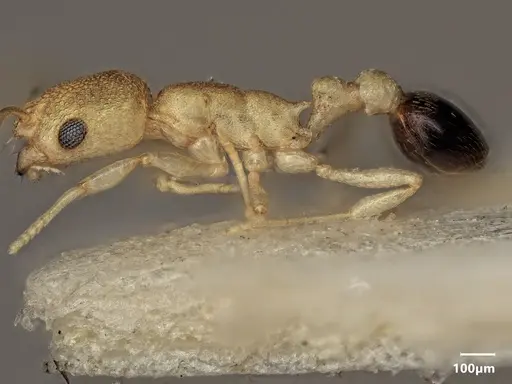
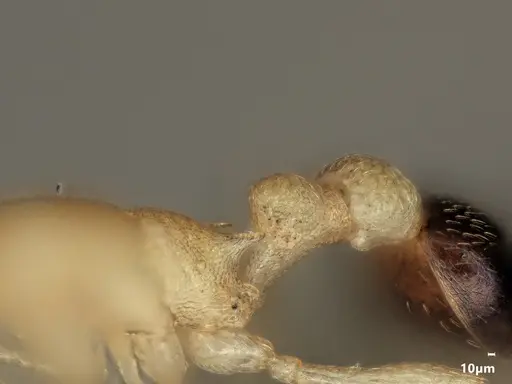
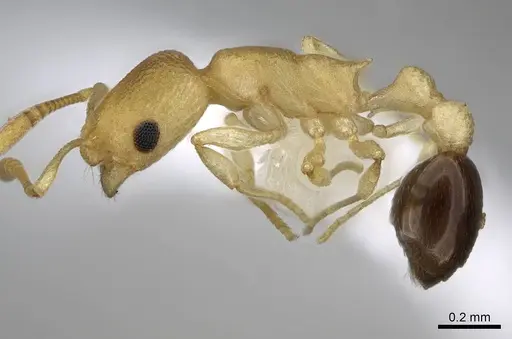
Cardiocondyla allonivalis is an extremely tiny ant species from Papua New Guinea, with workers around 2-3 mm total body length (typical for the genus). The species was only formally described in 2022 and is known from just four workers collected from a single nest . It belongs to the Cardiocondyla wroughtonii group and is morphologically similar to C. nivalis, but can be distinguished by the bulging lobes on each side of its postpetiole (the segment behind the waist) . The gaster is jet black while the rest of the body is very pale yellowish brown, creating a striking contrast . This is one of the least-studied ant species in the hobby, with virtually no captive breeding records. The single known nest was found in soil of a semi-dry littoral (coastal) forest at low elevation .
Quick Summary
- Difficulty: Expert
- Origin & Habitat: Papua New Guinea, sea level to 350m elevation in semi-dry littoral forest [1]. Found at four sites: Cape Wom (3.533°S,143.583°E), Wanang (5.250°S,145.267°E), Goldie River (9.30°S,147.42°E), and Popondetta (8.77°S,148.24°E) [1].
- Colony Type: Unknown, only one wild nest has ever been recorded [1]. Based on genus patterns, colonies are likely monogyne (single queen), but this is unconfirmed.
- Size & Growth:
- Queen: Unknown, queen has never been described [1]
- Worker: ~2-3 mm (body length inferred from related Cardiocondyla species, no direct total length measurements available) [1]
- Colony: Unknown, only four workers from one nest have ever been collected [1]
- Growth: Unknown
- Development: Unknown, no development data exists for this species (Based on related Cardiocondyla species, development likely takes 4-8 weeks at tropical temperatures, but this is purely estimated)
- Antkeeping:
- Temperature: Unknown, infer warm tropical conditions (24-28°C) based on sea-level PNG habitat [1]
- Humidity: Unknown, semi-dry littoral forest suggests moderate humidity (50-70%). Keep substrate lightly moist but not wet.
- Diapause: Unknown, tropical species from low elevation likely does not require hibernation, but this is unconfirmed
- Nesting: Natural nesting in soil confirmed [1]. Probably accepts standard small-ant setups like test tubes or small Y-tong nests with fine chambers scaled to their tiny size.
- Behavior: Behavior is unstudied. Based on genus patterns, they are likely relatively docile and non-aggressive. Their small size (workers ~2-3 mm) makes escape prevention important, use fine mesh or tight seals. Like other Crematogastrini, they likely use a 'smear' defense: a modified flattened stinger to wipe venom onto enemies rather than injecting it. Their tiny size makes this sting ineffective on human skin.
- Common Issues: extreme rarity makes obtaining this species nearly impossible, no captive breeding records exist, all care is speculative, their small size still requires fine mesh barriers to prevent escapes, virtually nothing is known about their diet or feeding requirements, one wild nest is the entire basis for all biological knowledge
Species Discovery and Rarity
Cardiocondyla allonivalis is one of the rarest ant species in the world to keep. It was only formally described in 2022 by Bernhard Seifert, and the entire scientific knowledge base consists of just four workers collected from a single nest by researcher P.S. Ward in Papua New Guinea [1]. The species name comes from Greek 'állo' (other) and Latin 'nivalis' (snowy), referring to its overall similarity to the related species C. nivalis [1]. The diagnostic feature that separates it from C. nivalis is the postpetiolar sternite, in C. allonivalis it has strong bulging lobes on each side, while in C. nivalis it is flat [1]. This species is essentially unavailable to antkeepers and may never be kept in captivity.
Appearance and Identification
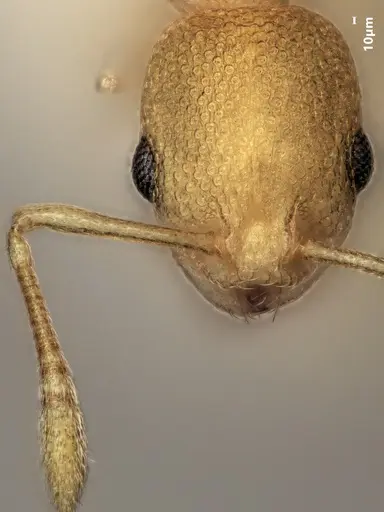
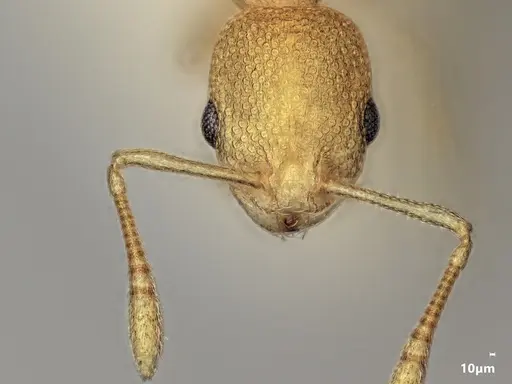
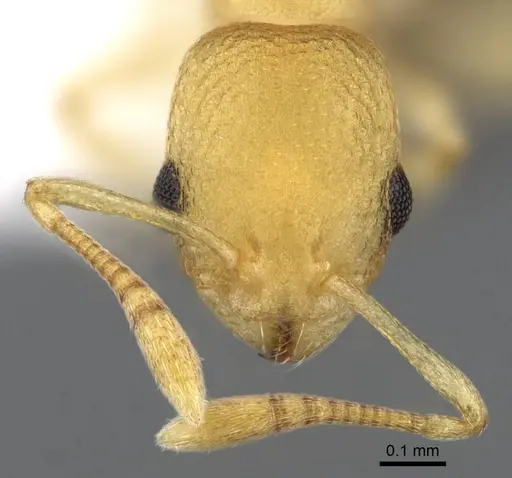
This is a very small ant species, workers are around 2-3 mm total body length (body size inferred from related species). The body is predominantly very pale yellowish brown, except for the gaster which is jet black [2]. The head has a distinctive surface texture with circular foveolae (small pits) that each contain a flat central tubercle, averaging 15.5 µm in diameter [2]. The postpetiole (the segment behind the waist) is notably wide and high compared to other Cardiocondyla species, and the sternite underneath has diagnostic bulging lobes [1]. The propodeal spines (on the back of the thorax) are short, and the overall body shape is slender [2]. These ants are essentially impossible to distinguish from close relatives without examination under a microscope.
Natural Habitat and Distribution
C. allonivalis is endemic to Papua New Guinea, known from just four coastal to low-elevation sites spanning from 3.5°S to 9.3°S latitude [1]. The type locality is Wanang at 95m elevation, and the highest known site reaches 350m [1]. The single known nest was found in soil within a semi-dry littoral forest, a coastal forest environment that is drier than tropical rainforests [1]. All collection sites are at low elevation near sea level [1]. This restricted distribution and habitat specialization suggests the species may have specific environmental requirements that would be challenging to replicate in captivity.
Housing and Care Recommendations
Since no captive records exist, all care recommendations are speculative estimates based on related Cardiocondyla species and the natural habitat data. The semi-dry littoral forest habitat suggests moderate humidity around 50-70%, kept slightly moist but not wet. Temperature should be warm (24-28°C) matching tropical lowland conditions. Nesting in soil suggests test tubes with moist cotton or small Y-tong nests would be appropriate. Due to their small size (workers ~2-3 mm), use fine mesh and tight-fitting lids to prevent escapes. Start with conservative feeding: sugar water and tiny protein sources like fruit flies, adjusting based on colony acceptance. Do not expect rapid growth, related species typically develop slowly. [1]
Related Species in the Genus
Cardiocondyla is a genus of tiny myrmicine ants with numerous species across tropical and temperate regions. Many related species in the wroughtonii group have been kept in captivity and are known to be docile, slow-growing, and suitable for beginners. However, C. allonivalis remains one of the least-studied species in an already poorly-studied genus. The closely similar C. nivalis is known from different geographic areas and can be distinguished by its flat postpetiolar sternite versus the bulging lobes of C. allonivalis [1]. If you are interested in keeping Cardiocondyla, more common species like C. obscurior or C. wroughtonii would be far more practical choices with established care protocols.
Frequently Asked Questions
Is Cardiocondyla allonivalis available for purchase?
No. This species is essentially unavailable to antkeepers. It was only described in 2022 and has been collected only once, just four workers from a single nest constitute the entire known specimen record. No colonies exist in captivity.
How big do Cardiocondyla allonivalis colonies get?
Unknown. No colony size data exists, only four workers from one nest have ever been studied. Based on related species, colonies likely reach dozens to a few hundred workers rather than the thousands seen in larger ant genera.
What do Cardiocondyla allonivalis eat?
Unconfirmed. No feeding observations exist for this species. Based on genus patterns, they likely accept sugar sources (honey, sugar water) and small protein items like fruit flies or other tiny arthropods. Start with sugar water and observe acceptance.
Do Cardiocondyla allonivalis ants sting?
Unknown. Cardiocondyla species have stingers but are typically too small to penetrate human skin effectively. Like other Crematogastrini, they likely use a 'smear' defense by wiping venom onto enemies. Most species in the genus are considered non-stinging to keepers.
What temperature should I keep Cardiocondyla allonivalis at?
No specific data exists. Based on their tropical sea-level habitat in Papua New Guinea, warm conditions around 24-28°C are estimated. Related tropical Cardiocondyla species thrive in this range.
Does Cardiocondyla allonivalis need hibernation?
Unknown but unlikely. As a tropical species from low elevation in Papua New Guinea, they probably do not require a diapause period. However, this has never been studied.
Are Cardiocondyla allonivalis good for beginners?
No. This species is not available to keepers and has no captive history. Even if obtained, the complete lack of care information would make successful keeping extremely unlikely. Consider more established Cardiocondyla species like C. obscurior instead.
How long does it take for Cardiocondyla allonivalis to develop from egg to worker?
Unknown. No development data exists for this species. Based on related Cardiocondyla species, development likely takes 4-8 weeks at tropical temperatures, but this is purely an estimate.
Can I keep multiple Cardiocondyla allonivalis queens together?
Unknown. Colony structure has never been studied. Most Cardiocondyla species form single-queen colonies, but some can be multi-queen. Without any data on this species, combining queens is not recommended.
Where does Cardiocondyla allonivalis live in the wild?
Only in Papua New Guinea, from sea level to 350m elevation. The single known nest was found in soil of a semi-dry littoral (coastal) forest. Known sites are Cape Wom, Wanang, Goldie River, and Popondetta [1].
Report an Issue
The current care sheet is based fully on literature. See inconsistencies, or something that's incorrect? Please , it will be resolved after review from an admin. Contributing to the blogs tab also helps providing information, to make us be able to further improve the caresheets. Thank you for your support!
References

Dit verzorgingsblad is gelicentieerd onder CC BY-SA 4.0 .
Community-blogs
ANTWEB1048502
Bekijk op AntWeb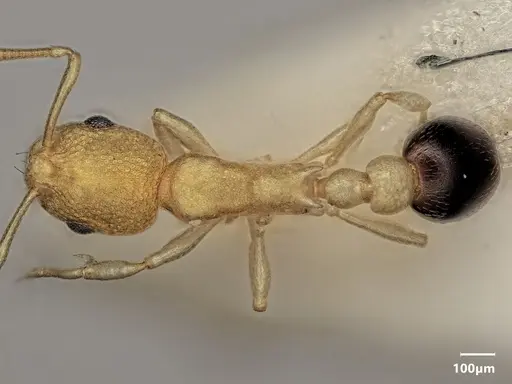
CASENT0914964
Bekijk op AntWeb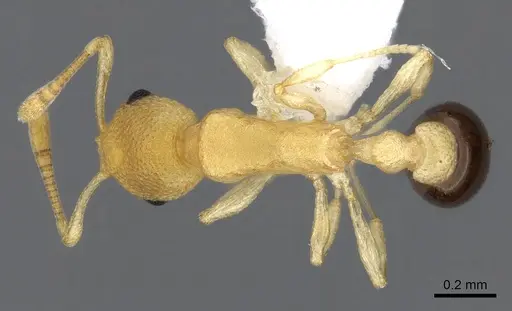
Literatuur
Verspreidingskaart laden...Producten laden...